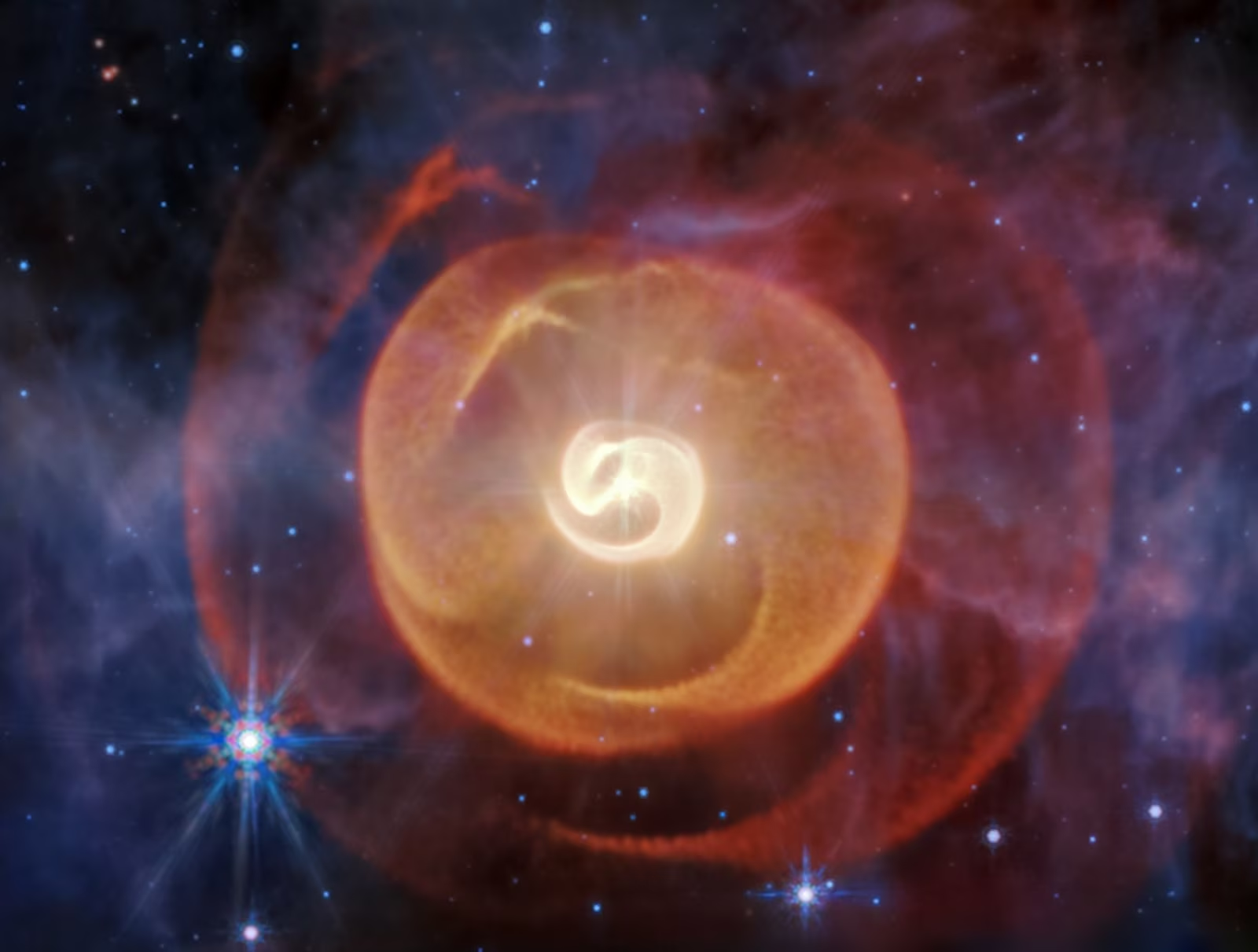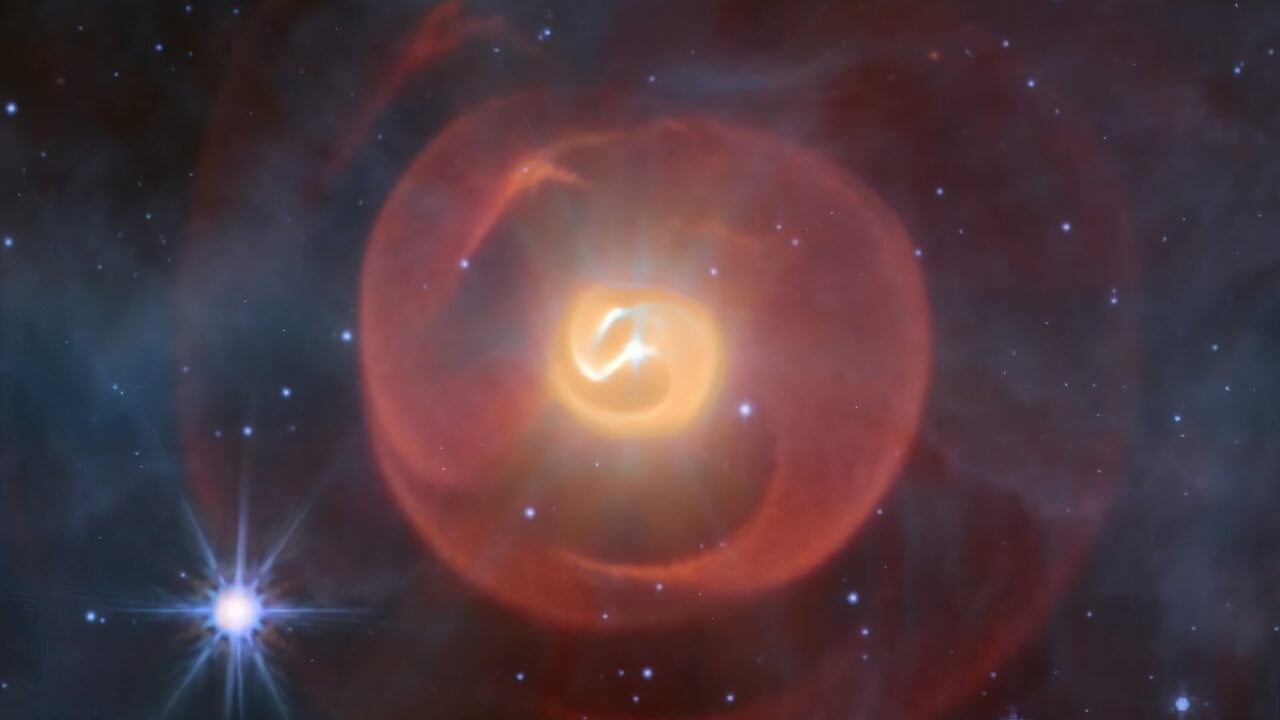
The James Webb Space Telescope captured stunning images of four coiled dust shells around the triple star system Apep, revealing intricate serpentine patterns ejected over centuries by Wolf-Rayet stars.
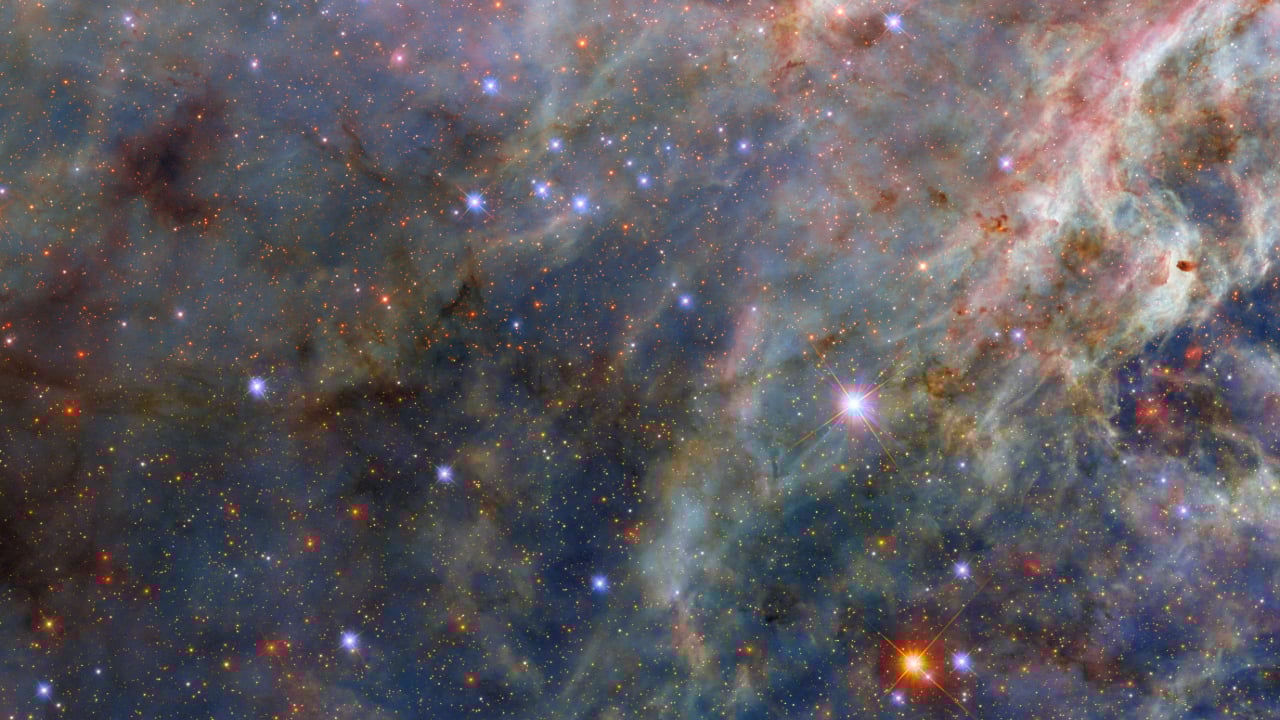
Hubble captured a stunning image of the Tarantula nebula in the Large Magellanic Cloud, revealing active star formation and massive Wolf-Rayet stars, highlighting the nebula as a significant stellar nursery about 160,000 light-years away.
The James Webb Space Telescope captured a detailed image of the Apep nebula, revealing it contains two Wolf-Rayet stars and a third star, providing new insights into the death of stars and the dust they leave behind.
A new JWST image of the Apep nebula reveals a complex system of two Wolf-Rayet stars with a spiral dust structure, providing insights into the violent death of massive stars and the formation of cosmic dust, with recent data showing multiple dust shells and a third star companion.
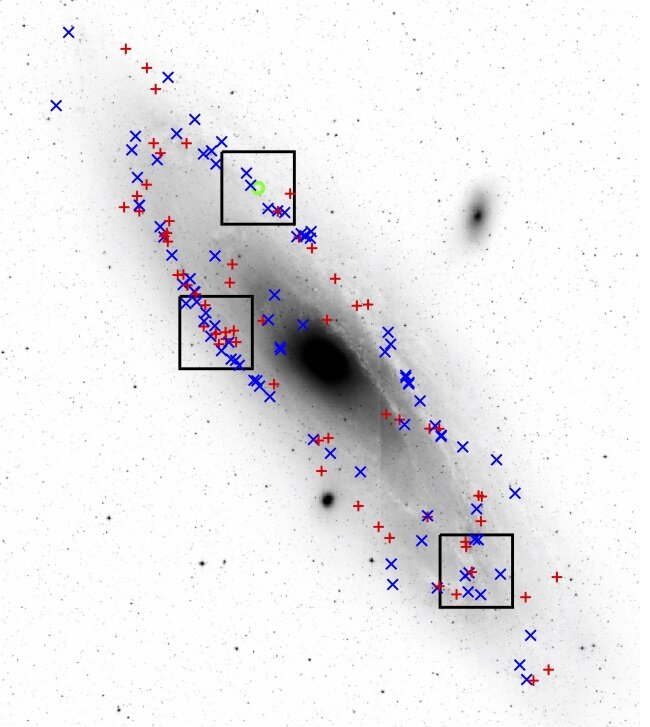
Astronomers using the Lowell Discovery Telescope have discovered 19 new Wolf-Rayet stars in the Andromeda galaxy. These extremely hot and luminous stars are at an advanced stage of stellar evolution and are losing mass at a high rate. The newly detected stars are generally fainter than previously known ones due to increased reddening. The researchers estimate that there are about 60 more Wolf-Rayet stars left to be found in Andromeda and plan to focus on specific regions to identify more of these stars. The findings will contribute to a better understanding of the evolution and end states of massive stars.
NASA's James Webb Space Telescope (JWST) captured a rare view of a Wolf-Rayet star, WR 124, which is about 30 times more massive than the Sun and has already shed enough material to make up ten Suns. The star is located roughly 15,000 lightyears away from us, in the constellation Sagitta. Observations like these give astronomers real data to work with for the first time, which could help them align their models more closely to reality and provide information about the stars lighting up the night sky today.
NASA's James Webb Space Telescope (JWST) captured a rare view of a Wolf-Rayet star, WR 124, which is about 30 times more massive than the Sun and has already shed enough material to make up ten Suns. The star is located roughly 15,000 lightyears away from us, in the constellation Sagitta. Observations like these give astronomers real data to work with for the first time, which could help align their models more closely to reality and provide information about the stars lighting up the night sky today.