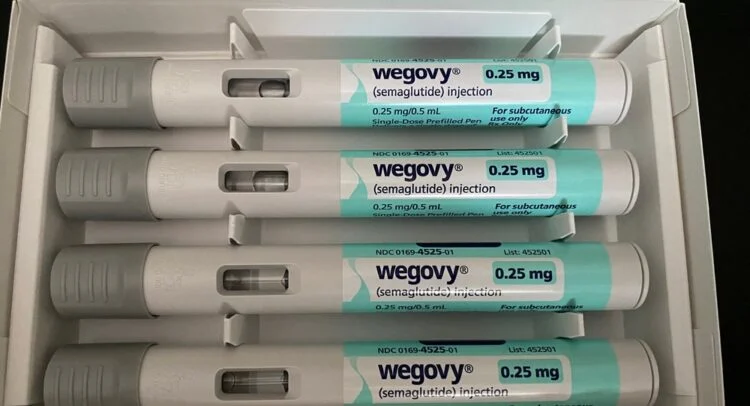
Amazon Pharmacy now offers Novo Nordisk's Wegovy weight-loss pill through insurance and cash options, with prices starting at $25 for insured and $149 for cash-paying customers, expanding access via kiosks and collaborations with telehealth providers, as the drug gains FDA approval and aims to attract new consumers seeking an alternative to injectable treatments.

Eli Lilly is preparing for the potential approval of a new weight loss pill following successful late-stage clinical trials, signaling a significant development in the pharmaceutical company's product pipeline.
Eli Lilly announced that its anti-obesity pill, orforglipron, successfully met weight-loss targets in a key diabetes trial, reducing body weight by 10.5% on average, which boosts its plans for FDA approval and intensifies competition with Novo Nordisk in the weight-loss drug market.
Viking Therapeutics' stock plummeted over 35% after mixed results from its weight-loss drug, which showed significant weight loss but also a high dropout rate due to side effects, leading to investor concern and a sharp decline in share price.
Viking Therapeutics' stock surged over 15% after positive results from a small study on its experimental weight loss pill, which is set to enter the next stage of development later this year. The once-a-day oral tablet showed promising results in reducing weight, with patients losing up to 5.3% of their weight on average. The company plans to start a phase two trial for the pill and believes that treating patients beyond 28 days may lead to further reductions in body weight. Analysts view Viking as a strong potential player in the burgeoning weight loss drug market, which could grow into a $100 billion market by the end of the decade.
Novo Nordisk's experimental weight-loss pill, amycretin, has shown promising early results in a small trial, with participants losing 13 percent of their body weight over three months, double the effectiveness of its existing drugs Ozempic and Wegovy. The pill, taken orally unlike the injections, mimics the gut hormone GLP-1 and another hormone called amylin. While the results have sent the company's shares soaring, experts caution that more research is needed to establish its long-term effectiveness and safety. The trial involved 16 participants, and further data from an injectable form of amycretin is expected next year.
Novo Nordisk CEO Lars Fruergaard Jørgensen believes the company's experimental weight loss pill, amycretin, could become a best-in-class treatment for obesity, potentially surpassing the success of its blockbuster drug Wegovy. Early-stage trial data showed patients on amycretin lost about 13.1% of their weight after 12 weeks, surpassing Wegovy's 6% weight loss. The pill targets gut hormone GLP-1 and pancreas hormone amylin, with a midstage trial expected to begin in the second half of 2022 and results anticipated in early 2026.
Novo Nordisk's market value has surpassed Tesla's after positive early trial data for its experimental weight loss pill, amycretin, showed a 13.1% weight loss in participants. The Danish pharmaceutical company's market cap now stands at $604 billion, making it the 12th most valuable company in the world. The company's focus on obesity treatments and cardiovascular disease, along with the potential of its new drugs, has led to a months-long rally in its stock. The company anticipates that the pill could be available to consumers within this decade, and it expects amycretin to have similar cardiac benefits to its successful injection-based drugs, Wegovy and Ozempic.
Pfizer has announced that it will stop developing its twice-daily weight loss pill, danuglipron, after obese patients experienced high rates of adverse side effects in a midstage clinical trial. This comes after Pfizer scrapped a different once-daily pill earlier this year due to elevated liver enzymes. The difficulties in developing effective and safe weight loss treatments are highlighted by the long list of obesity drugs that have been discontinued or pulled from the market due to unintended consequences, such as cancer risks, cardiovascular risks, and serious psychiatric problems. Despite recent breakthrough medications, including Novo Nordisk's Wegovy and Eli Lilly's Mounjaro, the path to treating obesity remains challenging.
Pfizer has announced the discontinuation of clinical trials for its weight loss pill, danuglipron, due to high rates of gastrointestinal side effects experienced by patients. The pill, which uses a similar mechanism to semaglutide, resulted in adverse events such as nausea, vomiting, and diarrhea in a large percentage of participants. Despite this setback, Pfizer remains committed to developing a weight loss pill and will continue to explore potential improvements in tolerability and study design. The news of the side effects caused a four percent drop in Pfizer's stock.
Pfizer has announced that it will discontinue the development of the twice-daily version of its experimental weight loss pill due to high rates of adverse side effects observed in a mid-stage clinical study. The drug showed promising results in terms of weight loss, but patients had difficulty tolerating the medication, with gastrointestinal issues being the most common side effect. Pfizer still plans to release phase two trial data on a once-a-day version of the drug in 2024, which will determine whether it will proceed to phase three studies. This setback puts Pfizer further behind competitors in the weight loss drug market, such as Eli Lilly and Novo Nordisk.
Pfizer's stock dropped after the company announced it would pursue its twice-daily weight loss pill candidate, danuglipron, over its once-daily candidate, lotiglipron, due to concerns of elevated liver damage risk in early stage trials. Analysts called the announcement a "clear setback" for the company, as lotiglipron was expected to be the more competitive of the two assets. The GLP-1 class of drugs is heating up competition in the obesity drug market, with analysts estimating sales could reach $30 billion in a decade. Eli Lilly and Novo Nordisk are also targeting the obesity treatment space with their own injectable and oral pill treatments.