Innovative Israeli technologies using engineered bacteria and wearable stress monitors aim to detect Crohn's disease flare-ups before symptoms appear, potentially transforming disease management by enabling earlier intervention and reducing complications.
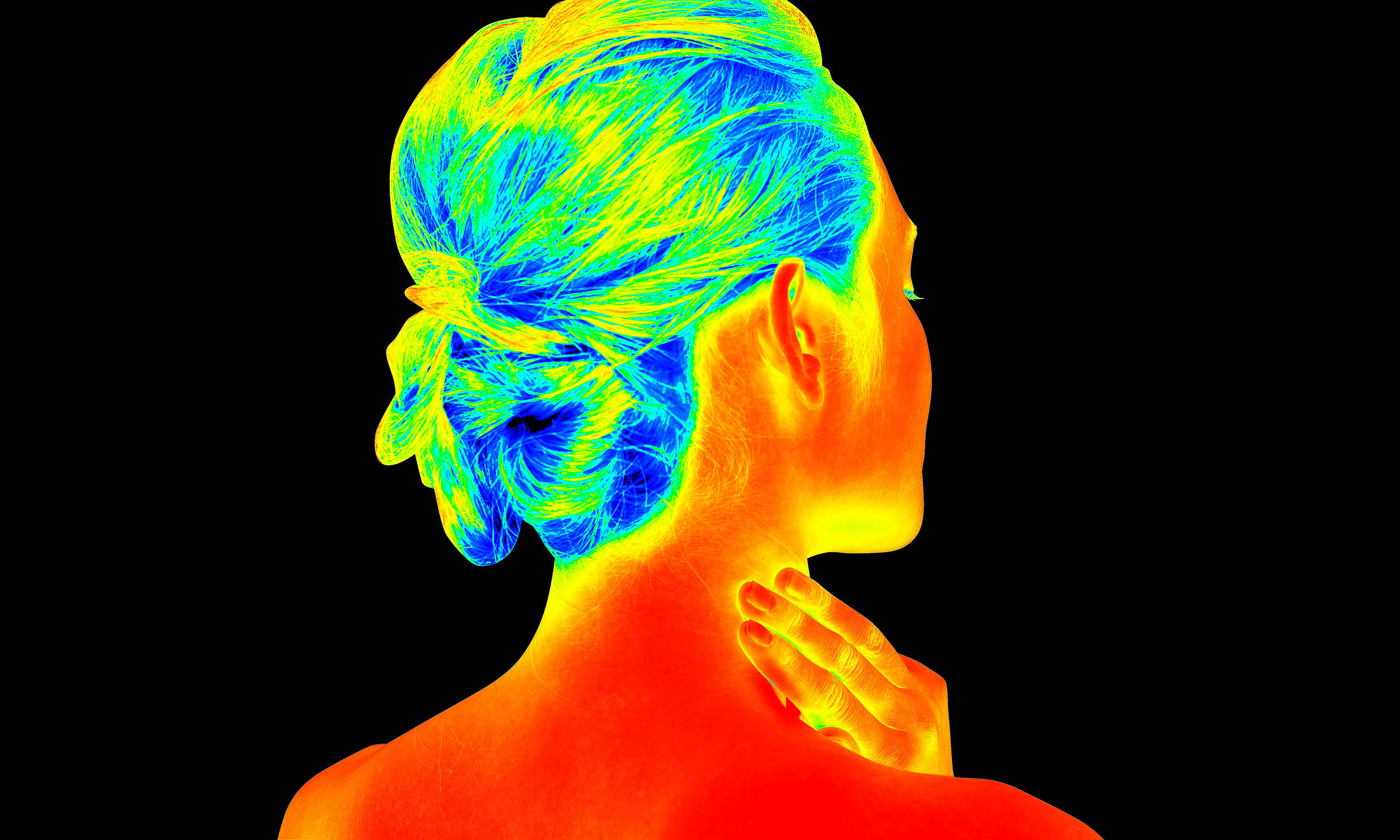
A large international study found a consistent link between higher body temperatures and depression symptoms, suggesting that monitoring and adjusting body temperature could become a new, low-cost approach to early detection and treatment of depression, especially through thermal therapies like saunas or heated vests.
A new study demonstrates that wearable sensors combined with machine learning can accurately monitor walking patterns, particularly step length, to help detect early signs of Alzheimer's and other neurological conditions during daily life, potentially enabling earlier diagnosis and intervention.
A study conducted by researchers at Oxford University has found that digital wearable devices can track the progression of Parkinson's disease more effectively than human clinical observation. By tracking over 100 metrics picked up by the devices, researchers were able to detect subtle changes in the movements of individuals with Parkinson's. This technology could help scientists determine whether novel drugs and therapies for Parkinson's are slowing the progression of the disease. The lead researcher emphasized that this is not a treatment for Parkinson's but a tool to aid in the development of treatments.
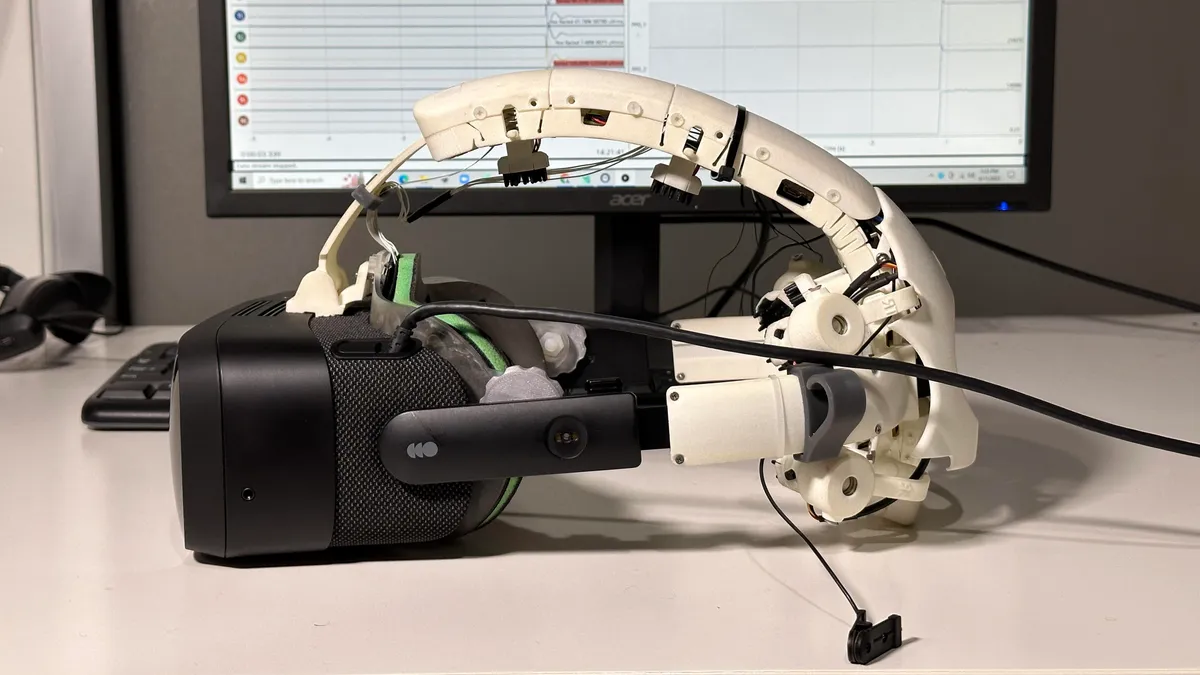
OpenBCI, a Brooklyn-based company, has developed a prototype mixed-reality headset called Galea that incorporates various sensors, including EEG, EMG, EDA, PPG, and eye tracking, to explore the possibilities of brain-computer interfaces in VR and AR. The headset, which can be used independently or with existing VR headsets, aims to enable new interactions with computers and enhance accessibility. OpenBCI's CEO sees the potential for future advancements in neural input technology, particularly when combined with standalone VR and AR headsets. The sensor platform could also pave the way for future wearable sensors that enhance everyday interactions.
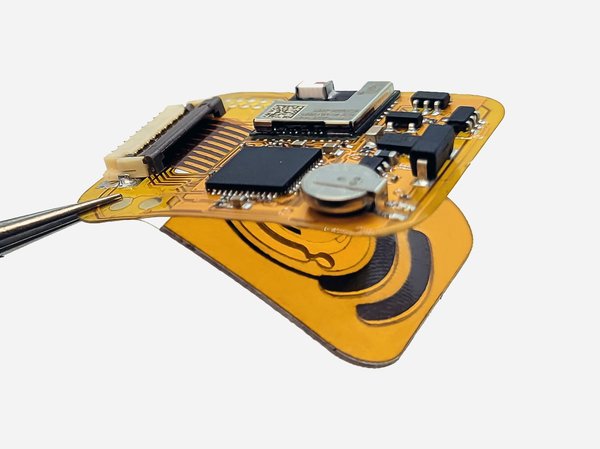
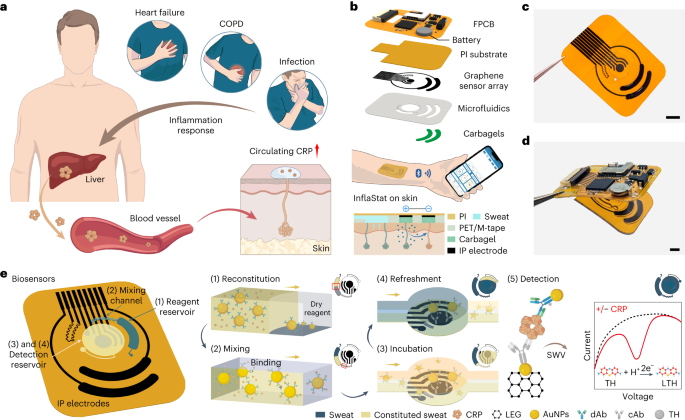
Researchers at Caltech have developed a wearable skin sensor that can wirelessly detect the presence of C-reactive protein (CRP) in human sweat, which is a molecular hallmark of inflammation. The sensor is built upon laser-engraved graphene and contains antibodies that bind to CRP and special molecules capable of generating a small electric current under certain conditions. The sensor also measures the concentration of ions in the sweat, the sweat's pH, and skin temperature to account for variations in sweat compositions from person to person. The technology has implications for practical medical applications and chronic disease management.
Researchers have developed a wireless patch that can monitor C-reactive protein levels in sweat, which is a marker of inflammation and a potential indicator of various health conditions. The patch uses a biosensor to detect the protein and wirelessly transmit the data to a smartphone app. This technology could enable non-invasive and continuous monitoring of inflammation, potentially leading to earlier detection and treatment of related health issues.