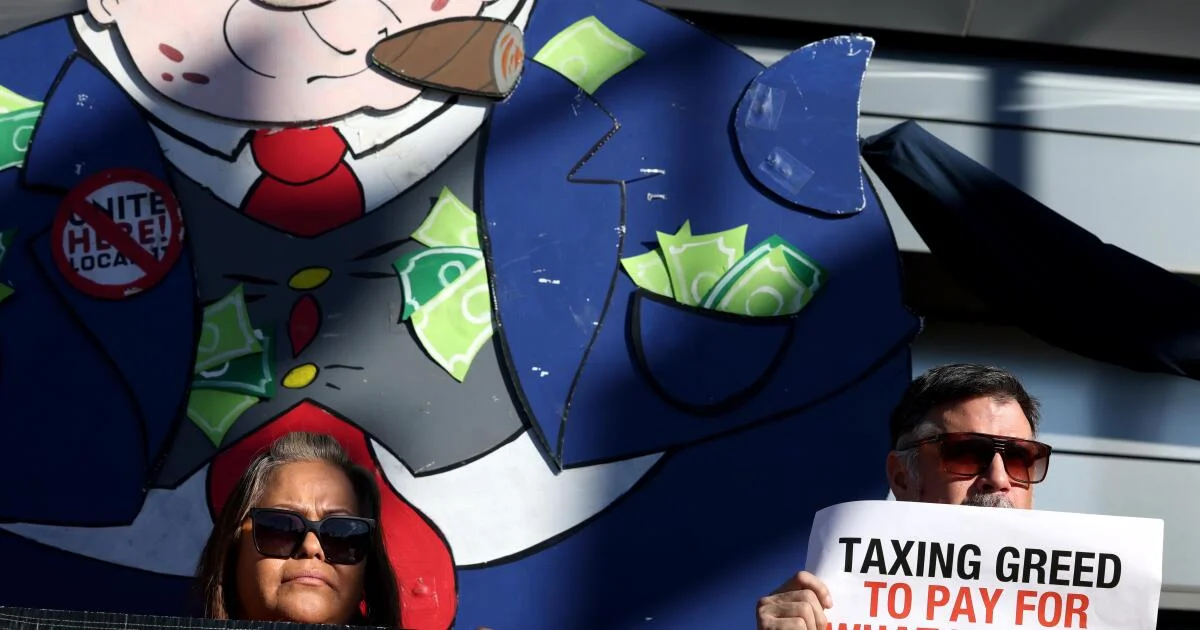
California is considering a 5% one-time wealth tax on residents worth over $1 billion, which could impact over 214 billionaires, including notable figures like Palmer Luckey, Mark Zuckerberg, and Jensen Huang. The tax aims to generate revenue but faces criticism for potentially prompting wealthy residents to leave the state, affecting California's economy.
Sergey Brin is reportedly moving his business entities out of California in response to proposed wealth tax policies, following similar actions by Larry Page, as part of a broader trend among tech billionaires to relocate assets to more tax-friendly states.
Attorney Alex Spiro warned California's governor that his billionaire clients would relocate if a proposed wealth tax passes, citing legal and economic concerns, including potential constitutional issues and capital flight.
Tech billionaires Peter Thiel and Larry Page are considering leaving California due to a proposed billionaire wealth tax, which aims to tax assets over $1 billion at 5%, potentially raising $100 billion for healthcare. The move is part of a broader trend of high-profile entrepreneurs relocating to states with lower taxes, such as Texas, amid concerns about California's fiscal policies and regulatory environment. The tax proposal still needs to gather enough signatures to appear on the 2026 ballot, but it has sparked debate over its impact on innovation and the state's economy.
Washington state proposes a 9.9% income tax on earnings over $1 million to address affordability and revenue issues, reflecting a broader trend among US states to tax the wealthy more heavily amid federal cuts and economic inequality.
The article discusses California's proposed 2026 ballot measure to impose a 5% wealth tax on its 200 billionaires to fund Medicaid and schools, highlighting how state-level efforts can address wealth inequality and potentially inspire broader national reforms despite political challenges.
French lawmakers rejected proposals for a wealth tax on the ultra-rich, instead approving a diluted tax on assets in holding companies, amid political divisions and concerns over economic impact, with the government also considering lifting a freeze on pensions and welfare benefits for 2026.
Illinois Democrats propose a groundbreaking $1.5 billion transit funding plan that includes a first-in-the-world wealth tax on billionaires based on unrealized capital gains, along with new taxes on streaming services and concert tickets, but the plan faces opposition and concerns about its impact on investment and growth.
Bernard Arnault, France's richest man and CEO of LVMH, strongly opposes a proposed 2% wealth tax on billionaires, criticizing it as harmful to France's economy and attacking its architect, economist Gabriel Zucman, as a far-left ideologue. The tax, targeting assets over 100 million euros, has significant public support and political momentum in France.
Norway is holding a closely contested election where the future of its century-old wealth tax and social welfare system are key issues, with debates centered around economic impact and inequality, and official results expected soon to determine the country's political direction.
A study from UC Berkeley reveals that billionaires, including the Forbes 400, pay a lower effective tax rate (24%) than the average American (30%), largely due to the lower taxation on capital gains and corporate income. The research highlights the need for a wealth tax to address growing inequality, as the current tax system favors the ultra-rich, who can often avoid paying higher taxes through various means.
The Supreme Court upheld a federal tax on certain foreign investments in the Moore v. United States case but avoided ruling on the broader issue of the constitutionality of a wealth tax. The decision focused narrowly on the specific tax issue at hand, leaving open questions about future wealth tax proposals and their potential implications.
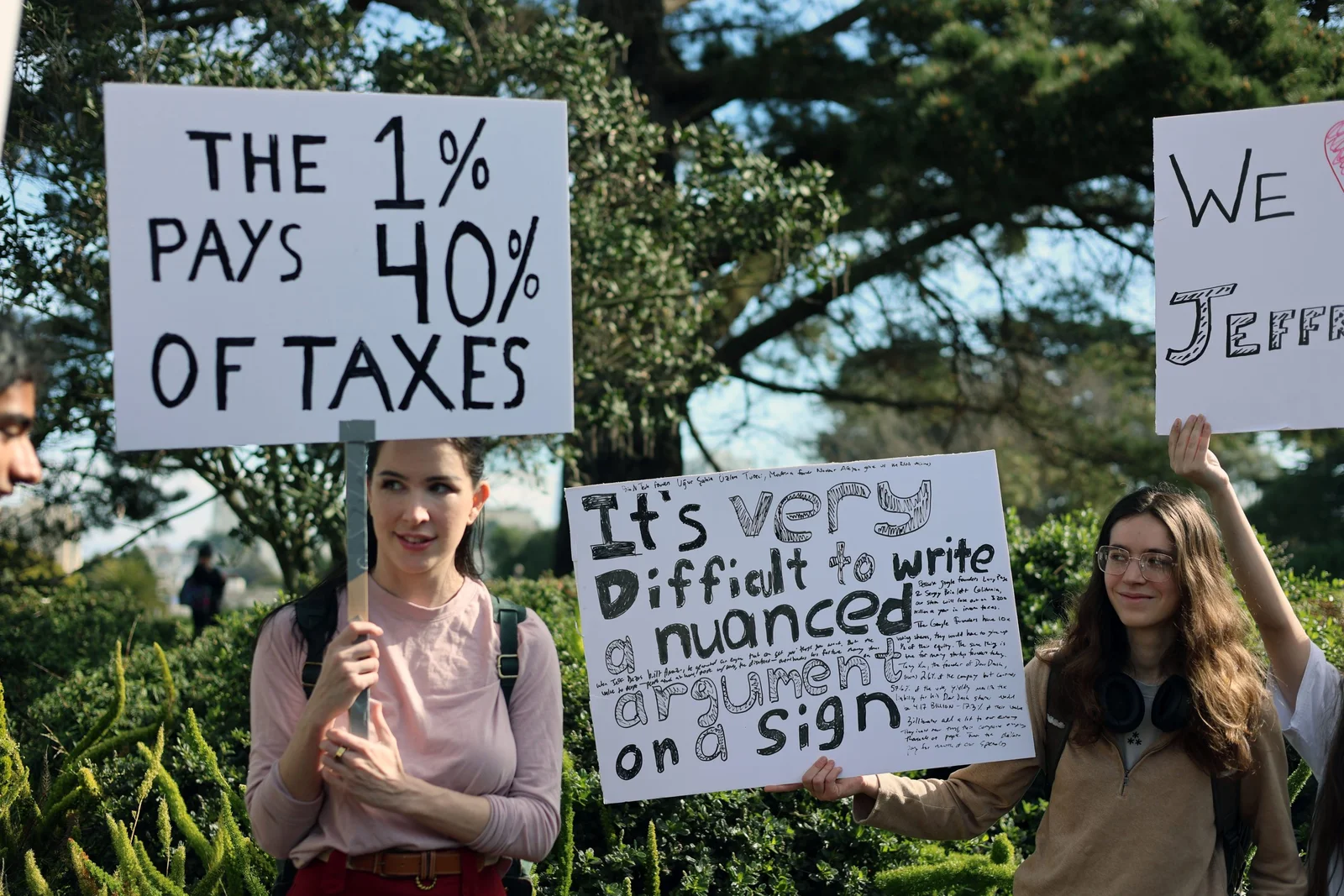
President Biden's proposed billionaire tax, aiming to impose a minimum 25% tax on Americans with assets over $100 million, has been met with skepticism from experts who question its practicality and potential impact on the US tax code. The proposal would require taxing unrealized gains, which raises concerns about handling losses and the potential for driving away ultra-wealthy individuals. Critics argue that the top 1% already pays a significant share of federal taxes, and suggest updating the existing alternative minimum tax instead. The debate highlights the complexities of taxing wealth in a rapidly evolving economic landscape.
If Democrats secure a trifecta in the upcoming elections, taxes could increase by $7 trillion over 10 years, with President Biden's proposed budget aiming to generate $5.3 trillion in revenues through fairer tax policies targeting the wealthy and large corporations. The budget prioritizes investing in essential public services for families and communities, including $33 billion for affordable housing, aiming to reduce homelessness and support first-time homebuyers. While the budget reflects a shift away from trickle-down economics, its implementation is contingent on Democratic electoral success.
President Joe Biden has proposed a "billionaire tax" targeting the super-rich, aiming to impose a 25% tax on Americans with wealth over $100 million. The debate over wealth taxes has reignited, with global finance ministers exploring a global minimum tax on billionaires. While some argue that wealth taxes could help combat wealth inequality, others question their effectiveness and potential for a mass exodus of the super-rich. Proponents believe the revenues generated could address wealth inequality, but critics raise concerns about the costs and redistribution of wealth.