California's 2026-27 budget, Newsom's final as governor, includes a surprise $22 billion boost for TK-12 and community colleges, lifting Prop 98 per-student funding to a record $20,427 and funding one-time and ongoing programs—such as sustaining community schools, teacher residencies, reading screenings, and expanded college and career pathways—while awaiting May revisions and legislative negotiations amid potential federal cuts.
California faces a $2.9 billion budget shortfall in 2023, the fourth consecutive year of multibillion-dollar deficits, despite increased revenues; the state plans to prioritize education investments, rebuild reserves, and address federal funding losses, while lawmakers debate spending and cuts amid ongoing fiscal challenges.
California faces an $18 billion deficit as Gov. Gavin Newsom prepares to release his final budget plan, with options limited to raising taxes or cutting spending, both politically challenging. The state's financial situation is worsened by federal funding cuts and increased spending, particularly on health care programs like Medi-Cal. Political considerations and the upcoming gubernatorial transition influence decisions, with little appetite for tax hikes on high earners or significant spending cuts, raising concerns about long-term fiscal stability and the governor's legacy.
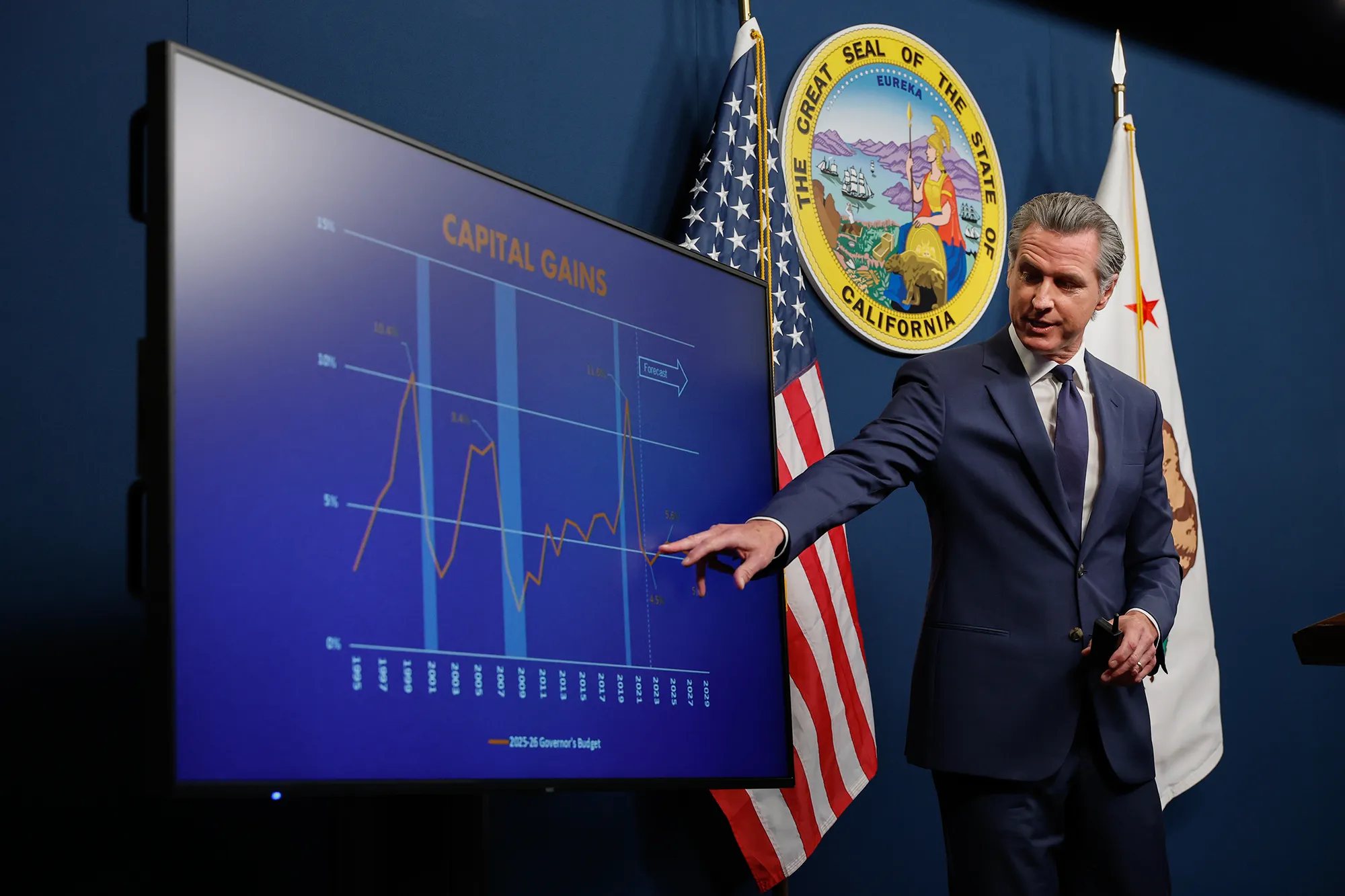
California's budget outlook has worsened from a surplus to an $18 billion deficit due to unforeseen costs like wildfires, Medi-Cal expenses, and federal policy impacts, with projections indicating ongoing deficits and potential structural issues requiring revenue increases or cuts.
California Governor Gavin Newsom signed a budget to close a $12 billion deficit, which includes cuts to immigrant healthcare access, such as stopping new enrollments for undocumented adults in Medi-Cal from 2026 and introducing premiums in 2027, while also maintaining funding for other safety net programs and environmental initiatives. The budget faces criticism from Republicans and some Democrats for its impact on vulnerable populations and future fiscal stability, amid ongoing federal and economic uncertainties.
The California budget deal for 2025-26 masks a significant structural deficit caused by years of overspending and accounting tricks, with officials blaming external factors like federal tariffs, while actually relying on payment deferrals, loans, and reserves to cover ongoing fiscal shortfalls, raising concerns about long-term fiscal health and transparency.
California Governor Gavin Newsom proposes reinstating an 'asset test' for low-income and disabled Medi-Cal applicants, which could lead to eligibility restrictions and cost savings, but faces criticism from disability advocates who warn it could harm vulnerable populations and increase long-term costs. The proposal aims to address rising healthcare expenses by reintroducing asset limits, including home and vehicle values, starting in 2026.
During the budget negotiations, California Governor Gavin Newsom employed tactics such as using the budget process to enact significant policy changes late in the game, bluffing on certain proposals, and fighting with environmental groups while also aligning with oil companies. His willingness to veto the budget if he didn't get his way on the California Environmental Quality Act (CEQA) revealed rifts between his administration and Assembly negotiators. Newsom also emphasized the need for fiscal restraint due to the state's $32 billion deficit and indicated that he may seek additional changes to CEQA in the future.