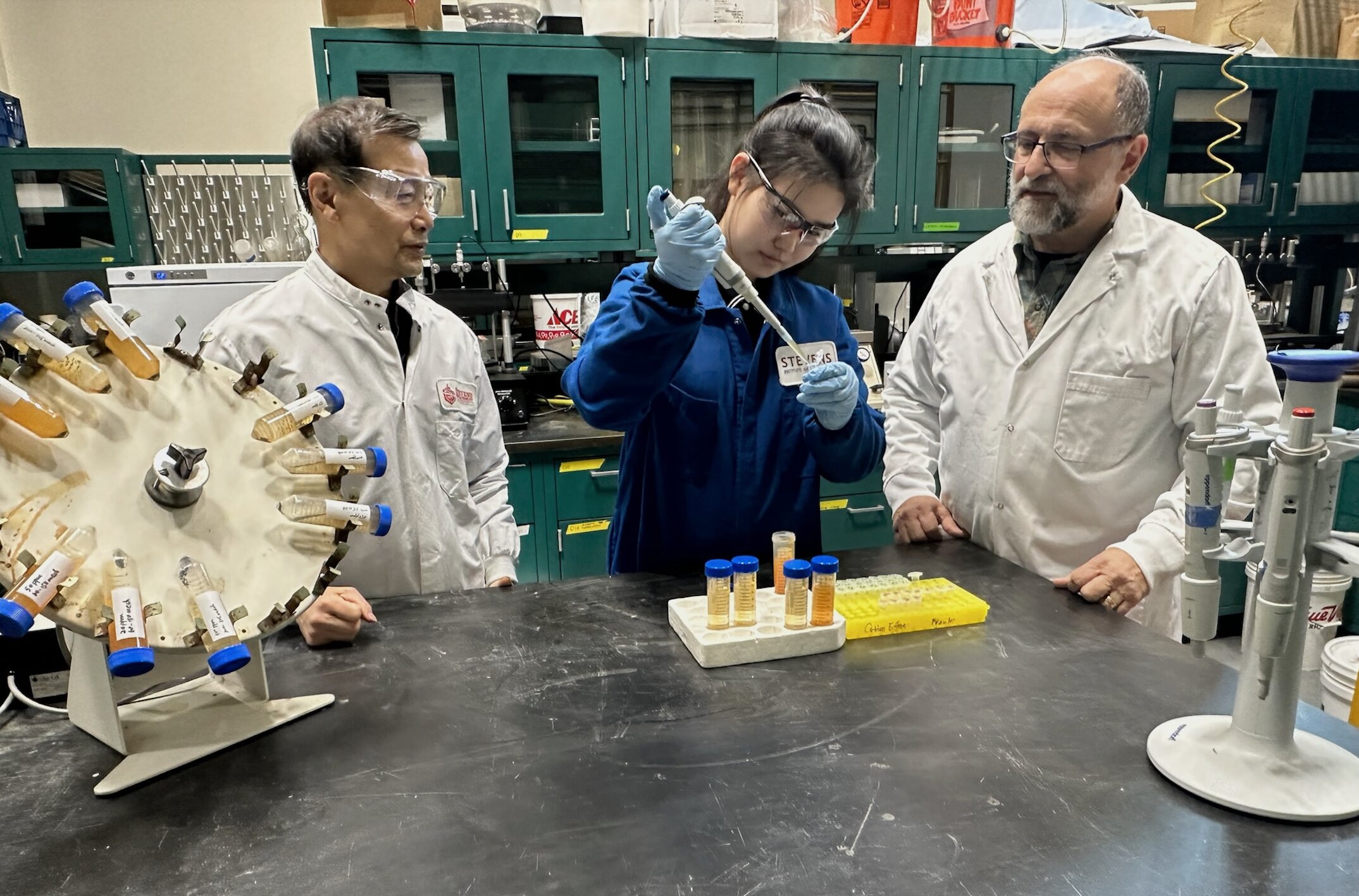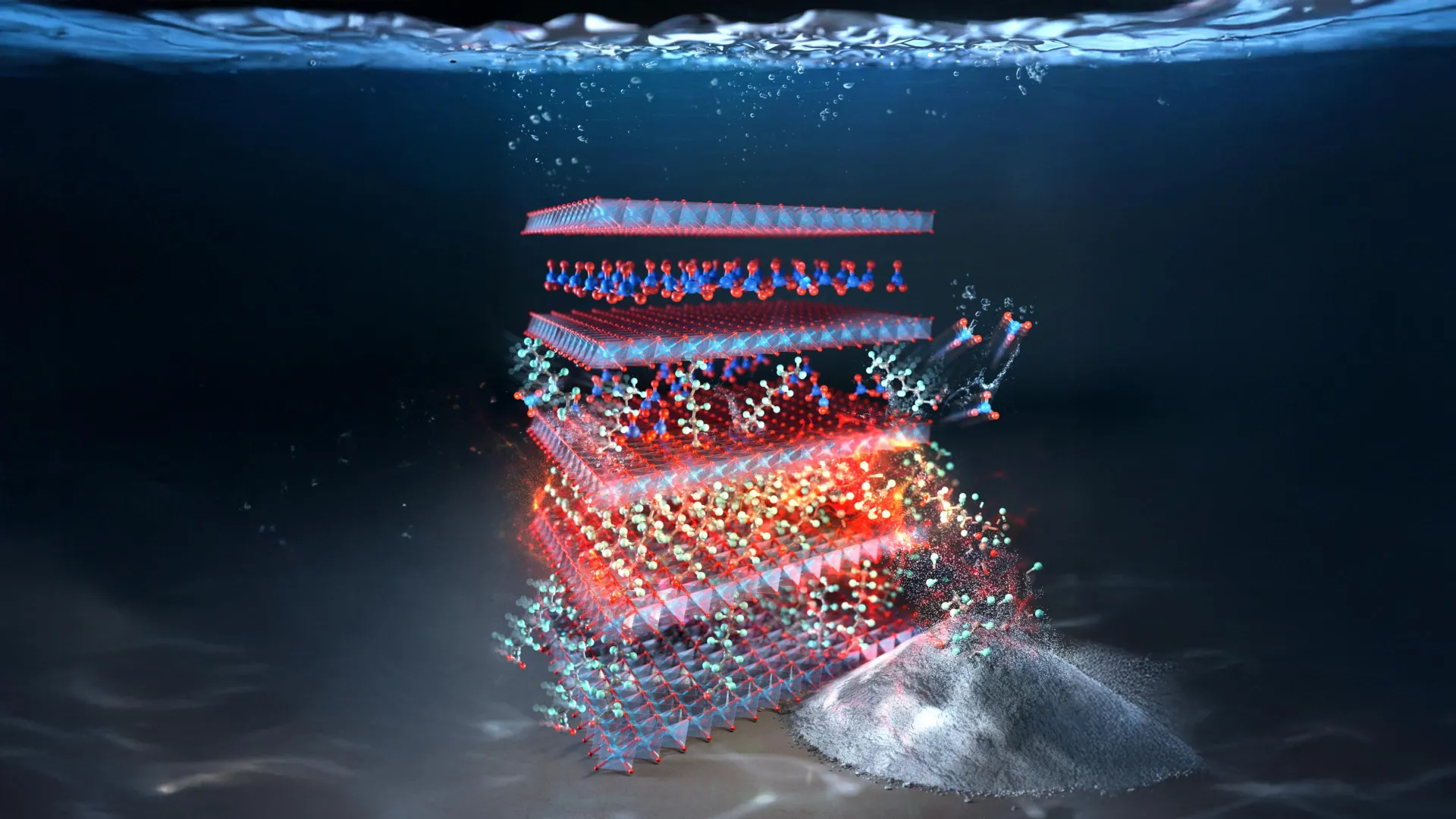
Researchers at Rice University have developed a rapid, eco-friendly technology using layered double hydroxide (LDH) materials to efficiently capture and destroy 'forever chemicals' (PFAS) in water, with potential for reuse and application in municipal and industrial water treatment.
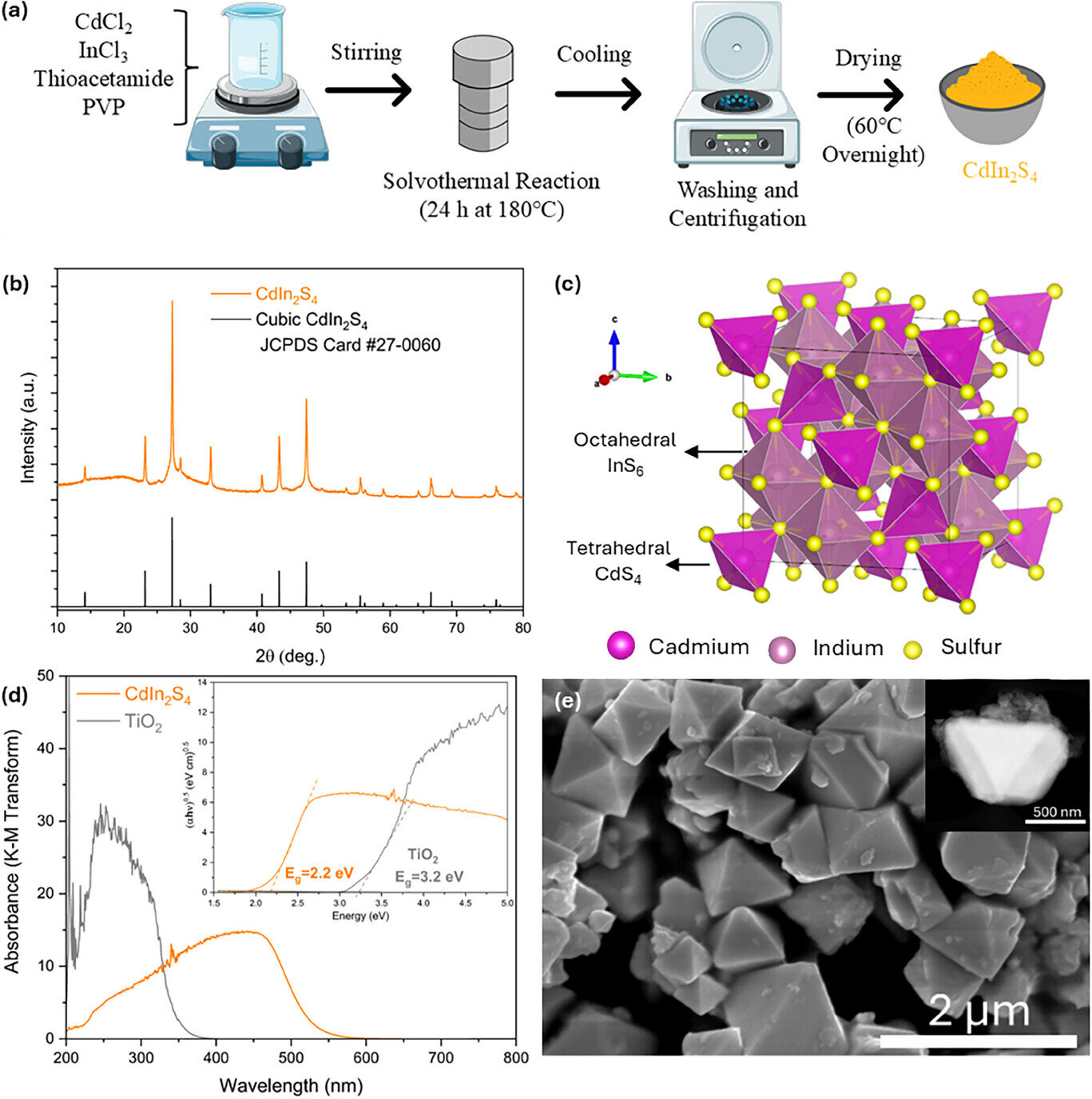
Researchers at the University of Adelaide have developed a sunlight-activated material that can break down harmful PFAS chemicals in water into harmless fluoride, offering a promising low-energy solution for environmental cleanup and water safety.
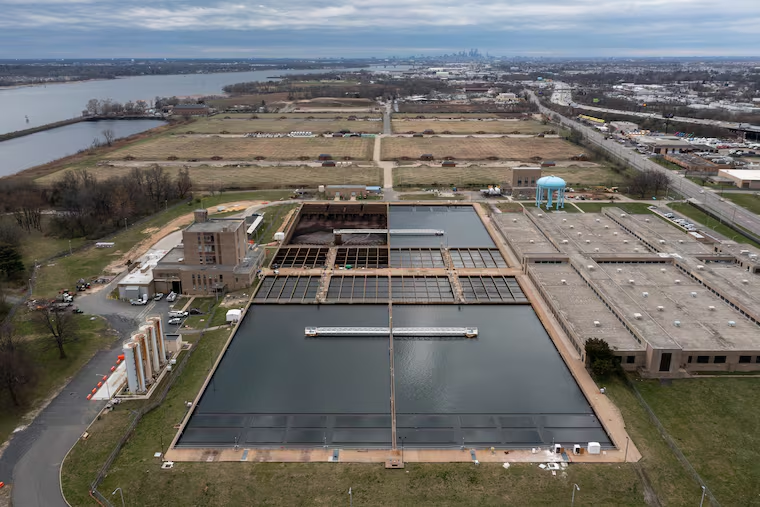
During a strike by city water workers, over 100 Philadelphia Water Department supervisors are working 24/7 shifts, including overtime and double pay, to ensure the city's water remains clean and flowing, relying on emergency training and city-funded accommodations amid ongoing contract negotiations.
Research shows that iron powder is significantly more effective than activated carbon in removing PFOS from water, and its effectiveness persists even when rusted, opening new possibilities for large-scale water purification technologies.
A newly identified chemical byproduct, chloronitramide anion, has been found in the drinking water of about a third of U.S. homes, raising concerns about its potential toxicity. This byproduct forms when water is treated with chloramine, a common disinfectant. Although its health effects are unknown, its similarity to other toxic chemicals warrants further investigation. The discovery highlights the ongoing challenge of balancing water disinfection with potential health risks from byproducts. Researchers emphasize the need for more studies to determine the chemical's safety.
A new study has highlighted the health risks posed by 2,6-DHNPs, a group of disinfection byproducts resistant to traditional water purification methods. These contaminants were found to be significantly more toxic than regulated DBPs, causing severe heart damage in zebrafish embryos. The study emphasizes the urgent need for advanced water purification technologies to effectively remove these pollutants and safeguard public health, as the contaminants surviving water treatment processes can lead to severe health outcomes in exposed organisms.
Jacob Printz and his uncle, Steve Wilcenski, founded Invicta Water after Jacob's mother, Michelle, passed away from breast cancer believed to be caused by PFAS-contaminated drinking water. Invicta Water has developed a cost-effective and efficient system that uses boron nitride and UV light to destroy PFAS particles in water without toxic byproducts. The process is estimated to be 75% cheaper than current systems used by water treatment plants. Invicta is planning to pilot large-scale applications for water treatment and industrial use, as well as developing at-home versions of the system. The founders hope to prevent others from experiencing the heartbreak they faced with Michelle's death.
The city of Hamilton in Alabama has resumed treating its water supply after a broken dam left it too muddy to treat for nearly two days. The city and surrounding communities had to conserve water, resulting in school and business closures. The source of the problem was a broken dam on private property north of Hamilton, which was located with the help of the Alabama Law Enforcement Agency's helicopter. Free water will be distributed to residents to help them cope with the intense heat, and the mayor expects things to return to normal by Sunday.
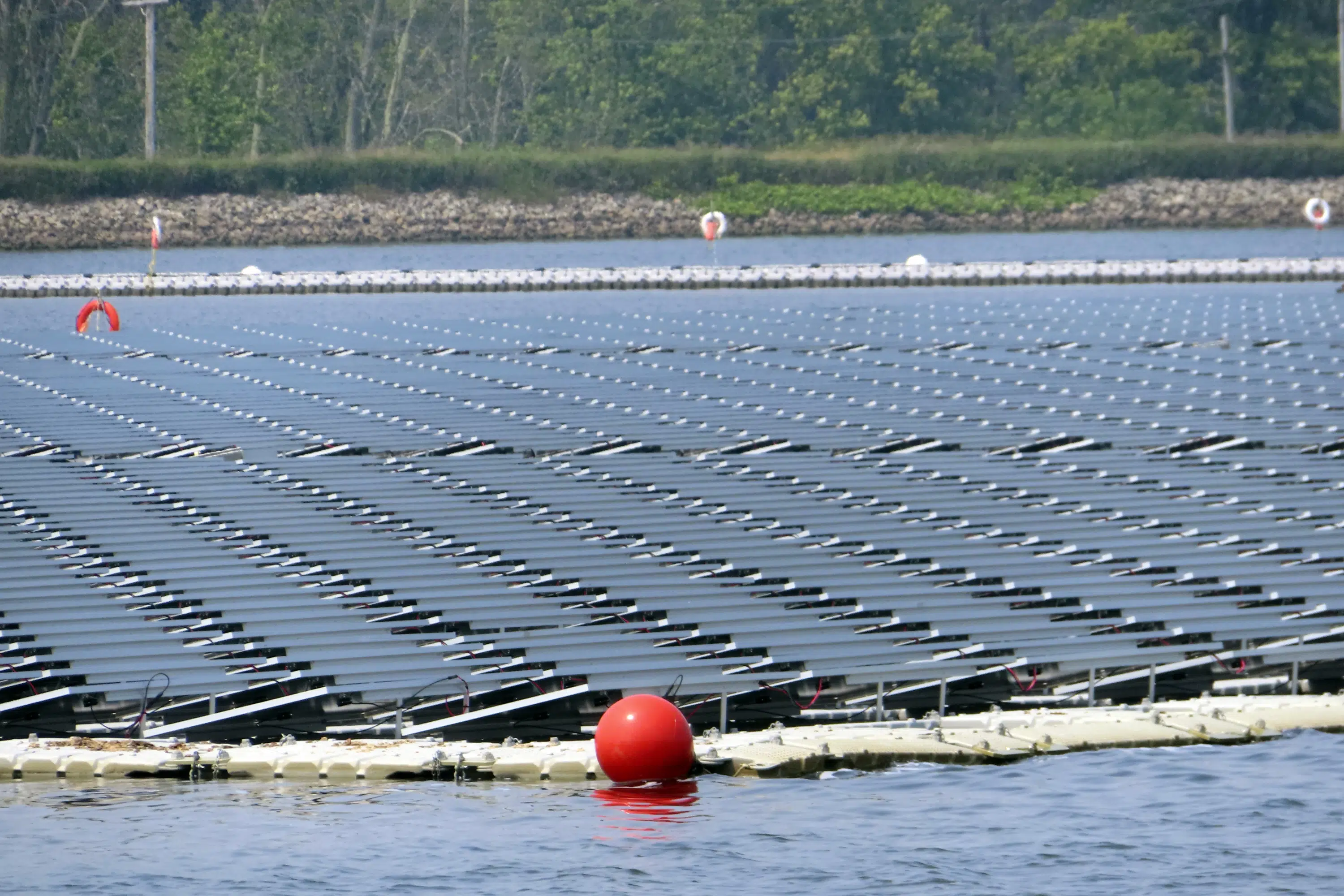
New Jersey American Water Company partnered with NJR Clean Energy Ventures to build the largest floating solar array in North America, consisting of 16,510 solar panels on the surface of the Canoe Brook Reservoir. The 17-acre solar array produces 8.9 megawatts of electricity, enough to power 1,400 homes, and provides 95% of the water treatment plant's energy requirements. Floating solar arrays are starting to catch on in the US, and a study published in March found that thousands of cities could generate an amount equal to all their electricity demand using floating solar.
New Jersey American Water Company partnered with NJR Clean Energy Ventures to build the largest floating solar array in North America, consisting of 16,510 solar panels on the surface of the Canoe Brook Reservoir. The 17-acre solar array produces 8.9 megawatts of electricity, enough to power 1,400 homes, and provides 95% of the water treatment plant's energy requirements. Floating solar arrays are starting to catch on in the US, and a study found that thousands of cities could generate an amount equal to all their electricity demand using floating solar.
A malfunction at a Lake Oswego water treatment facility caused 500,000 gallons of non-disinfected wastewater to flow into the Willamette River near Foothills Park. The public is advised to avoid the river in the area for two days due to the possibility of increased bacteria in the water. The wastewater had undergone most stages of treatment except for the final step of adding disinfectant, which failed and was repaired at 5:30 a.m. The City of Portland is working with Lake Oswego to replace the aging wastewater plant.
Philadelphia Water Department officials were unable to switch to a clean water source to serve much of the city if a key water treatment plant became contaminated during a recent chemical spill. The incident highlights the need for infrastructure investments in drinking water and other infrastructure in the US. Achieving full redundancy within a drinking water system is difficult and expensive, but Philadelphia is striving for it with its 25-year Water Revitalization Plan, which includes several projects that would allow the Water Department to serve the entire city with water from just the Schuylkill River or just the Delaware River, indefinitely.