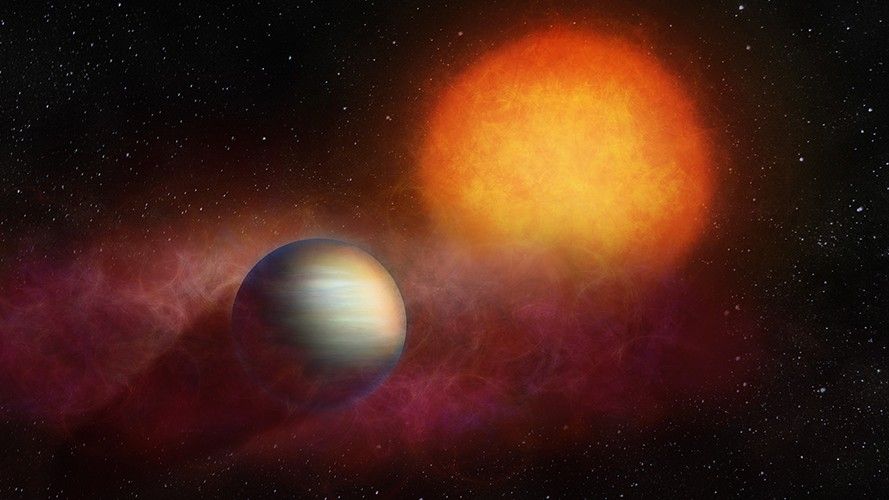
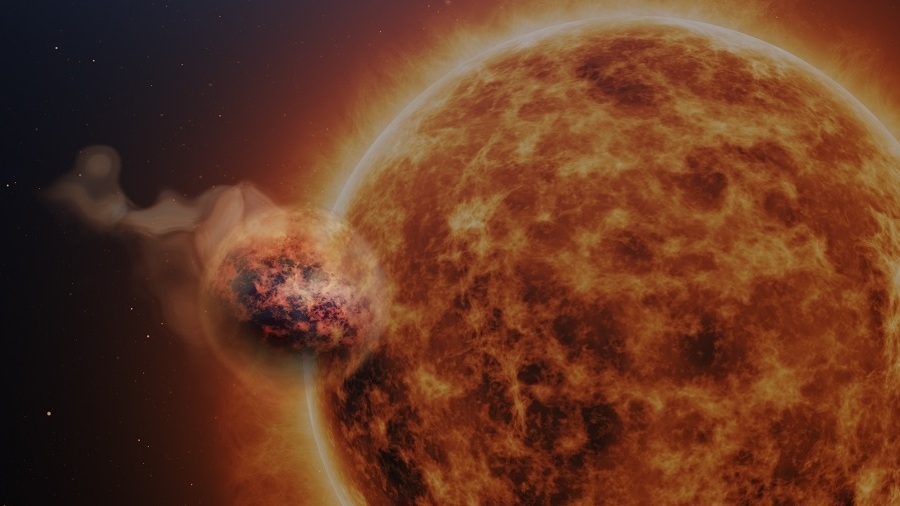
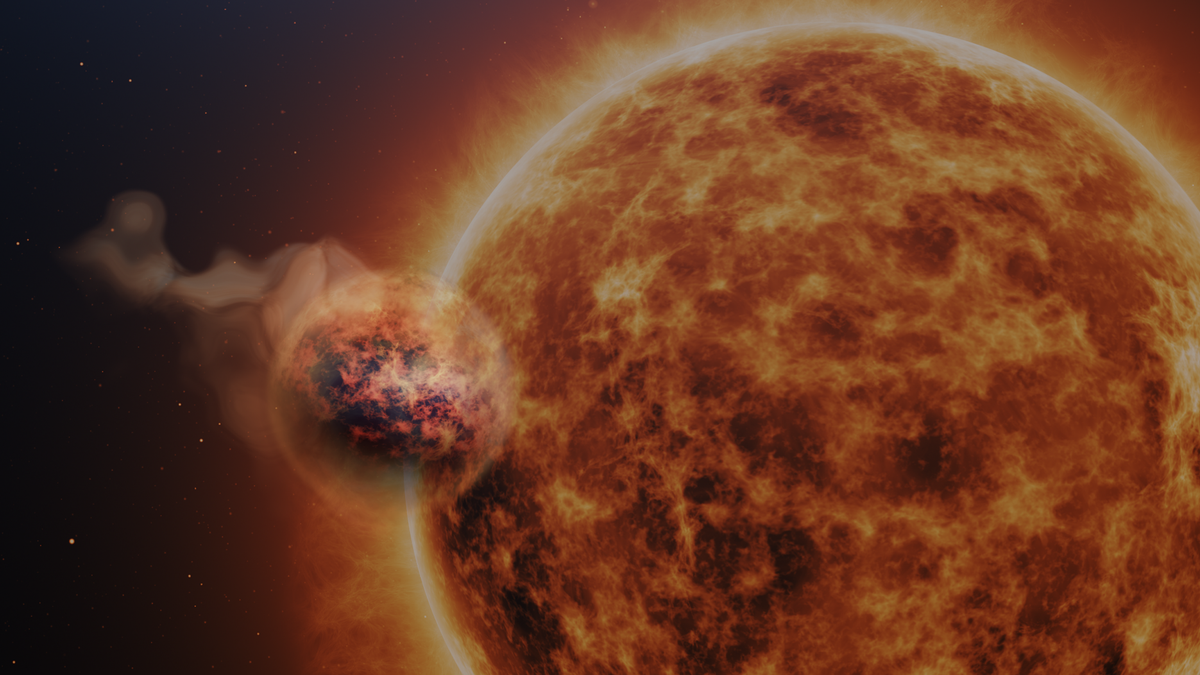
The James Webb Space Telescope observed a 'super-puff' exoplanet, WASP-107b, shedding its atmosphere in real time, revealing a massive helium cloud ahead of the planet, which provides insights into atmospheric evaporation and planetary evolution.
The JWST observed the 'super-puff' exoplanet WASP-107b, which is losing its helium-rich atmosphere rapidly as it orbits close to its star, providing insights into atmospheric escape processes on distant worlds.
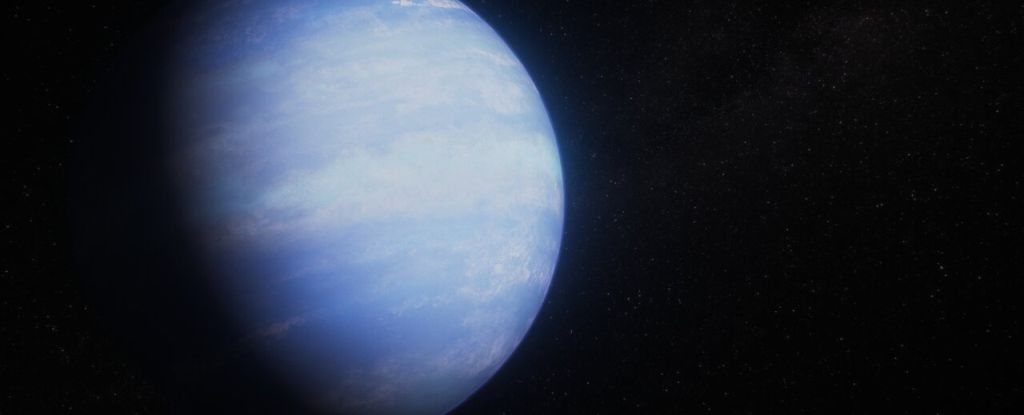
The James Webb Space Telescope has provided a detailed look at the exoplanet WASP-107b, revealing that its low methane atmosphere and high internal temperature explain its unusually low density. This new data suggests that WASP-107b has a much larger core than previously thought, aligning with existing planetary formation models and negating the need for radical revisions. The findings indicate that the planet's elliptical orbit and resulting gravitational stress likely contribute to its internal heat.
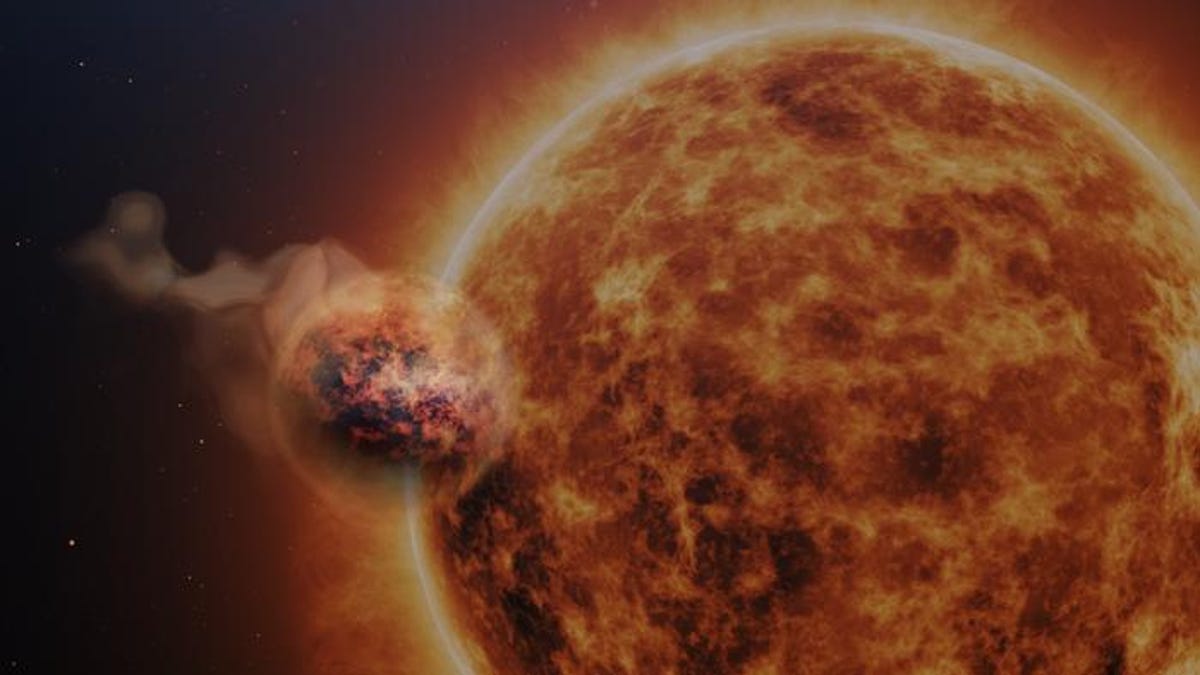
European astronomers using NASA's James Webb Space Telescope have made new discoveries about the exoplanet WASP-107b. The observations reveal that the Neptune-like gas giant has scorching hot temperatures, sandy clouds high in the atmosphere that can fall like rain onto its surface, and a complex chemical composition including water vapor and sulfur dioxide. The absence of methane suggests a warm interior, and the presence of silicate sand clouds indicates a "fluffy" composition. The findings reshape our understanding of planetary formation and evolution, shedding new light on our own solar system.
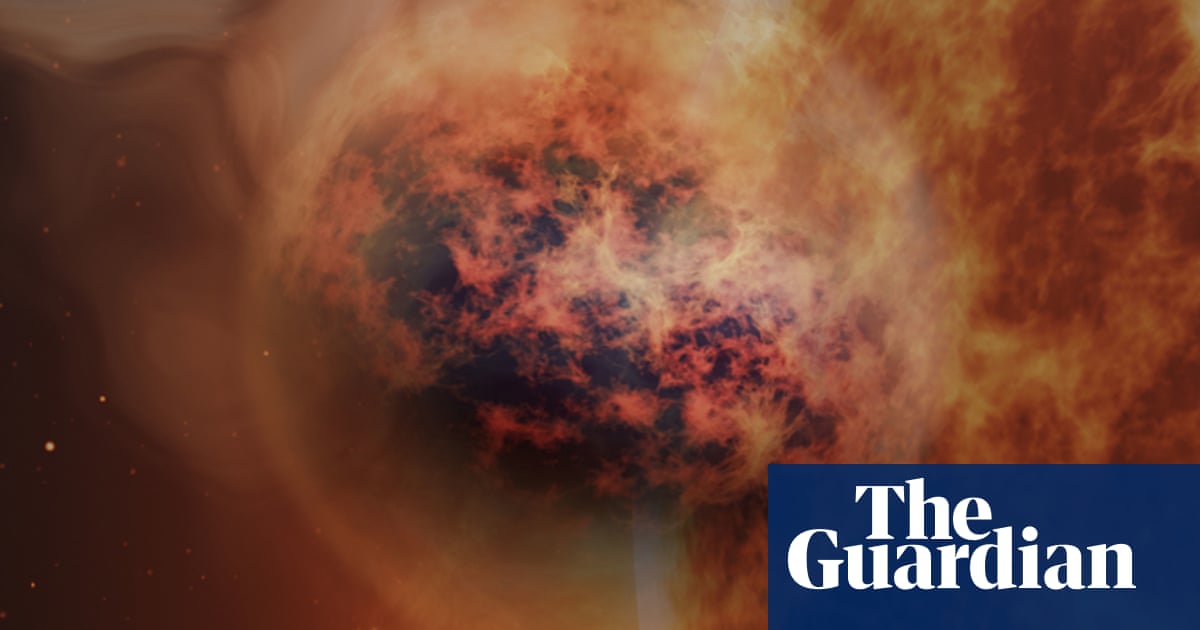
NASA's James Webb space telescope has made groundbreaking observations of an exoplanet called Wasp-107b, located 200 light years away, revealing a planet where it rains silicate sand. The planet, nicknamed the "candy floss" planet, features scorching temperatures, raging winds, and the smell of burnt matches due to the presence of sulphur dioxide. The latest observations also identified water vapor and silicate sand clouds in the planet's atmosphere. Wasp-107b, similar in mass to Neptune but the size of Jupiter, provides valuable insights into the atmospheres of distant planets and expands our understanding of the potential diversity of life beyond Earth.
Observations by the James Webb Space Telescope (JWST) suggest that the gas giant planet WASP-107b has clouds made of tiny bits of sand. The sand acts like water on Earth, falling towards the planet's hotter interior and evaporating back up to form clouds. This discovery reveals the existence of bizarre clouds beyond our solar system and provides valuable insights into the atmospheric composition of distant planets. The JWST's ability to detect infrared light and make precise measurements has allowed scientists to confirm the presence of sand clouds on WASP-107b, challenging previous assumptions and paving the way for further exploration of otherworldly cloud formations.
The Webb Space Telescope has discovered a Neptune-like gas giant called WASP-107b, located 211 light-years away from Earth. The telescope detected water vapor, sulfur dioxide, and sand-like silicate clouds in the planet's atmosphere. WASP-107b's less dense constitution allowed astronomers to study its atmosphere in greater detail than is possible with Jupiter. The discovery of sand clouds and sulfuric skies on this exoplanet reshapes our understanding of planetary formation and evolution. The Webb Space Telescope's observations of exoplanets are providing valuable insights into the diversity of worlds and the search for habitable planets beyond our solar system.