
"NASA's James Webb Telescope Uncovers Exoplanet with Sand Clouds and Surprising Atmosphere"
TL;DR Summary
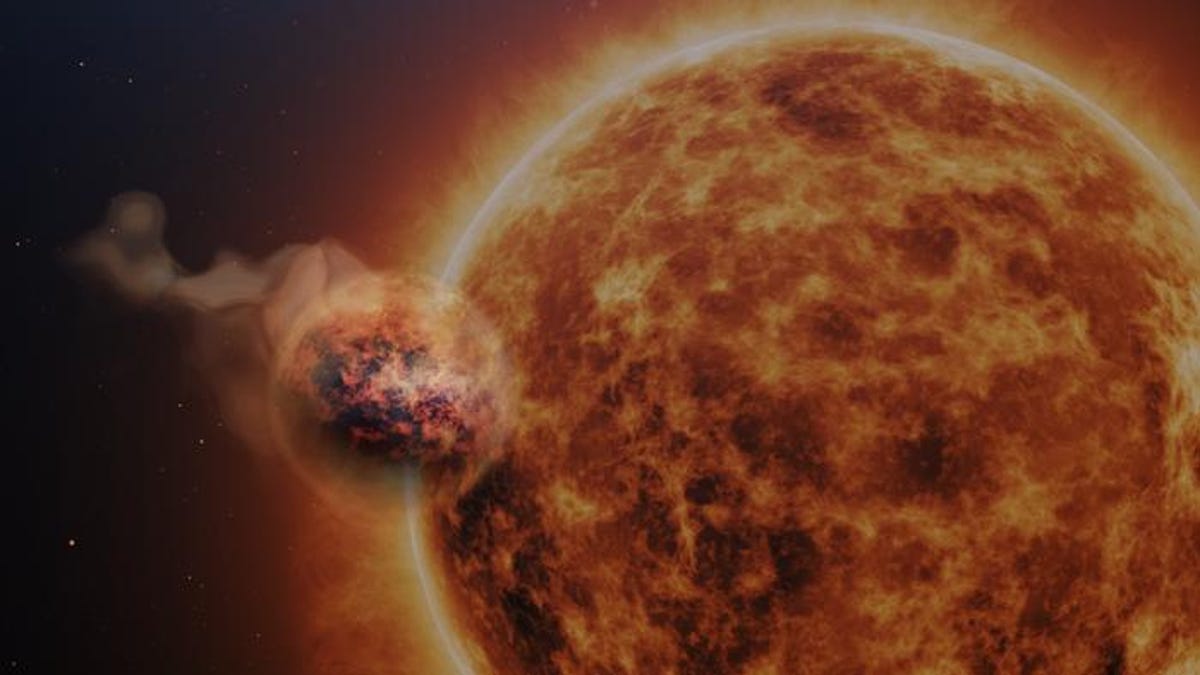
European astronomers using NASA's James Webb Space Telescope have made new discoveries about the exoplanet WASP-107b. The observations reveal that the Neptune-like gas giant has scorching hot temperatures, sandy clouds high in the atmosphere that can fall like rain onto its surface, and a complex chemical composition including water vapor and sulfur dioxide. The absence of methane suggests a warm interior, and the presence of silicate sand clouds indicates a "fluffy" composition. The findings reshape our understanding of planetary formation and evolution, shedding new light on our own solar system.
Topics:top-news#astronomy#atmospheric-composition#exoplanet#james-webb-space-telescope#sand-clouds#wasp-107b
- NASA telescope reveals scorching planet WASP-107b has sand clouds USA TODAY
- Why 'cotton candy' exoplanet has experts fascinated CTV News
- James Webb Space Telescope Has Discovered Something On a Nearby Exoplanet That Could "Reshape Our Understanding" of Planetary Evolution The Debrief
- James Webb spots exoplanet with sand clouds and sulfur-filled skies BGR
- An Exoplanet Where It Rains Sand Science Friday
Reading Insights
Total Reads
0
Unique Readers
8
Time Saved
3 min
vs 4 min read
Condensed
88%
739 → 90 words
Want the full story? Read the original article
Read on USA TODAY