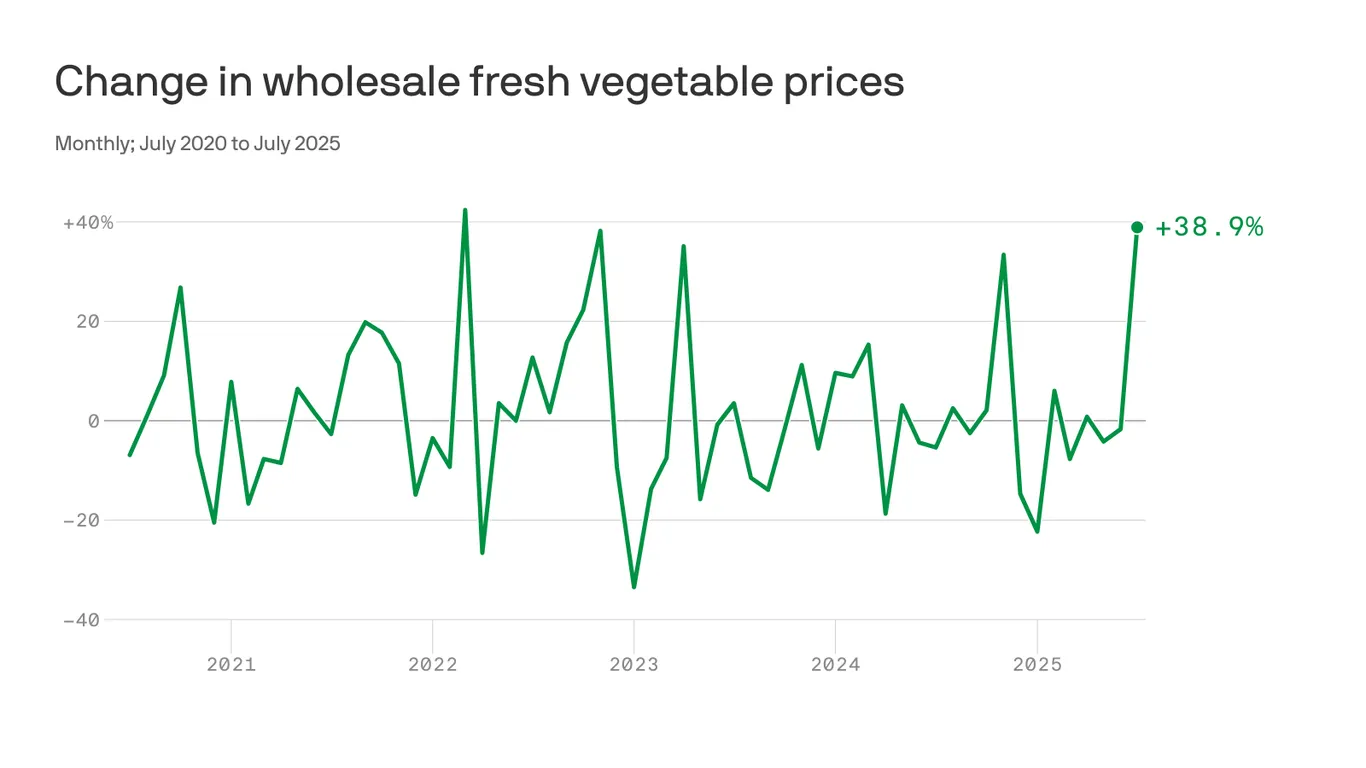
Wholesale vegetable prices in the U.S. surged by 38% in July, sparking debate over whether tariffs, weather, supply chain issues, or labor shortages are responsible. While some experts suggest tariffs may contribute, others point to weather and supply disruptions. Despite the wholesale increase, consumer vegetable prices remained stable in July, but a sustained rise could lead to higher grocery bills in the future, with potential increases exceeding 10%.
Wholesale vegetable prices have surged by nearly 39%, driven by factors such as market volatility, climate change, labor shortages, and tariffs on imports, which could lead to higher consumer prices in the coming months.
Wholesale vegetable prices in the U.S. surged to record levels in July, driven by tariffs and import issues, signaling potential increases in grocery store prices and inflation concerns for consumers.
Frozen fruit and vegetable prices in the US have surged by almost 12% over the past year, while the cost of fresh produce has seen minimal increases. This discrepancy can be attributed to climate change and extreme weather conditions, such as heavy rainfall and drought in California, which have caused problems for farmers. Additionally, factors like the war in Ukraine, labor cost increases, and disruptions in the supply chain have contributed to the shortage of ingredients for frozen goods. These challenges are expected to impact farmers' profitability and result in higher prices for consumers.