Elon Musk claims that AI and robotics will be the key to solving the US debt crisis within three years by significantly boosting productivity, potentially leading to a world where work is optional and poverty is eliminated through advanced automation like his Optimus robot.
President Joe Biden has reached a deal with Senate Democrats and Republicans to raise the US debt ceiling, avoiding a potential default. However, the deal comes at a cost, with Democrats agreeing to a compromise that will fund the government only until December 3, 2021, and Republicans refusing to support any increase in spending. The US debt crisis remains a contentious issue, with both parties continuing to debate the best course of action.
The possibility of a US debt crisis is causing concern in financial markets, with the potential consequences being described as "frightful." The US government's ability to pay its creditors on time is crucial to the smooth functioning of the global financial system, and any default could cause havoc across a range of markets. While negotiations to increase the amount the US government can borrow are ongoing, a default could lead to a deep recession in the US and sink the global economy. The dollar and US Treasuries may enjoy some protection due to their outsized role in international trade and finance, but the fallout from a US default would still be severe.
Economist Jeffrey Sachs argues that the US debt crisis is largely fueled by nonstop wars since the start of the century, including Afghanistan, Iraq, Syria, Libya, Yemen, and Ukraine, which have cost over $8 trillion. Sachs criticizes both parties for not addressing the elephant in the room, which is the massive US military budget, and instead proposing cuts to government programs for the poorest people. He also highlights the bipartisan support for wars of choice and lies, driven by the military-industrial complex and neoconservatives, and warns of the risks of a potential war with China. Sachs calls for negotiations to stop the Ukraine war and reduce the military budget to save lives, the world, and the budget.
A default on the US federal debt could have severe consequences for the global economy, with orders for Chinese factories drying up, Swiss investors suffering losses, and Sri Lankan companies unable to deploy dollars. Even a breach of the debt limit for no more than a week could wipe out roughly 1.5 million jobs in the US. If a government default were to last much longer, the consequences would be far more dire, with US economic growth sinking, 7.8 million American jobs vanishing, borrowing rates jumping, the unemployment rate soaring, and a stock-market plunge erasing $10tn in household wealth.
The US is facing a debt crisis that could have a devastating impact on small businesses, with 65% of them believing they would be negatively affected by a default. Small businesses that contract directly with the federal government, service government properties, and rely on government services would be the first to feel the impact. The longer-term effects could be even more devastating, with credit and financial markets becoming volatile and banks limiting financing to only the most secure customers. Small business owners should prepare by hoarding cash, confirming credit availability, and communicating with customers, suppliers, employees, and partners.
Bitcoin and Ether prices edged higher, with Litecoin leading the gainers among the top 10 non-stablecoin cryptocurrencies. Bitcoin's transaction fees increased due to network congestion caused by the popularity of Bitcoin Ordinals and new BRC-20 memecoins Pepe and Floki. Ether maintained the key support level of $1,800 after its blockchain developers added updates to fix performance issues. Meanwhile, U.S. investors fear a possible debt default, causing U.S. equity futures to edge down.
The potential of a US debt default crisis is beginning to worry Americans, with a new survey revealing that the "debt crisis standoff" is one of the factors contributing to a decline in consumer sentiment. Since consumers are already feeling gloomy about the economy, the fallout from a debt default could be even worse. Treasury Secretary Janet Yellen recently circled June 1 as the first potential day the US may not be able to satisfy all its obligations. A default on US obligations would produce an economic and financial catastrophe, Yellen said.
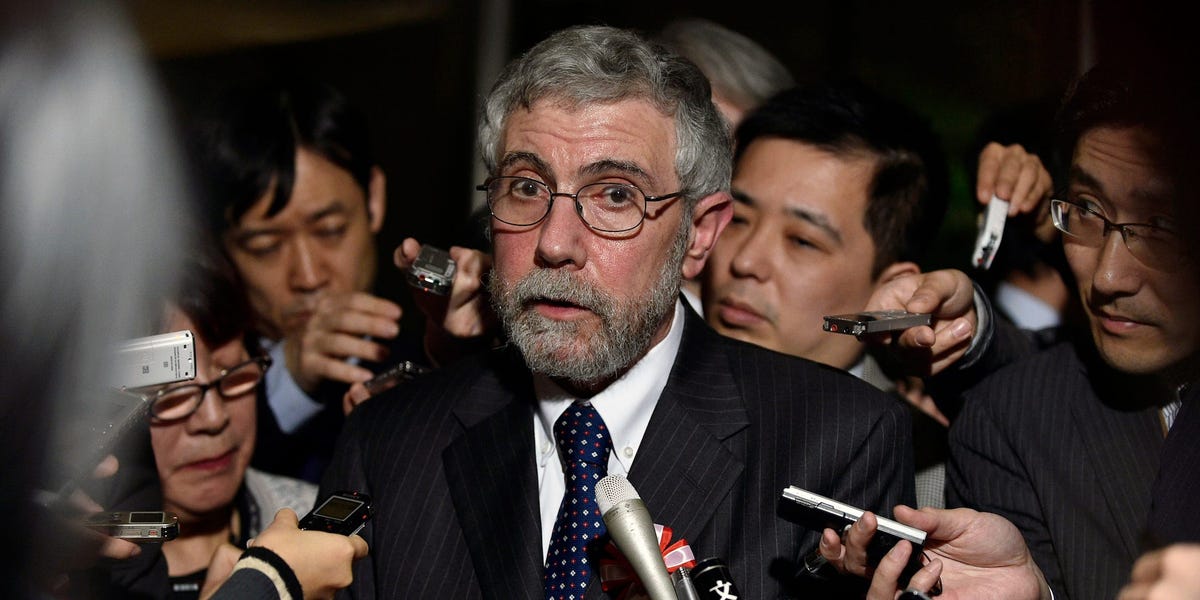
Nobel laureate Paul Krugman suggests that minting a $1 trillion platinum coin to pay bills and prevent a US debt crisis wouldn't worsen inflation, as the Fed would likely sell $1 trillion worth of government bonds to offset any inflationary effects. Krugman thinks the government is more likely to issue "premium bonds" to avoid default than mint a $1 trillion coin. The projected deadline for the US debt default is approaching, with no signs of progress on a deal to lift it.