Tag

Universes Expansion

All articles tagged with #universes expansion

science2 years ago

Unraveling the Universe's Expansion: The Role of Cosmic Voids

A recent study proposes that the "Hubble tension," a discrepancy in measurements of the universe's expansion rate, can be resolved using the alternative MOND theory of gravity. This theory suggests that local matter density variations account for the observed discrepancies. The study, conducted by researchers from the Universities of Bonn and St. Andrews, suggests that irregularities in the distribution of matter, such as "bubbles" of under-density, could explain the faster expansion of the universe in our vicinity. By using a modified theory of gravity called MOND, the researchers found that the Hubble tension disappears, providing a possible solution to this cosmological mystery.
astronomy2 years ago

Unveiling the Universe's Expansion: Could a Giant Void Hold the Answer?

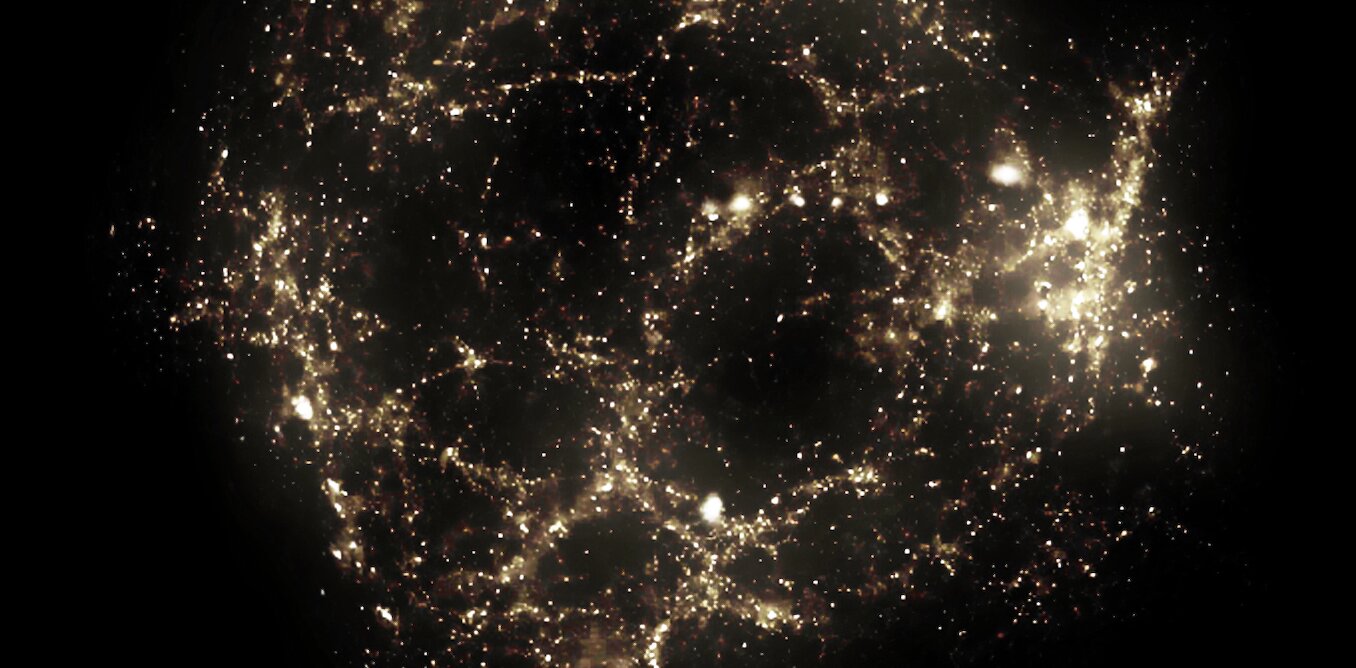
Researchers propose that we live in a giant void in space, which could explain the discrepancy in the rate of the universe's expansion known as the Hubble tension. The void, with below-average density, would cause outflows of matter that inflate local measurements. This theory is based on an alternative model called Modified Newtonian Dynamics (MOND), which suggests that gravity behaves differently in weak gravitational fields. Recent observations of galaxy velocities support this idea, showing a quadruple speed compared to the standard model. These findings challenge the current understanding of cosmology and may require a revision of Einstein's theory of gravity.

science2 years ago

Cracking Einstein's Puzzle: Decoding the Universe's Accelerating Expansion

Astronomers have discovered that the universe's expansion is accelerating, likely due to dark energy. However, there are inconsistencies in expansion rate measurements, known as the Hubble tension, which challenge current models. The leading theory, Lambda CDM, explains the acceleration and expansion rate but doesn't fully align with observations. Researchers are exploring modifications to the model and new ideas to explain the Hubble tension, including evolving dark energy models, interacting dark energy-dark matter models, and modified gravity models. However, none of these solutions have fully explained the tension, suggesting a need to study the early universe for a better understanding.

space-science2 years ago

Unveiling the Secrets of Dark Matter and the Universe's Expansion: Euclid's Discovery

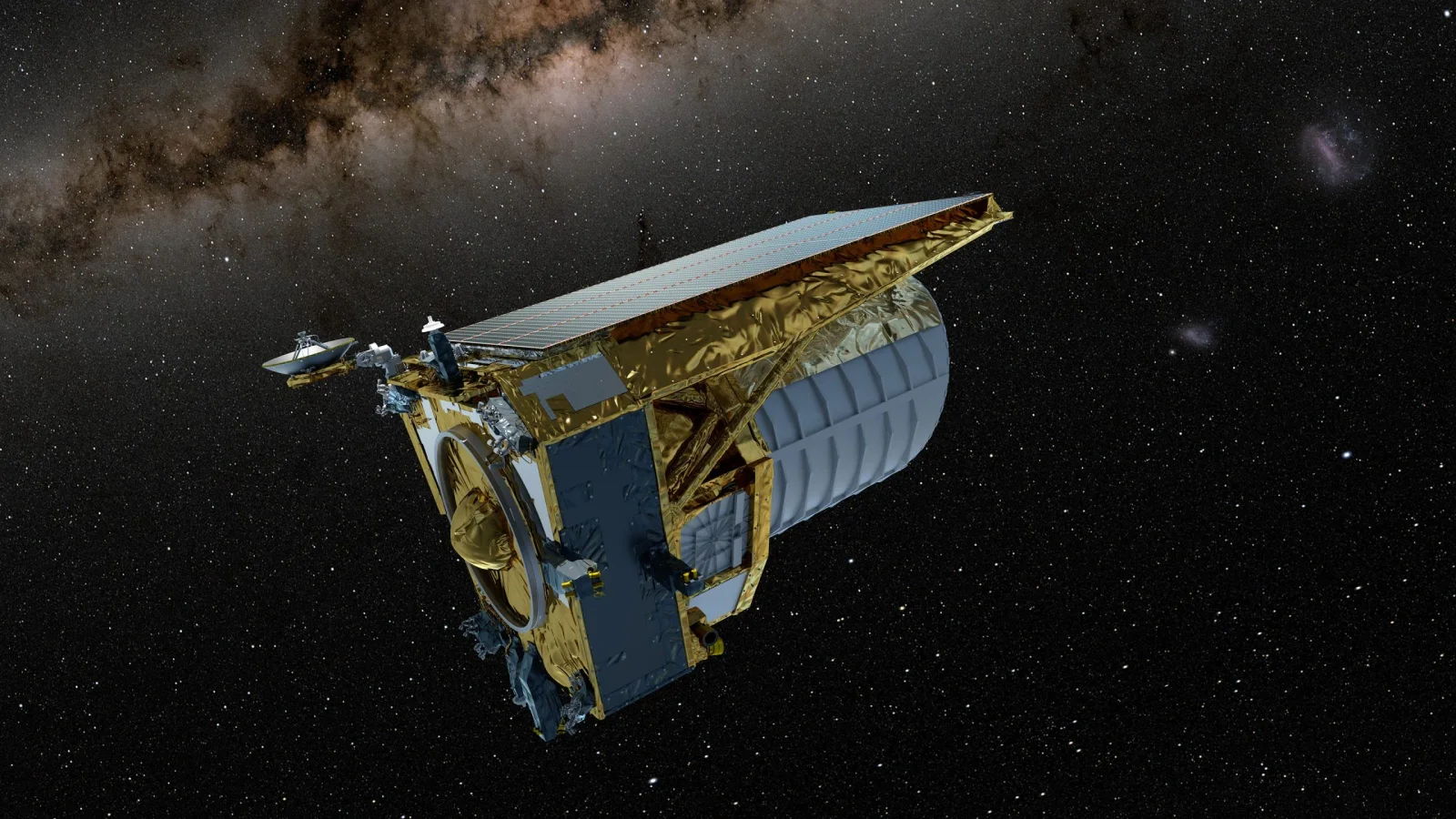
The Euclid spacecraft, a joint mission between the European Space Agency (ESA) and NASA, has successfully captured its first test images, indicating that it is on track to achieve its scientific goals. Euclid's mission is to explore the mysteries of the universe, including the nature of dark matter and the reason behind the universe's accelerating expansion, known as dark energy. The spacecraft will catalog billions of distant galaxies to create the largest-ever 3D map of the sky. With NASA's contributions, including the design and fabrication of the sensor-chip electronics, the mission is expected to provide valuable insights into the cosmos.

science2 years ago

"Scientists Push the Boundaries of Physics with Einstein and Euler's Theories"

Researchers at the University of Geneva have developed a new method to test the theories of Euler and Einstein by considering the measure of time distortion, aiming to explain the phenomena of dark matter and the acceleration of the Universe's expansion. This method, which examines the validity of Euler's and Einstein's equations, could help determine whether new forces or matter that violate these theories exist in the Universe. The findings have potential implications for missions such as the EUCLID space telescope and the Dark Energy Spectroscopic Instrument, which aim to understand the origin of the Universe's expansion and the nature of dark matter.

astronomy2 years ago

Revolutionary Measurement of Universe's Expansion Settles Cosmic Debate.

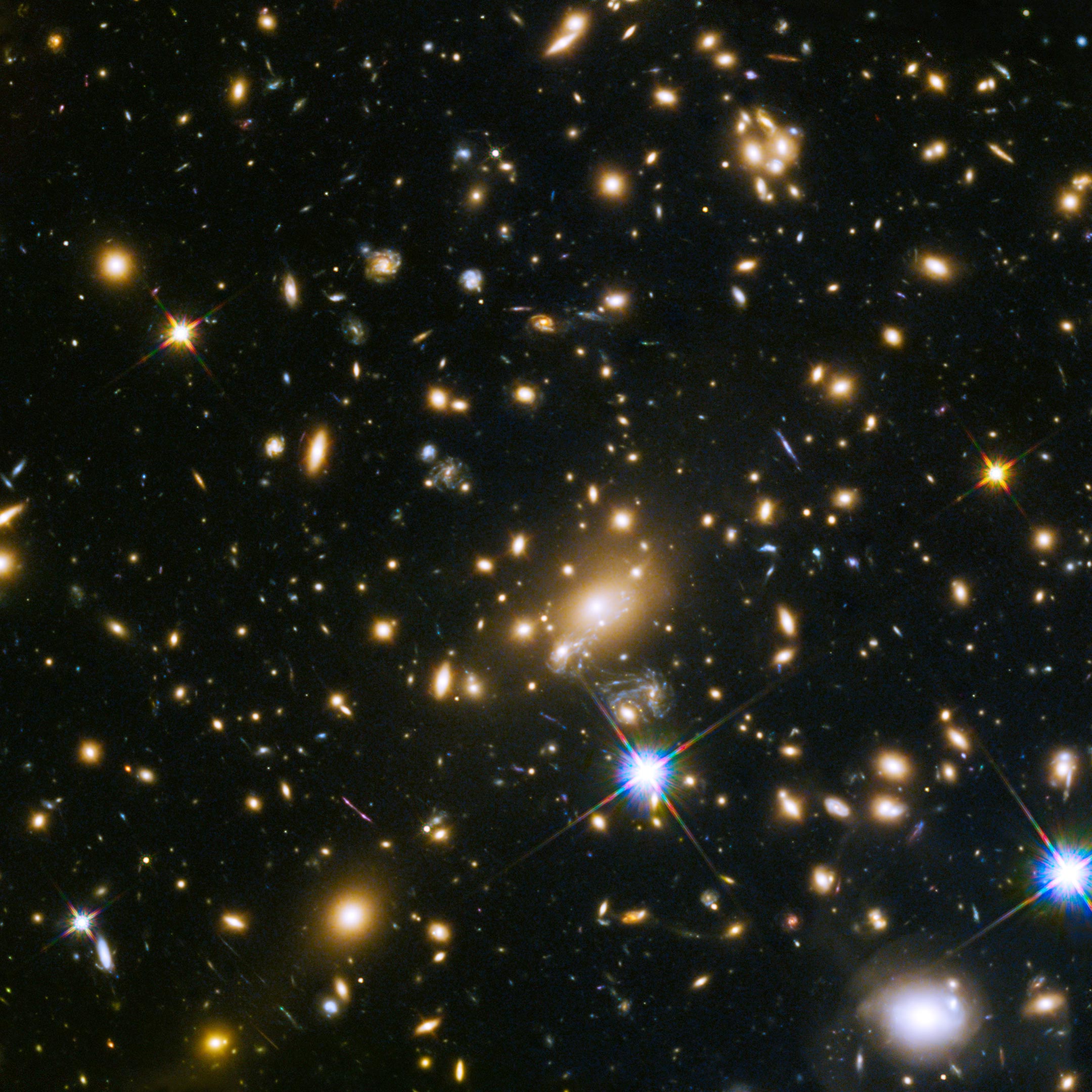
University of Minnesota-led researchers have used a first-of-its-kind technique to measure the expansion rate of the Universe, providing insight that could help more accurately determine the Universe’s age and help physicists and astronomers better understand the cosmos. By using data from a magnified, multiply-imaged supernova, the researchers were able to measure the Hubble Constant using a theory developed in 1964 by Norwegian astronomer Sjur Refsdal that had previously been impossible to put into practice. The researchers’ findings don’t absolutely settle the debate, but they do provide more insight into the problem and bring physicists closer to obtaining the most accurate measurement of the Universe’s age.