Tag

Terrestrial Planets

All articles tagged with #terrestrial planets

The Potential for Life After Death: The Dilemma of Sun-like Stars.
astronomy2 years ago

The Potential for Life After Death: The Dilemma of Sun-like Stars.

Astronomers have discovered an intact Jupiter-mass planet orbiting a white dwarf, raising questions about the existence of terrestrial, Earth-like planets around white dwarfs. While white dwarfs have habitable zones, they are much smaller than those around main sequence stars. The discovery of a massive gas giant around a white dwarf suggests that rocky planets may be rare in this population. However, the presence of rocky debris disks indicates the existence of small terrestrial planets. Further research is needed to determine the true population of planets around white dwarfs and their potential for habitability.
The Potential for Life on White Dwarfs: A Planetary Mystery
astronomy2 years ago

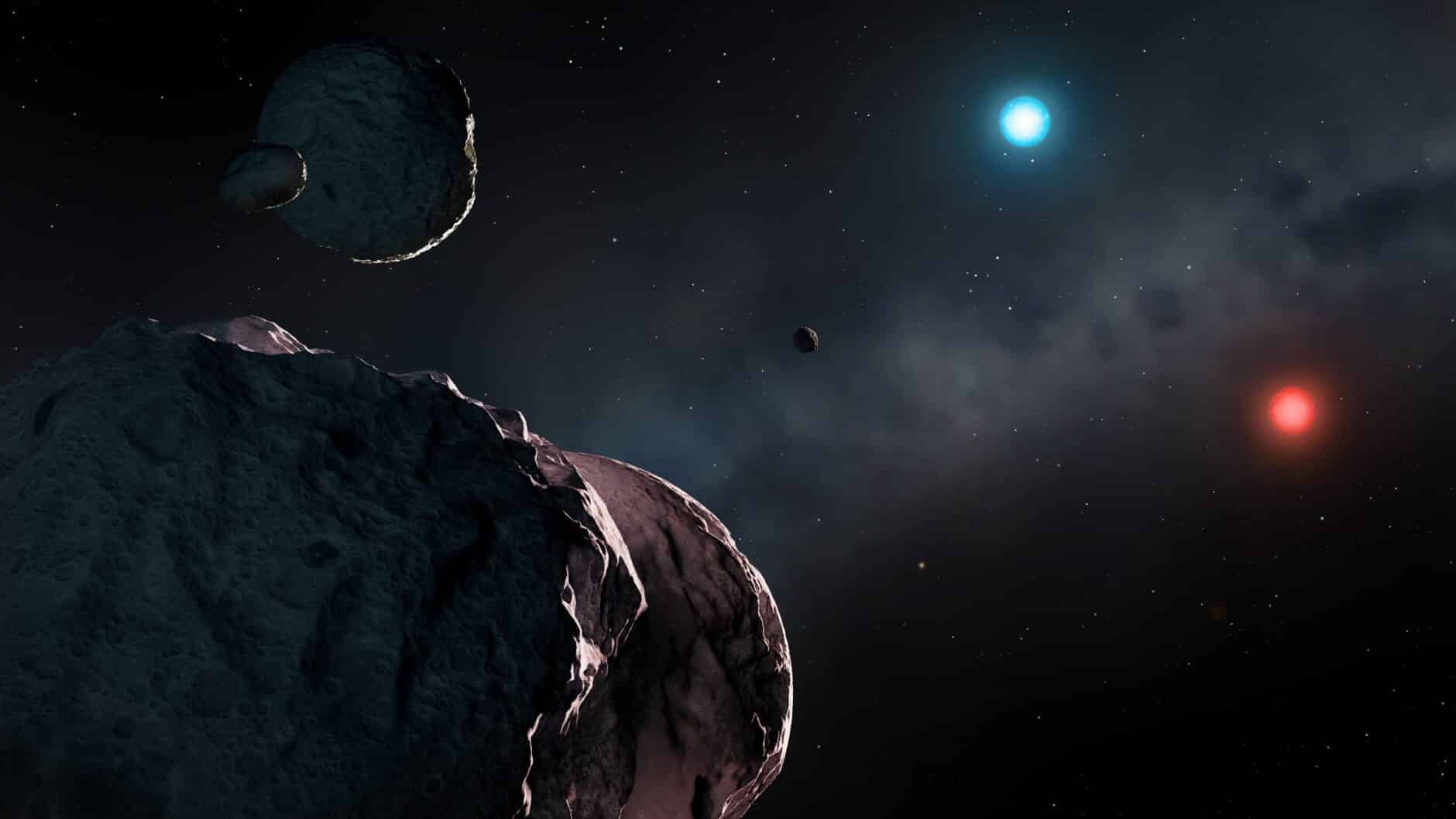
The Potential for Life on White Dwarfs: A Planetary Mystery

Astronomers have discovered an intact Jupiter-mass planet orbiting a white dwarf star, raising questions about the existence of other planets around white dwarfs. While white dwarfs can have habitable zones, rocky white dwarf planets seem to be rare. The discovery of a massive gas giant around a white dwarf challenges the hypothesis that small rocky planets dominate the white dwarf exoplanet population. However, the presence of rocky debris disks suggests the existence of terrestrial planets. Further research is needed to determine the true population of planets around white dwarfs and their potential for habitability.

"Unveiling the Enigmatic Secrets of Lava Worlds: A Groundbreaking Study"
science2 years ago

"Unveiling the Enigmatic Secrets of Lava Worlds: A Groundbreaking Study"

A new study published in The Astrophysical Journal explores the properties and evolution of lava worlds, massive exoplanets with magma oceans. These planets, found close to their host stars, have extreme surface temperatures and inhospitable conditions. The study reveals that magma oceans can affect the size and structure of these planets, making them denser and impacting their mantles. Understanding lava worlds can provide insights into the evolution of terrestrial planets, including Earth. The research suggests that different compositions of magma oceans can influence the trapping of volatile elements, which has implications for habitability. Density is not the best parameter to characterize lava worlds, and scientists should focus on other factors like surface gravity.

Caltech Reveals Earth's Formation Secrets
science2 years ago

Caltech Reveals Earth's Formation Secrets

A study from Caltech reveals that the early Earth formed from hot and dry materials, suggesting that water arrived late in the planet's formation. By analyzing magmas from different layers of the Earth's interior, researchers found that the early Earth lacked volatiles, including water. This discovery challenges previous theories of terrestrial planet formation and has implications for understanding the building blocks of other planets in the solar system. The study highlights the importance of exploring inner planets like Venus and Mercury to better understand how terrestrial planets, including Earth, were formed.

Late Arrival: Earth's Water Came in the Final Stages of Formation
science2 years ago

Late Arrival: Earth's Water Came in the Final Stages of Formation

A study from Caltech reveals that the early Earth formed from hot and dry materials, indicating that water, a crucial component for the evolution of life, arrived late in Earth's formation. The research, conducted by an international team of scientists, analyzed the chemical signatures of magmas from different depths within the Earth to understand its layers. The study suggests that Earth primarily accreted from volatile-poor differentiated planetesimals and that the addition of life-essential volatiles, including water, occurred during the last 15% or less of Earth's formation. The findings contribute to our understanding of planet formation and have implications for the building blocks of other terrestrial planets like Mercury and Venus.

Controversial theory suggests fast Earth formation increases likelihood of alien life.
science2 years ago

Controversial theory suggests fast Earth formation increases likelihood of alien life.

Earth formed within just 3 million years, much faster than previously thought, according to a new study. The authors assert that this rapid genesis occurred through a theory called pebble accretion. The team determined the time scale of Earth’s formation by looking at silicon isotopes from more than 60 meteorites and planetary bodies in the vicinity of Earth, which represent the rubble leftover after planet formation. This study provides “the strongest evidence” that terrestrial planets formed via pebble accretion.