Tag

Telescope Array

All articles tagged with #telescope array

Utah Telescope Array Captures Rare Air-to-Ground Gamma Ray Burst

Originally Published 2 years ago — by Deseret News

Featured image for Utah Telescope Array Captures Rare Air-to-Ground Gamma Ray Burst
Source: Deseret News

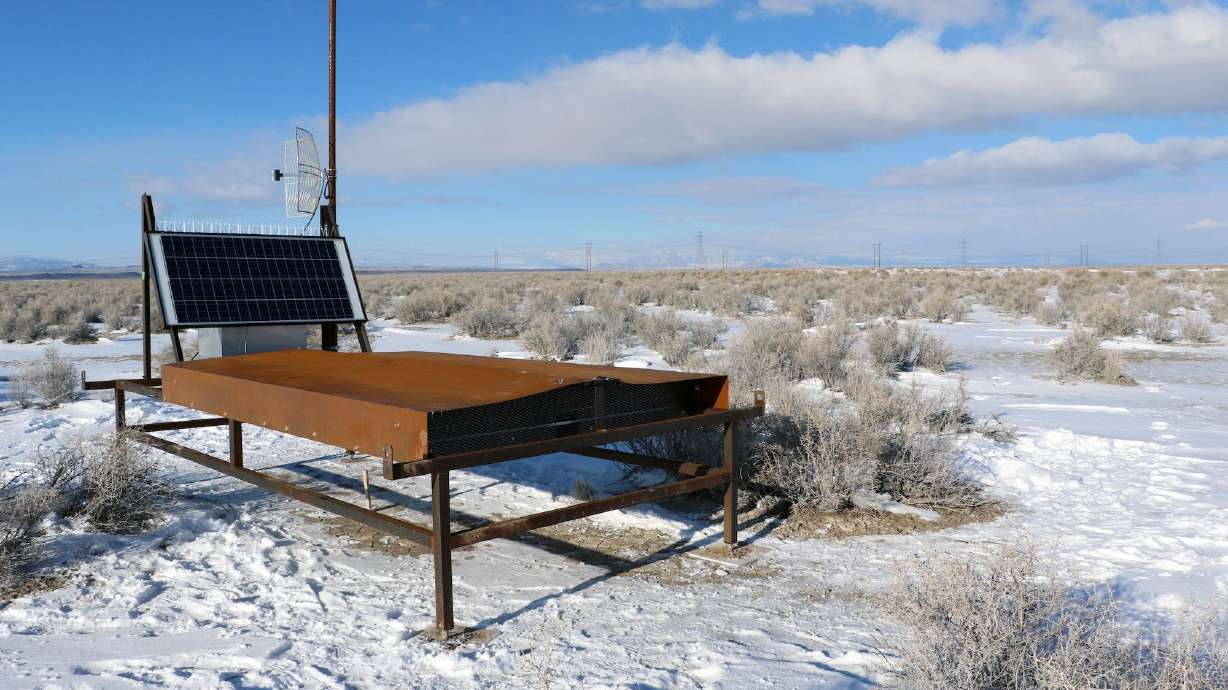
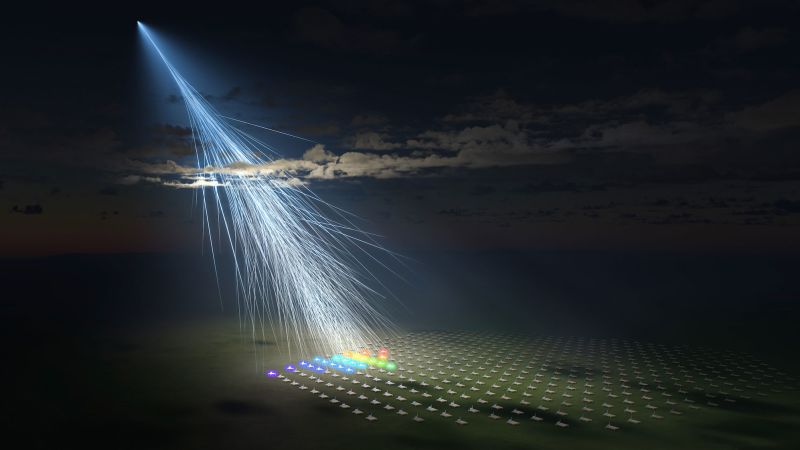
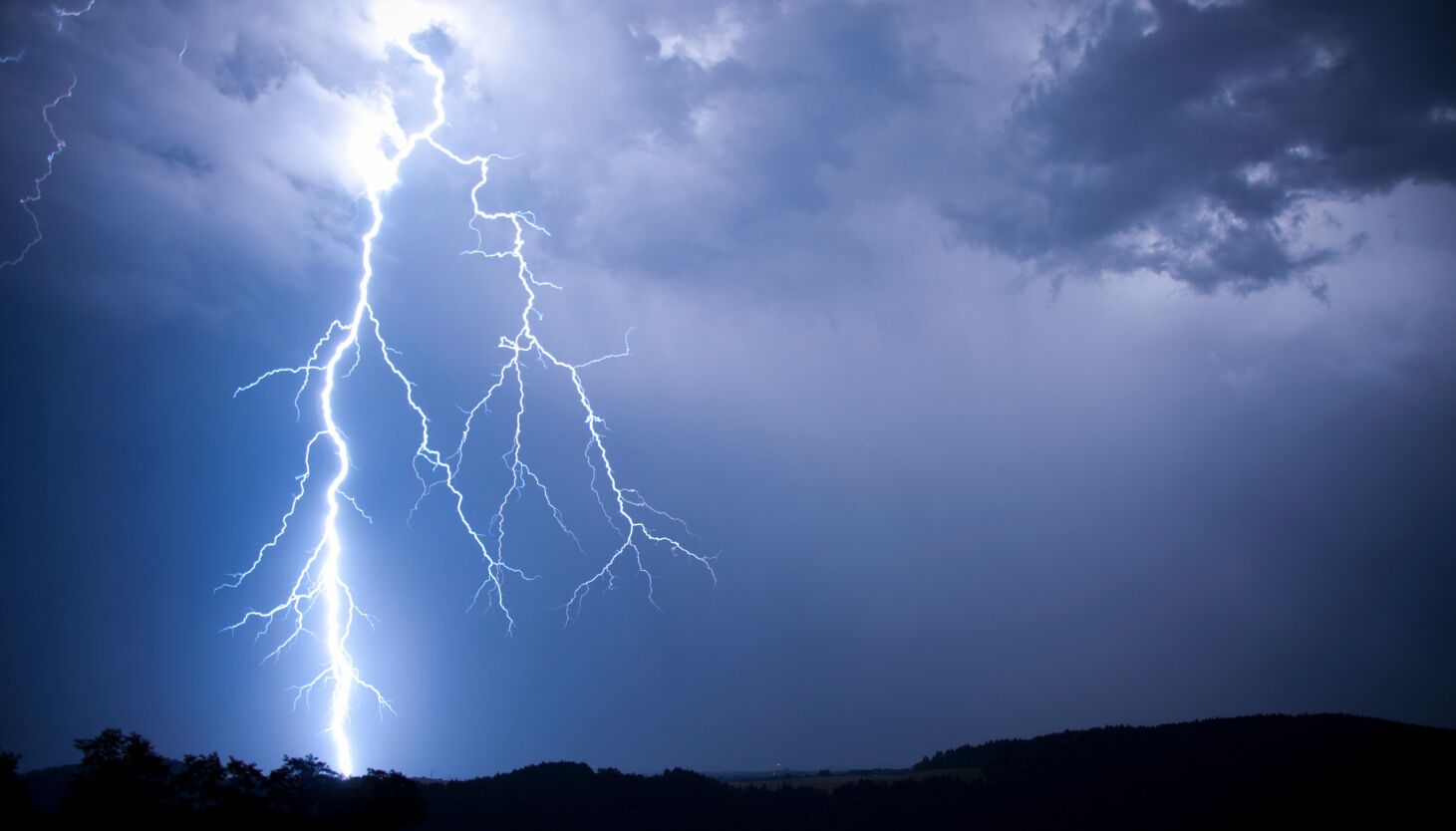
Scientists at the University of Utah captured video footage of rare air-to-ground gamma-ray bursts during a storm in Utah. Using a special camera, researchers observed how gamma rays burst downwards from cloud-to-ground lightning strikes, discovering that multiple gamma rays were produced at later lightning stages than previously thought. The rays were also associated with a pulse of optical light that had never been recorded. The findings are an important step in understanding the physics behind these downward gamma rays. The Telescope Array, which was primarily designed to observe cosmic rays, has expanded to include lightning instrumentation, opening up new possibilities for scientific discovery. However, scientists caution that gamma rays are a serious form of electromagnetic radiation that can cause harm to human cells.
Unexplained Cosmic Ray Detected in Utah's Telescope

Originally Published 2 years ago — by Yahoo News

Featured image for Unexplained Cosmic Ray Detected in Utah's Telescope
Source: Yahoo News

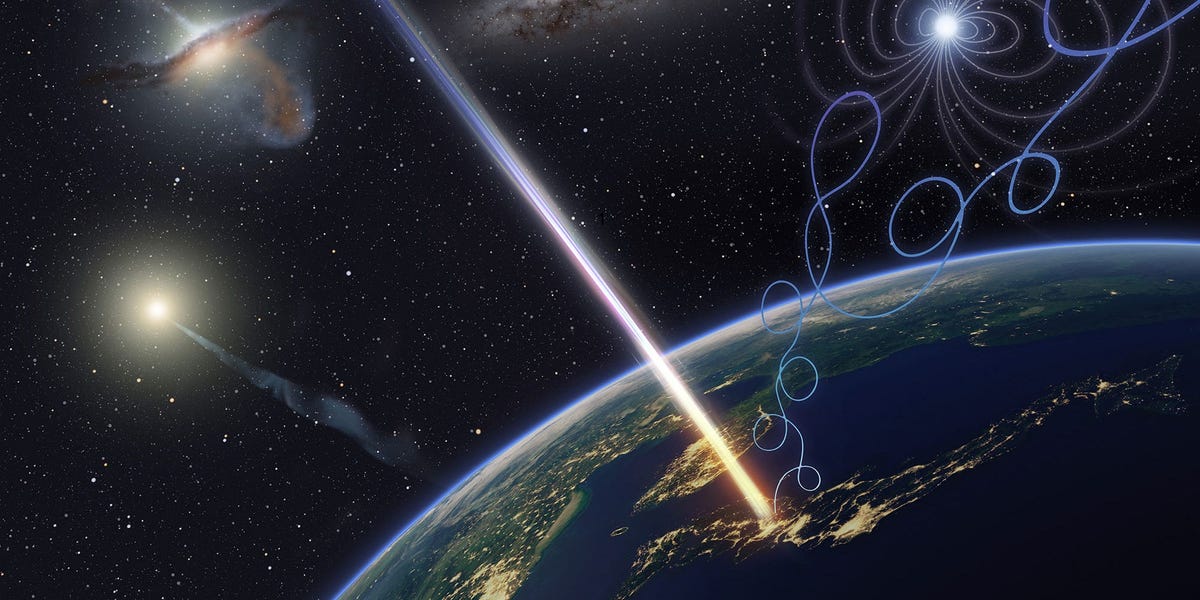
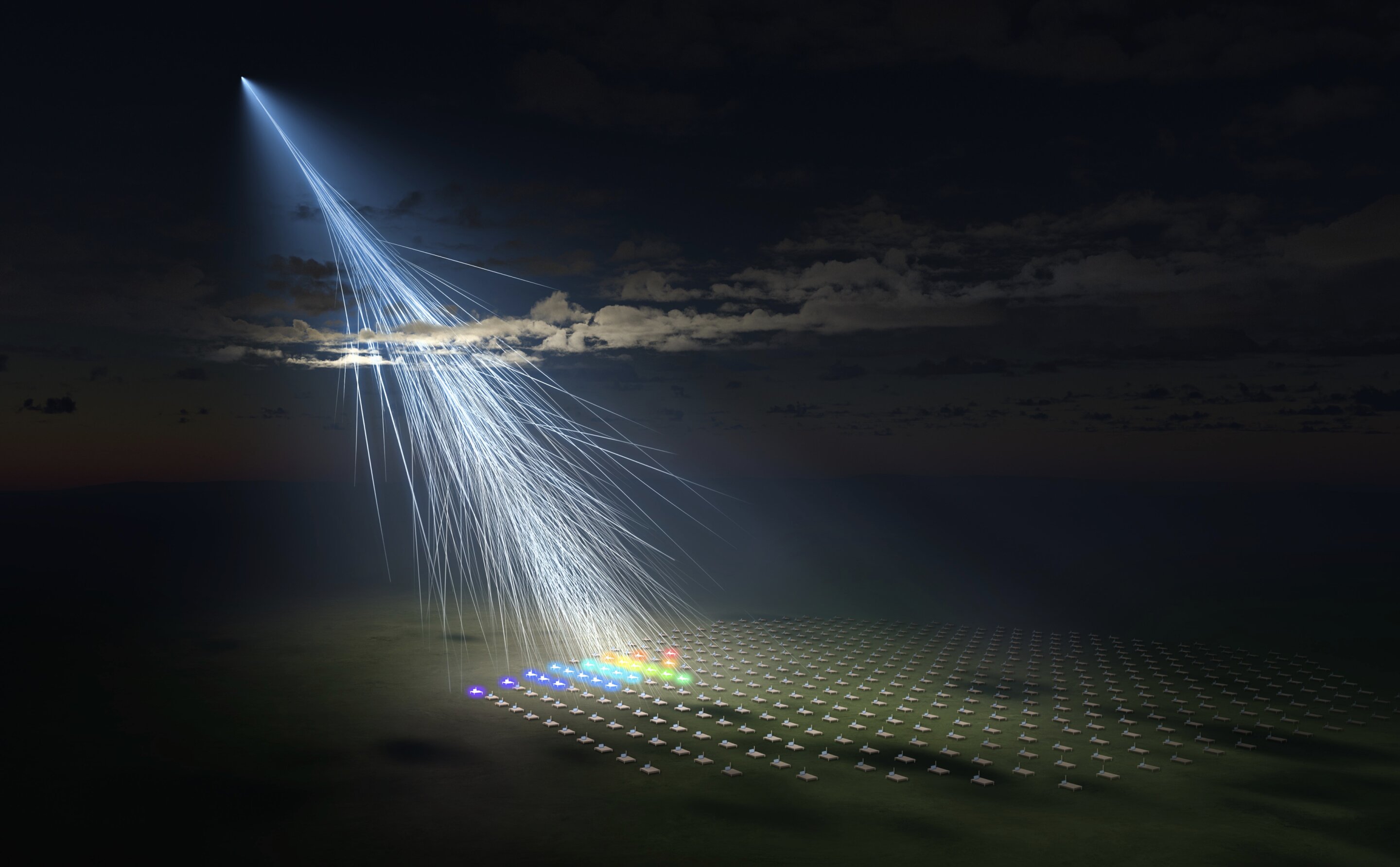
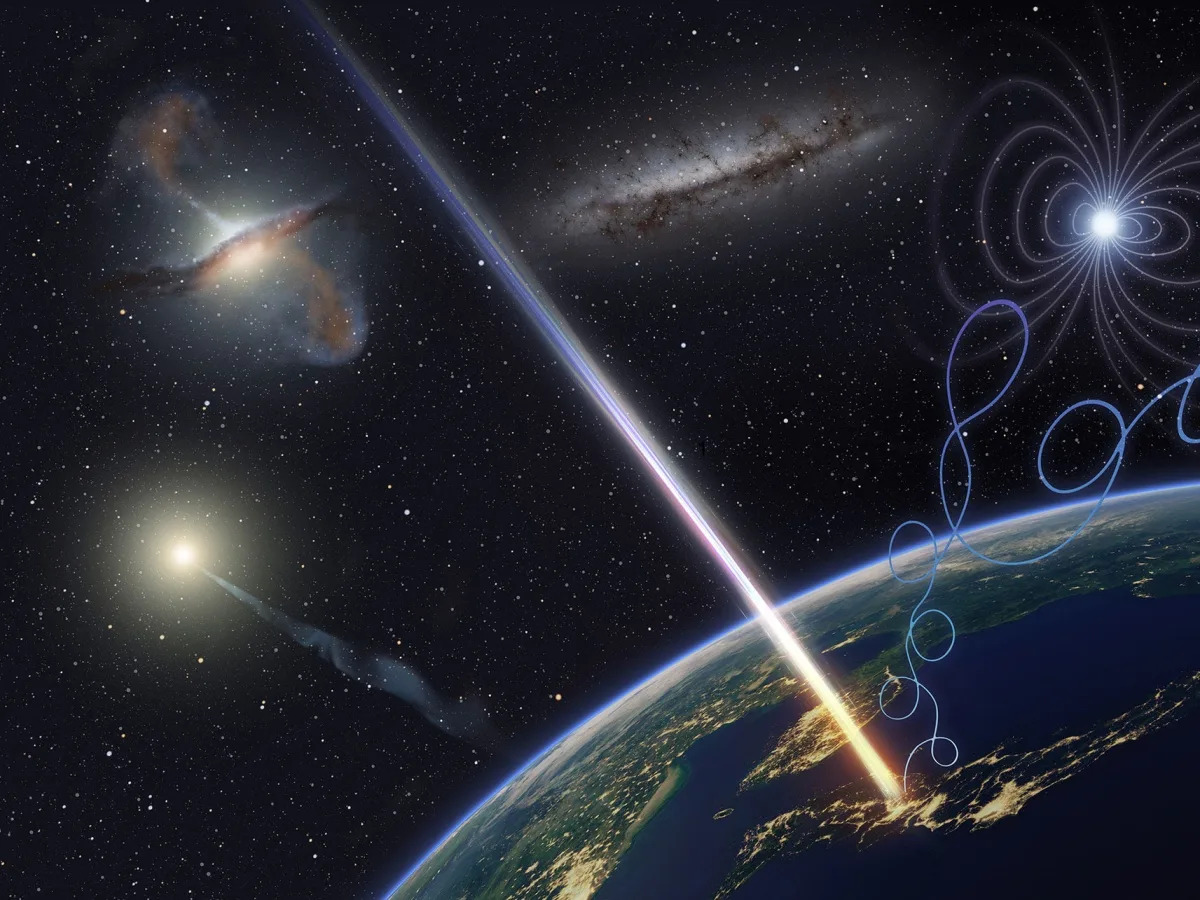
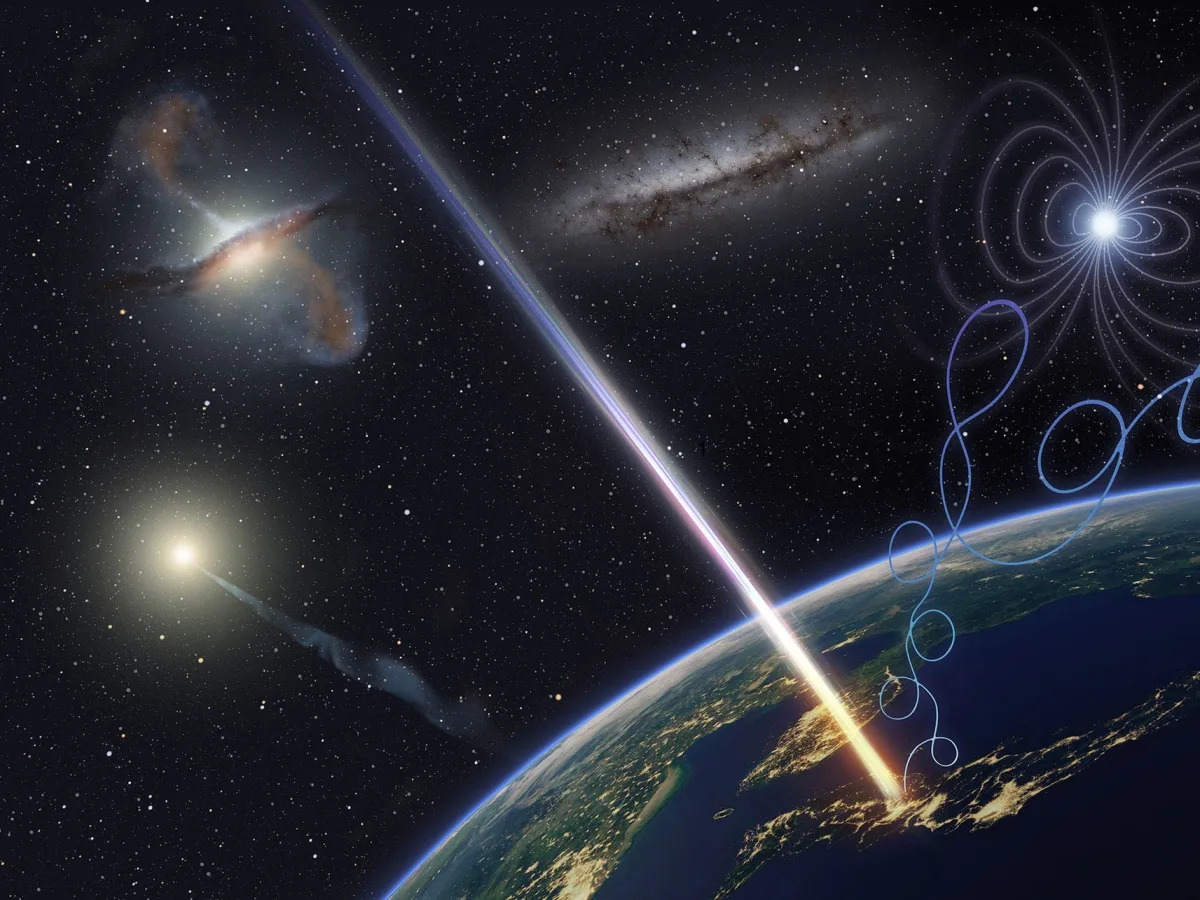
Scientists at the University of Utah and the University of Tokyo have detected a rare cosmic ray, named the "Amaterasu particle," believed to have originated from beyond the Milky Way galaxy. The particle's energy rivals that of the record-setting "Oh-My-God" particle observed in 1991. The source of these ultra-high-energy cosmic rays remains a mystery, as there is no known high-energy source capable of producing them. The Amaterasu particle is thought to have come from the Local Void, an empty region near the Milky Way. The discovery was made by the Telescope Array observatory in Utah, which aims to capture more cosmic ray events and provide further insights into cosmic phenomena.

"Utah Telescope Discovers Enigmatic Cosmic Ray from Beyond Our Galaxy"

Originally Published 2 years ago — by Yahoo! Voices

Featured image for "Utah Telescope Discovers Enigmatic Cosmic Ray from Beyond Our Galaxy"
Source: Yahoo! Voices

Scientists at the University of Utah and the University of Tokyo have detected a rare cosmic ray, named the "Amaterasu particle," believed to have originated from beyond the Milky Way galaxy. The particle's energy rivals that of the record-setting "Oh-My-God" particle observed in 1991. The source of these ultra-high-energy cosmic rays remains a mystery, as there is no known high-energy source capable of producing them. The Amaterasu particle is thought to have come from the Local Void, an empty region near the Milky Way. The discovery was made by the Telescope Array observatory in Utah, which aims to capture more cosmic ray events and provide further insights into cosmic mysteries.

"Unexplained Cosmic Ray Stuns Scientists with Possible Extraterrestrial Origins"

Originally Published 2 years ago — by Business Insider

Featured image for "Unexplained Cosmic Ray Stuns Scientists with Possible Extraterrestrial Origins"
Source: Business Insider

Scientists have discovered a rare cosmic ray, named the "Amaterasu particle," which is believed to originate from beyond the Milky Way galaxy. This ultra-high-energy particle, similar to the record-setting Oh-My-God particle, poses a mystery as its source remains unknown. While most cosmic rays come from the sun, high-energy particles like the Amaterasu particle are thought to come from other galaxies and extragalactic sources. The Telescope Array observatory in Utah detected the particle, and further expansion of the observatory aims to provide more insights into cosmic mysteries.

Unexplained Ultra-High-Energy Cosmic Ray Baffles Astronomers

Originally Published 2 years ago — by SciTechDaily

Featured image for Unexplained Ultra-High-Energy Cosmic Ray Baffles Astronomers
Source: SciTechDaily

Astrophysicists at the University of Utah and the Telescope Array have detected ultra-high-energy cosmic rays, including the newly discovered Amaterasu particle, which challenge current understanding of particle physics. These particles have energies beyond theoretical limits and their origin and propagation remain a mystery. The Telescope Array, an ongoing research project, aims to unravel the unknown cosmic phenomena behind these rare cosmic rays.

Unexplained Cosmic Ray Shocks Scientists in Utah

Originally Published 2 years ago — by USA TODAY

Featured image for Unexplained Cosmic Ray Shocks Scientists in Utah
Source: USA TODAY

Scientists are puzzled by the detection of the most powerful cosmic ray in over three decades, believed to have originated from beyond the Milky Way galaxy. Dubbed the Amaterasu particle, its exact origin remains a mystery, leading some experts to suggest unknown physics may be at play. Cosmic rays, charged particles that travel through space at close to the speed of light, provide valuable samples of matter from outside the solar system. The recently discovered cosmic ray, with an estimated energy of 240 exa-electron volts, has left scientists questioning what could produce such high energy and where these particles come from. Upgrades to the Telescope Array in Utah aim to capture more of these rare ultrahigh-energy cosmic rays and trace their origins more precisely.

Unexplained Cosmic Ray Stuns Scientists as it Hits Earth

Originally Published 2 years ago — by KSL.com

Featured image for Unexplained Cosmic Ray Stuns Scientists as it Hits Earth
Source: KSL.com

Scientists have detected an ultra-high-energy particle, believed to have originated from beyond the Milky Way galaxy, shedding light on the mysterious origins of cosmic rays. The particle, nicknamed the Amaterasu particle, was observed by the Telescope Array in Utah and has an energy equivalent to dropping a brick on your toe from waist height. These high-energy cosmic rays are thought to be related to phenomena such as black holes and gamma-ray bursts, but the exact sources remain unclear. The discovery raises questions about the nature of these particles and their origins in seemingly empty space.

Unraveling the Enigma of Powerful Cosmic Rays: Recent Discoveries and Perplexing Origins

Originally Published 2 years ago — by Phys.org

Featured image for Unraveling the Enigma of Powerful Cosmic Rays: Recent Discoveries and Perplexing Origins
Source: Phys.org

The Telescope Array experiment has detected the second-highest-energy cosmic ray ever observed, with an energy equivalent to dropping a brick on your toe from waist height. The origin and mechanism of these ultra-high-energy cosmic rays remain unknown, as they surpass the theoretical limits of known sources. Researchers speculate that these rare phenomena may follow particle physics unknown to science. The Telescope Array is expanding its detectors to capture more events and shed light on the mystery.

"Unprecedented Cosmic Ray Strikes Utah, Originating from Deep Space"

Originally Published 2 years ago — by @theU

Featured image for "Unprecedented Cosmic Ray Strikes Utah, Originating from Deep Space"
Source: @theU

The Telescope Array, a collaboration between the University of Utah and the University of Tokyo, has detected the second-highest extreme-energy cosmic ray ever observed. Dubbed the "Amaterasu particle," this subatomic particle has an energy equivalent to dropping a brick on your toe from waist height. The origin of these ultra-high-energy cosmic rays remains a mystery, as they surpass the theoretical limit for cosmic ray energy and come from seemingly empty areas of space. Researchers speculate that unknown particle physics or defects in spacetime could be responsible. The Telescope Array is expanding its detectors in hopes of capturing more events and gaining further insights into these phenomena.

Unexplained Cosmic Ray Baffles Scientists with its Immense Power

Originally Published 2 years ago — by CNN

Featured image for Unexplained Cosmic Ray Baffles Scientists with its Immense Power
Source: CNN

Scientists have detected an ultra-high-energy cosmic ray, nicknamed the Amaterasu particle, that rivals the energy of the famous "Oh-My-God" particle. These particles, which are thought to originate from other galaxies and extragalactic sources, are still not fully understood. The recently discovered particle was detected by the Telescope Array in Utah and has an energy equivalent to dropping a brick on your toe from waist height. The origins of these high-energy particles remain a mystery, with the biggest ones appearing to come from voids or empty space. The Telescope Array is expanding to capture more data and potentially provide answers about the origins of these cosmic rays.

Unraveling the Mystery of the Highest-Energy Cosmic Ray Detected

Originally Published 2 years ago — by Ars Technica

Featured image for Unraveling the Mystery of the Highest-Energy Cosmic Ray Detected
Source: Ars Technica

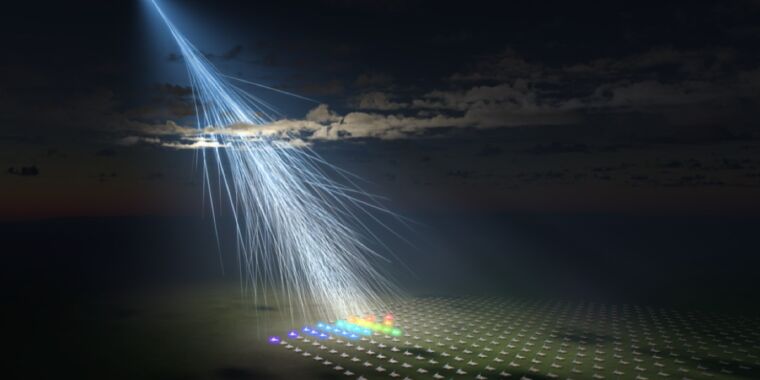
Astronomers using the Telescope Array in Utah have detected an ultra-high-energy cosmic ray (UHECR) with an energy level of 244 EeV, the highest since the famous "Oh-My-God" particle in 1991. Dubbed the "Amaterasu" particle, its origin remains a mystery, as tracing its trajectory led to an empty area of space known as the "Local Void." The detection challenges current theories on the sources of UHECRs, which could include cosmic-scale explosions, active galactic nuclei, gamma ray bursts, or starburst galaxies. The expansion of the Telescope Array may provide more insights into these high-energy particles.