Tag

Suvorexant

All articles tagged with #suvorexant

health2 years ago

Insomnia medication reduces Alzheimer's protein levels.

A drug called suvorexant, approved to treat insomnia, has been found to reduce levels of proteins associated with Alzheimer’s disease in cerebrospinal fluid in a small study. Researchers are launching a clinical trial to further test the drug in people at risk of developing dementia. The drug is a dual orexin receptor antagonist (DORA) that blocks orexin, a chemical in the brain that promotes wakefulness. The study results are encouraging, but further research is needed to understand the long-term effects of the drug on cognitive decline.

health2 years ago

Insomnia Medication Belsomra Could Combat Opioid Addiction

A preclinical study found that suvorexant (Belsomra), an insomnia drug, could be a potential treatment for opioid use disorder (OUD) in rats. Suvorexant reduced prescription opioid intake and helped protect against relapse in rats modeling OUD. If the results translate to humans in clinical trials, the insomnia drug could offer a promising approach for the millions of people who have OUD. Suvorexant was designed to inhibit the activity of both the orexin-1 and orexin-2 brain-cell receptors, which are also involved in the process of drug dependency.

health2 years ago

Sleeping pills may hold promise in reducing Alzheimer's disease proteins.

A recent study published in Annals of Neurology found that taking the sleep medication suvorexant before bed reduced the levels of Alzheimer's proteins in the spinal fluid of participants. Alzheimer's patients often experience sleep disturbances, but it's unclear whether poor sleep causes Alzheimer's or vice versa. The study included 38 participants who had no known cognitive impairments and no evidence of Alzheimer's-related changes in the brain. While the initial results are promising, longer-term studies with larger participant groups are needed to confirm the findings. The study author recommends that individuals with sleep disturbances should see their doctor and be evaluated for sleep disorders before taking any medications.

health2 years ago

Sleeping pill shows promise in reducing Alzheimer's proteins.

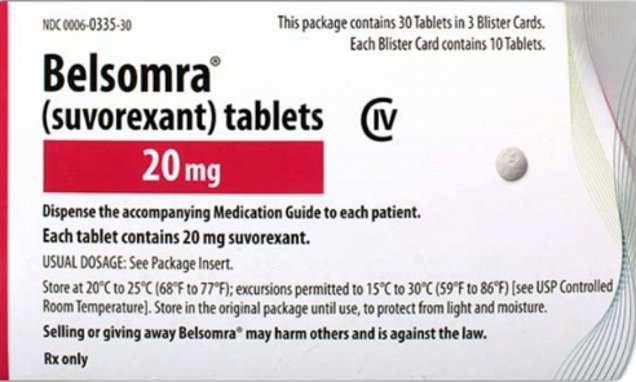
Researchers at Washington University School of Medicine in St. Louis have found that the FDA-approved insomnia pill suvorexant, also known as Belsomra, can reduce harmful proteins associated with Alzheimer's disease. The study was conducted over a two-night span and showed "proof-of-concept" that the drug affects the levels of proteins critical for driving Alzheimer's disease. Although more research is needed, the results are encouraging and suggest that daily reductions of the proteins could bolster long-term neurological health. However, long-term usage of sleeping pills, particularly in older adults, can have dangers.

health2 years ago

Sleeping Pill Reduces Alzheimer's Proteins, Study Shows

A small study suggests that the insomnia medication suvorexant could potentially reduce Alzheimer’s proteins in the brain, but more research is needed to confirm its effectiveness in preventing or slowing the disease. Participants who took a higher dose of the drug experienced a significant drop in amyloid and hyperphosphorylated tau levels. Sleep disturbances can be an early sign of Alzheimer’s disease, and poor sleep accelerates harmful changes to the brain.

health2 years ago

Sleep medication may reduce Alzheimer's pathology.

A preliminary study conducted by researchers at the Washington University School of Medicine in St. Louis has revealed that taking a particular sleeping pill known as suvorexant before bed may help reduce the levels of Alzheimer's disease proteins. The study was designed to determine if suvorexant could reduce amyloid and tau protein levels, which are associated with Alzheimer's disease. However, experts caution that it is too early to determine if the medication is effective in staving off cognitive decline.

neuroscience2 years ago

Sleeping Pills Could Halt Alzheimer's Progression, Study Suggests

A small study has shown that suvorexant, a sleep medication commonly prescribed to treat insomnia, reduced levels of the Alzheimer’s-associated amyloid beta protein and hyperphosphorylated tau protein in the brain. The study suggests that sleep medications could slow or stop the progression of Alzheimer’s disease, but more research is needed to confirm the viability of such an approach.

health2 years ago

Sleeping Pills May Prevent Alzheimer's, Study Shows.

A small proof-of-concept study by researchers at Washington University School of Medicine in St. Louis found that a sleeping pill used to treat insomnia, suvorexant, lowered Alzheimer's-associated waste proteins, beta-amyloid and tau proteins, suggesting future preventative care for the disease focused on preserving and restoring good sleep. The study monitored 38 middle-aged participants for two nights in a sleep lab and found that participants who received the higher dose of suvorexant and got a good night’s sleep had 10-20 percent lower levels of beta-amyloid than participants who didn’t receive the medication.

health2 years ago

"Sleeping Pill and Bedtime Trick Show Promise in Reducing Alzheimer's Risk"

A small study conducted by researchers at the University of Washington in St Louis, Missouri, found that a common sleeping pill, suvorexant, can reduce the levels of Alzheimer's linked proteins in the brain. Participants who took the highest dose had amyloid levels that were up to a fifth lower than other participants in their spinal fluid by the next morning. However, scientists are not urging people to start taking the pills every night, saying much more extensive research is needed to back up the results.