Physicist David Politzer reflects on his groundbreaking 1973 discovery of asymptotic freedom, which revealed how the strong force binds quarks inside atomic nuclei. This discovery, for which he won the 2004 Nobel Prize in Physics, revolutionized particle physics by providing a working framework for quantum chromodynamics (QCD). Politzer discusses his journey, the challenges faced, and the broader implications of his work, which enabled precise calculations and experiments in the field.
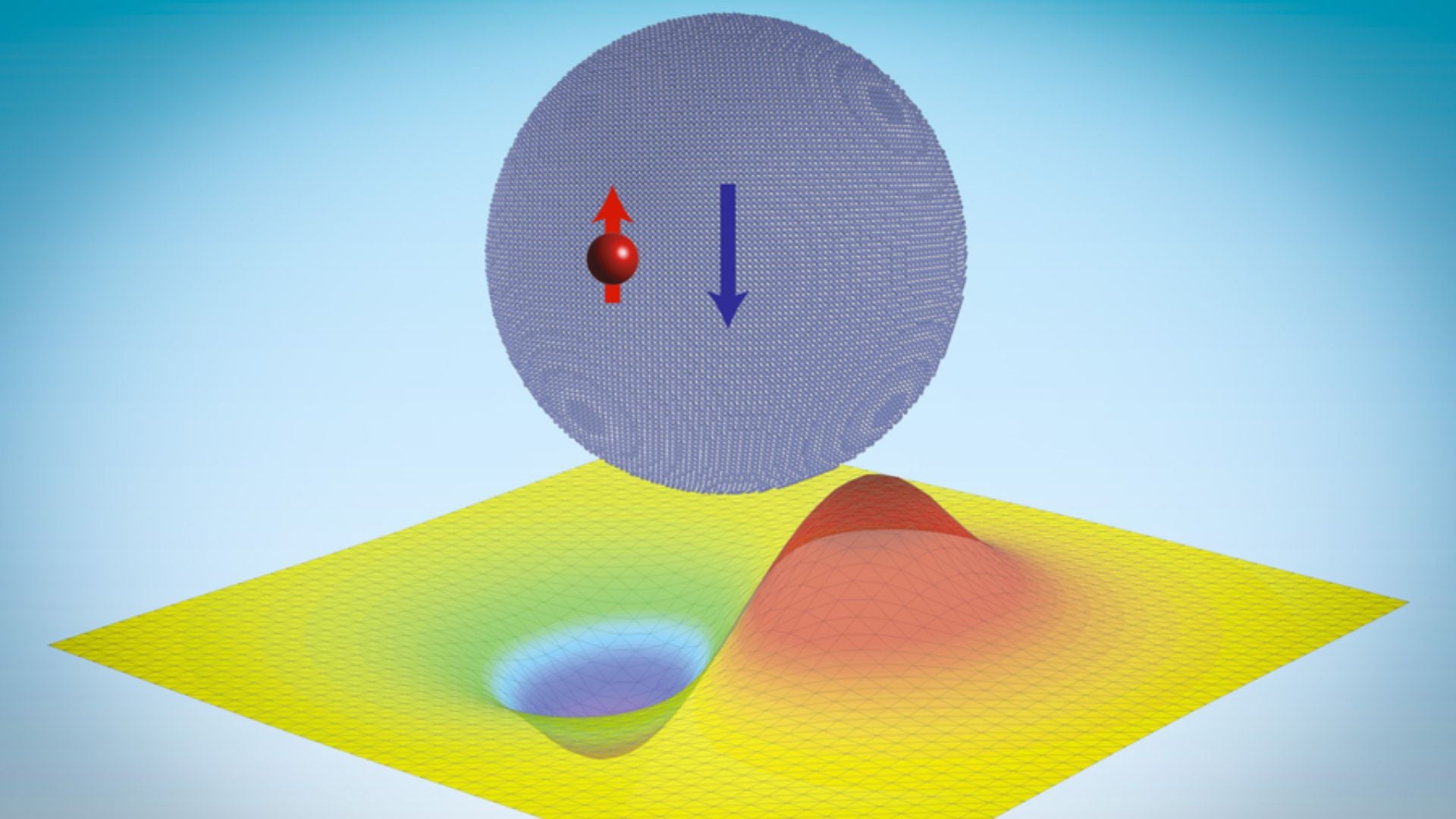
MIT researchers have discovered that neutrons, despite being uncharged particles, are governed by the short-range strong force, rather than the electromagnetic force. This finding challenges previous understanding of neutron behavior and its interactions with materials.
MIT researchers have discovered that neutrons can be made to cling to quantum dots, forming artificial "neutronic molecules" held together by the strong force, which may lead to new tools for probing material properties at the quantum level and exploring quantum information processing devices. This unexpected finding could have applications in controlling individual neutrons for triggering reactions and developing quantum information systems, as well as in neutron imaging for materials analysis. The research was reported in the journal ACS Nano and was supported by the U.S. Office of Naval Research.
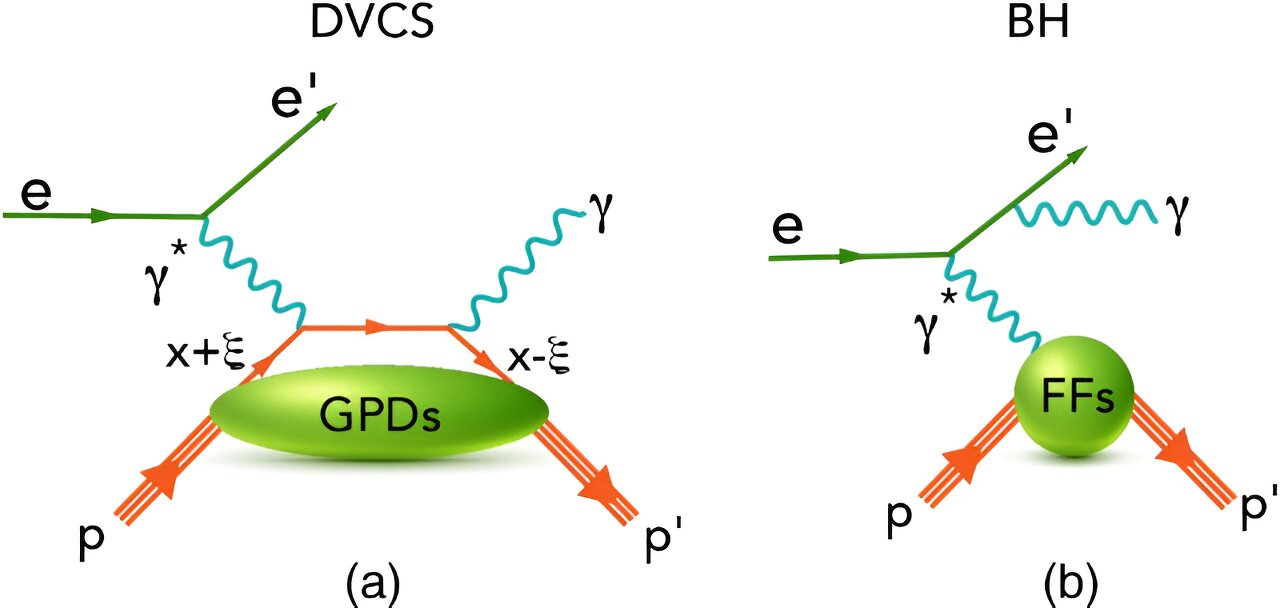
Physicists have used 50-year-old predictions about gravity's impact on subatomic particles to measure a second mechanical property in the proton, revealing the shear stress on the proton's quarks. By exploiting decades-old data and deeply virtual Compton scattering, the team successfully measured the strong force's distribution within the proton, providing insights into the proton's structure and potential for discovering new physics.
Physicists have used 50-year-old predictions about gravity's impact on subatomic particles to measure a second mechanical property in the proton, revealing the shear stress on the proton's quarks. By exploiting decades-old data and deeply virtual Compton scattering, the team successfully measured the strong force's distribution within the proton, providing insights into its structure and potential for discovering new physics. This breakthrough could lead to a deeper understanding of proton properties and pave the way for future measurements in the field of nuclear science.
Nuclear physicists at the U.S. Department of Energy's Thomas Jefferson National Accelerator Facility have used gravity to reveal new details about the strong force inside the proton, providing a snapshot of the force's distribution and shear stress on the quark particles. This research, published in Reviews of Modern Physics, marks the second measurement of the proton's mechanical properties and was made possible by a half-century-old prediction and two-decade-old data from experiments conducted with Jefferson Lab's Continuous Electron Beam Accelerator Facility.
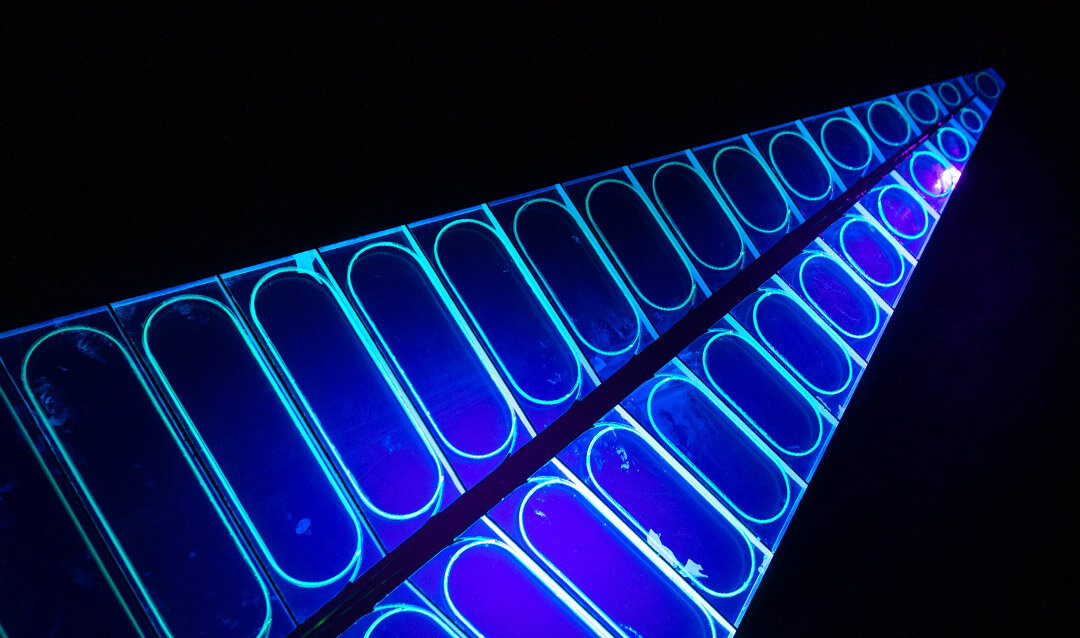
Physicists Rosi Reed and Anders Knospe are leading experiments at Brookhaven National Laboratory's Relativistic Ion Collider to explore the nature of quark-gluon plasma, a fluid made up of subatomic particles that existed in the first instant of the universe. They have built a highly-specialized detector to measure aspects of the universe that have never before been measured. Their event plane detector is designed to measure the trajectories of fundamental charged particles post-collision and will help answer questions about the strong force and the creation of matter in the universe.