Valve has significantly advanced its SteamOS Linux-based operating system, making it a strong competitor to Windows for PC gaming, especially with the success of Proton that allows Windows games to run seamlessly on Linux. This shift is challenging Microsoft's dominance in PC gaming, as more gamers and manufacturers adopt SteamOS for better performance and flexibility, including on Arm hardware, signaling a potential future where Windows is no longer the default gaming platform.
Steam on Linux has reached a new high, surpassing 3% market share for October 2025, driven by the success of Steam Deck and Proton, with Linux now at 3.05% overall, marking its best performance in a decade.
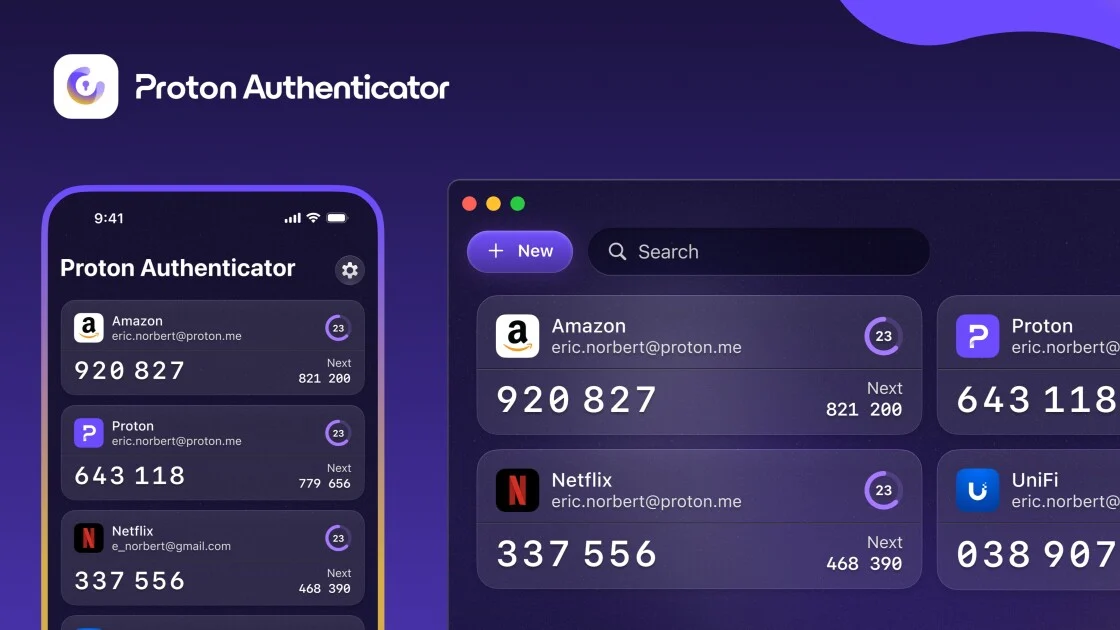
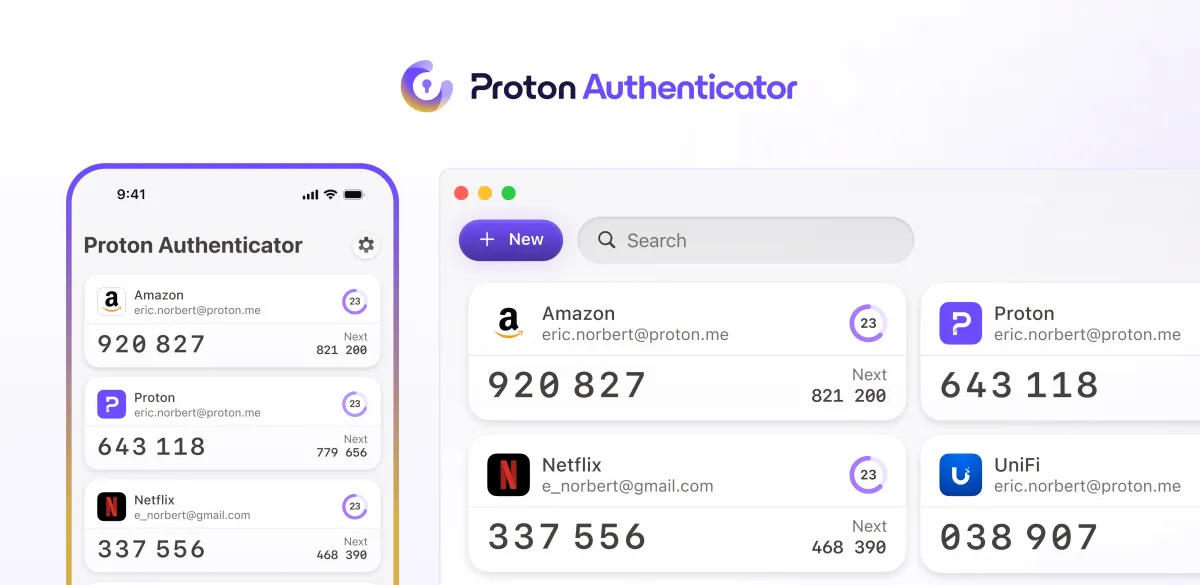
Proton has launched a new open-source two-factor authentication app called Proton Authenticator, aiming to provide a privacy-focused alternative to Google and Microsoft’s tools. It offers secure, offline-capable code generation, cross-device sync, and data backup, emphasizing user control and transparency. The app is free and available across multiple platforms, marking Proton's entry into the 2FA market alongside its existing privacy tools.
Proton has launched a free, open-source authenticator app available across all major platforms, offering secure, encrypted, and offline-compatible two-factor authentication to enhance account security and user privacy.
Proton has launched Lumo, a privacy-focused AI assistant that encrypts all chats, keeps no logs, and operates without third-party data sharing, emphasizing transparency and European data protection standards.
Proton has launched Lumo, a privacy-focused AI chatbot that stores data locally with zero-access encryption, ensuring user privacy and preventing third-party access, positioning itself as an alternative to larger tech company AI services.
Valve's Proton Experimental has been updated to include initial speech synthesis support and various game fixes for Steam Deck and Linux. The update also simplifies modding by allowing most mods to be extracted next to the game executable without additional steps. This change, along with previous updates like NVIDIA Optical Flow API support, enhances the gaming experience on Linux. Proton 9.0-4 is also in testing as the next stable version.
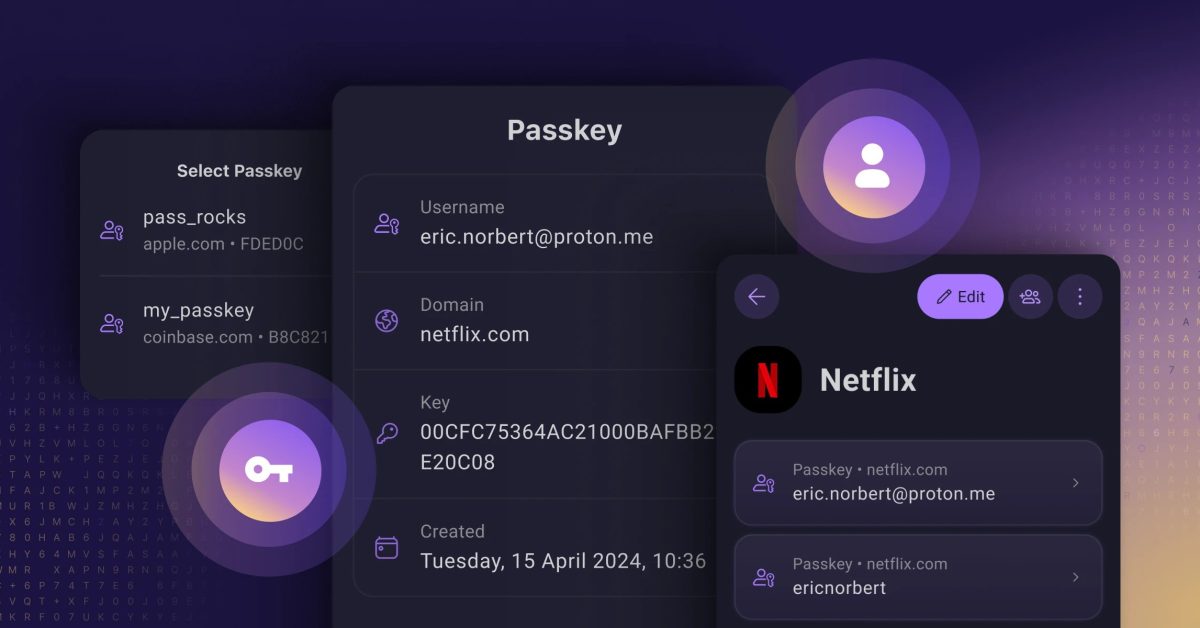
Proton has introduced passkey support for its Proton Pass password manager, emphasizing that access is free, universal, and open-source. The company criticizes big tech's approach to passkey support, stating that it locks customers into specific platforms or requires paid plans. In contrast, Proton aims to make passkeys accessible to everyone, offering a one-click interface, open-source and end-to-end encryption, and compatibility with all standard and business plans.
Physicists have long sought to understand the distribution of matter and energy within protons, particularly the elusive "Druck term" which represents the arrangement of pressures and forces. While traditional gravitational experiments were deemed impractical due to the weakness of gravity, a breakthrough in the late 1990s and early 2000s revealed a workaround involving two-photon scattering events. By analyzing the energies and momentums of particles resulting from these events, physicists were able to extract the proton's internal pressures, revealing intense forces at the proton's core and shedding light on its stability.
If you're looking for alternatives to Gmail and Outlook, consider trying out email apps like Spark Mail + AI, Airmail, Proton Mail, Edison Mail, and Hey, each offering unique features such as AI assistance, unified inbox, privacy protection, quick email fetching, and innovative inbox organization. These apps provide a fresh take on email management, catering to different user preferences and needs.
Nuclear physicists at the Thomas Jefferson National Accelerator Facility have revealed the distribution of the strong force within protons for the first time, showing its influence on the quantum scale and connecting it to gravity. This groundbreaking research provides unprecedented insights into the proton's internal dynamics, shedding light on its mechanical properties and setting the stage for future discoveries in nuclear science. The study, funded by the US Department of Energy and National Science Foundation, combines historical theoretical insights with modern experimental data, offering a new pathway for exploration in nuclear physics.
Physicists have used 50-year-old predictions about gravity's impact on subatomic particles to measure a second mechanical property in the proton, revealing the shear stress on the proton's quarks. By exploiting decades-old data and deeply virtual Compton scattering, the team successfully measured the strong force's distribution within the proton, providing insights into the proton's structure and potential for discovering new physics.
Physicists have used 50-year-old predictions about gravity's impact on subatomic particles to measure a second mechanical property in the proton, revealing the shear stress on the proton's quarks. By exploiting decades-old data and deeply virtual Compton scattering, the team successfully measured the strong force's distribution within the proton, providing insights into its structure and potential for discovering new physics. This breakthrough could lead to a deeper understanding of proton properties and pave the way for future measurements in the field of nuclear science.
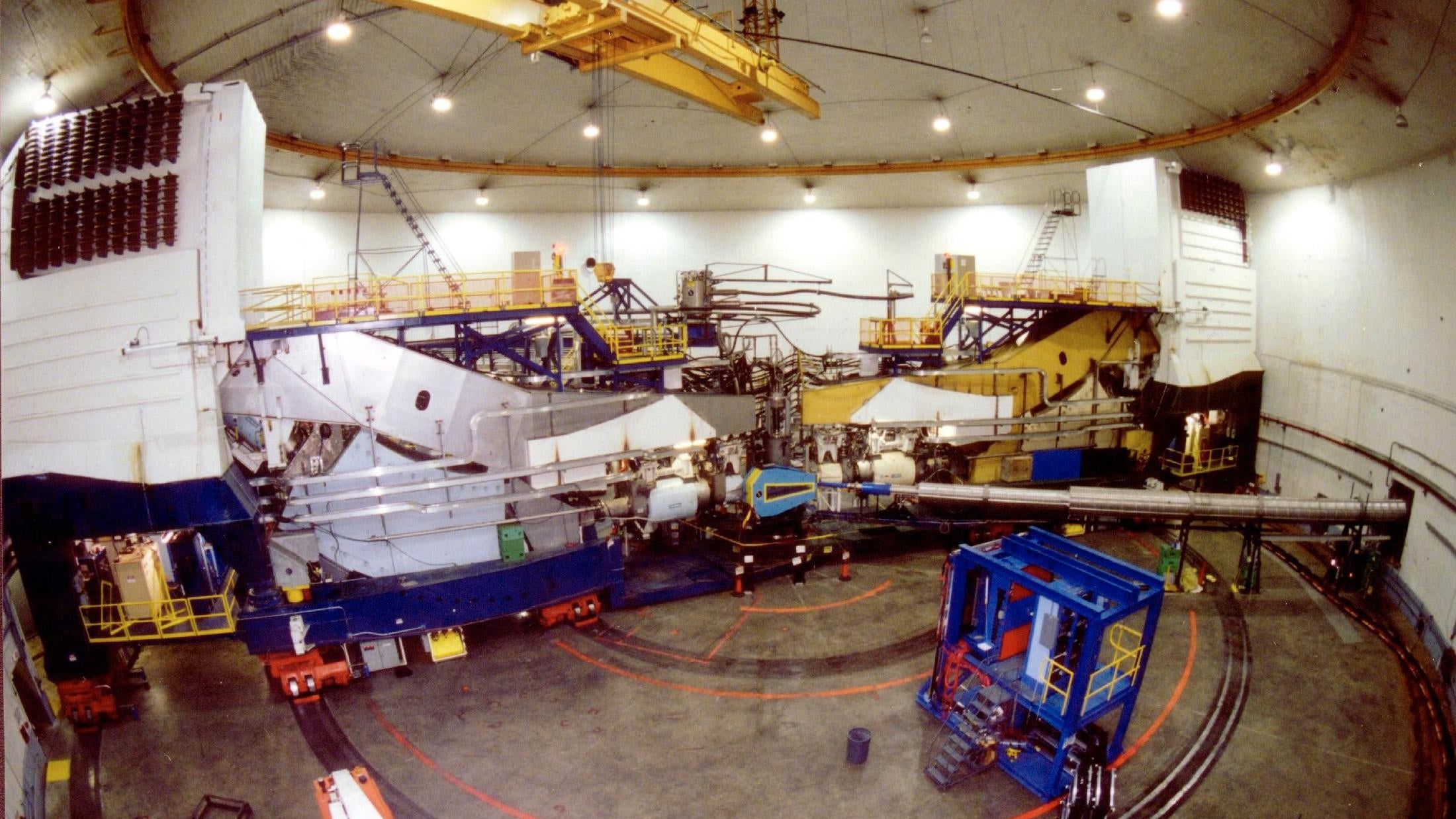
Nuclear physicists at the U.S. Department of Energy's Thomas Jefferson National Accelerator Facility have used gravity to reveal new details about the strong force inside the proton, providing a snapshot of the force's distribution and shear stress on the quark particles. This research, published in Reviews of Modern Physics, marks the second measurement of the proton's mechanical properties and was made possible by a half-century-old prediction and two-decade-old data from experiments conducted with Jefferson Lab's Continuous Electron Beam Accelerator Facility.
The METAL GEAR SOLID: MASTER COLLECTION Vol.1 recently launched on Steam, but it is currently broken on Steam Deck and desktop Linux. While Metal Gear Solid works fine, Metal Gear Solid 2 and Metal Gear Solid 3 do not function properly, with audio issues and quitting to the Steam Library. There are also problems with saving games, as some players have reported losing their progress. The ports themselves are basic, lacking full-screen support and having blurry graphics. Hopefully, Valve will address these issues with a Proton update.