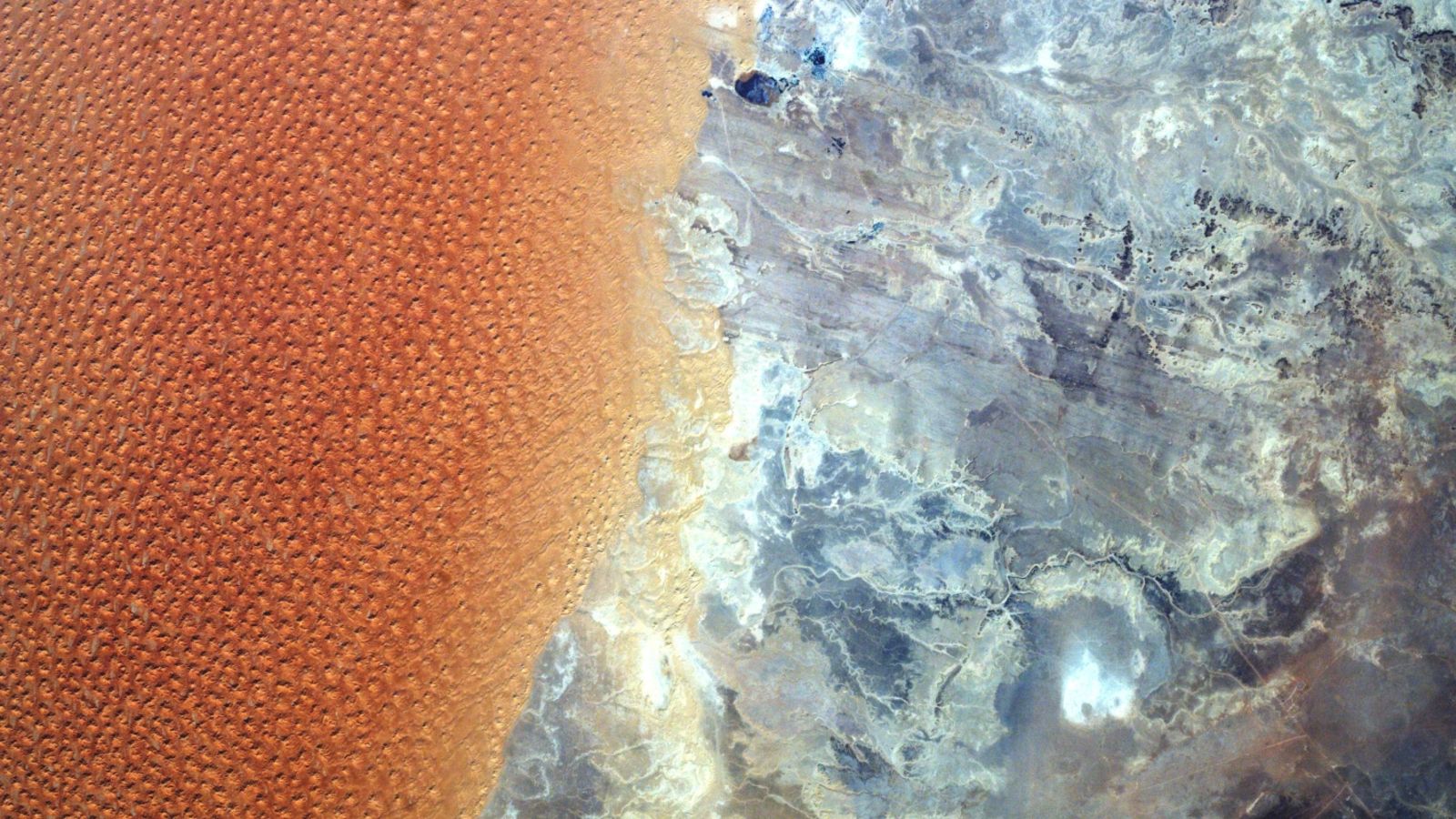
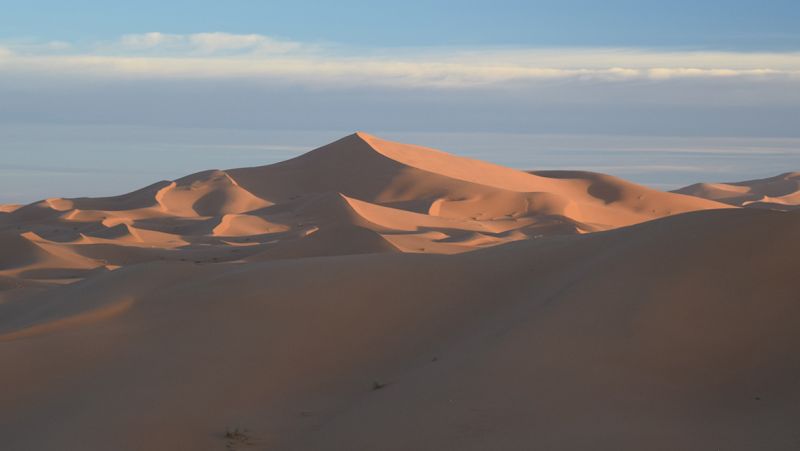
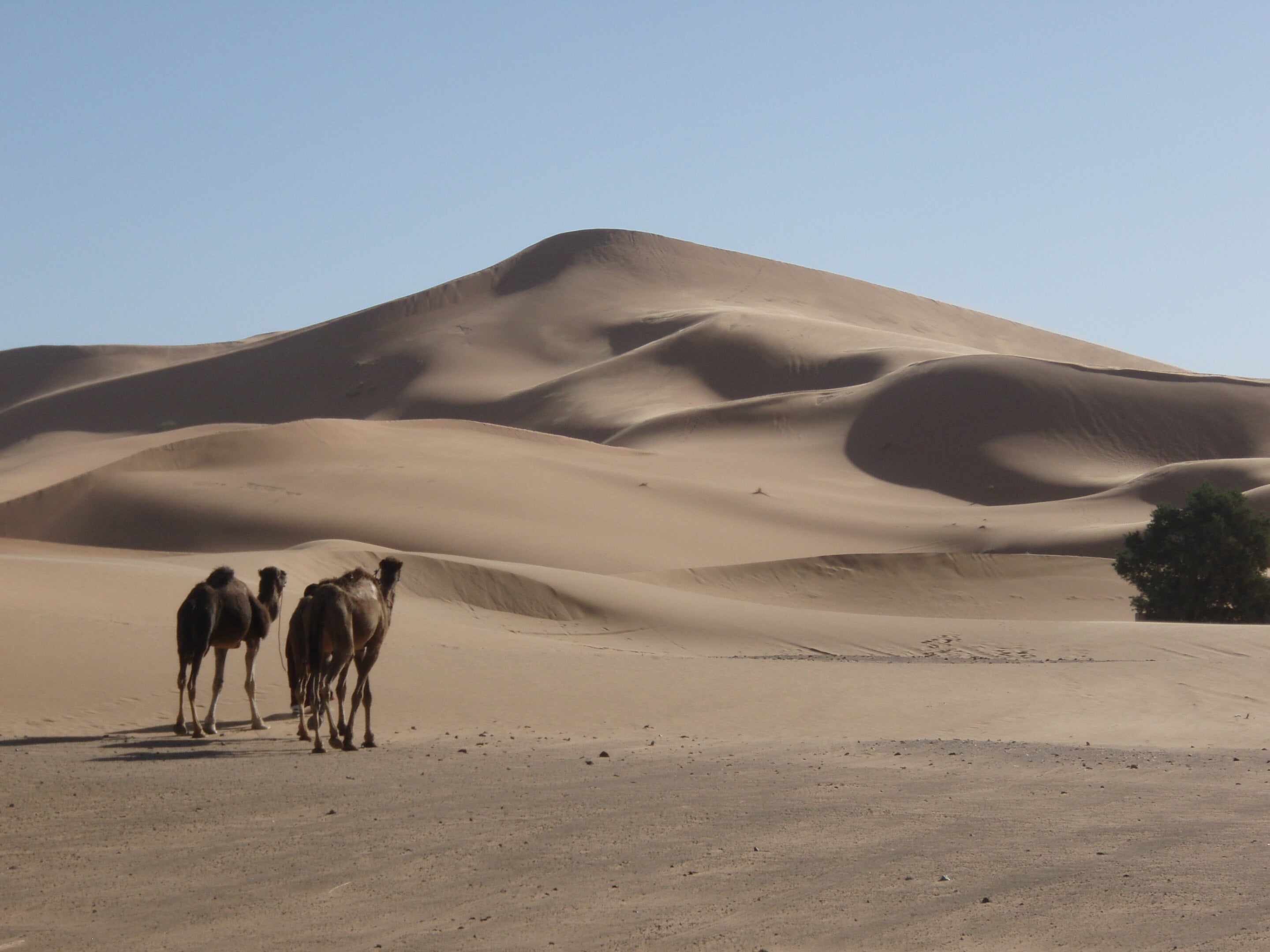
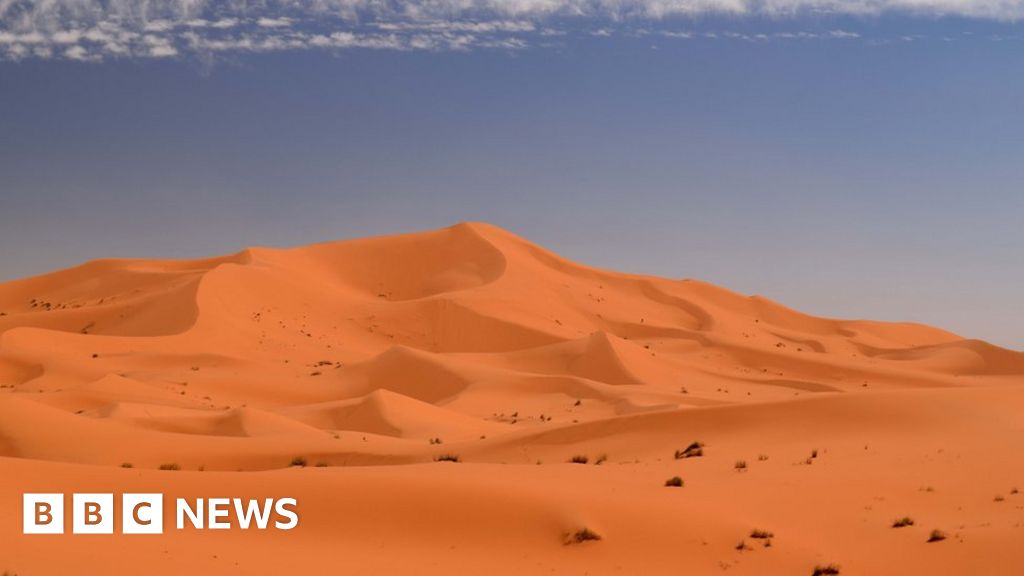
A satellite image captures the striking contrast between a field of 'star dunes' in Algeria and rocky terrain in Libya within the Sahara Desert, highlighting geological and ecological interactions shaped over millions of years, with the border between the two countries running through the scene.
Scientists have unraveled the mystery of the absence of star-shaped dunes from Earth’s geological history by dating a 13,000-year-old star dune in Morocco and discovering its rapid formation in the last thousand years. The study, published in Scientific Reports, used ground penetrating radar and luminescence dating techniques to reveal the dune's growth and history, shedding light on Earth's past climate changes and geological formations.
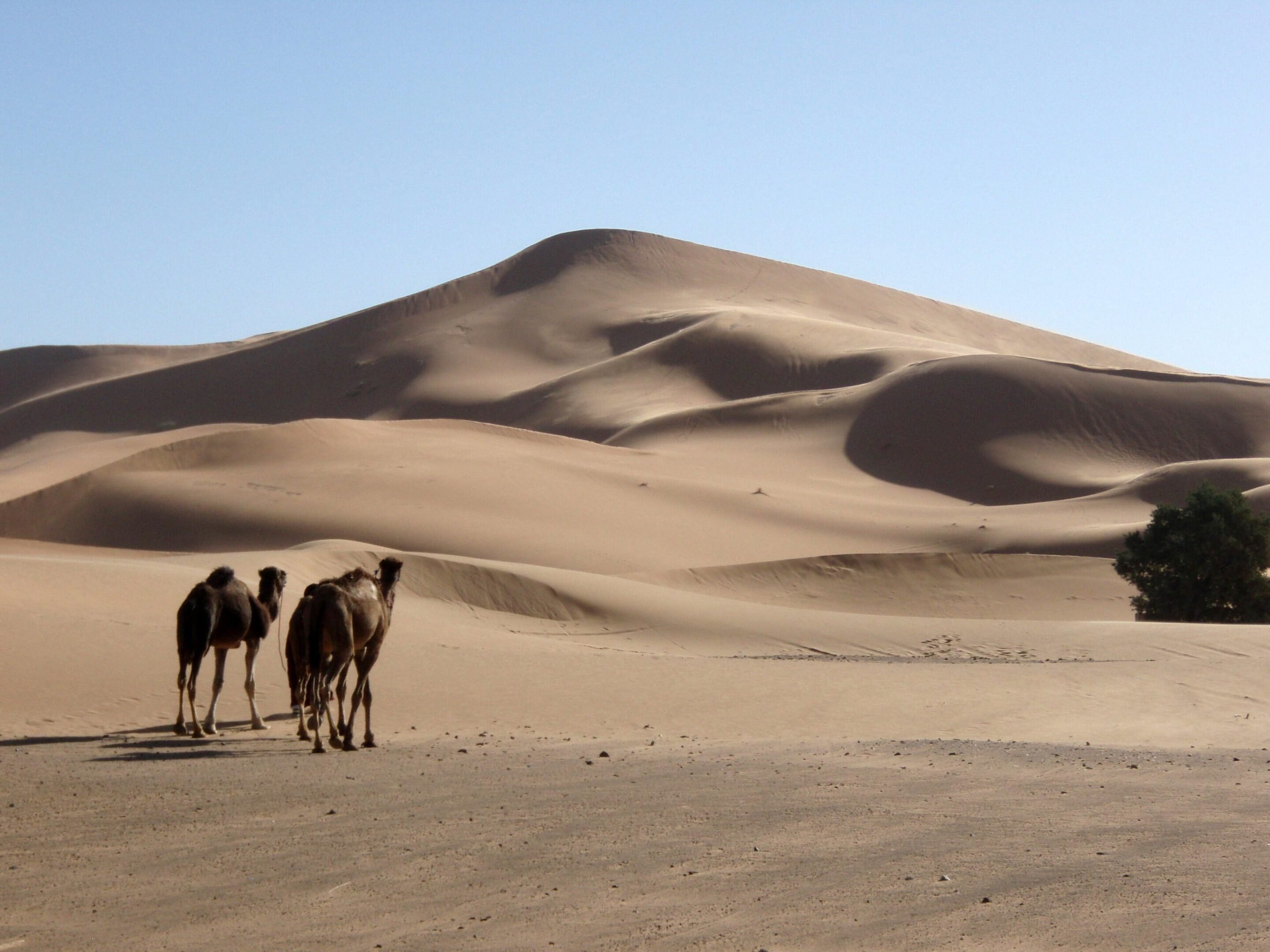
Scientists have long been puzzled by the absence of giant star-shaped sand dunes in geological records despite their prevalence in modern deserts and even on extraterrestrial bodies. A new study analyzing the Lala Lallia star dune in Morocco has shed light on their formation and movement, providing a model for identifying these features in sedimentary rock. The research, published in Scientific Reports, suggests that the use of ground penetrating radar and mineral dating techniques can help uncover the secrets of these natural wonders and locate them in the geological record.
A new study using ground-penetrating radar has revealed that the massive "star dunes" in Morocco are much younger than previously thought, with their formation occurring over the last 1,000 years. Surprisingly, these dunes are also on the move, being pushed westward by steady winds at a rate of about a foot and a half per year, highlighting the potential impact on infrastructure in the area.
Scientists studying a star dune in the Sahara Desert have uncovered surprising insights into its age, growth, and movement. Using radar scans and sand grain analysis, they found that the dune's base formed around 13,000 years ago, with most of its growth occurring over the past 1,000 years. The research also addressed the mystery of the scarcity of ancient evidence of star dunes, suggesting that eroded parts of their preserved structures may have been previously identified as remnants of other dune types.
Scientists have solved the mystery of the absence of star-shaped dunes from Earth's geological history for the first time, dating one back thousands of years. The study by Aberystwyth University, Birkbeck, and UCL academics is the first to date how long it took a star dune to form and examine its internal structure. The research reveals the oldest parts of the base of the Moroccan dune are 13,000 years old, and it formed rapidly in the last thousand years, surprising scientists who had thought larger dunes were far older. The study used luminescence dating techniques to determine the age of the dune and suggests it formed around the same time as the Younger Dryas event, an abrupt cooling period in Earth's history.
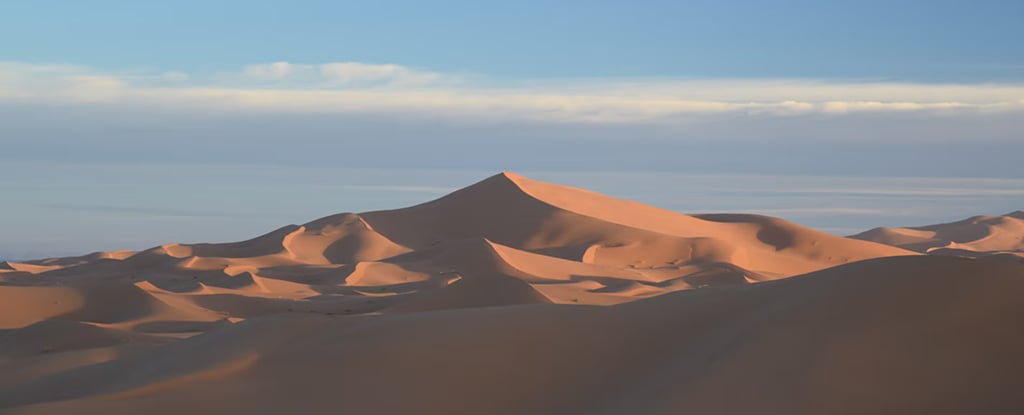
Scientists have conducted the first comprehensive study of a star dune, revealing the internal structure and formation process of these pyramid-shaped sand formations. The study focused on the Lala Lallia star dune in eastern Morocco, showing that it took about 900 years for the dune to form, accumulating roughly 6,400 metric tons of sand annually. Star dunes, which make up just under 10% of Earth's desert dunes, are the tallest and are formed in areas with complex wind regimes. The researchers' findings provide insight into identifying ancient star dunes in the geological record and highlight the awe-inspiring landscapes they create.
Scientists have determined the age of the Lala Lallia star dune in Morocco, one of Earth's largest and most complex sand dunes, to be 13,000 years old using luminescence dating. These dunes, also found on Mars, are formed by opposing winds and provide insight into past climates. The discovery sheds light on the rapid formation and movement of these massive dunes, which were previously unrecognized in Earth's geological history.