Tag

Geological Record

All articles tagged with #geological record

science1 year ago

"Scientists Locate Missing Piece of Earth's Crust"

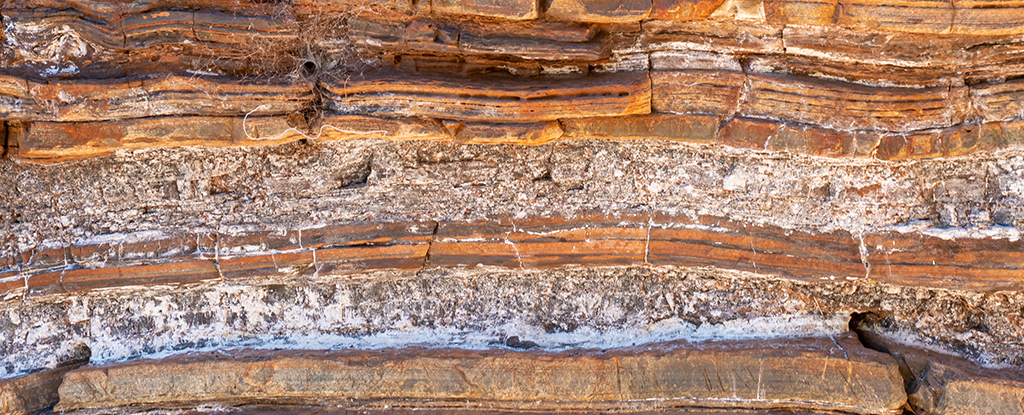
Scientists have discovered that a large chunk of the Earth's crust, missing from the geological record and known as "The Great Unconformity," was likely eroded by glaciers during the "Snowball Earth" period. This severe glacial erosion stripped away 3-5 kilometers of rock, which was then washed out to sea, explaining the sharp age changes in rocks observed globally.

science1 year ago

Unveiling the Secrets of Earth's Moving Star Dunes

Scientists have long been puzzled by the absence of giant star-shaped sand dunes in geological records despite their prevalence in modern deserts and even on extraterrestrial bodies. A new study analyzing the Lala Lallia star dune in Morocco has shed light on their formation and movement, providing a model for identifying these features in sedimentary rock. The research, published in Scientific Reports, suggests that the use of ground penetrating radar and mineral dating techniques can help uncover the secrets of these natural wonders and locate them in the geological record.

environment1 year ago

"Microplastics Threaten Accuracy of Ancient Rock Age Markers"

Microplastics have been found to seep through layers of rock, making their presence in rock strata an unreliable indicator of the beginning of the Anthropocene epoch. A study analyzing sediment samples from three lakes in Latvia revealed that smaller plastic particles could travel deeper into the mud, reaching layers predating the acceleration of plastic production in the 1950s. This challenges the use of plastic presence in rock strata as a marker for human impact on the planet. The study identified 14 different types of plastic in the sediment samples, highlighting the pervasive nature of microplastics in the environment and their potential to impact natural cycles and food chains.

science2 years ago

Scientists Locate Missing Chunk of Earth's Crust

Scientists have discovered the location of a large chunk of the Earth's crust that has been missing from the geological record for over a century. The missing rocks were eroded during a period known as "Snowball Earth" when the planet was covered in ice. The erosion resulted in a gap in the sedimentary record, known as "The Great Unconformity." Researchers estimate that 3-5 kilometers of rock were stripped away globally, leaving one billion cubic kilometers of material missing. The missing rocks were likely washed out to sea by glaciers that eroded them.

earth-science2 years ago

Ancient Volcanic Glass Shards Discovered 3000 Miles from Antarctica

Glass shards from an ancient volcanic eruption in New Zealand's Taupō volcano have been discovered buried beneath 280 meters of Antarctic ice, approximately 3,000 miles away. The shards, along with a seventh shard from an earlier eruption, provide a unique "double fingerprint" of the Taupō volcano as the source. The findings help confirm the timing of the explosive event, which occurred around 230 CE. The discovery validates previous age estimates of tree logs buried by the eruption and offers insights into the volcano's potential global effects on the atmosphere and climate.

science-and-technology2 years ago

"Unearthing the Influence of 'Doctor Who' on Pre-Human Reptile Research"

Scientists have proposed the Silurian hypothesis, a thought experiment exploring the possibility of a pre-human civilization on Earth. While no fossilized evidence has been found, geological processes such as tectonic plate subduction and glaciation could have erased any remnants of ancient urbanization. Instead, researchers suggest looking for global signatures, such as carbon isotopes and microplastics, that could indicate the presence of an intelligent civilization. Additionally, artifacts on the moon left by humans may endure for millions of years, providing potential evidence for future xenoarcheologists. The search for signs of pre-human civilizations raises questions about the Fermi Paradox and the possibility of overlooking deep-space alien signatures.

science2 years ago

New satellite data reveals increased risk of giant asteroids hitting Earth.

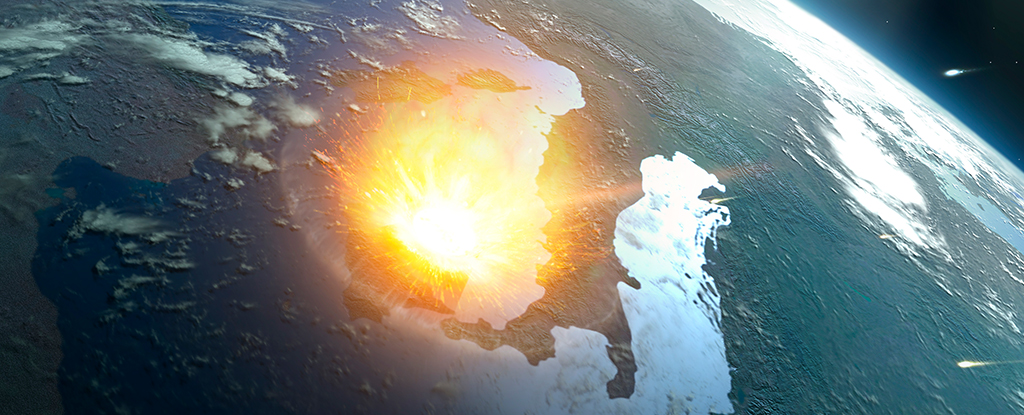
NASA's Goddard Space Flight Center chief scientist, James Garvin, believes that the risk of giant asteroids hitting Earth could be worse than current estimates predict. Garvin and his team used a new catalog of high-resolution satellite images to take a closer look at the weathered remains of some of the largest impact craters formed within the last million years, in an effort to better gauge their true size. Based on their analysis, a number of these craters feature faint rings beyond what have typically been considered their outer rims, effectively making them larger than previously presumed. The implications are profound, suggesting kilometer-sized objects are coming down from above every few ten-thousand years.