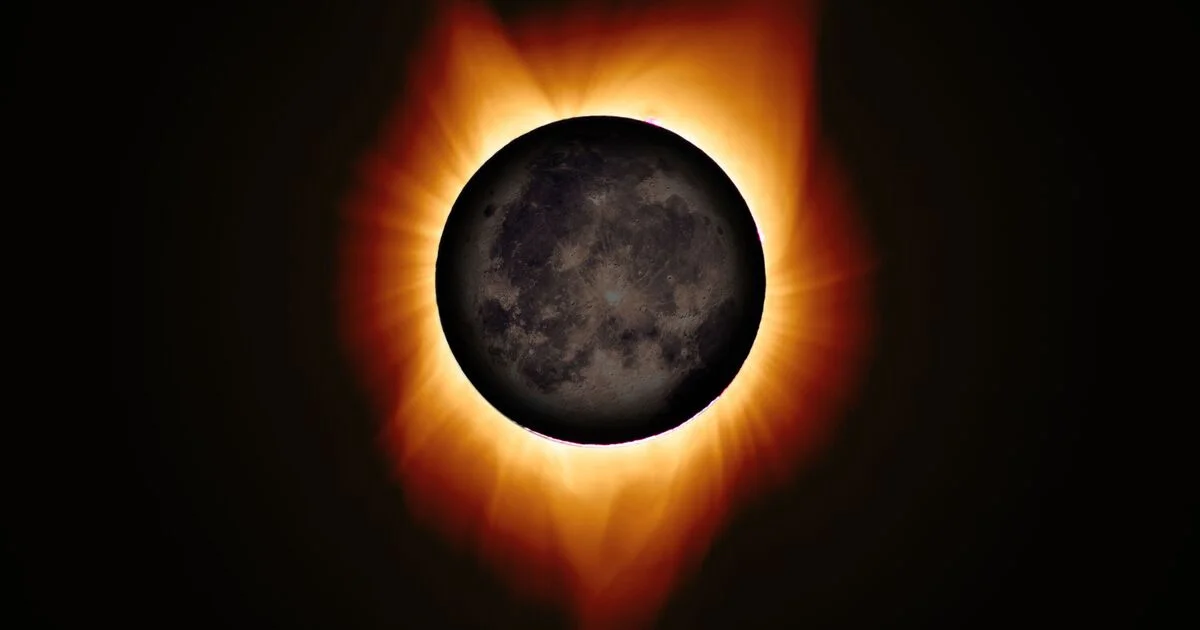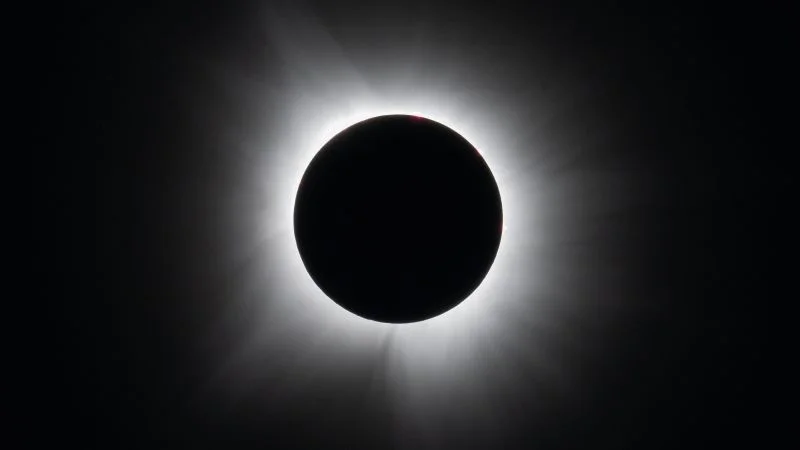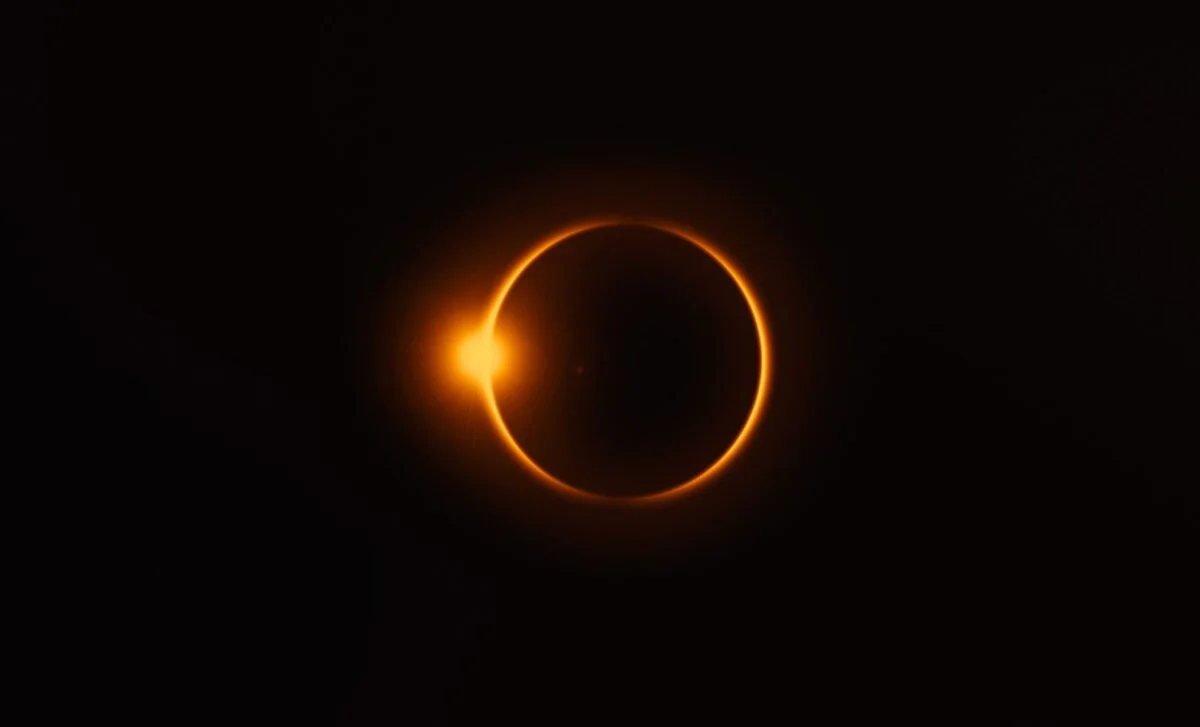
The annular solar eclipse on February 17, 2026, will create a 'ring of fire' visible only from a remote part of Antarctica, with limited opportunities for observation due to weather and accessibility. Partial views will be available in parts of Antarctica, southern Africa, and South America. The event's rarity and location make it a unique but challenging spectacle to witness.
The next solar eclipse, an "annular" one, is set to occur on October 2, 2024, passing over parts of the Pacific Ocean, southern Chile, and southern Argentina. This eclipse will create a "ring of fire" effect, with about 93% of the sun being blocked by the moon. The best viewing locations include Rapa Nui/Easter Island, Chile, and Argentina. However, the chances of clear skies vary across these areas. After October 2024, the next annular solar eclipse will occur on February 17, 2026, in Antarctica.
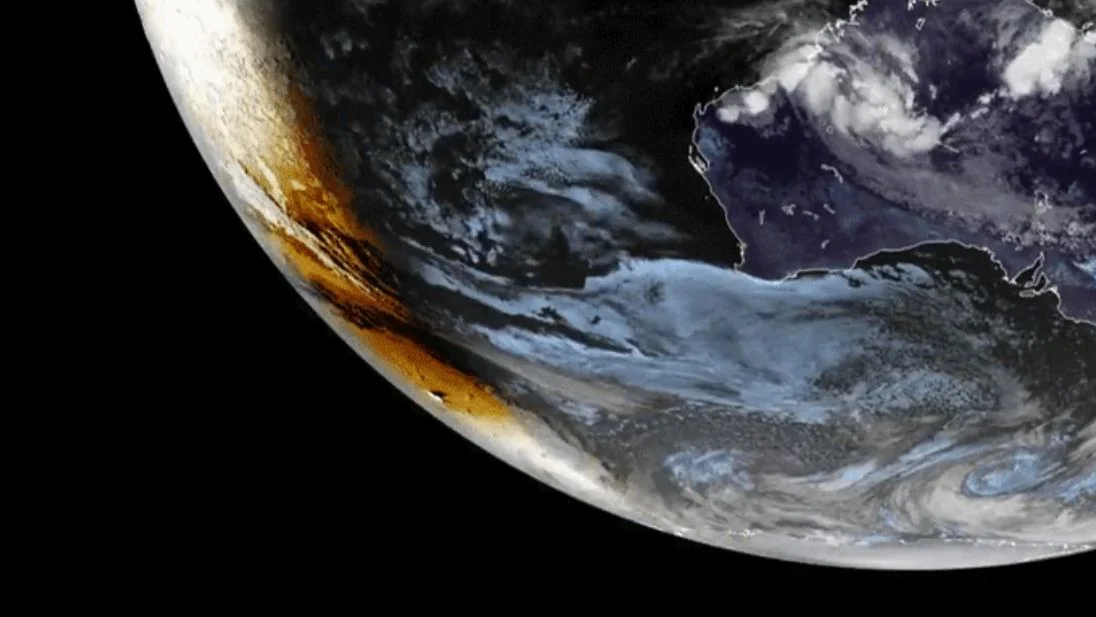
NASA's Deep Space Climate Observatory (DSCOVR) captured a unique view of the recent annular eclipse from Earth's orbit. Unlike a total solar eclipse, an annular eclipse occurs when the Moon is at its maximum distance from Earth, resulting in a "ring of fire" effect where the Sun's outer limb is still visible. The DSCOVR mission's Earth Polychromatic Imaging Camera (EPIC) captured the shadow sweeping across the United States, providing a different perspective of the event. More eclipses are expected in the coming months, including a lunar eclipse on October 28th and a major solar eclipse on April 8th.
NASA's EPIC imager aboard the Deep Space Climate Observatory captured a stunning image of the Moon's shadow cast on Earth during the annular solar eclipse on October 14, 2023. The eclipse, visible across the United States, Mexico, and parts of Central and South America, created a "ring of fire" effect as the Moon blocked the Sun's rays but was too far from Earth to completely obscure it. The image shows the Moon's shadow falling across the southeastern coast of Texas, near Corpus Christi. The next annular solar eclipse visible from the United States will be on June 21, 2039.
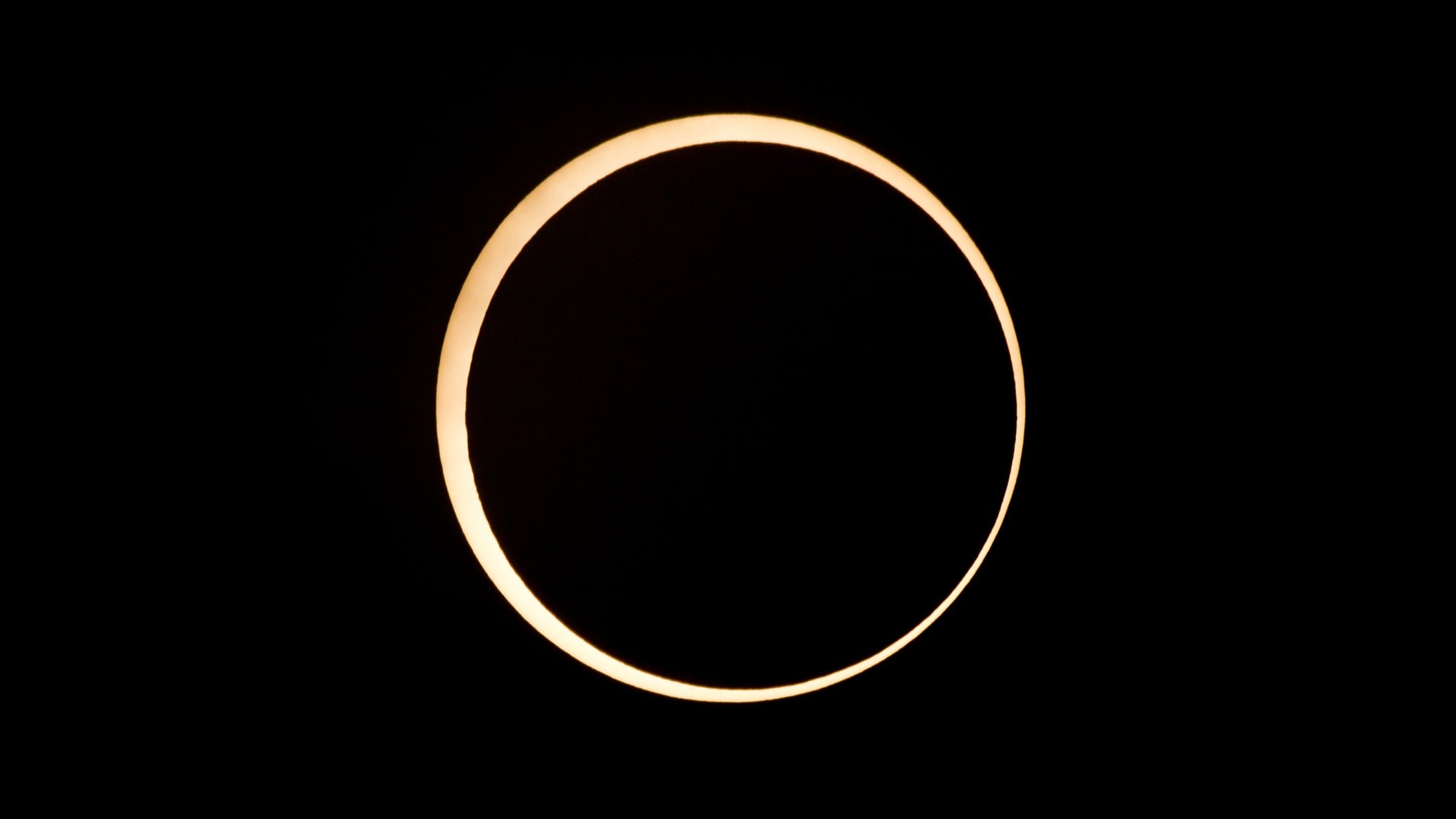
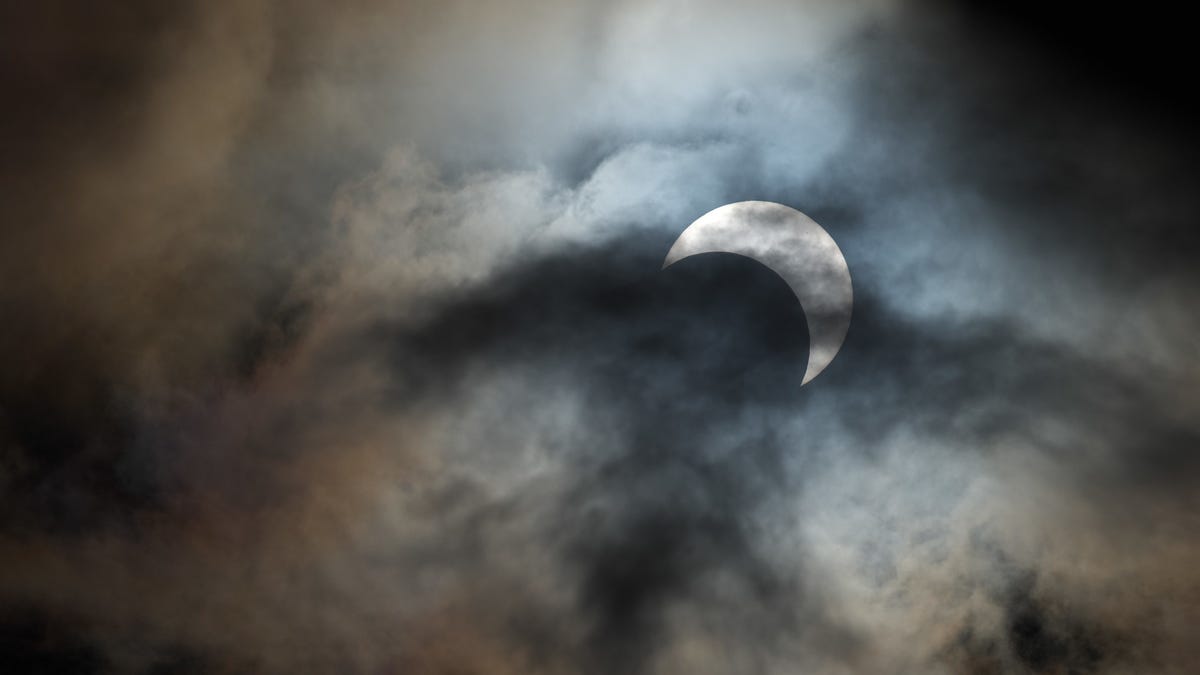
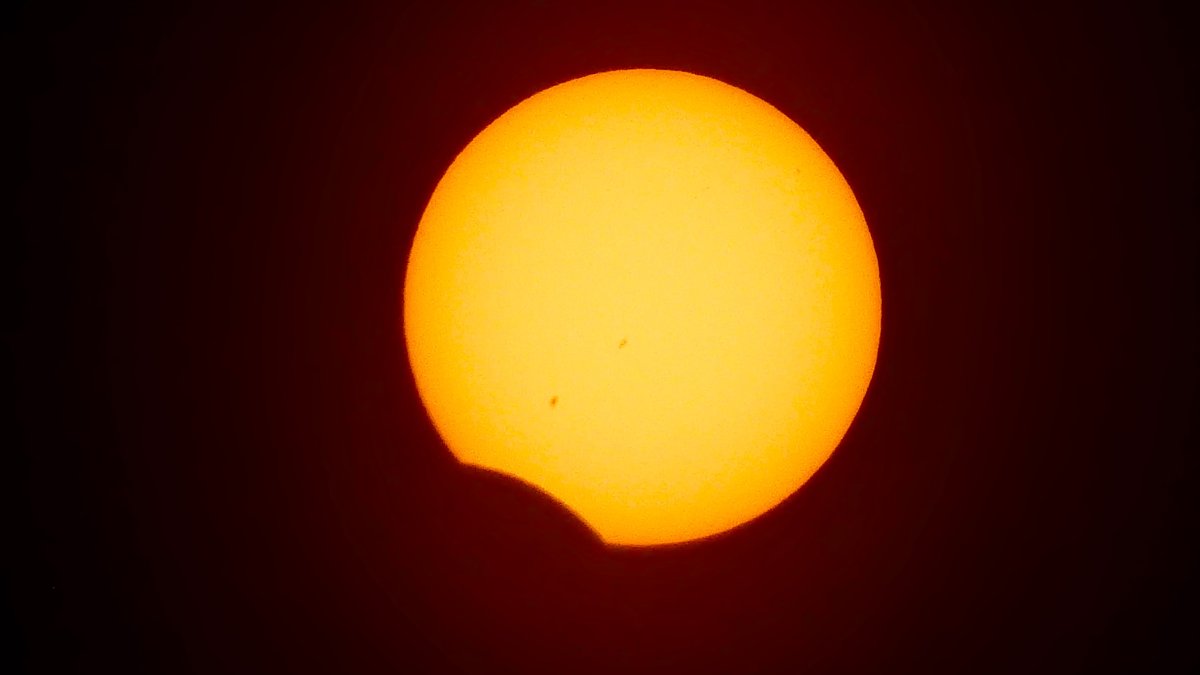
Photographers across the Americas captured mesmerizing moments of the annular solar eclipse that occurred on October 14. Despite clouds in some areas, the "ring of fire" effect was visible as the Moon partially obscured the Sun, leaving a bright outer ring of sunlight. The eclipse was seen in various countries, including the United States, Mexico, and Brazil. Ancient civilizations often interpreted eclipses as omens or the wrath of the gods. Safety precautions, such as using certified solar eclipse glasses or filters, were emphasized for viewers.
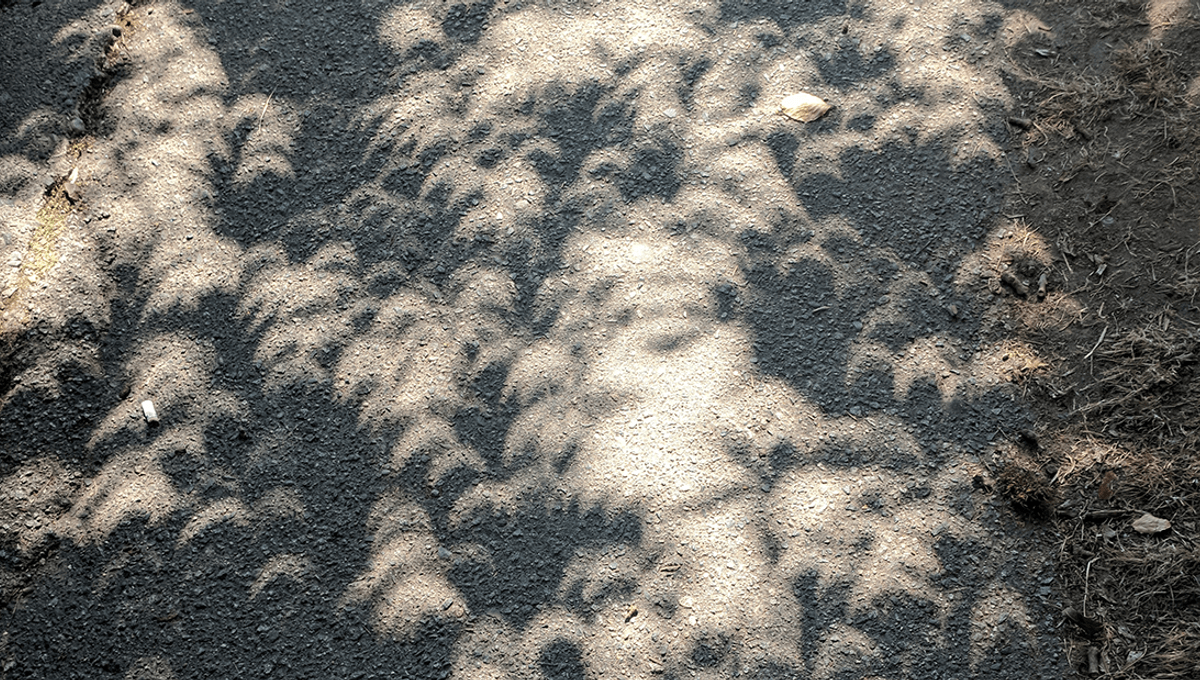
Americans witnessed a "ring of fire" annular eclipse on Saturday, and some captured fascinating "eclipse shadows" naturally projected onto the ground. These projections can be seen by creating a pinhole camera or through gaps in the light between leaves of trees. The phenomenon occurs when light passes through a small hole, creating a projection of the eclipse on a surface below. This provides a safe way to view the eclipse without damaging the eyes.
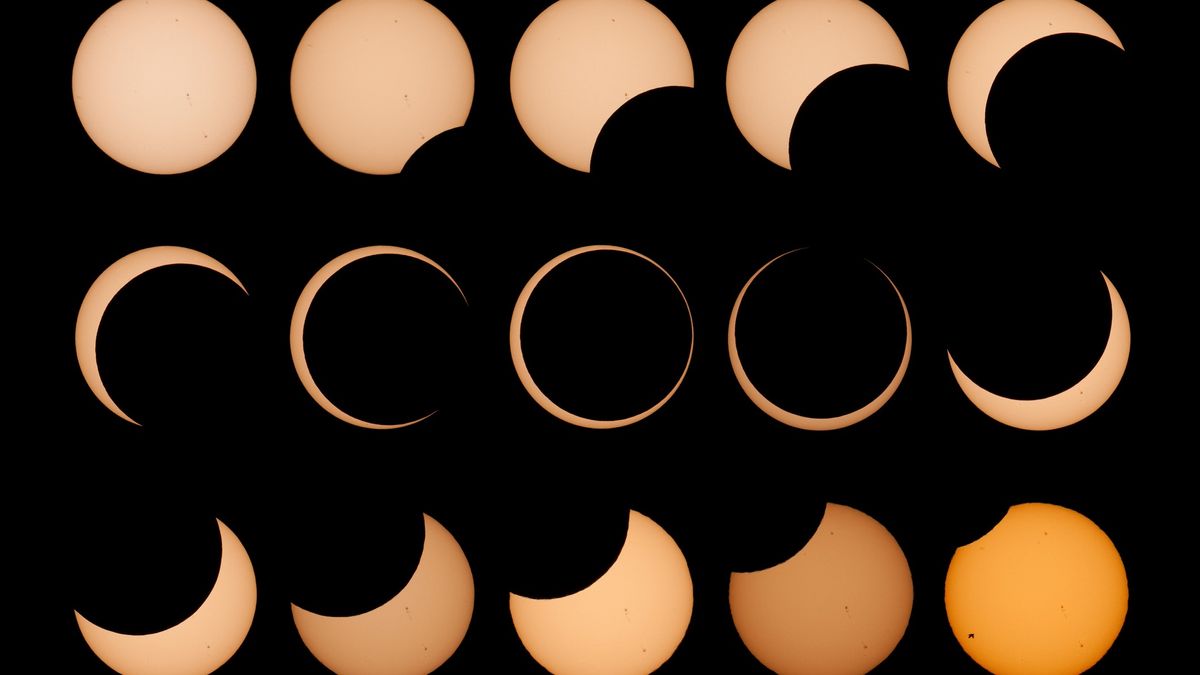
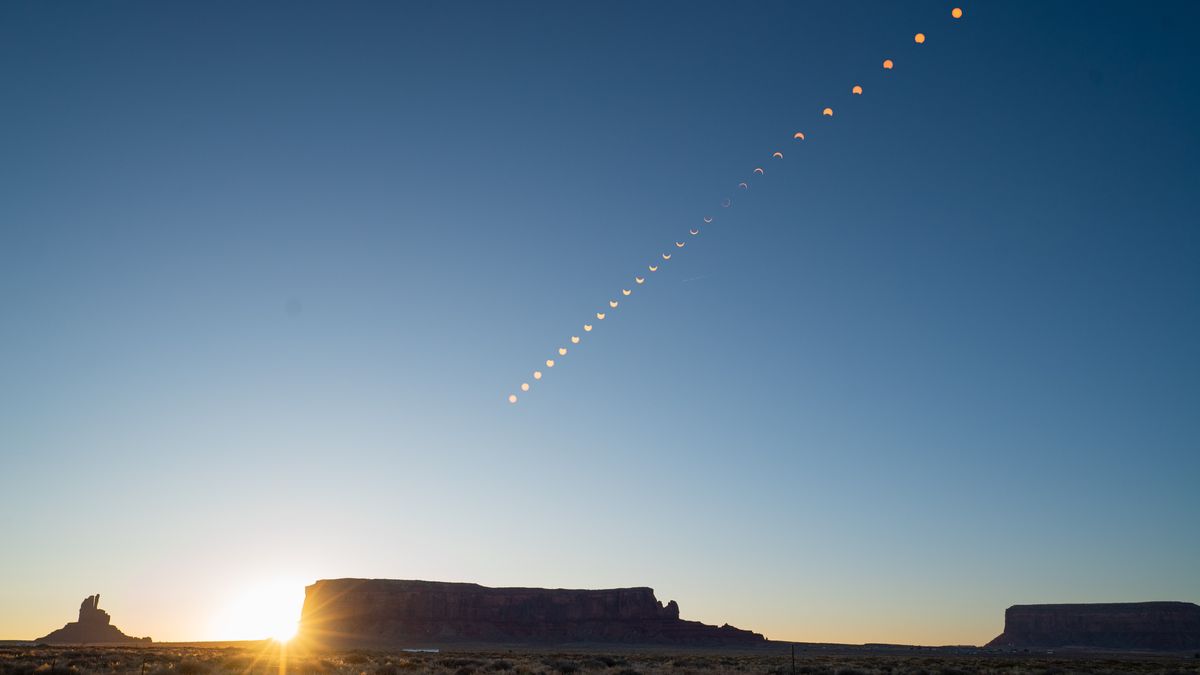
An annular solar eclipse captivated skywatchers across the Americas, offering a stunning "ring of fire" effect. The eclipse was visible in several U.S. states and countries in Central and South America, attracting millions of spectators. Many captured breathtaking photos of the event, showcasing the various stages of the eclipse. National parks, such as Capitol Reef National Park in Utah, opened their doors to eclipse chasers. Merchandise related to the eclipse was also available. The next solar eclipse, a total solar eclipse, is set to occur on April 8, 2024.
San Diegans had the opportunity to witness a partial annular solar eclipse, also known as the "ring of fire," where the moon crosses in front of the sun, creating a ring-like effect. The eclipse reached its maximum coverage at around 9:26 a.m., with the sun being about 70% obscured. The path of annularity spanned across North, Central, and South America, with the next visible annular eclipse in the contiguous United States not occurring until 2046. Eclipses continue to captivate people due to their scientific significance and enduring fascination.
A partial solar eclipse was visible in various regions of North, Central, and South America, including parts of the United States. The best viewing conditions were in the Four Corners to Texas, while cloud cover hindered visibility in the Northwest. The eclipse could be observed with proper eye protection, and NASA experts provided live broadcasts from Texas and New Mexico. The next annular solar eclipse visible in the US will occur on June 21, 2039, with Alaska being the only state in its path.
A solar eclipse known as the "Ring of Fire" cut across the Western Hemisphere, starting in Oregon and moving through several states in the United States and Latin American countries. Unlike a total eclipse, this annular eclipse occurs when the moon is farthest from the Earth, creating a halo of sunlight around the moon's border. Millions of people experienced either the annular eclipse or a partial solar eclipse, with major cities like Seattle, Los Angeles, Houston, Mexico City, and Bogotá witnessing considerable dimming of the sun. Observers were advised to use proper protective eyewear and not to look directly at the eclipse.
An optometrist warns of the dangers of looking at the sun during an eclipse, as it can cause eclipse blindness or solar retinopathy, resulting in permanent damage to the retina. Symptoms include a black dot in your vision that doesn't go away. To prevent this, the American Optometric Association recommends using certified solar eclipse glasses with the ISO 12312-2 standard, which are dark and nearly impossible to see through. An annular eclipse will occur on October 14, followed by a total solar eclipse in April 2024.
Thousands of people have gathered in Utah to witness the annular solar eclipse, also known as the "Ring of Fire" eclipse. While the southern and central parts of the state will experience the full eclipse, the northern areas will see about 90% coverage. It is important to use proper eye protection, as staring at the eclipse without protection can cause eye damage.
On October 14th, a new moon will create an annular solar eclipse visible in parts of the southwestern U.S., Southern Mexico, Central America, and northern South America. During an annular eclipse, the moon appears slightly smaller than the sun, creating a "ring of fire" effect. Observers are advised to use proper safety equipment when viewing the eclipse. Additionally, the article provides information on the visibility of planets and constellations in the night sky during this time.
Cloudy weather is expected to obscure the 'ring of fire' annular solar eclipse in Northwest Arkansas and the River Valley on Saturday, October 14, 2023. Razorbacks fans attending the game in Alabama will be under the eclipse when the game starts at 11 a.m. The eclipse, similar to a total solar eclipse, will create a "ring of fire" or large halo surrounding the darkened moon. People in Northwest Arkansas and the River Valley will be able to see the partial eclipse from about 10:30 a.m. to 1:30 p.m., with the peak occurring at 11:53 a.m. Glasses compliant with ISO 12312-2 are recommended for safe viewing.
Millions of people across the Americas are preparing for an annular solar eclipse on Saturday, where the moon will interrupt the sun, casting a shadowy veil from Oregon to Brazil. The eclipse will be visible in the Western United States, the Yucatán Peninsula, and many nations in Central America. Scientists stress the importance of using appropriate protective equipment to avoid eye damage while viewing the eclipse. Various events and celebrations are planned along the eclipse's path, including concerts, dance performances, and Indigenous traditions. The eclipse will also be an opportunity for researchers to study the sun and its effects on the ionosphere and space weather.