Tag

Solar Particles

All articles tagged with #solar particles

science1 year ago

"Mysterious Dent in Earth's Magnetic Field Disrupts Southern Hemisphere Auroras"

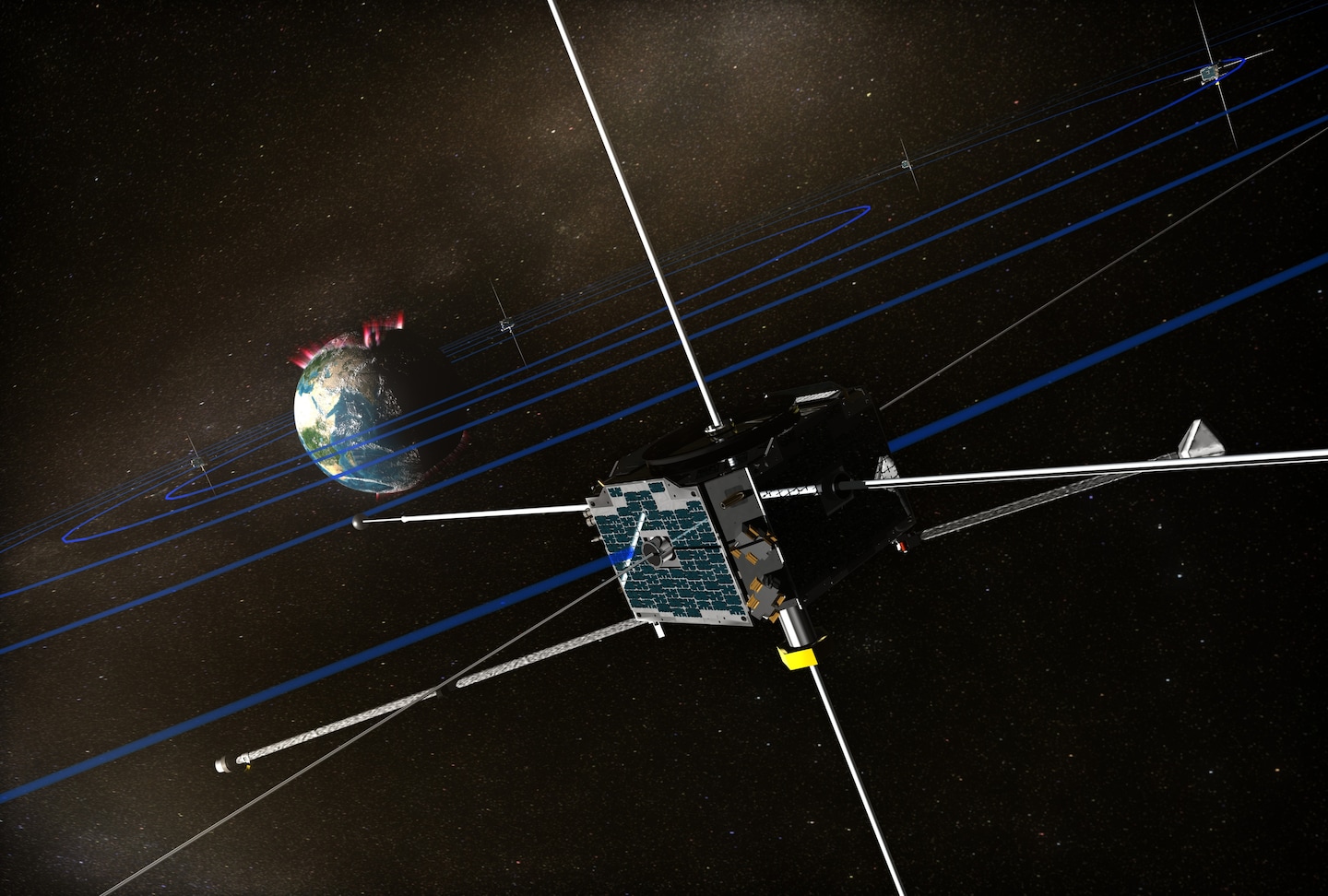
A new study has found a significant dent in Earth's magnetic field over the southern Atlantic Ocean, known as the South Atlantic Anomaly, which weakens the southern lights or auroras. This anomaly, already known for exposing satellites to high levels of ionizing radiation, has now been found to affect the southern auroras, with weakened magnetic fluctuations reducing the energy put into the atmosphere by solar particles. The study highlights the two-way relationship between Earth-related factors and solar activity, and researchers plan to investigate whether similar phenomena occur on other planets.
space-science2 years ago

"India's Solar Probe Analyzes Earth's Particle Environment"

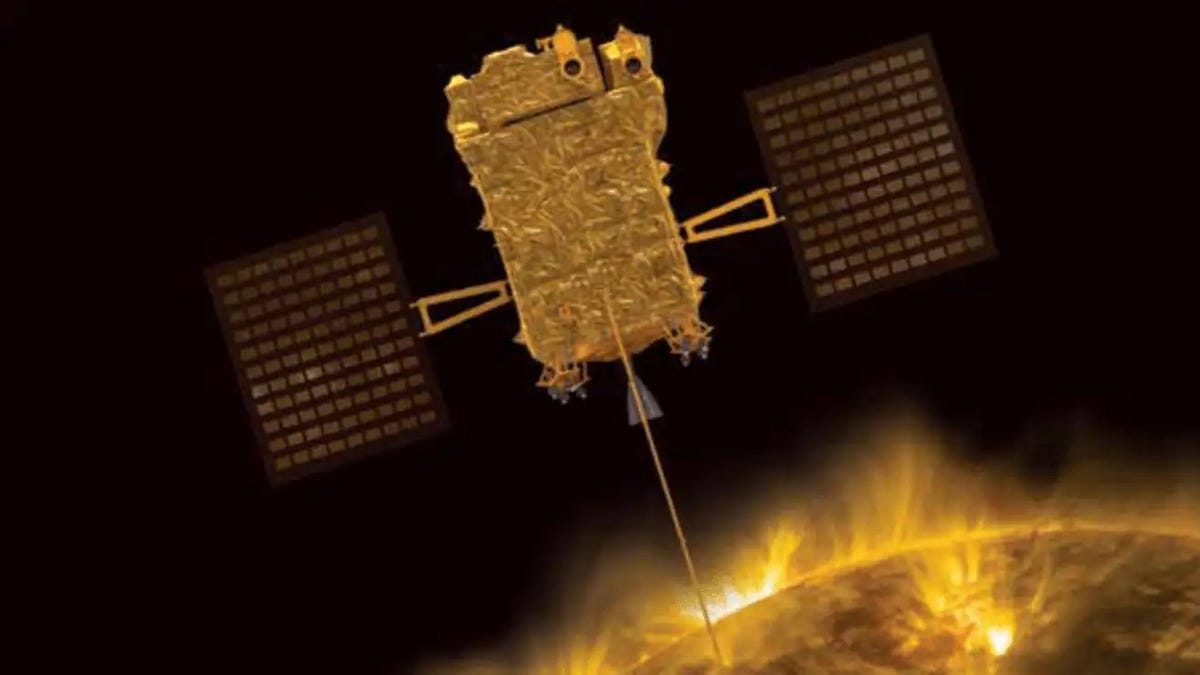
India's Aditya-L1 mission, launched on September 2, has begun collecting data on particles surrounding Earth using its Supra Thermal & Energetic Particle Spectrometer (STEPS) instrument. The spacecraft, headed towards the Earth-Sun Lagrange Point 1, will observe the origin, acceleration, and anisotropy of solar wind and space weather phenomena. Aditya-L1 carries seven science instruments, four of which will study the Sun directly, while the remaining three will measure particles at the Lagrange Point 1 to understand the effects of solar dynamics in the interplanetary medium. This marks India's first attempt to study the Sun and better understand space weather.

science-and-technology2 years ago

48-Hour Solar Storm: Earth Struck by Intense Solar Flares

A solar storm caused by multiple solar flares is expected to last 48 hours, with the main impact being a shortwave radio blackout in the Arctic Circle. The storm, caused by charged proton particles, is not expected to have significant effects on satellites, GPS, mobile networks, internet, or power grids. The National Oceanic and Atmospheric Administration (NOAA) utilizes satellites like NOAA-20 to monitor and predict atmospheric disturbances.

space2 years ago

Solar Eruption Sends Shockwaves Across Earth, Moon, and Mars

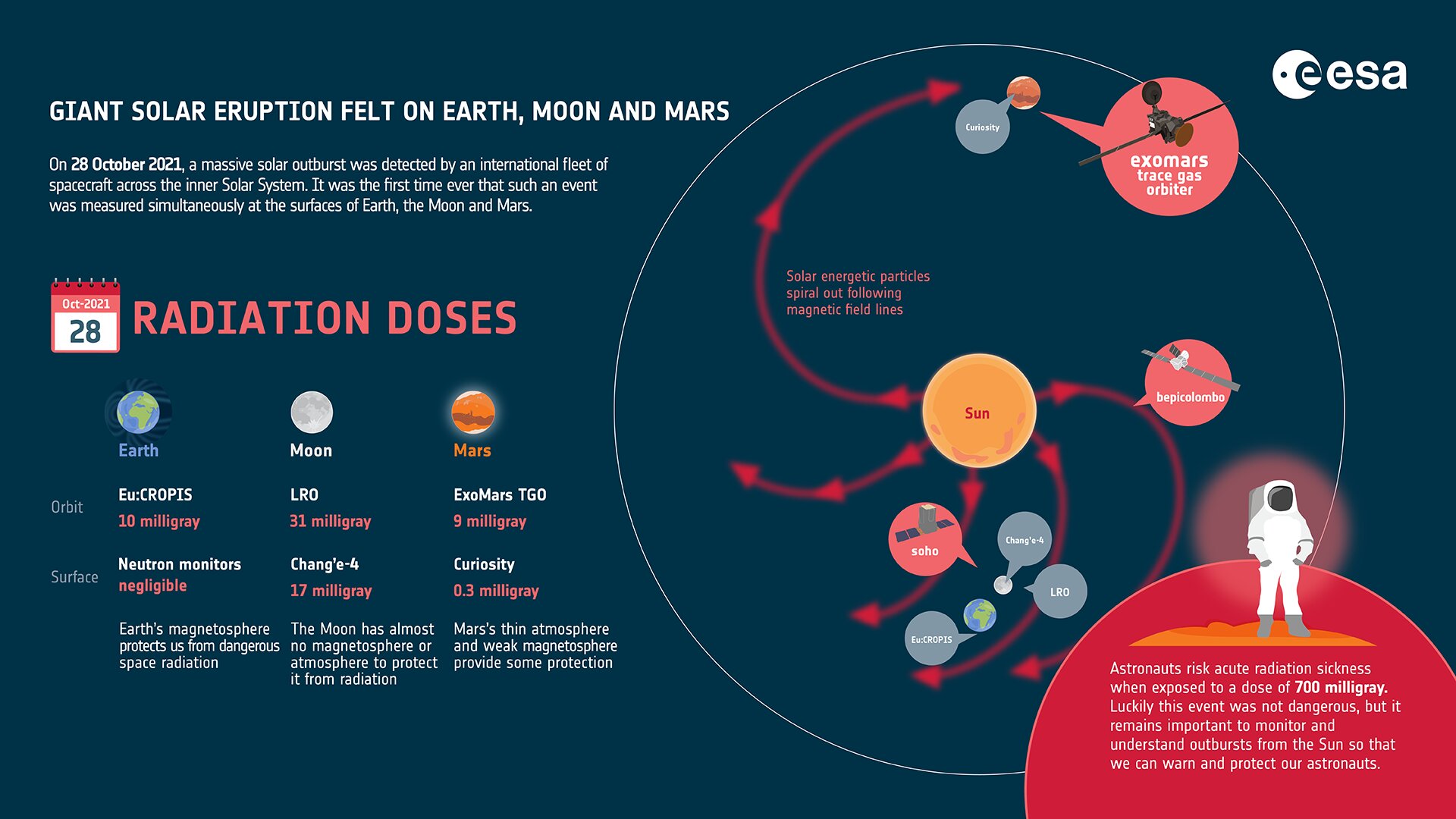
A massive coronal mass ejection from the sun on October 28, 2021, was so significant that it affected Earth, the moon, and Mars simultaneously. This rare "ground level enhancement" event allowed energetic solar particles to reach the surfaces of these celestial bodies. While Earth's magnetic field protected us from the majority of the particles, the moon and Mars, lacking their own magnetic fields, were more vulnerable. Understanding these solar events is crucial for protecting astronauts during future missions to the moon and beyond, as radiation exposure can have severe health consequences.

science2 years ago

Baby Sun's Violent Outbursts May Have Sparked Life on Earth

Violent outbursts by the infant Sun, in the form of powerful superflares, may have triggered life on Earth by colliding solar particles with molecules in Earth's early atmosphere to create the basic building blocks that would later combine to create life. Researchers have created amino acids and carboxylic acids, two of the essential basic ingredients for proteins and life, by bombarding a replica of the primordial atmosphere with simulated solar particles and lightning in the laboratory. This suggests that rampant solar activity could have played a significant role in life's origins, and could help astronomers identify where prebiotic chemistry may have formed elsewhere.

science-and-technology2 years ago

NASA seeks public assistance in studying Sun's chaotic physics and Earth's magnetic field collisions.

NASA has launched a new citizen science project called Heliophysics Audified: Resonances in Plasmas (HARP) that invites volunteers to listen to low-frequency waves generated by solar particles colliding with Earth's magnetic environment. The goal is for volunteers to help identify important features within the cosmic soundscape, which will help scientists better understand space weather events and prepare for them. The HARP team has sped up the waves to make them audible to humans, and believes that humans are often better at listening than machines. Interested volunteers can visit Listen.spacescience.org to participate.