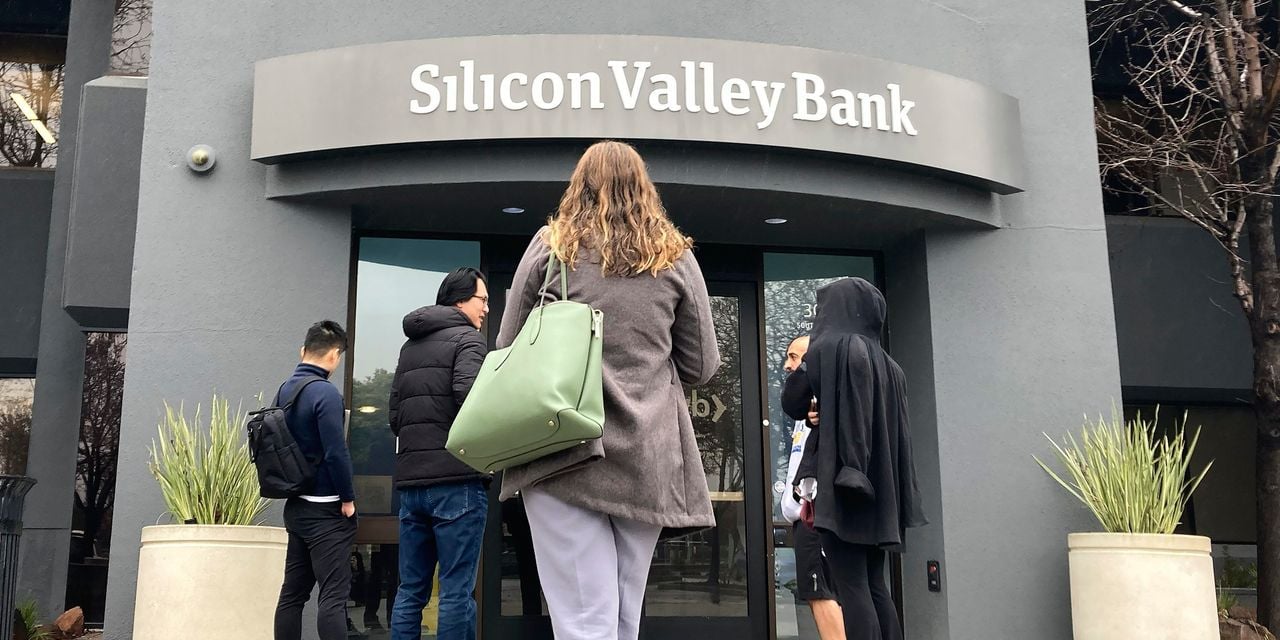
A year after its collapse and subsequent acquisition by First Citizens Bank, Silicon Valley Bank is attempting to rebuild its reputation and customer base in the tech industry. Despite efforts to reassure customers and emphasize its continued focus on start-ups, the bank has faced significant challenges in regaining trust and deposits. The bank's former dominance in the tech industry has waned, with many customers and venture capitalists now spreading their deposits across multiple banks.
SingleStore CEO Raj Verma discusses the impact of Silicon Valley Bank's collapse on the venture capital ecosystem, noting a shift away from "growth at any cost" towards a focus on profitable growth and fiscal responsibility. While there is still capital available, it has become harder for companies to raise funds, with only the strongest companies succeeding. Verma also highlights the significant opportunity of generative AI in the current landscape.
A year ago, JPMorgan analyst Steven Alexopoulos made a research blunder by lowering his target for Silicon Valley Bank (SIVB) shares to $177 from $270, deeming it a prudent strategy despite the bank's liquidity issues. However, the bank's stock plummeted, and the FDIC intervened, leaving shareholders with nothing. Despite the blunder, Alexopoulos continues to work as an equity analyst at JPMorgan. The incident highlights ongoing concerns about the US banking sector's held-to-maturity bonds and the need for transparency in financial markets.
As Silicon Valley Bank's dominance in the start-up banking sector wanes, a new crop of banks and financial institutions, including Mercury, Brex, and Square, are emerging as the new favorites for start-ups. These companies offer a range of financial services tailored specifically to the needs of start-ups, such as seamless integration with accounting software and easy access to venture debt, reflecting the evolving landscape of banking in the technology and start-up space.
The IRS has filed a lawsuit against the FDIC over a $1.45 billion tax bill related to the bailout of Silicon Valley Bank by the US government. The FDIC, which took over the bank, is disputing the tax claim, leading to a legal battle between two government agencies. The IRS acknowledges that the final tax burden may be less than initially estimated, but the dispute remains unresolved.
The IRS has sued the FDIC to determine the amount it must pay to cover Silicon Valley Bank's $1.45 billion tax debt after the bank's collapse in March 2023. The FDIC, acting as the bank's receiver, has denied the tax claim, leading to a legal dispute. Additionally, SVB Financial, the bank's former parent company, has also sued the FDIC over the seizure of $1.93 billion in cash, arguing that the FDIC should repay the funds.
The IRS has sued the FDIC over the failed Silicon Valley Bank's $1.45 billion tax debt, with the FDIC denying the entire tax claim. The IRS is seeking a court ruling to determine the amount the FDIC must pay, as it acts as a receiver for the bank's assets to repay creditors. The dispute arose after the IRS filed an estimated $1.45 billion tax claim, which the FDIC rejected, leading to a legal battle amid the fallout from SVB's collapse and subsequent lawsuits involving seized cash and deposit guarantees.
According to a Duke University professor, the collapse of Silicon Valley Bank earlier this year is not an isolated incident, and many other banks may fail. The professor warns that as long rates increase, it will have negative implications for the economy, particularly in the commercial real estate and housing markets. He believes the Federal Reserve should have stopped raising rates earlier this year to avoid a self-inflicted recession. The professor also notes that the current GDP growth is primarily due to consumers depleting their pandemic savings, and the economy cannot rely on consumer spending to bail it out in 2024.
Silicon Valley Bank, which experienced a dramatic collapse eight months ago, sponsored and hosted parties at AfroTech, the largest Black tech conference in the US. While some Black techies felt it was in poor taste for the bank to celebrate at the conference, others appreciated the bank's commitment to the community and believed it had the potential to earn trust again from scratch. Many Black founders who had previously banked with SVB have moved on to competing banks.
US banks are rushing to make financial restatements in order to reduce their liabilities related to Silicon Valley Bank, as concerns grow over the bank's exposure to troubled companies in the technology sector. The restatements aim to lower the banks' potential losses and protect their balance sheets.
San Francisco Federal Reserve Bank President Mary Daly stated that the failure of Silicon Valley Bank (SVB) was due to regulators being too slow to take action. Daly emphasized that she does not have a supervising role in SVB but believes that other officials waited too long to address regulatory issues. The postmortem report on SVB's failure highlighted the problem of slowness in regulatory action. Daly clarified that supervision is a system-wide activity and that the responsibility for fixing regulatory issues lies with the Fed's Board of Governors. She also discussed the Fed's ongoing fight against inflation and the challenges of raising rates without causing a recession or allowing inflation to remain above the central bank's target. Other Fed officials also spoke about the need for rate hikes to combat inflation.
SVB Financial, the former parent company of Silicon Valley Bank, is suing the FDIC to regain access to approximately $2 billion in deposits that were seized by the regulator after the bank's collapse. SVB Financial filed for bankruptcy in March, shortly after Silicon Valley Bank was placed into receivership.
SVB Financial, the parent company of Silicon Valley Bank, has filed a lawsuit against the Federal Deposit Insurance Corporation (FDIC) to recover $1.9 billion that the regulator has held since seizing the bank earlier this year. SVB Financial argues that the FDIC is violating U.S. bankruptcy code by withholding the funds, which are crucial for the company's ability to reorganize. The bankruptcy judge recently approved the sale of SVB Financial Group's investment bank, SVB Securities, to its managers. The collapse of Silicon Valley Bank in March continues to have repercussions, with depositors seeking legal redress and federal officials investigating Goldman Sachs' involvement in the bank's final days.
SVB Financial Group, the former owner of Silicon Valley Bank (SVB), has filed a lawsuit against the US Federal Deposit Insurance Corporation (FDIC), accusing it of violating US bankruptcy law by keeping $1.9bn in cash after taking over SVB's banking arm. The FDIC's failure to return the funds is hindering SVB Financial's ability to reorganize and causing continuous harm to the debtor. SVB Financial Group's lawsuit comes after the FDIC seized Silicon Valley Bank's assets earlier this year, marking the largest bank collapse since the 2008 financial crisis.
The US government spent over $12.75 billion to bail out Silicon Valley Bank's 10 wealthiest depositors, according to an unredacted document released by the Federal Deposit Insurance Corporation (FDIC). The document reveals the names of the firms that were bailed out, including stablecoin issuer Circle, venture capital giant Sequoia, and fintech firm Bill.com. The FDIC guaranteed the deposits of these firms, which exceeded the $250,000 FDIC protection limit per account, following SVB's collapse in March.