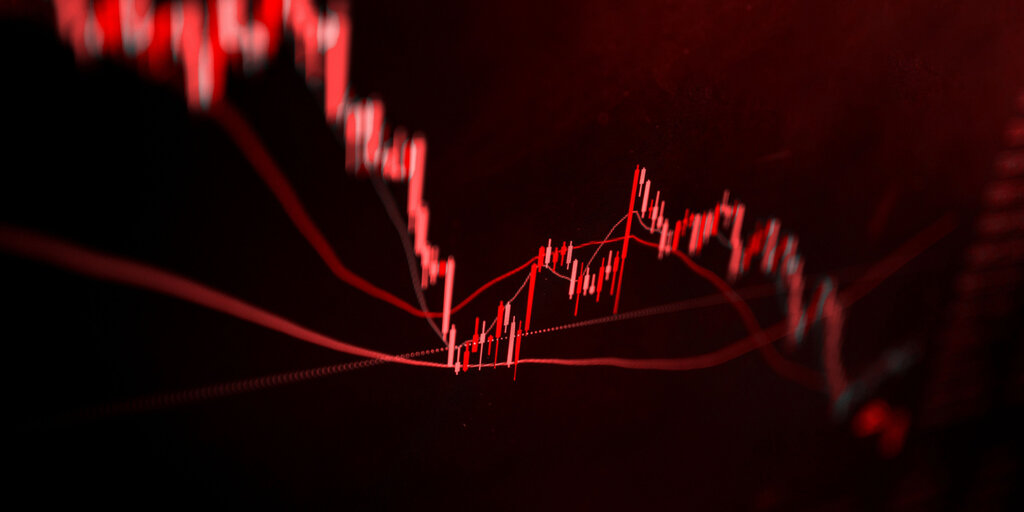
SAND, the native token of The Sandbox, surged by 20.49% to $0.3629, driven by bullish technical indicators and increased on-chain activity. The token is testing the critical $0.36 resistance level, with potential targets at $0.42 and $0.48 if it breaks through. Rising active addresses and transaction counts, along with reduced exchange reserves, suggest growing interest and accumulation. However, a 54.89% spike in open interest indicates heightened speculative activity, which could lead to increased volatility.
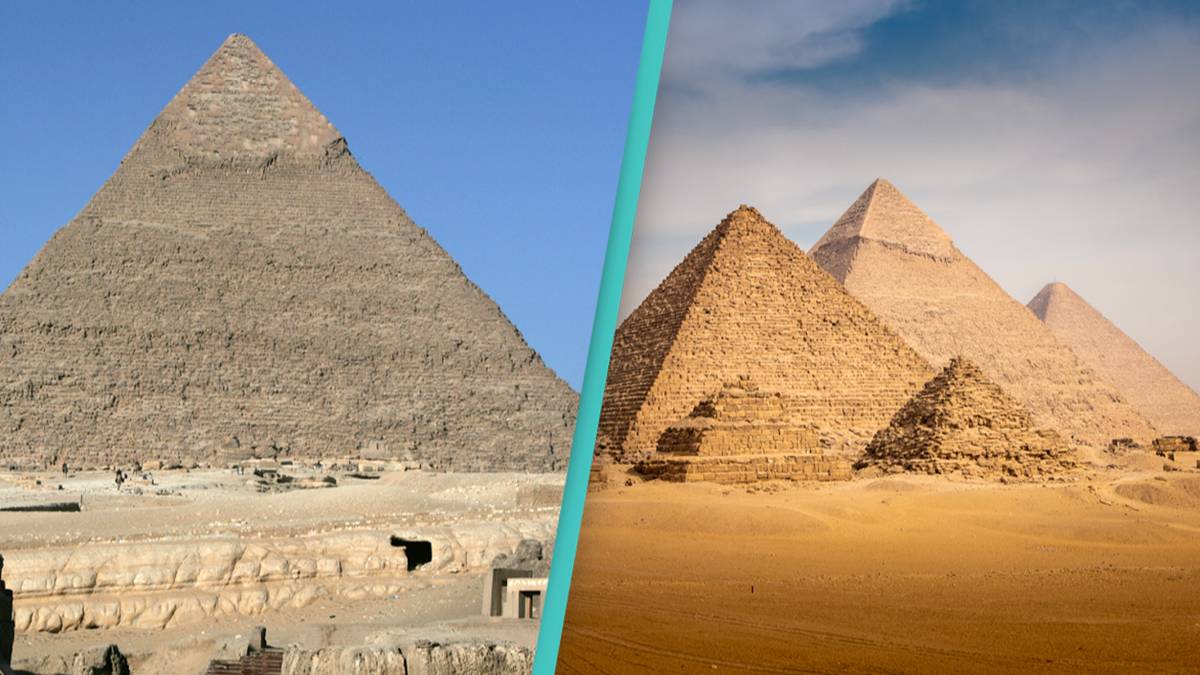
Physicists believe they have solved the mystery of how the Ancient Egyptians built the pyramids by conducting experiments based on a wall painting in an ancient tomb. The painting depicted men moving a statue with ropes attached to a sledge, while water was poured over the sand in front of the sledge. The physicists found that adding the right amount of water to the sand reduced sliding friction, making it easier to move objects. This discovery challenges previous beliefs that the pouring of water was purely ceremonial, and suggests that wet sand is about twice as stiff as dry sand, making it easier for the Egyptians to move heavy objects during pyramid construction.
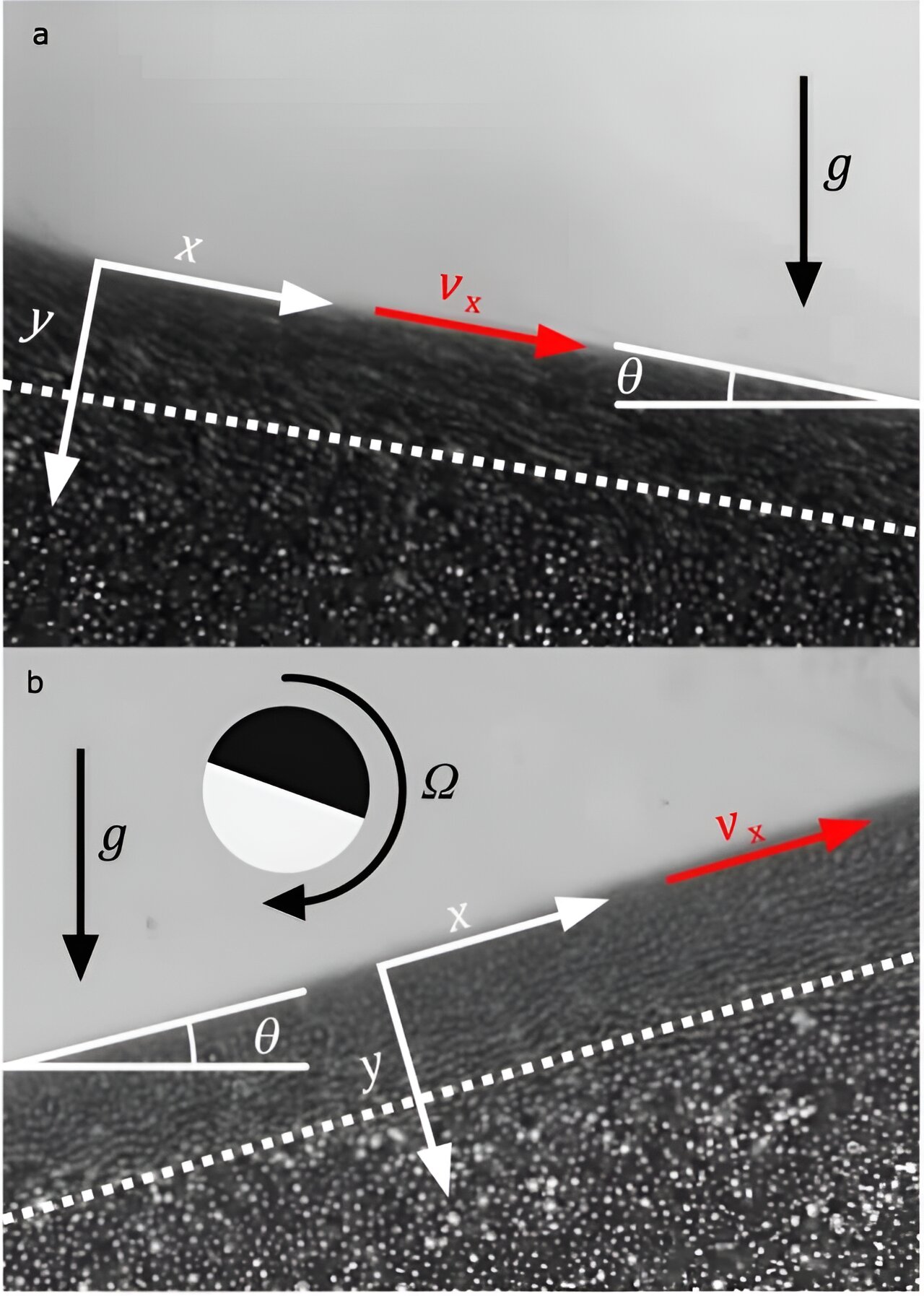
Researchers at Lehigh University have discovered that sand can flow uphill when subjected to torque and an attractive force. By applying these forces to each grain, the sand particles were observed to flow uphill, up walls, and up and down stairs. This unusual discovery could have various applications in fields such as healthcare, material transport, and agriculture. The researchers are now exploring the collective motion of the sand particles and investigating potential uses in microrobotics and nutrient delivery systems.
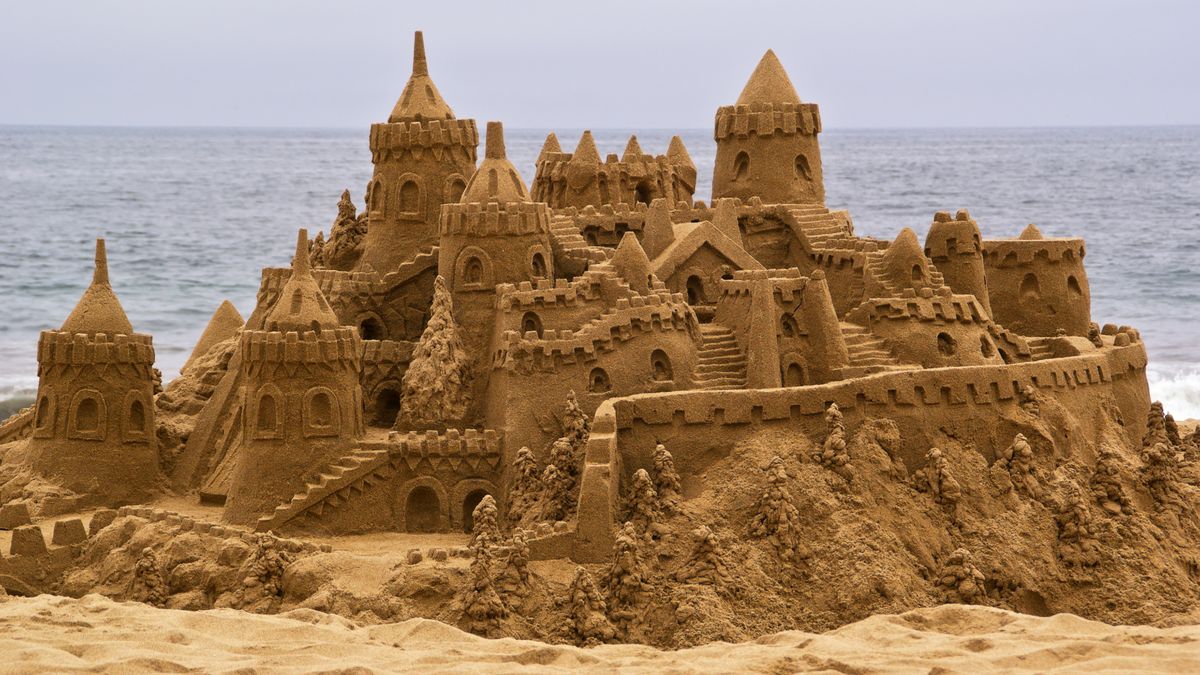
Sandcastles stay together through a combination of sand, water, and air. Water adheres to the surface of sand grains, forming small bridges that hold the grains together. The strength of these bridges is governed by the surface tension of water. The perfect sandcastle requires one part water for every eight parts dry sand. Angular grains with sharp corners interlock more, increasing stability. Adding a small fraction of clay to the sand helps create more water bridges for sturdier construction. Salt from seawater can help stabilize sandcastles, but they will eventually dry out and become fragile.
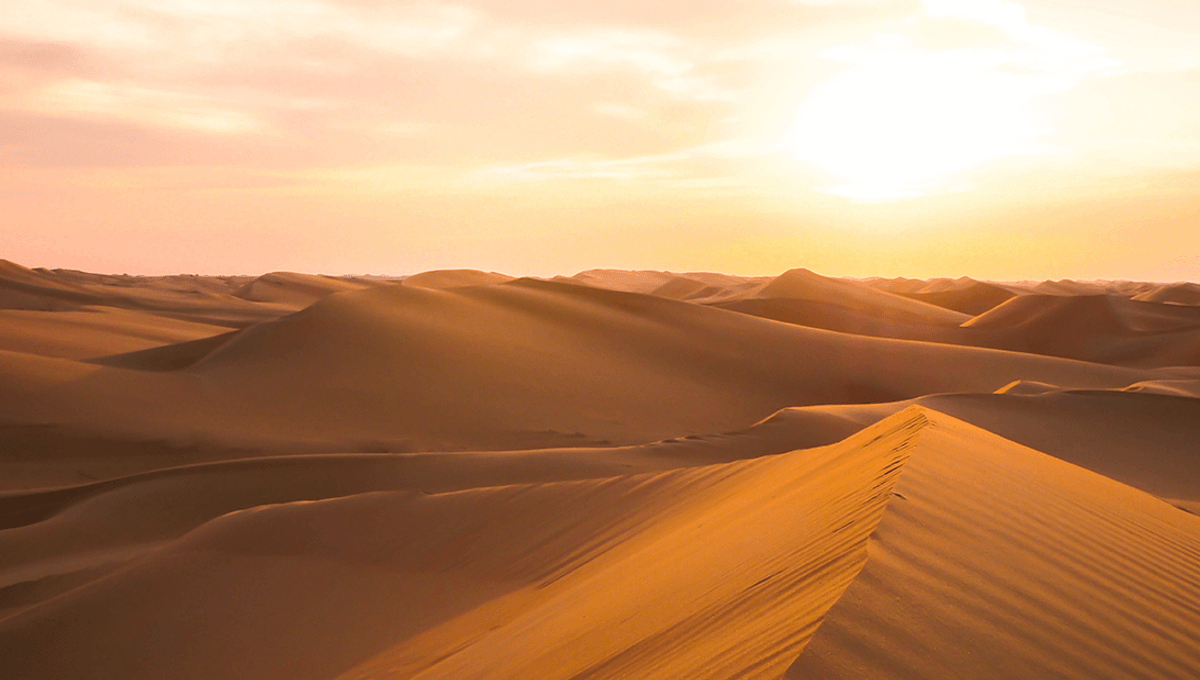
The composition underneath desert sand varies depending on the location, with some areas having sand dunes that may conceal forests or sinkholes. Sand is formed from weathered rocks and can eventually turn into sedimentary rock sandstone. In deserts, the exposed bedrock itself is often covered by sand, which is formed through the weathering process. Digging beneath sandy deserts would reveal the bedrock and dried-out clay. However, sand dunes can still hold surprises, such as preserved trees or evidence of ancient lakes.
Sand is made of tiny, loose grains of material that can be composed of eroded rock, crushed seashells, parrotfish poop, or the remains of calcium-containing sea creatures. Sand can be found in various colors, including black, white, pink, green, yellow, red, and blue. Sand is used in various industries, including construction, metal casting, water filtration, and ceramics. Meiofauna, tiny animals that live among grains of sand, help clean up beaches. Sand dunes can be found throughout the solar system and may provide insight into the composition of other worlds.
Bitcoin and Ethereum lost momentum amid the Ledger controversy and US market uncertainty, with Bitcoin seeing a 3.5% loss and Ethereum falling 1.3%. Render (RNDR) was the biggest gainer of the week, up 19.3%, while Pepecoin lost 10.5%. Sui's native SUI token, Optimism (OP), and Algorand (ALGO) also saw double-digit losses. The Sandbox game (SAND) gained 5.4% and Render (RNDR) climbed 13.6% in the past day alone.
The release of Apple's mixed-reality headset could potentially boost the metaverse industry, leading to a surge in metaverse tokens like MANA and SAND. However, the success of these tokens will ultimately depend on the widespread adoption of the metaverse among everyday users. While many crypto market participants immediately correlate the concept of virtual reality with "metaverse tokens," it's worth noting that Decentraland is still building out its VR capabilities and The Sandbox has "no immediate or future plans" to build out VR.
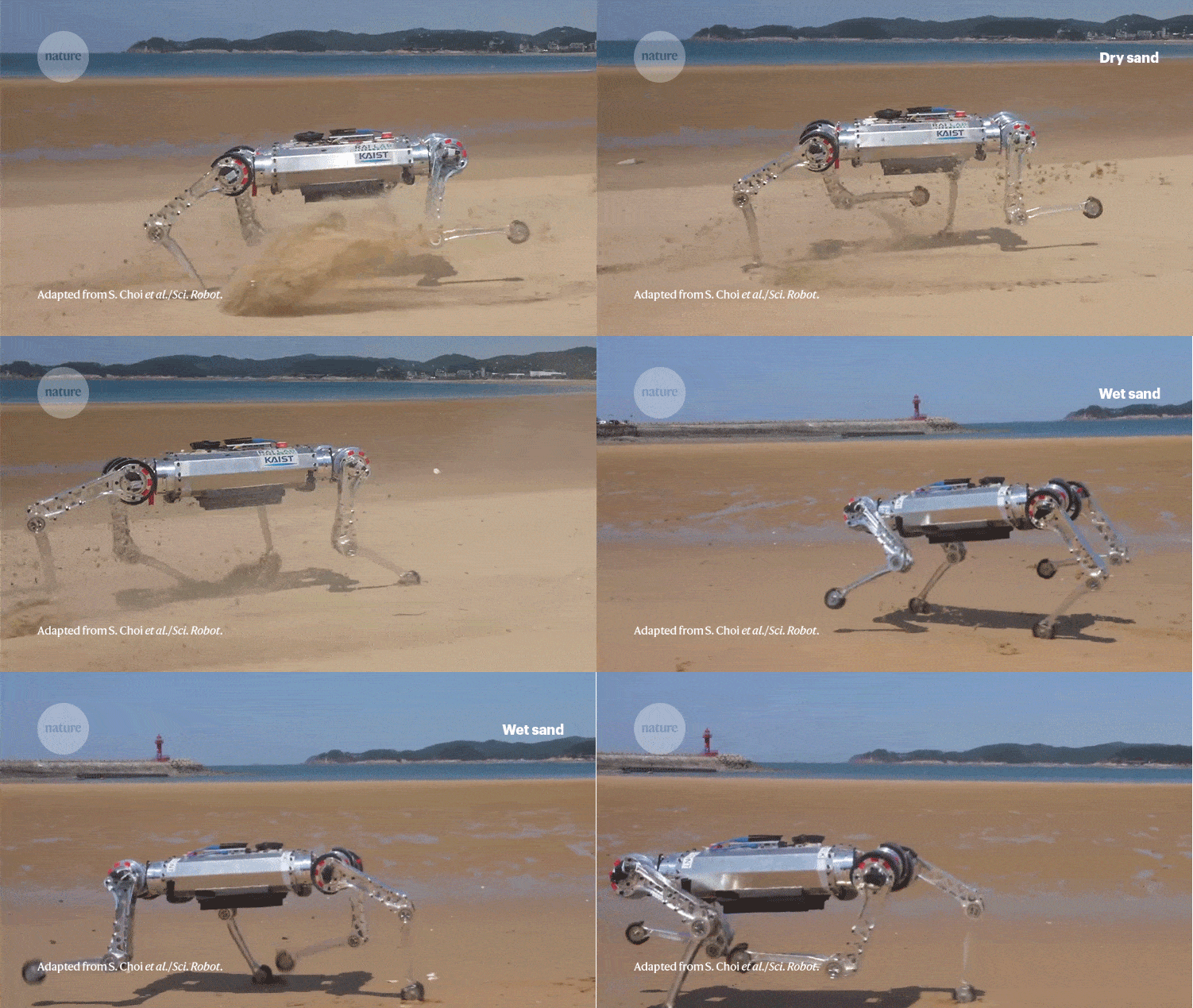
Researchers have developed a four-legged robot that can run on sand at a faster pace than humans jog on solid ground. The robot's success is attributed to combining data-driven learning with accurate, yet simple, models. The robot is fast, robust, and energetically efficient on sand, demonstrating the value of this approach for controlling robots over complex terrain.
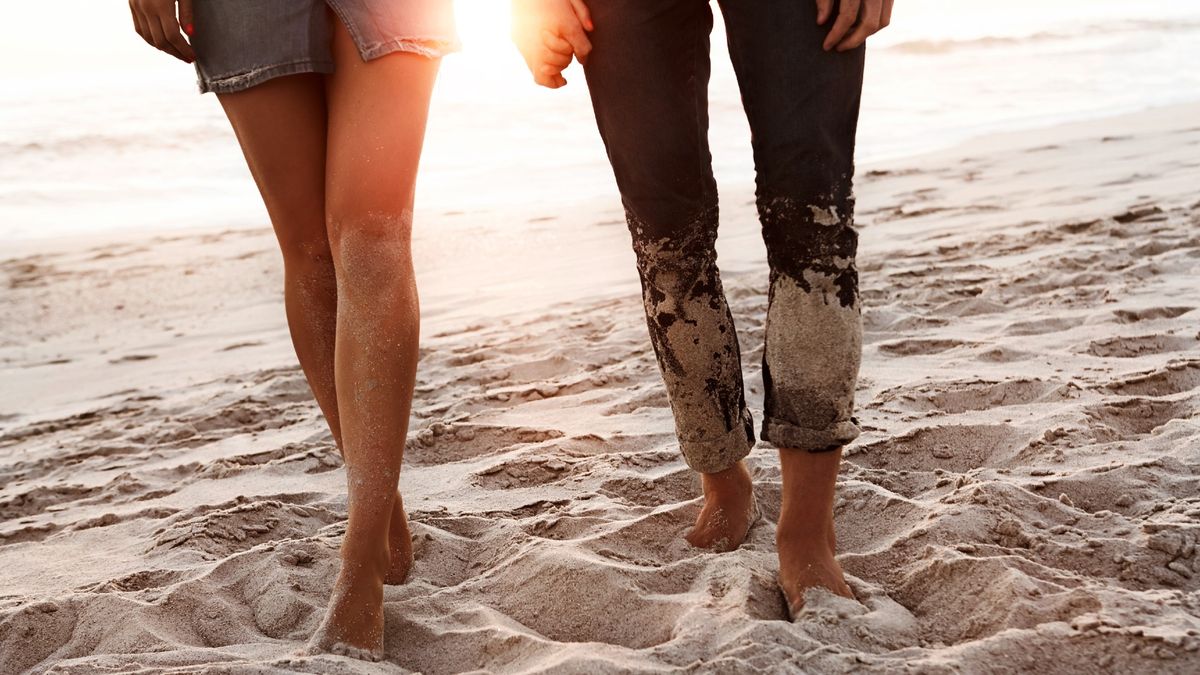
Walking on sand is harder than on solid ground because it requires more energy due to the softness and unevenness of the surface. The body makes small adjustments to gait, engaging muscles in the ankle and foot that might otherwise get more rest. Running on sand reduces the disparity in energy expenditure, but it is still more energy-intensive than walking on a solid surface. Wet sand is easier to walk on than dry sand, and increasing surface area by wearing shoes or changing gait can also help. Sand is a better surface for helping athletes recover more quickly from workouts and for people who are rehabbing after injuries.