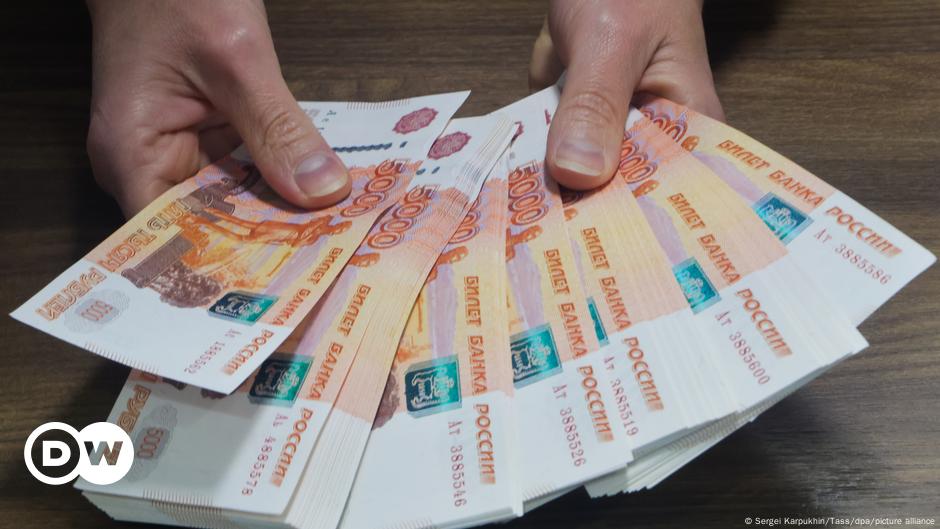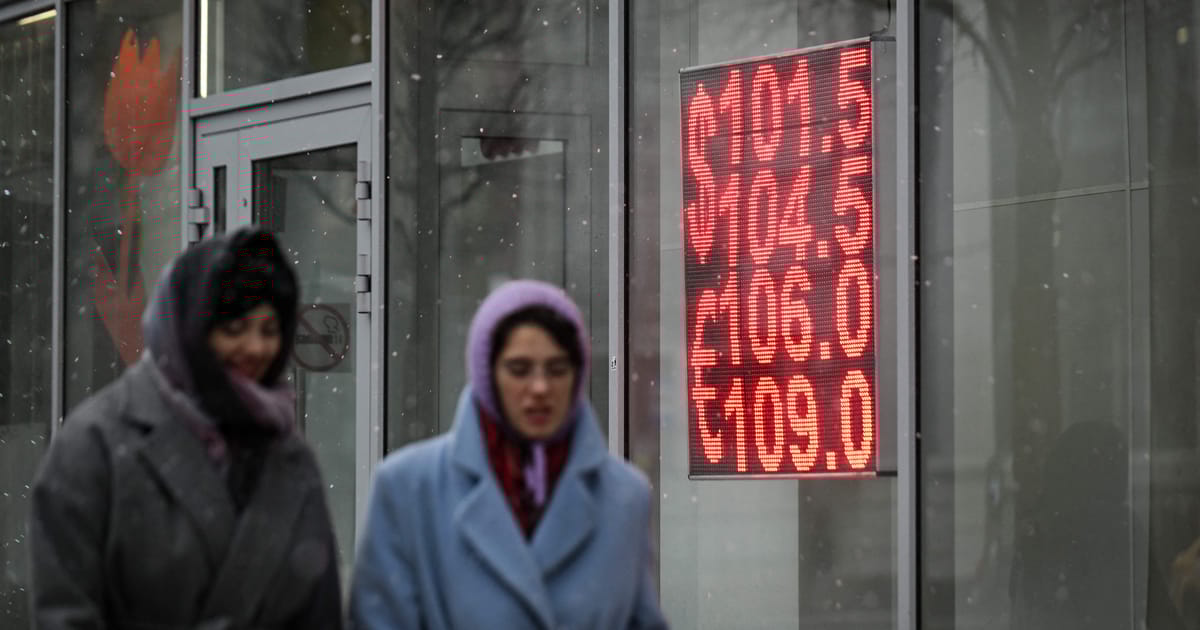
The Russian ruble declined sharply following limited progress in recent Russia-Ukraine peace talks, with markets reacting negatively to the symbolic nature of negotiations and ongoing economic pressures from declining export revenues and investor concerns about potential interest rate cuts, leading to a weaker ruble and falling stock indices.
Russia's economy faces risks of overcooling due to high interest rates and an overvalued ruble, potentially hindering recovery and growth, with officials calling for more significant rate cuts and structural reforms.
Russia's central bank has reduced its interest rate to 20% for the first time since September 2022, signaling easing inflation pressures, though monetary policy remains tight to control inflation and support economic stability amid ongoing geopolitical tensions.
Russia's ruble remains weak, valued at less than a penny, despite the central bank's halt on foreign currency purchases. The ruble has fallen 20% against the dollar this year, exacerbated by U.S. sanctions on Russian banks. While this could make exports cheaper, it risks increasing inflation due to more expensive imports. Russia's sovereign wealth fund, used to support the ruble, has dwindled from $140 billion to $55 billion since the Ukraine invasion, leaving the economy vulnerable to energy price fluctuations. The central bank maintains high interest rates, but further hikes could strain the economy.
The Russian ruble's decline against major currencies, exacerbated by Western sanctions, poses a challenge for the Kremlin as it tries to balance war spending with controlling inflation. The ruble's value has dropped to 109 per U.S. dollar, impacting consumer prices and leading the central bank to raise interest rates to 21% to curb inflation, which stands at 8.5%. Despite these economic pressures, President Putin maintains that the situation is under control, though experts highlight the visible impact of inflation on the Russian populace.
Russian President Vladimir Putin has downplayed concerns over the ruble's significant depreciation, attributing it to inflation, budget payments, and oil prices. Despite Putin's reassurances, analysts warn of economic instability due to rising inflation, military spending, and falling oil prices. The ruble's decline, exacerbated by US sanctions on Gazprombank, threatens to increase import costs and inflation. Russia's central bank has intervened to stabilize the currency, but the economic outlook remains bleak amid ongoing geopolitical tensions and Western sanctions.
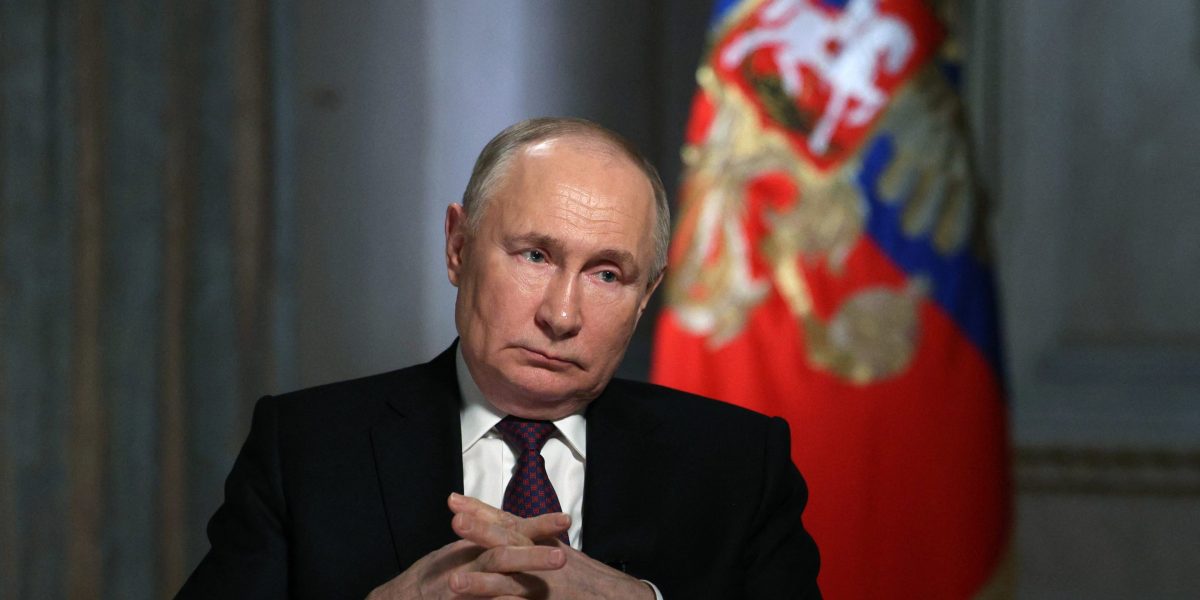
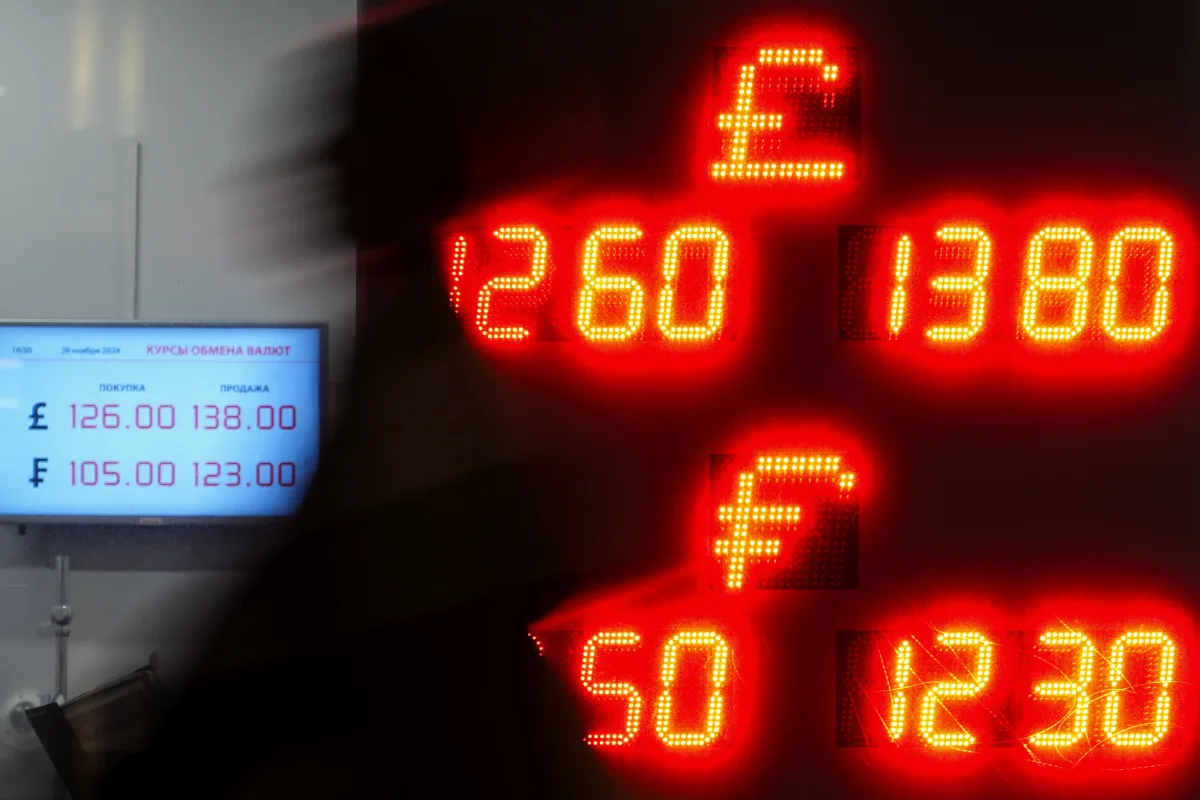
Russian President Vladimir Putin assured that the ruble's exchange rate is under control despite its recent sharp decline, attributing fluctuations to factors like budgetary payments and oil prices. He emphasized that there is no reason for panic and that the Central Bank has tools to manage inflation without raising interest rates. The ruble's value against the dollar and euro has dropped significantly, with the Central Bank setting the official rate at 108 rubles, a level not seen since March 2022.
The Russian ruble has plummeted to its lowest level against the US dollar since March 2022, driven by US sanctions on Gazprombank and falling oil prices. The sanctions have restricted Russia's access to global financial systems, impacting its ability to fund military operations and receive commodity revenues. Despite increased defense spending and GDP growth, Russia faces inflationary pressures and economic instability. The government views the weak ruble as beneficial for exports, but experts warn of potential financial instability if the situation isn't managed soon.
Russia's central bank has halted foreign currency purchases and is selling Chinese yuan to support the ruble, which has plummeted to its lowest value since the Ukraine war began. This move aims to curb inflation, which officially exceeds 9% but may be higher according to analysts. The ruble's decline is exacerbated by Western sanctions and a lack of foreign investment, while the weak currency risks importing inflation through higher prices for imported goods. The situation is further strained by low unemployment and rising wages due to military mobilization.
Russia's central bank has halted foreign currency purchases and is selling Chinese yuan to support the ruble amid soaring inflation and economic sanctions. The ruble has plummeted to its lowest value since the Ukraine war began, exacerbated by Western sanctions and a lack of foreign investment. Inflation rates are high, with consumer prices rising sharply, prompting the central bank to raise interest rates to 21%. However, this has not stabilized the ruble, leading to calls for even higher rates despite potential economic slowdown.
Russia's ruble has sharply declined, prompting the central bank to intervene by halting foreign currency purchases to stabilize the market. The ruble's fall to its lowest level since March 2022 is attributed to new U.S. sanctions and a war-focused economy, leading to inflation and economic instability. Despite Kremlin dismissals, experts warn of a potential currency crisis, with the ruble's devaluation reflecting broader economic challenges exacerbated by Western sanctions and increased defense spending.
The Russian ruble is experiencing a significant decline as the country's war economy faces mounting pressure. Simultaneously, Europe's single currency is also under strain due to internal economic challenges and political instability, with markets looking to the European Central Bank (ECB) for solutions. The ECB warns that a lack of growth could reignite the eurozone debt crisis, exacerbated by higher interest rates and potential trade wars. These economic issues are compounded by political tensions, including the influence of figures like Trump on European economic policies.
Russia's Central Bank has announced it will halt foreign currency purchases on the domestic market until the end of 2024 to curb financial market volatility as the ruble hits its lowest levels since the 2022 invasion of Ukraine. The ruble's devaluation, trading as low as 113 to the dollar, is expected to increase inflation, potentially adding 1.5 percentage points to the current rate of 8.5%. The Bank will continue selling foreign currency through its sovereign wealth fund, planning daily sales equivalent to 8.4 billion rubles in the latter half of 2024.
Russia's central bank has raised interest rates to 13% in an effort to combat inflation and support the weakening ruble. This marks the third consecutive interest rate hike and comes after an emergency rate hike in August. The ruble is trading close to a 16-month low against the dollar, and the central bank has raised its inflation forecast for 2023 to 7.5%, well above the target of 4%. Economists warn that Russia's economy could stagnate and become more dependent on China due to western sanctions and the invasion of Ukraine.
The Central Bank of Russia has raised its key lending rate to 13% in an effort to combat inflation and stabilize the struggling ruble. The country's economy has been hit hard by a decrease in export revenues, particularly from oil sales, as well as increased defense spending and sanctions. Additionally, Russia is facing a brain drain of talent and a low birth rate, resulting in a shortage of workers. Despite these challenges, the government has revised its forecast for economic growth in 2023 to 2.8% and predicts a 2.3% increase in GDP next year.