Tag

Ring Of Fire

All articles tagged with #ring of fire

Orbital 'ring of fire' eclipse: Proba-2 captures four space-view angles of Feb. 17, 2026
space9 days ago

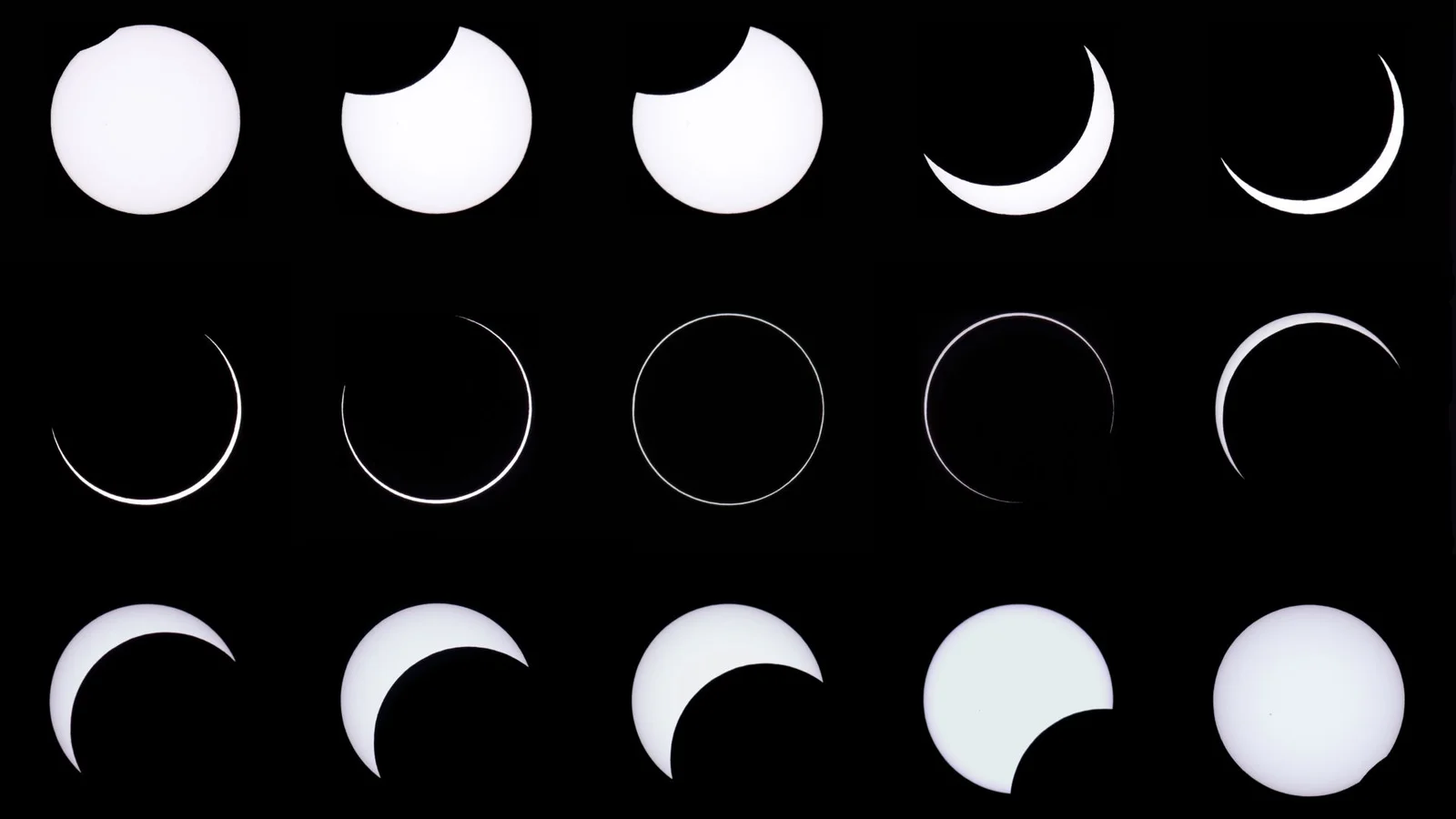
Orbital 'ring of fire' eclipse: Proba-2 captures four space-view angles of Feb. 17, 2026

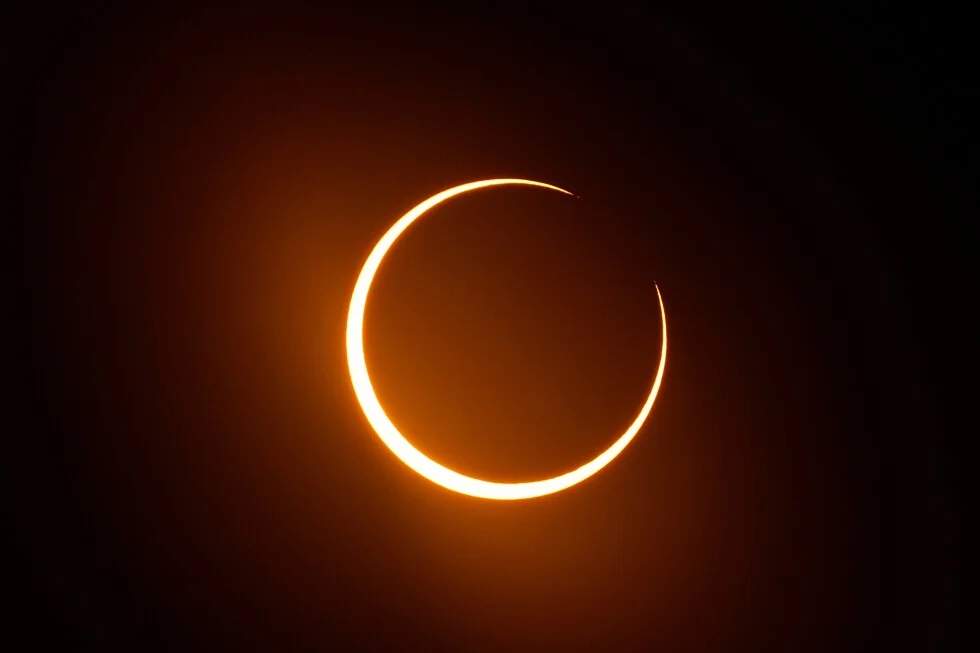
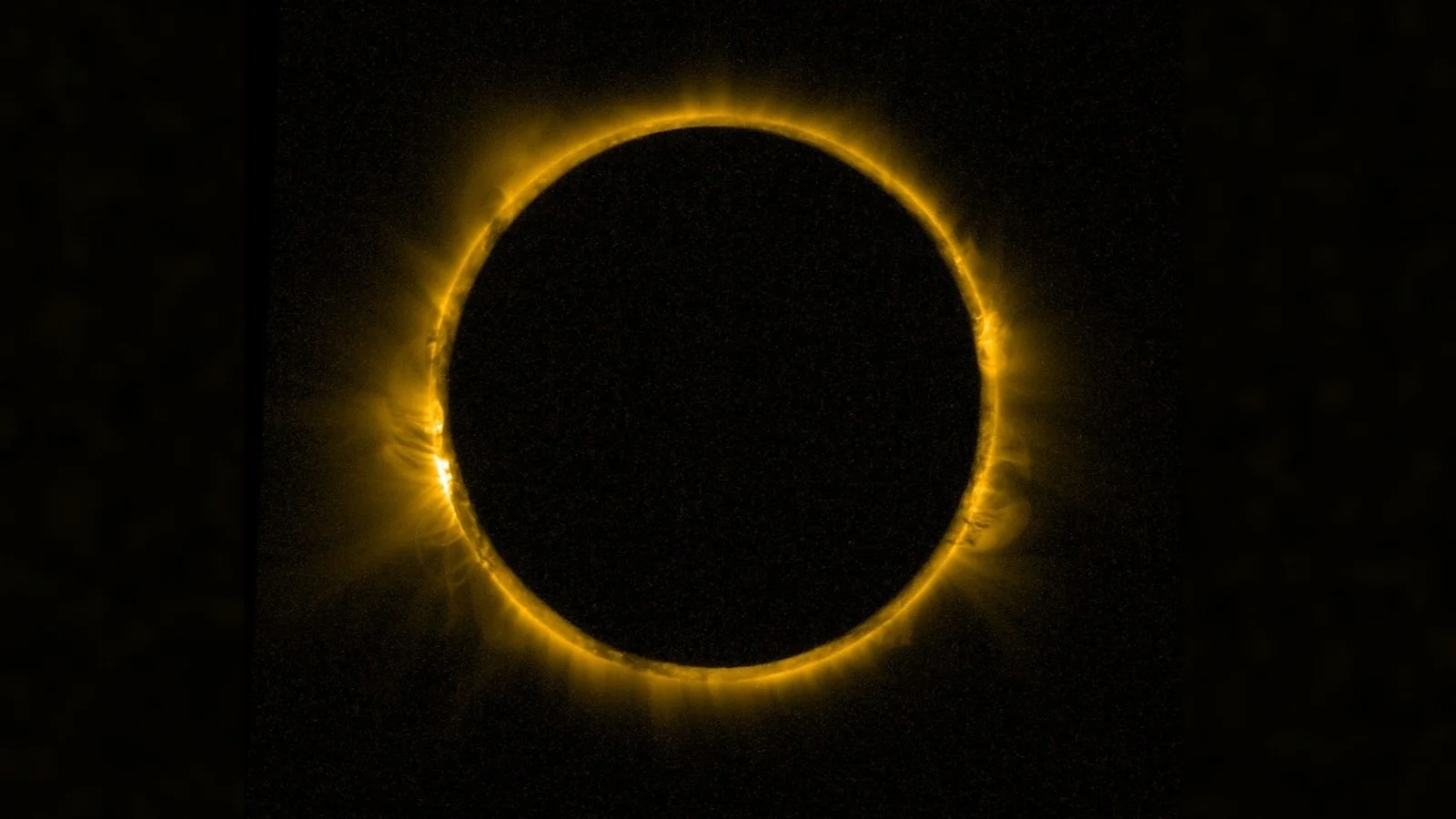
ESA’s Proba-2 satellite recorded four viewpoints of the Feb. 17, 2026 annular solar eclipse from orbit, including a spectacular “ring of fire” when about 93% of the Sun was obscured; the SWAP instrument imaged the Sun’s corona in extreme ultraviolet, with the most complete ring visible from remote Antarctica while other locations saw a partial eclipse.
Antarctic Ring of Fire: Only 13 Spots Will See This Week's Solar Eclipse
science12 days ago

Antarctic Ring of Fire: Only 13 Spots Will See This Week's Solar Eclipse

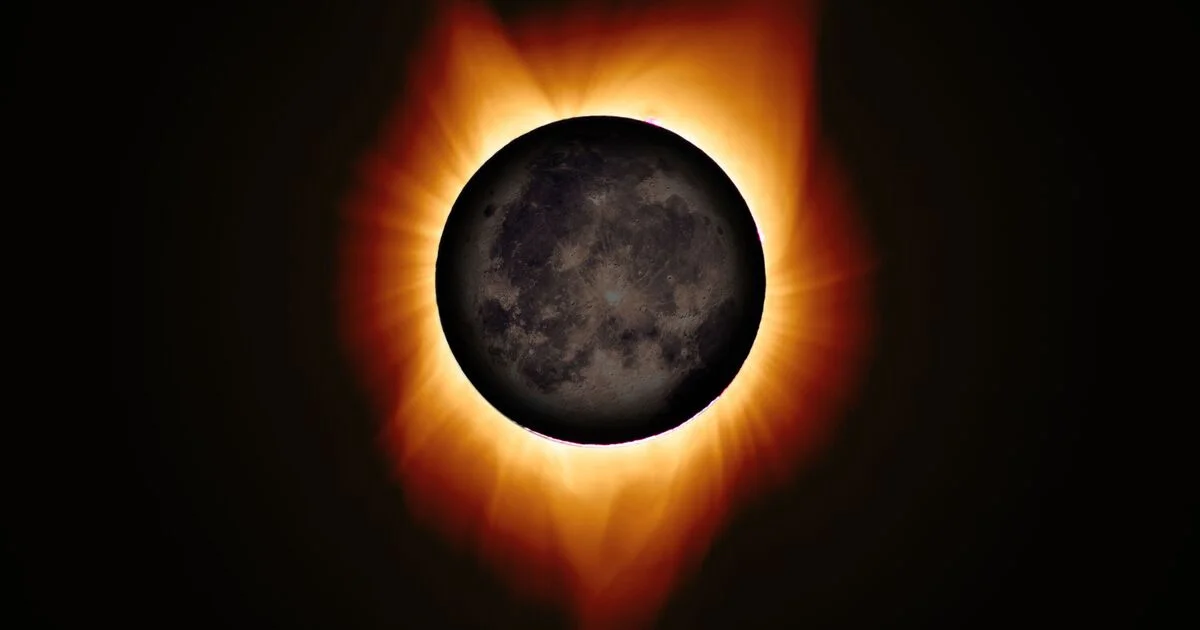
The year’s first solar eclipse is an annular “ring of fire” visible only from 13 locations along a narrow path that starts over western Antarctica and sweeps across the Davis Sea coastline and the Southern Ocean on Feb 17 at about 7:10am; the UK isn’t in the path, Antarctica watchers will see the full eclipse while other locations may witness partial views, and a lunar eclipse follows on March 3–4.

Antarctica witnesses a brief 'ring of fire' during February's annular eclipse
space12 days ago

Antarctica witnesses a brief 'ring of fire' during February's annular eclipse

An annular solar eclipse swept across a remote Antarctic corridor on Feb. 17, producing a ring of fire as the Moon partially obscured the Sun. Annularity lasted a little over two minutes along a ~383‑mile-wide path that included the Concordia research station, with a partial eclipse visible to about 176 million people in southern South America and southern Africa. The event ended around 9:27 a.m. EST. The article notes the next major sky show will be the total lunar eclipse on March 3, 2026, expected to be viewable by billions of people, offering a different kind of celestial spectacle.

Antarctica to Witness February’s Ring-of-Fire Solar Eclipse
space13 days ago

Antarctica to Witness February’s Ring-of-Fire Solar Eclipse

On Feb. 17, 2026, an annular solar eclipse will turn the Sun into a ring of fire, visible mainly over Antarctica with partial visibility in parts of southern Africa and the southern tip of South America; the peak annular phase occurs around 7:12 a.m. EST, and Space.com will provide a live eclipse blog. The event is notable for observers across a remote region, with penguins anticipated to “see” the eclipse more than people. The next total solar eclipse will occur on Aug. 12, 2026, visible in Greenland, western Iceland, and northern Spain, and travel and viewing guidance is highlighted for enthusiasts.

2026 Ring of Fire: Antarctic eclipse path with partial view for Africa
science13 days ago

2026 Ring of Fire: Antarctic eclipse path with partial view for Africa

In February 2026, an annular solar eclipse—the so-called ring of fire—will trace a narrow path over Antarctica, with a partial eclipse visible across the continent, Africa, and parts of South America. Concordia Station, Antarctica, is the prime viewing spot where annularity peaks around 7:47 p.m. local time, and the event will last about two hours overall. Since only a slim path shows the ring, many observers will rely on livestreams or safe viewing methods; eye protection with certified eclipse glasses is essential. The next annular eclipse is February 6, 2027, and the next U.S. viewing opportunity isn’t until 2039.

Antarctica readies for a dramatic ring of fire solar eclipse in 2026
space20 days ago

Antarctica readies for a dramatic ring of fire solar eclipse in 2026

The February 17, 2026 event will be an annular (ring of fire) solar eclipse, visible mainly from Antarctica where up to about 96% of the Sun will be obscured for a little over two minutes; a partial eclipse will also be seen across parts of Antarctica, southern Africa, and the southern tip of South America. The live updates cover viewing tips, safety precautions, and guides for observers looking to catch the spectacle.

Antarctic Ring of Fire Eclipse: A Spectacle With Limited Access
science1 month ago

Antarctic Ring of Fire Eclipse: A Spectacle With Limited Access

On February 17, 2026, an annular solar eclipse will trace a 4,282 km path over Antarctica, creating a thin “ring of fire” as the Moon sits near apogee and covers about 96% of the Sun at maximum. Although scientifically valuable for studying solar irradiance and atmospheric changes, practical observation is severely limited by harsh weather, extreme remoteness, and restricted access at the few observing sites, meaning the event will be visible to only a small, mostly fixed-number of researchers rather than a broad public audience.

Antarctic 'ring of fire' solar eclipse set to dazzle penguins in February
space1 month ago

Antarctic 'ring of fire' solar eclipse set to dazzle penguins in February

On Feb 17, 2026, an annular solar eclipse—where the Sun appears as a ring—will sweep a narrow path across Antarctica, with up to about 96% of the Sun obscured at maximum along the annular track near Concordia Station. The ring of fire will be visible only within a long, thin corridor (roughly 2,661 by 383 miles); elsewhere in Antarctica and in parts of southern Africa and the southern tip of South America viewers will see a partial eclipse. Because the path is so limited, most people will follow the event via livestreams or live blogs rather than witnessing the ring in person.

Russian Earthquake Triggers Tsunami Warnings Across Pacific
world7 months ago

Russian Earthquake Triggers Tsunami Warnings Across Pacific

A magnitude 8.8 earthquake struck off Russia's Kamchatka Peninsula, ranking among the top 10 strongest ever recorded, causing damage, injuries, and triggering tsunami warnings across the Pacific region. The earthquake occurred along a tectonic plate boundary in the Ring of Fire, where the Pacific Plate subducts beneath the Okhotsk Plate, leading to frequent and powerful seismic events. Aftershocks and a tsunami have followed, emphasizing the ongoing seismic risk in subduction zones worldwide, including areas like New Zealand.

Scientists Alert on Potential Massive Eruptions from Mount Rainier and Pacific Volcanoes
science7 months ago

Scientists Alert on Potential Massive Eruptions from Mount Rainier and Pacific Volcanoes

Recent increased volcanic activity across the Pacific Ring of Fire, including Mount Rainier's seismic swarm and ongoing eruptions at Alaska's Great Sitkin and Hawaii's Kilauea, has raised concerns among scientists about potential hazards like lahars and ash clouds, emphasizing the need for continued monitoring and preparedness.

Scientists Reveal Varied Behaviors of Cascade Volcanoes in Subduction Zones
science9 months ago

Scientists Reveal Varied Behaviors of Cascade Volcanoes in Subduction Zones

Scientists study the diverse behaviors of Cascade volcanoes, which are part of the Ring of Fire, to better understand their eruption patterns and hazards. The USGS monitors these volcanoes, including well-known ones like Mount St. Helens and less active ones like Mount Adams, using seismic data and hazard assessments to prepare for potential eruptions and protect communities.

"Indonesian Officials Fear Collapse as Mount Ruang Erupts, Prompting Tsunami Warnings"
natural-disasters1 year ago

"Indonesian Officials Fear Collapse as Mount Ruang Erupts, Prompting Tsunami Warnings"

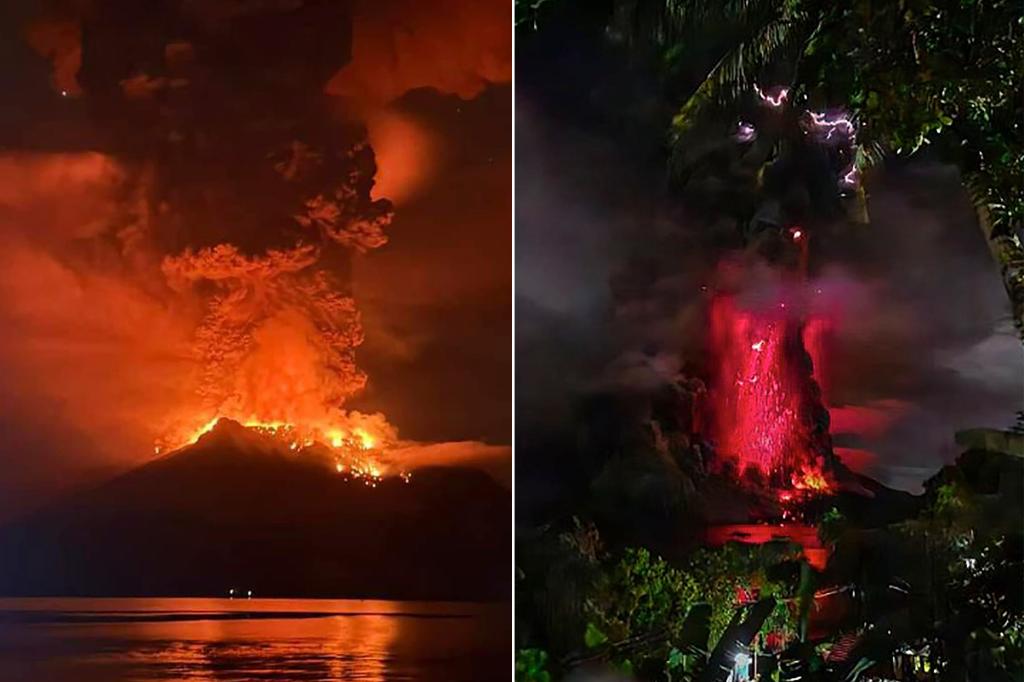
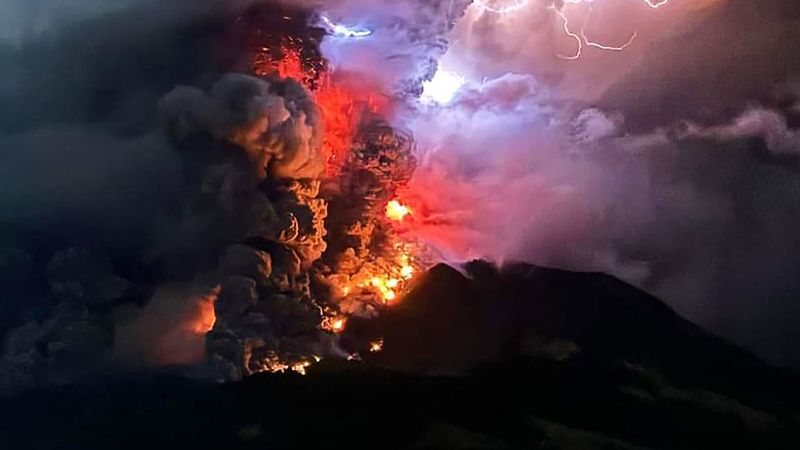
Indonesian authorities issued a tsunami alert after the Ruang volcano on Sulawesi island erupted several times, prompting the evacuation of over 11,000 people. The volcano's alert level was raised to the highest, and officials fear that part of the volcano could collapse into the sea, potentially causing a tsunami. Indonesia, known for its volcanic activity due to its location along the "Ring of Fire," has 120 active volcanoes. Residents are being relocated to the nearest city, Manado, as a precautionary measure.

"Indonesian Volcano Eruption Triggers Tsunami Alert and Evacuations"
natural-disasters1 year ago

"Indonesian Volcano Eruption Triggers Tsunami Alert and Evacuations"

Indonesian authorities have ordered the evacuation of hundreds of villagers after Mount Ruang, a remote island volcano in North Sulawesi, erupted multiple times, spewing lava and ash plumes. There are fears that the volcano could collapse into the sea and trigger a tsunami, prompting the highest volcano alert level to be raised. Dramatic footage shows ash billowing into the sky and villagers being evacuated, with no reported casualties. Indonesia, known for its numerous active volcanoes, sits along the Ring of Fire, a region prone to seismic activity.