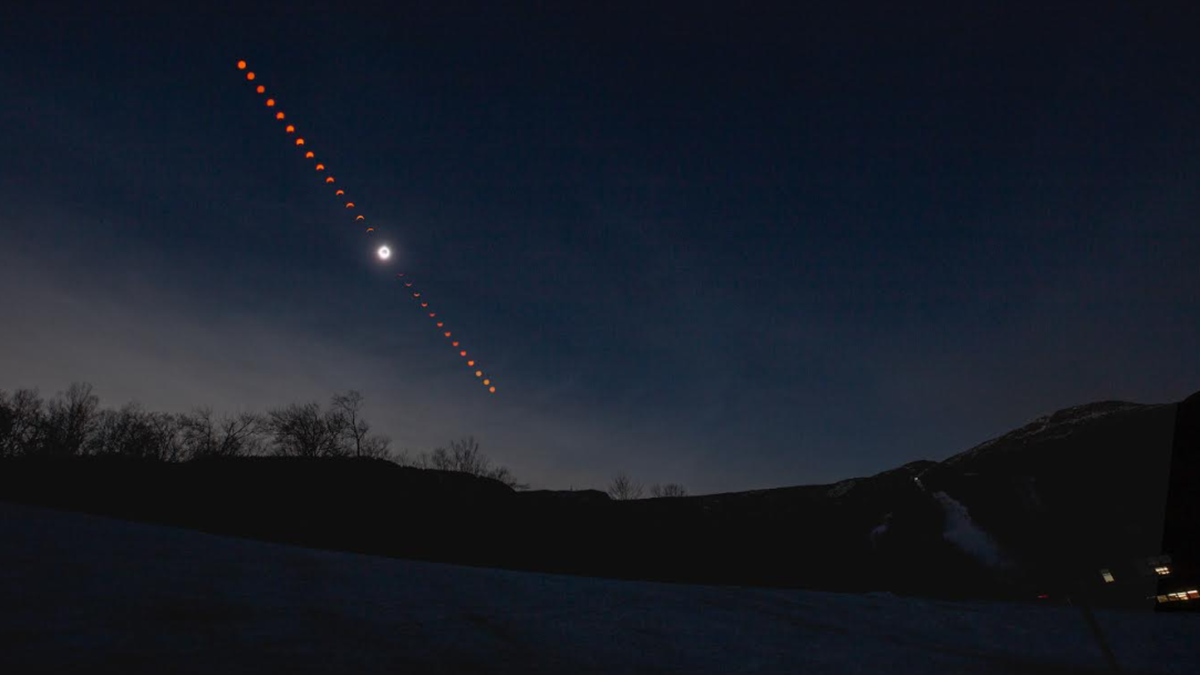
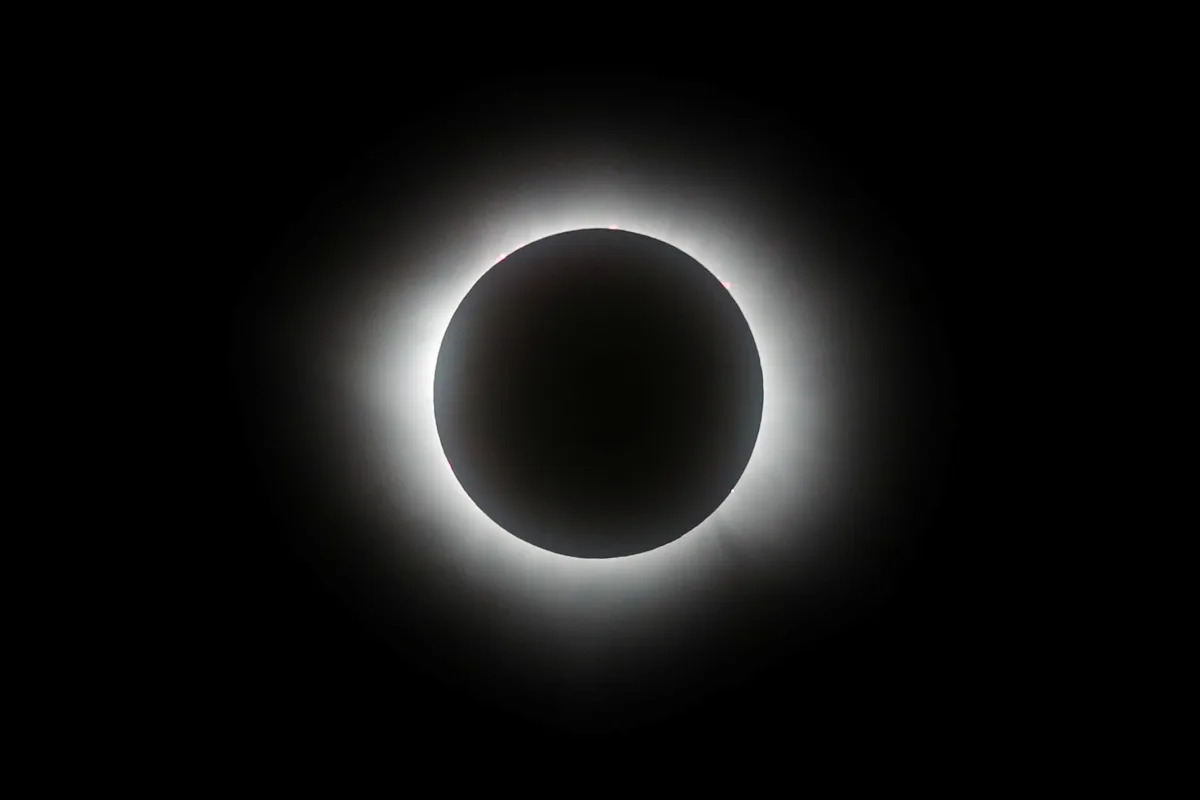
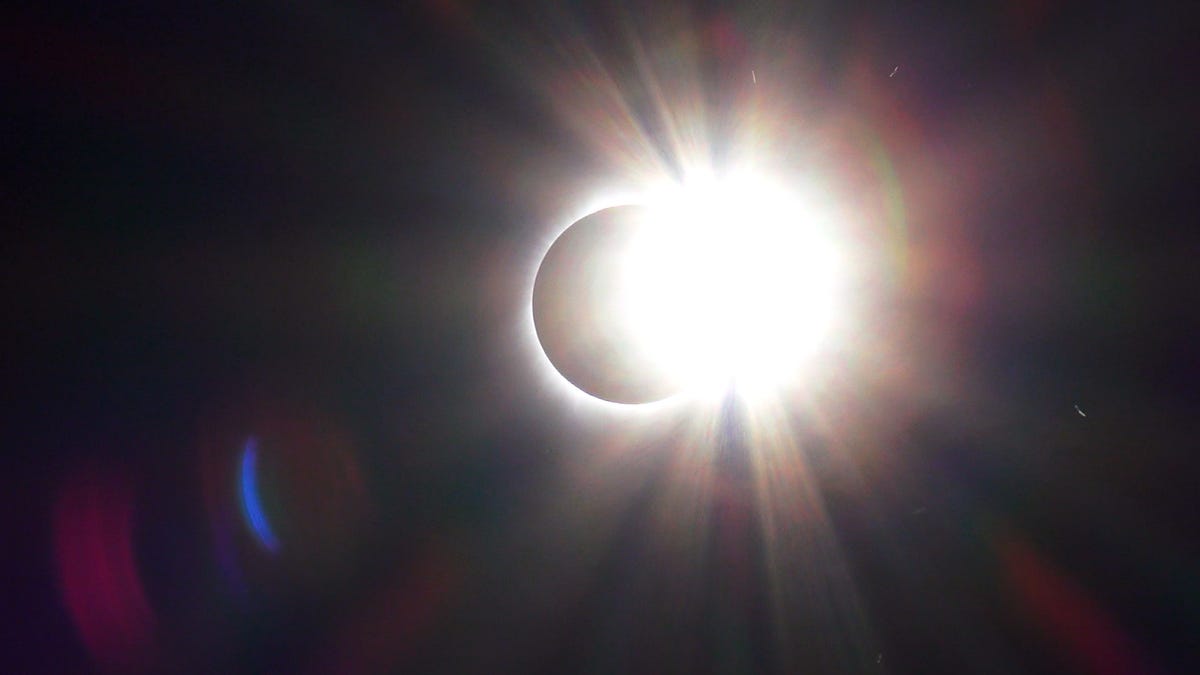
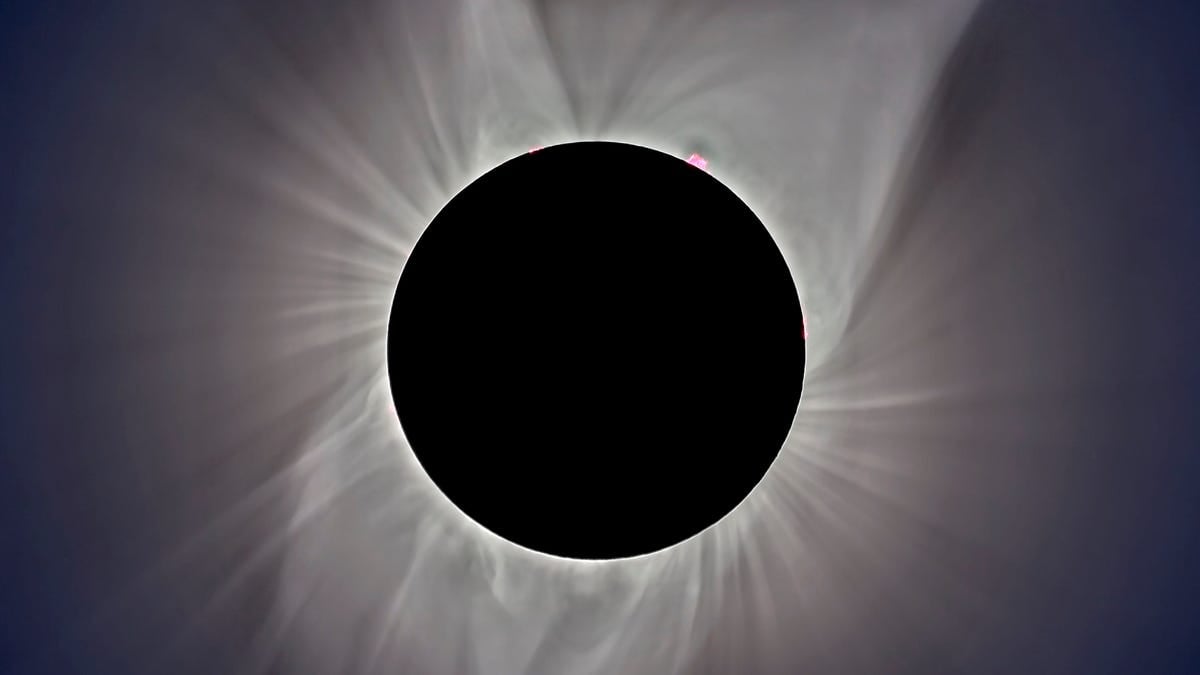
On April 8, 2024, a total solar eclipse swept through North America, captivating millions of onlookers along its path of totality. Spectacular images of the eclipse were captured by space enthusiasts, showcasing the moon obscuring the sun and revealing the corona and chromosphere. The eclipse was also witnessed from an airplane, imaged by the European Space Agency's satellite, and even observed from the International Space Station. The next solar eclipse visible from North America is in 2044, with other opportunities in 2033 and 2045.
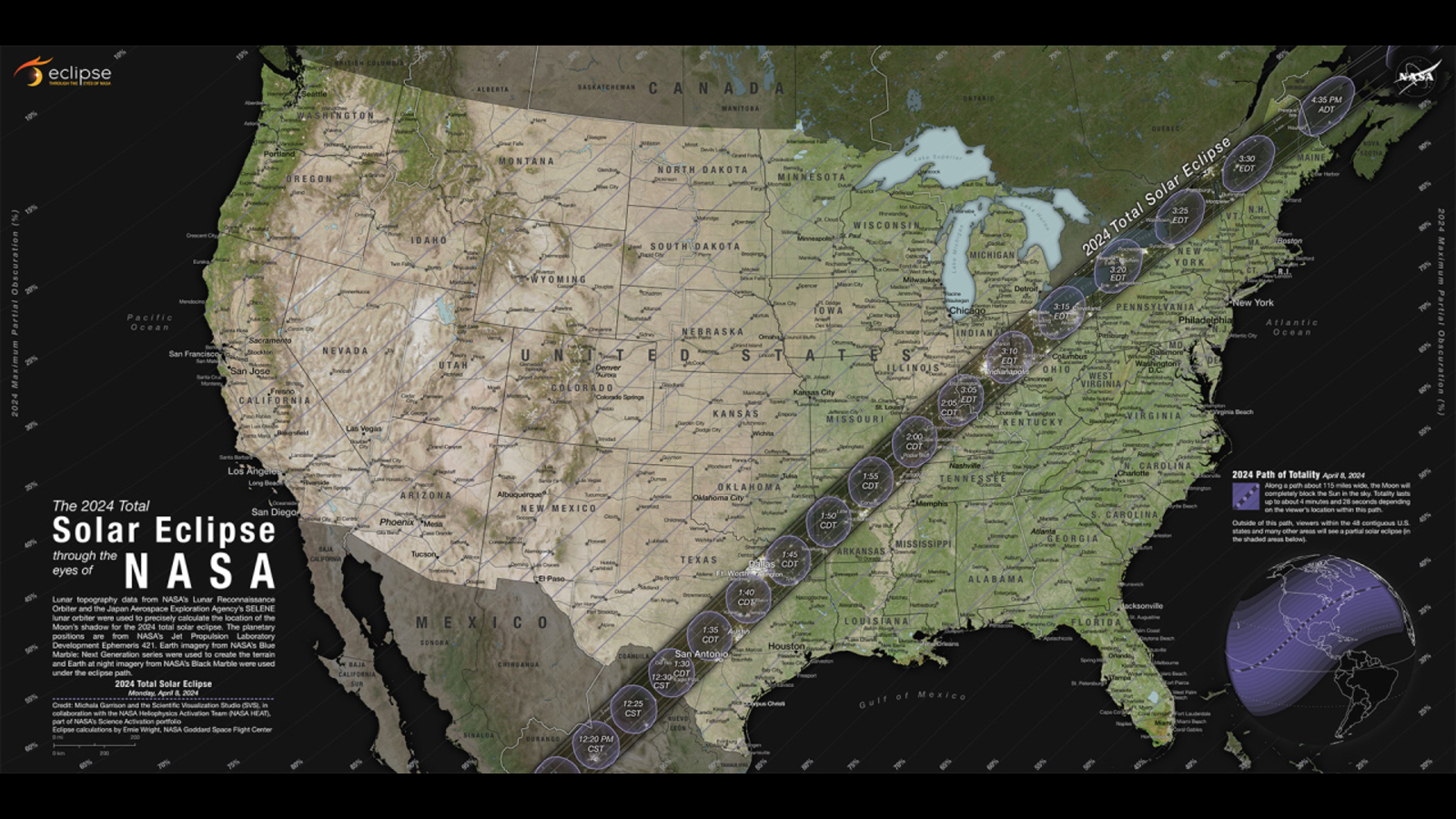
A total solar eclipse was visible in the United States, Mexico, and Canada, with the path of totality spanning over 100 miles. The eclipse was at least partially visible in 49 states, with Alaska being the only exception. People across the continent gathered to witness the celestial event, with some experiencing totality and others viewing a partial eclipse. The eclipse also sparked social media activity and even led to Bonnie Tyler's "Total Eclipse of the Heart" reaching No. 1 on the U.S. iTunes charts.
New map calculations suggest the path of totality for the upcoming solar eclipse might be slightly narrower than previously calculated, potentially leaving some cities on the edge out of the total darkness experience. NASA acknowledges the uncertainty involved in mapping the eclipse's path and advises spectators to head for the middle of the path for optimal viewing. While some alternative maps have been proposed, experts emphasize the importance of experiencing totality, which offers a unique and spectacular astronomical event.
A new map shows a narrower path of totality for the April 8 solar eclipse, potentially impacting some cities, but Luna Pier in Michigan remains in the path for a total eclipse. The mayor encourages visitors to head to Toledo instead due to potential traffic congestion. Experts suggest that eclipse chasers should not make significant changes to their travel plans, but those on the edge of the path may want to consider moving a few miles south for a better view. It is advised to prepare as normal, pick a viewing spot ahead of time, and pack special eclipse glasses and camera lens filters.
New research suggests that the 2024 solar eclipse path may have changed slightly, affecting some Indiana cities like Kokomo, Frankfort, and parts of Crawfordsville. The updated map, created by Besselian Elements, factors in new information about the Sun's size and topography to create a more accurate eclipse map. NASA states that the change will mainly impact cities on the edge of the path of totality, urging people to move closer to the center for a guaranteed view of the total eclipse. The solar eclipse's partial phase will begin at approximately 1:50 p.m. ET on April 8 in Indianapolis.
As the April 8 total solar eclipse approaches, hundreds of cities along the path of totality, including appropriately-named locales like Eclipse Island and Moon Beach, are set to draw huge crowds. Eclipse cartographer Michael Zeiler identified 16 eclipse-themed places directly on the eclipse path in Mexico, the United States, and Canada, with some being relatively small and obscure. Captain James Cook named Eclipse Island in Newfoundland after observing an annular solar eclipse there in 1766, and other eclipse-named places include Moon, Sun Valley, and Shadowland. The upcoming total solar eclipse will offer a unique opportunity for spectators to witness the celestial event, with the next total solar eclipse in North America not expected until 2044.
The speed of October's annular solar eclipse will vary depending on the location on Earth. The moon's shadow will travel as fast as 7,000 mph and as slow as 1,700 mph. The speed is influenced by the geometry of the Earth, the distance to the moon, and the moon's orbital speed. The eclipse will move fastest at the extremes of its path and slowest in the middle. In the U.S., the shadow's speed will decrease from 5,683 mph to 1,772 mph as it passes through. The eclipse will create a "ring of fire" as the moon's antumbral shadow passes across the Earth's surface.