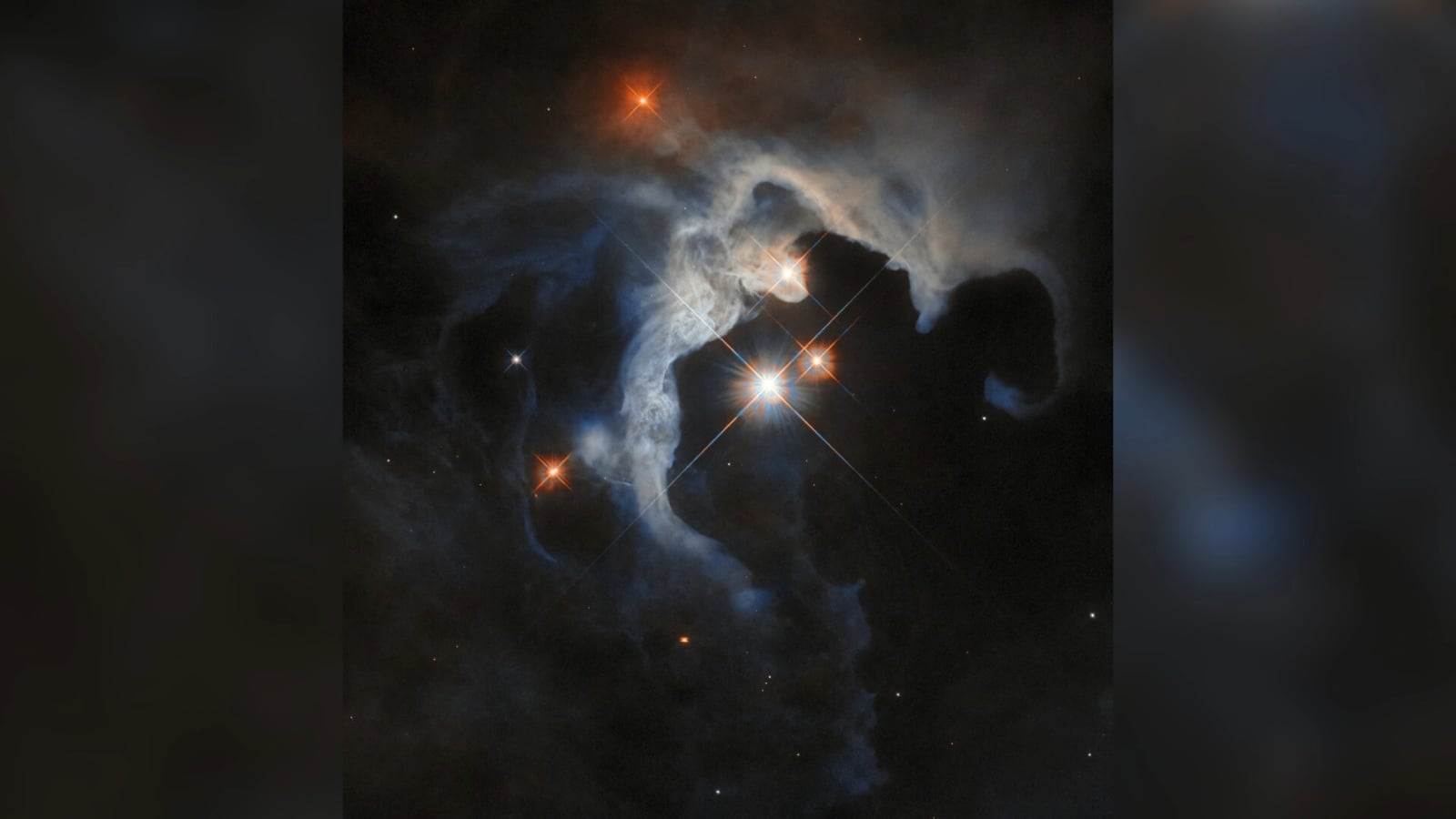
Hubble images the NGC 1333 star-forming region, revealing a protostar with a surrounding planet-forming disk and a reflection nebula; the region, about 950 light-years away in the Perseus cloud, highlights how stars form and how their disks illuminate their birth environment.
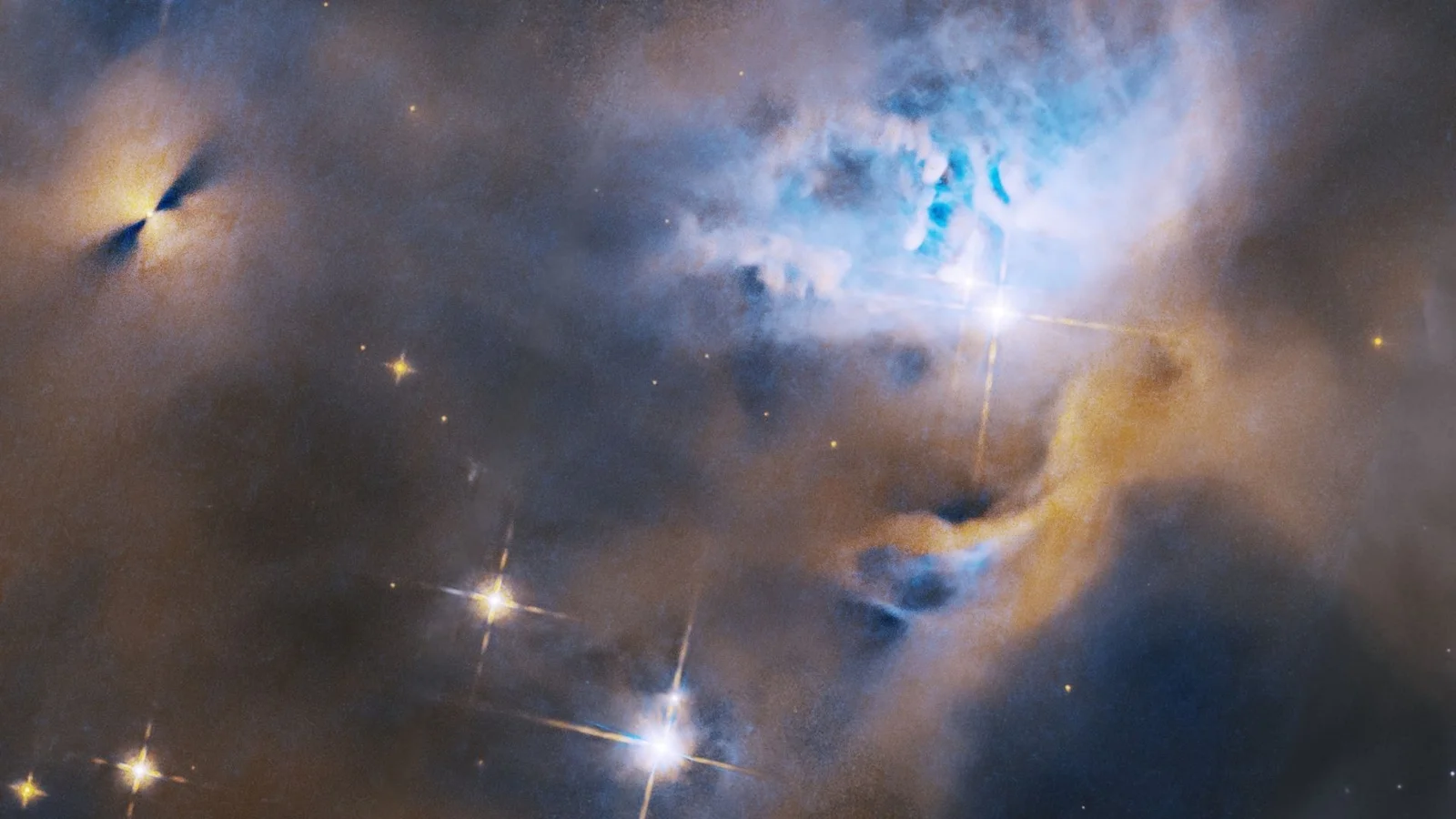
The Hubble Space Telescope captured an image of a reflection nebula, GN 04.32.8, within the Taurus Molecular Cloud, showcasing young stars and a newly formed protostar, providing insights into star formation in our nearby universe.
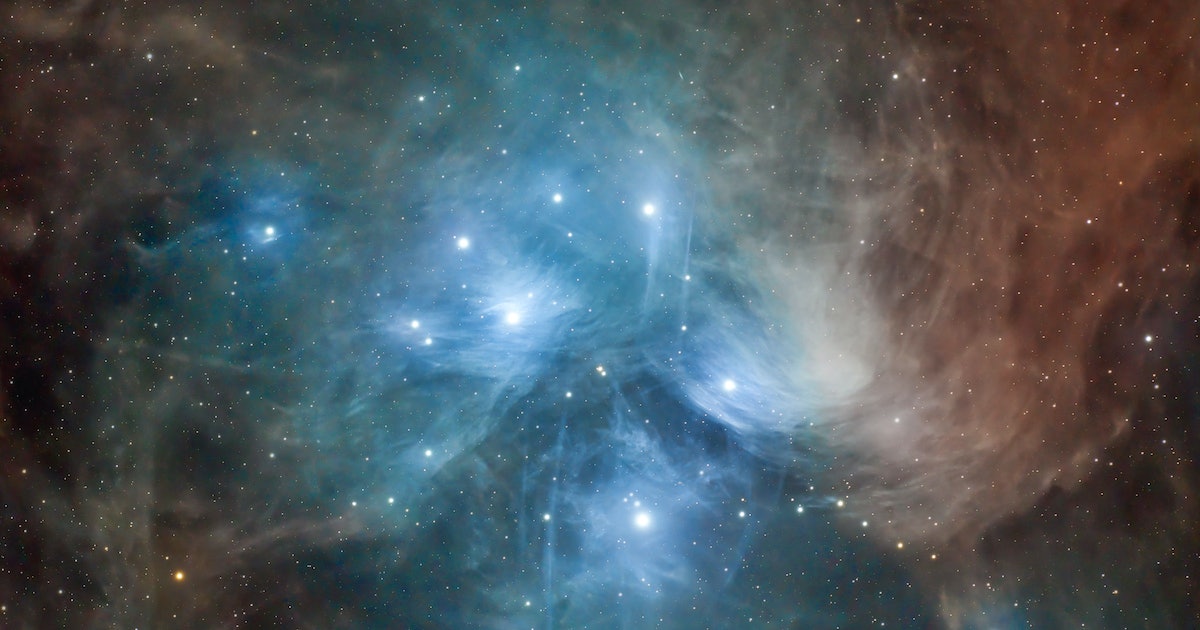
Astronomers captured an image of the Pleiades star cluster tearing a passing cloud of gas and dust into cosmic tatters, with the radiation from its massive, hot, bright blue stars exerting physical pressure on the cloud and stretching it into long filaments that glow with reflected blue starlight. The passing cloud may be part of the much larger Radcliffe Wave, an 8,800 light-year-long structure of gas and dust where new stars are forming, potentially including our own Sun.
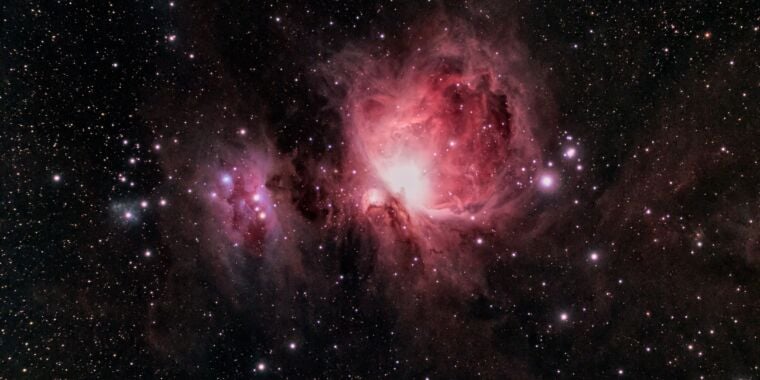
The Daily Telescope showcases an image of the Running Man Nebula, a reflection nebula located in the Orion constellation's "sword." The nebula, consisting of interstellar gas that reflects nearby stars' light, was discovered by William Herschel in 1786. The photograph was captured by David Beverly using a William Optics GT81 telescope and a QHY168C CMOS camera.
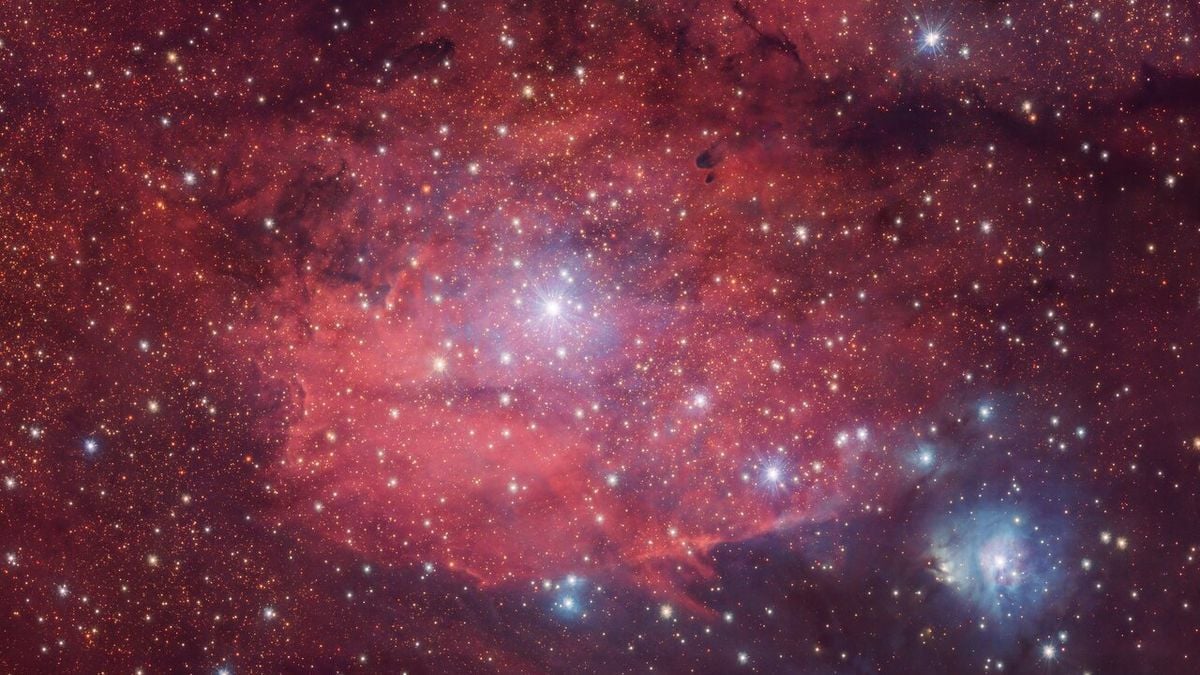
The European Southern Observatory (ESO) has released a stunning photo of IC1284, a rosy red emission nebula that glows from active star formation and hydrogen fusion. The photo, taken using ESO's OmegaCAM on the VLT Survey Telescope, also features two blue reflection nebulae, NGC6589 and NGC6590. The image is part of the VST Photometric H alpha Survey of the Southern Galactic Plane and Bulge (VPHAS+), which aims to study nebulae and stars to better understand their life cycles.
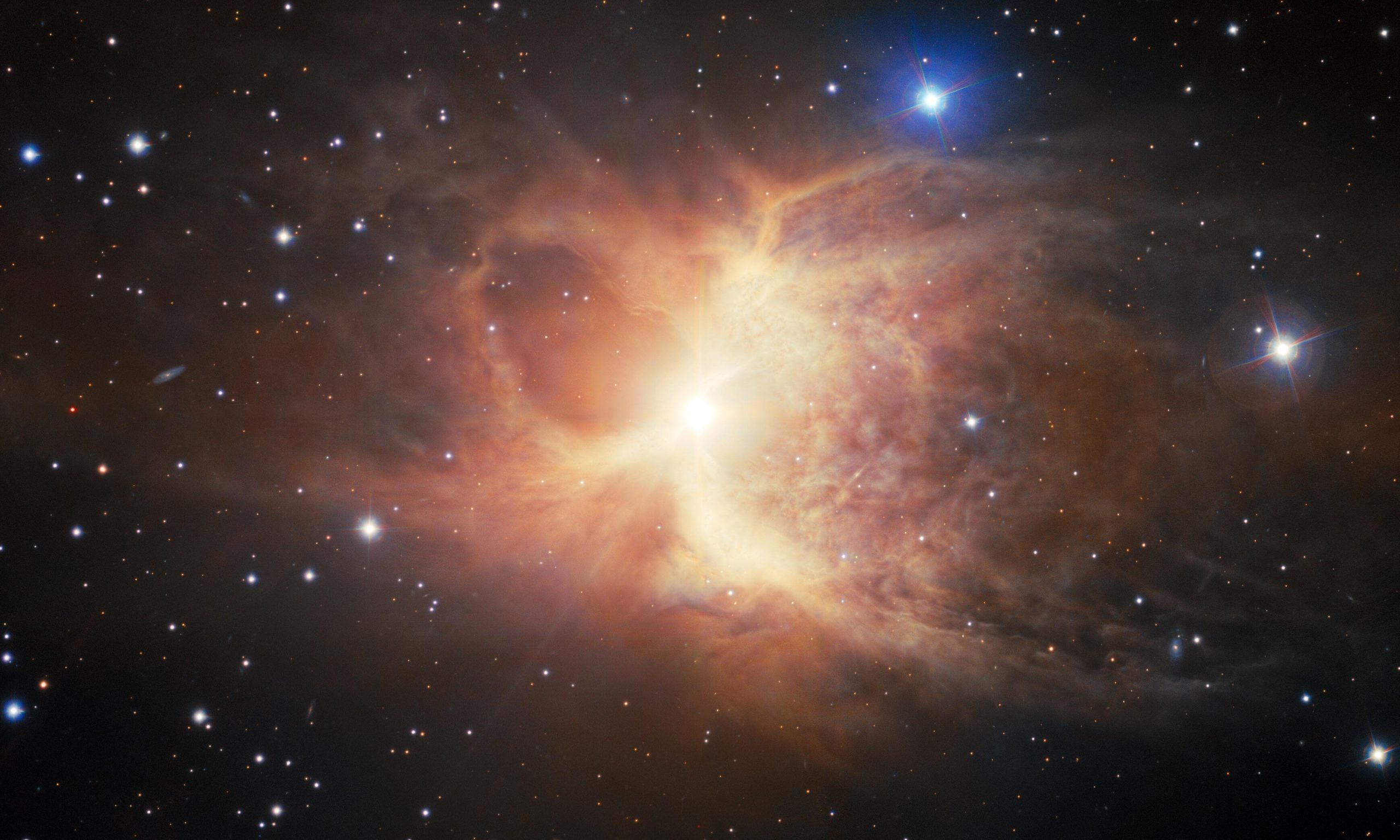
The Gemini South telescope has captured a stunning image of the Toby Jug Nebula, a rare bipolar reflection nebula resembling an old English jug. Located 1,200 light-years away in the constellation Carina, this nebula offers valuable insights into the evolution of red giants, including our Sun's future transformation. The nebula's structure and glowing heart provide astronomers with unique information about the end-of-life phase of red giants and the cosmic structures they form. The Toby Jug Nebula is believed to have formed through interactions between the dying red giant and a shredded companion star. This discovery has implications for understanding the future evolution of our own Sun.
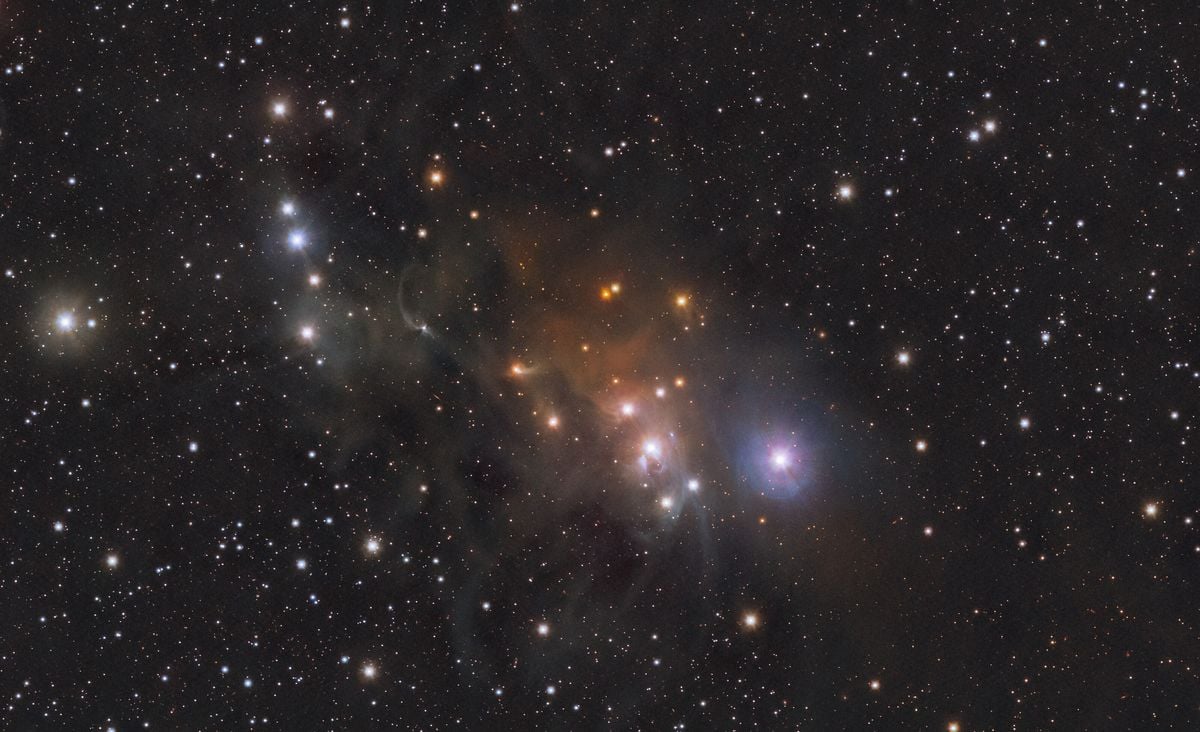
The European Southern Observatory (ESO) has released a stunning infrared image of the Chamaeleon Complex, a vast stellar nursery located approximately 522 light-years from Earth. The image showcases the brightest nebula in the region, IC 2631, which is a reflection nebula made of dust clouds that reflect light emitted from nearby stars. The nebula is primarily illuminated by a young and bright star called HD 97300. The image, captured using ESO's VISTA telescope, reveals interstellar gas and dust energized by young stars in the process of forming. Despite its name, IC 2631 can be observed in the southern hemisphere throughout most of the year.
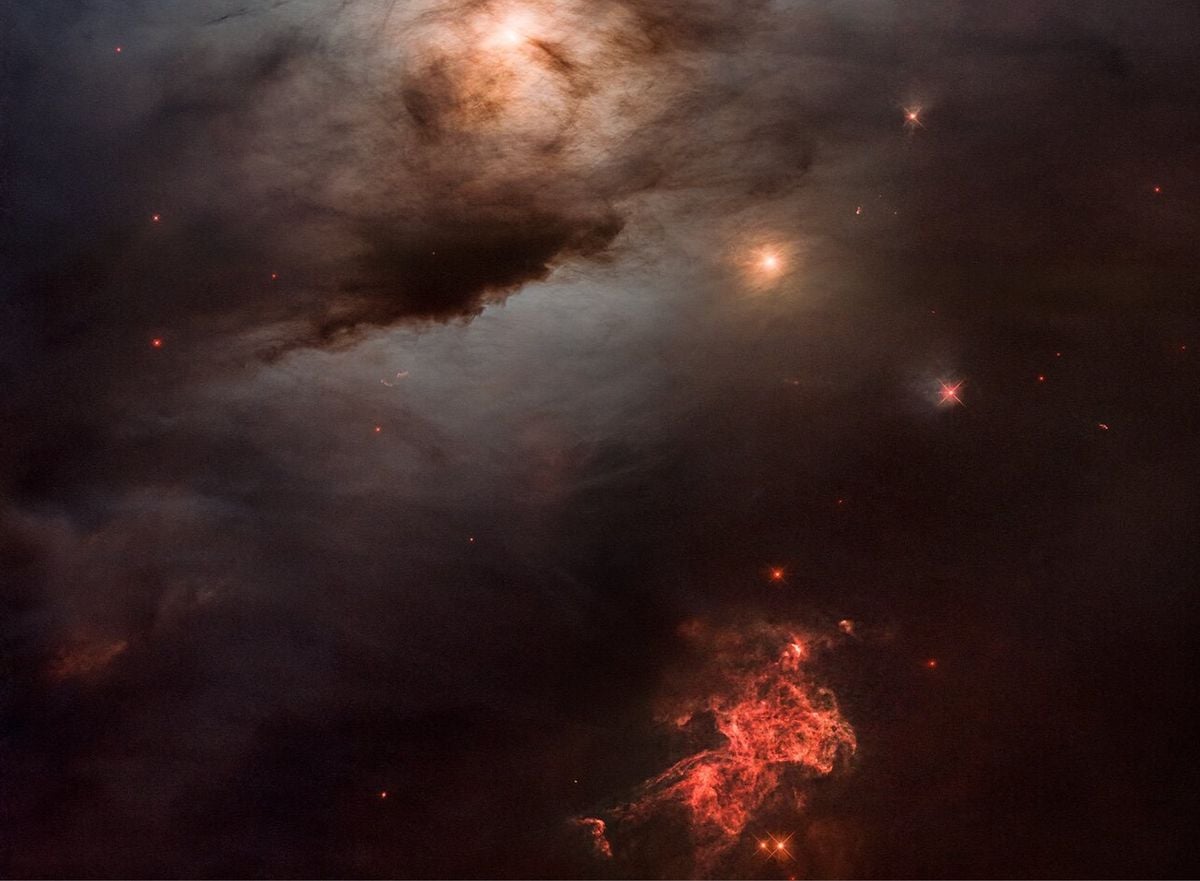
The Hubble Space Telescope celebrated its 33rd launch anniversary by capturing a stunning new photo of NGC 1333, a reflection nebula located 960 light-years away in the Perseus molecular cloud. The image showcases hundreds of newly forming stars embedded within the dark cloud, which is filled with obscuring dust. The photo also highlights the ferocious stellar winds sweeping through the nebula's clouds of dust, likely caused by the bright blue star at the top of the image, and a reddish glow representing hydrogen ionized by young stars.