Tag

Pulsar Timing Arrays

All articles tagged with #pulsar timing arrays

physics1 year ago

"Exploring Ultralow Frequency Gravitational Waves"

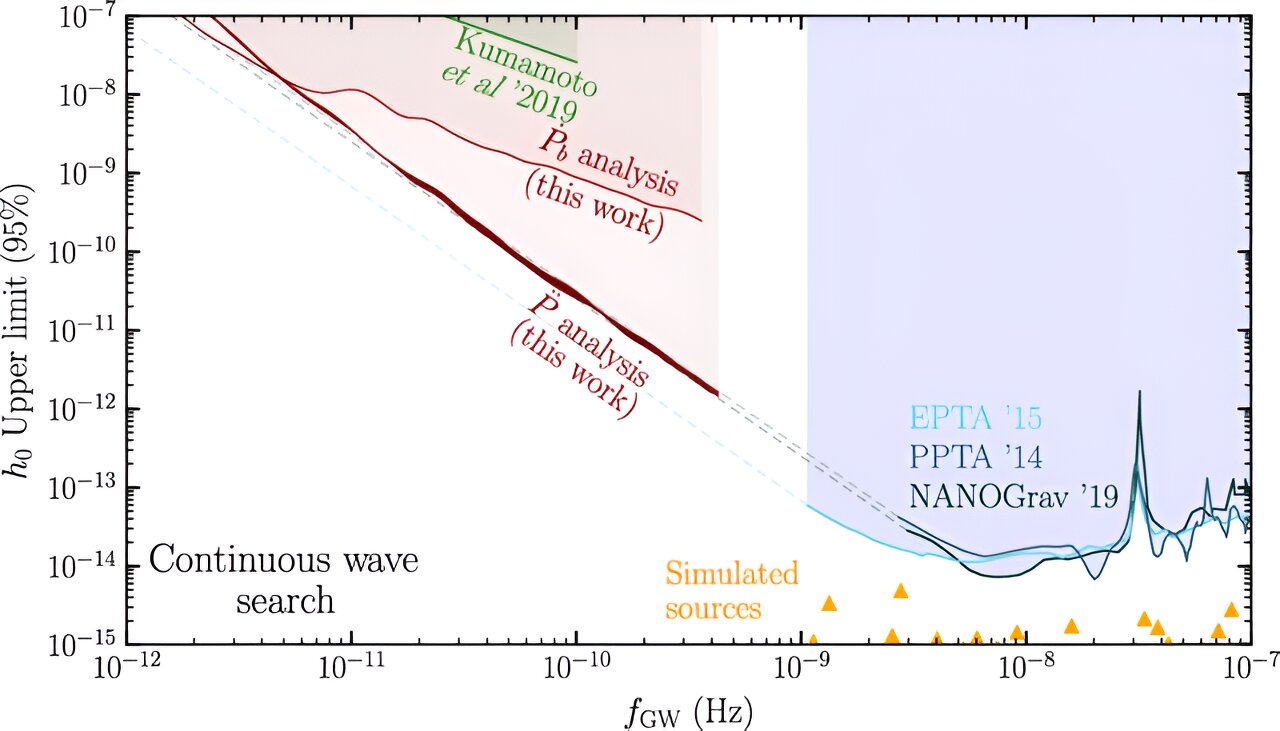
Physicists have developed a method to detect ultralow frequency gravitational waves, potentially unlocking the secrets of early supermassive black hole mergers. These waves, with frequencies as low as 10 picohertz, are 100 times slower than any previously measured gravitational waves. By analyzing pulsar data, researchers hope to differentiate between the origins of these waves, whether from supermassive black hole mergers or cataclysmic events in the early universe, shedding light on cosmic history.
physics1 year ago

"The Impact of the Strong Force on Gravitational Waves"

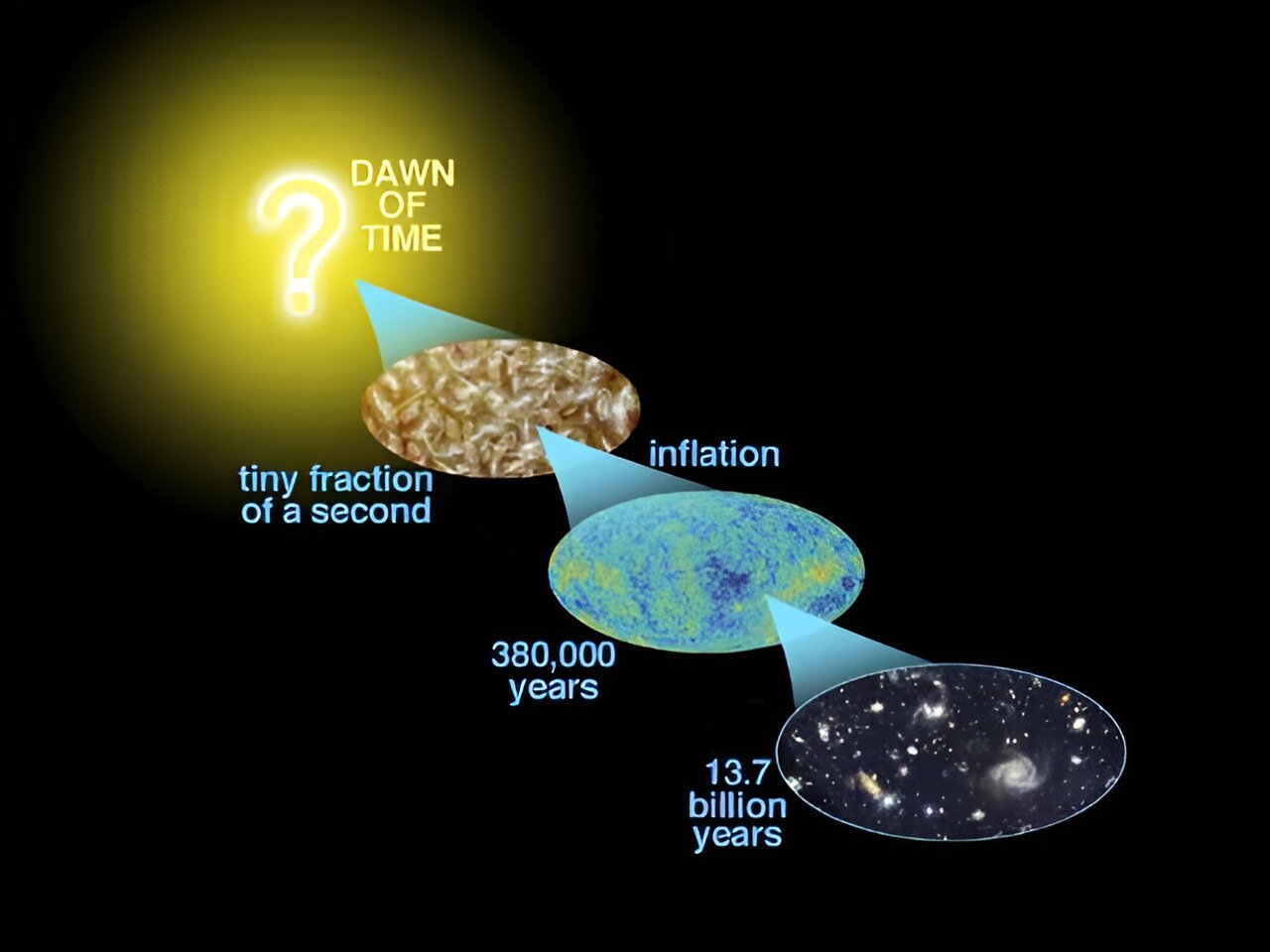
Physicists have shown that the behavior of quarks and gluons as the universe cools should leave a distinct signature on the stochastic gravitational wave background, potentially impacting models of the universe post-Big Bang. This finding could help distinguish early universe waves from those originating from other sources, such as astrophysical phenomena. The study suggests that the quantum chromodynamics crossover, which occurred about 10-5 seconds after the Big Bang, could affect the low-frequency gravitational wave signal, providing a way to search for this signature in pulsar timing array data.

space2 years ago

"Massive Discovery: 300 Gamma-Ray Blasting Neutron Stars Unveiled, Including 'Spider Pulsars'"

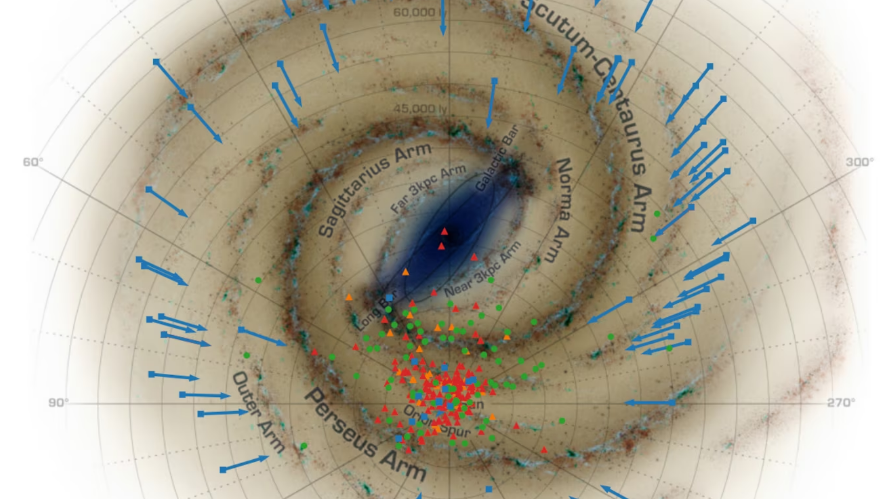
The Fermi gamma-ray space telescope has discovered around 300 rapidly spinning neutron stars, including several "spider pulsars" that devour their companion stars. These millisecond pulsars emit gamma-rays and serve as precise timekeepers, allowing for the study of deep space events. Neutron stars are born when massive stars explode in supernovas, and their extreme characteristics are a result of their size reduction. The discovery of these neutron stars could help in understanding low-frequency gravitational waves and potentially be used for navigation purposes in the future.

astronomy2 years ago

Inflation's Lingering Impact on the Cosmos

Scientists from the Chinese Academy of Science have analyzed 15 years of pulsar timing data from the NANOGrav observatory to study the physics of the early universe. They found that the data supports the existence of ultra-slow-roll inflation, a type of inflation that produced clumped matter and is responsible for the stochastic gravitational wave background (SGWB) signals observed by pulsar timing arrays. This finding provides insights into the origins of gravitational waves and opens the door for further research in understanding the new physics of the cosmos.

science2 years ago

Unveiling the Impact of Gravitational Waves on Our Universe

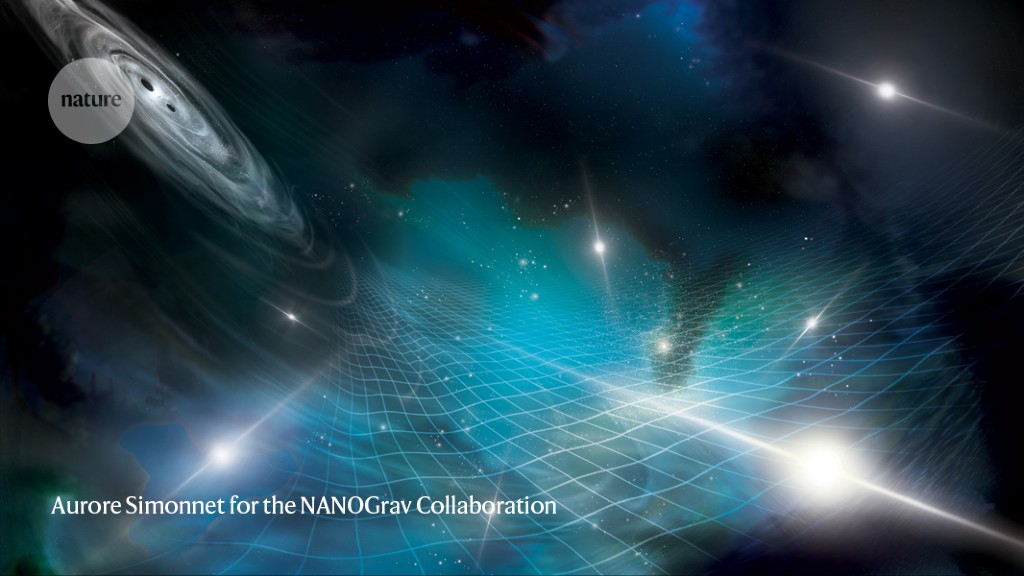
Four teams of scientists have announced the detection of strong hints of very long gravitational waves, known as "monster" gravitational waves, which could revolutionize our understanding of the cosmos. Unlike previous gravitational wave detections, these waves have wavelengths of 0.3 parsecs or more. The waves are believed to be produced by pairs of supermassive black holes orbiting each other in the hearts of distant galaxies. If confirmed, this discovery would provide evidence that supermassive black holes can come very close to each other in nature. The detection of these waves could also have implications for the planned space-based detector, LISA, and could potentially shed light on the growth of black holes and the early Universe.