Astronomers favor several exoplanets like Proxima Centauri, TRAPPIST-1, and K2-138 for their unique features and potential habitability, highlighting the diversity and ongoing discovery of alien worlds beyond our Solar System.
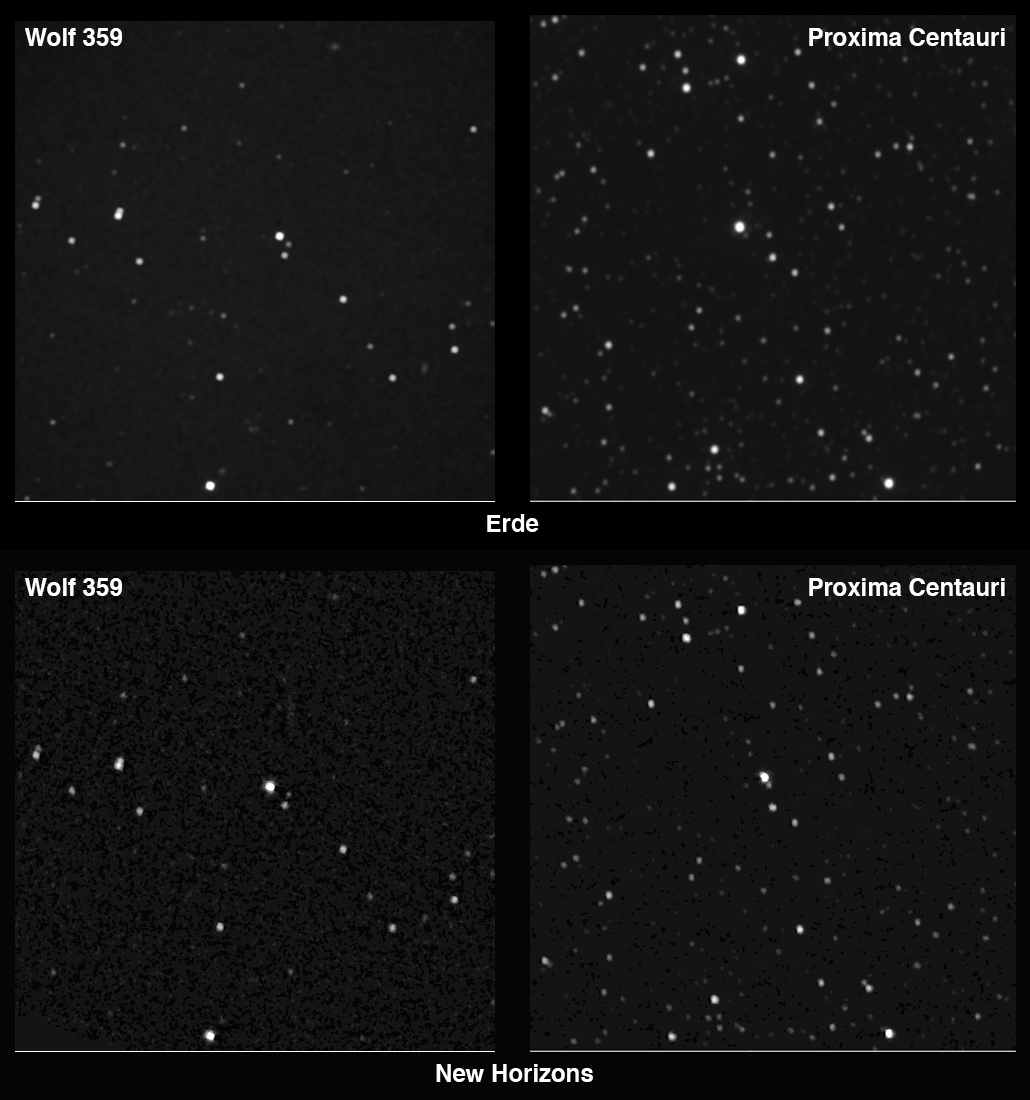
The New Horizons spacecraft has demonstrated a groundbreaking method of interstellar navigation using optical stellar astrometry and parallax measurements, which could enable future spacecraft to navigate autonomously to distant stars like Proxima Centauri by measuring the apparent shifts in nearby stars' positions relative to background stars as it travels through space.
The Extremely Large Telescope (ELT) could potentially detect biosignatures in the reflected light of Proxima Centauri B, the closest exoplanet to Earth, using the High Angular Resolution Monolithic Optical and Near-infrared Integral field spectrograph (HARMONI) to capture high-resolution spectra. While the exoplanet doesn't transit its star, the study suggests that by using masks to block the central brilliance of the star, it may be possible to capture the light of the exoplanet and discover biogenic molecules, offering a new method for searching for alien life.
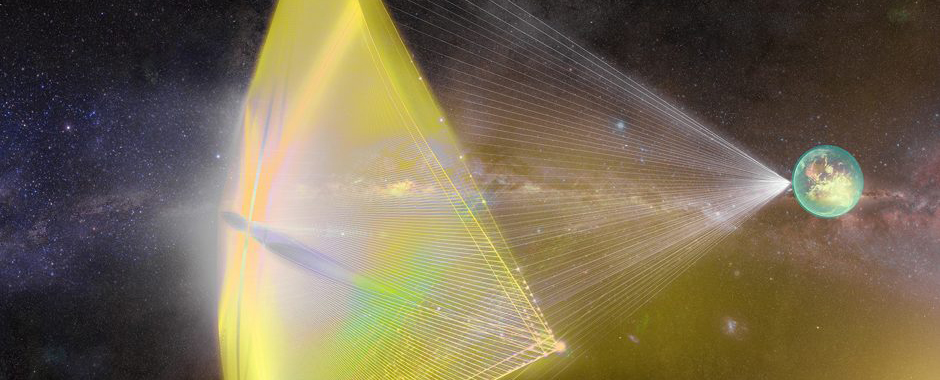
NASA has selected the Swarming Proxima Centauri project for Phase I development, aiming to utilize gram-scale spacecraft propelled by a 100-gigawatt laser beamer to reach Proxima Centauri and its Earth-like exoplanet by the third quarter of this century. The project, led by Space Initiatives Inc. and the Initiative for Interstellar Studies, could have applications in space exploration, Earth observation, medicine, additive manufacturing, environmental studies, and more through the development of a coherent swarm of robotic probes.
NASA has selected a proposal called Swarming Proxima Centauri, which involves using gram-scale spacecraft propelled by a 100-gigawatt laser beamer to reach Proxima Centauri and its Earth-like exoplanet by the third quarter of this century. The concept, developed by Space Initiatives Inc. and the Initiative for Interstellar Studies, aims to overcome the challenges of interstellar travel by utilizing swarm dynamics and autonomous navigation. The mission could have applications in space exploration, Earth observation, and various fields on Earth, but the primary obstacle remains the cost of the laser array.
Scientists have explored various concepts for interstellar spacecraft that could potentially reduce the travel time to reach our nearest star, Proxima Centauri, which is currently thousands of years away using existing technologies. These concepts include advanced propulsion systems, such as ion drives, antimatter engines, and laser sails, as well as innovative ideas like wormholes and warp drives. While these concepts are still in the realm of theoretical possibilities, they offer hope for future space exploration and the potential for humanity to become a spacefaring civilization.
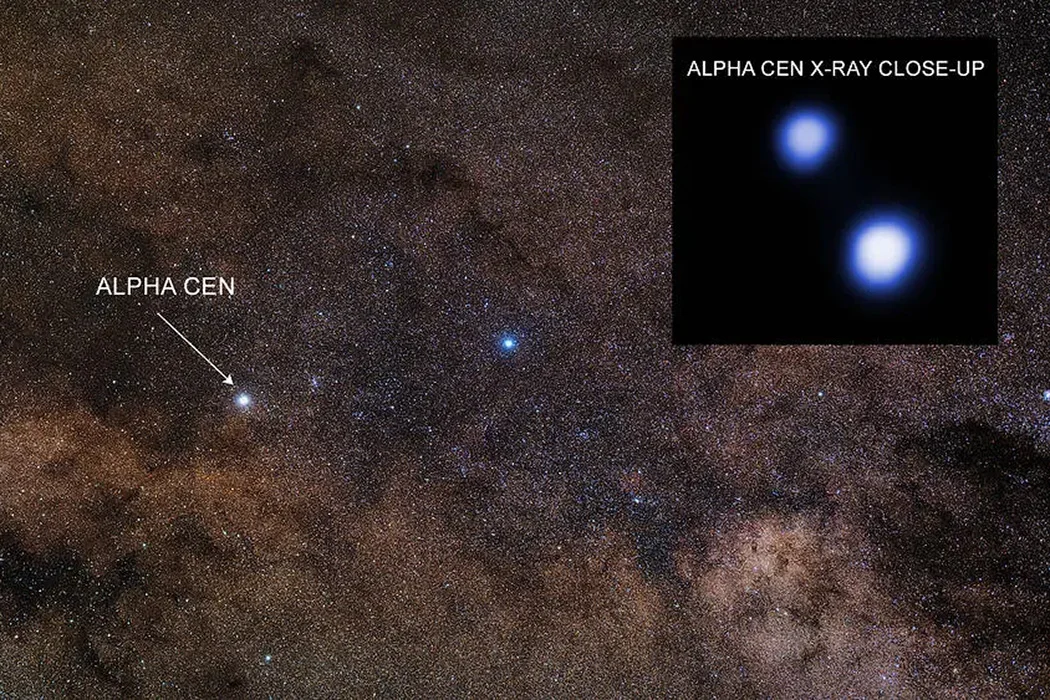
The Alpha Centauri system, consisting of Alpha Centauri A, Alpha Centauri B, and Proxima Centauri, is of special interest in the search for extraterrestrial life due to its proximity to Earth and the potential for habitable planets. Proxima Centauri, the closest star to Earth, has two confirmed planets, including one in the habitable zone. While the potential for life on these planets is uncertain, the Breakthrough Foundation is funding the TOLIMAN space telescope program to search for additional habitable planets in the Alpha Centauri system. The discovery of a rocky, potentially habitable planet in this system could have significant implications for the existence of life beyond Earth.
NASA's James Webb Space Telescope (JWST) captured a rare view of a Wolf-Rayet star, WR 124, which is about 30 times more massive than the Sun and has already shed enough material to make up ten Suns. The star is located roughly 15,000 lightyears away from us, in the constellation Sagitta. Observations like these give astronomers real data to work with for the first time, which could help them align their models more closely to reality and provide information about the stars lighting up the night sky today.
NASA's James Webb Space Telescope (JWST) captured a rare view of a Wolf-Rayet star, WR 124, which is about 30 times more massive than the Sun and has already shed enough material to make up ten Suns. The star is located roughly 15,000 lightyears away from us, in the constellation Sagitta. Observations like these give astronomers real data to work with for the first time, which could help align their models more closely to reality and provide information about the stars lighting up the night sky today.