Tag

Protoplanets

All articles tagged with #protoplanets

"Flat Protoplanets: A Surprising Twist in Gas Giant Formation"

Originally Published 1 year ago — by Hackaday

Featured image for "Flat Protoplanets: A Surprising Twist in Gas Giant Formation"
Source: Hackaday

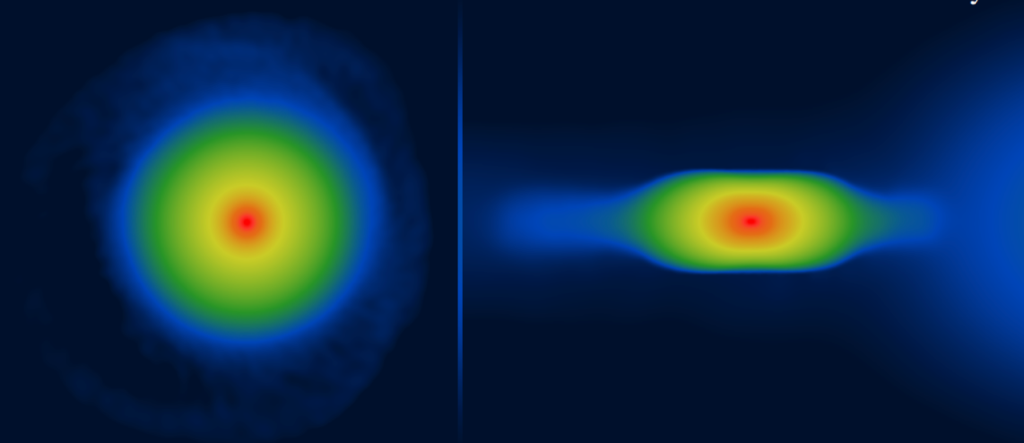
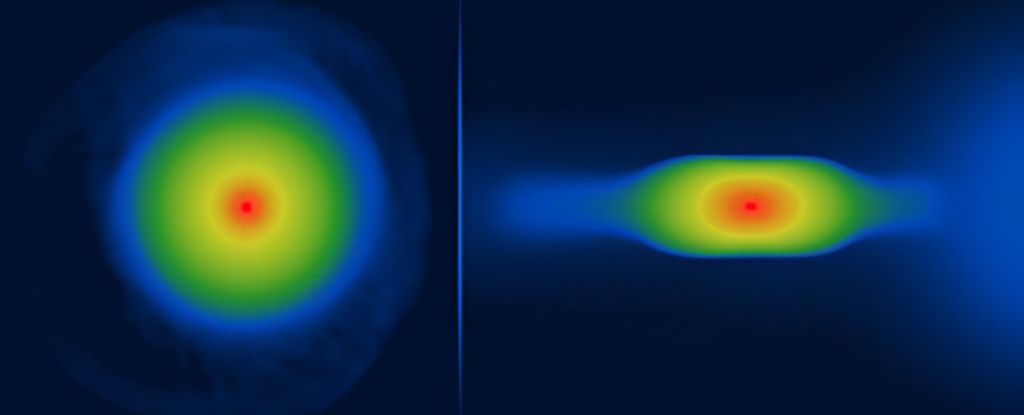
New modelling suggests that protoplanets formed within fragmentary protostar accretion discs may take on a strongly oblate spheroid shape rather than a spherical one, based on simulations run by researchers at the University of Central Lancashire. This research not only enhances our understanding of our own solar system's formation, including Earth's oblate spheroid shape, but also aids in interpreting observations from telescopes like Hubble and James Webb as we study actively forming star regions like the Orion Nebula, potentially refining simulations and reevaluating previous observational interpretations.
"Revealing the Flat Truth: Jupiter's Surprising Past and Baby Exoplanets' Shape"

Originally Published 1 year ago — by ScienceAlert

Featured image for "Revealing the Flat Truth: Jupiter's Surprising Past and Baby Exoplanets' Shape"
Source: ScienceAlert

New simulations suggest that gas giant protoplanets may initially form as flattened oblate spheroids before settling into their familiar round shape, shedding light on the diverse ways planets can grow in the turbulent disks of dust and gas around young stars. This finding challenges the assumption that planets form as perfect spheres and provides insight into the process of disk instability planet formation. The research, conducted by astrophysicists at the University of Central Lancashire, has been accepted into Astronomy & Astrophysics Letters and offers valuable implications for understanding and interpreting developing planets in stellar disks.

"James Webb Space Telescope Unveils Earth's Ancient Origins"

Originally Published 2 years ago — by Space.com

Featured image for "James Webb Space Telescope Unveils Earth's Ancient Origins"
Source: Space.com

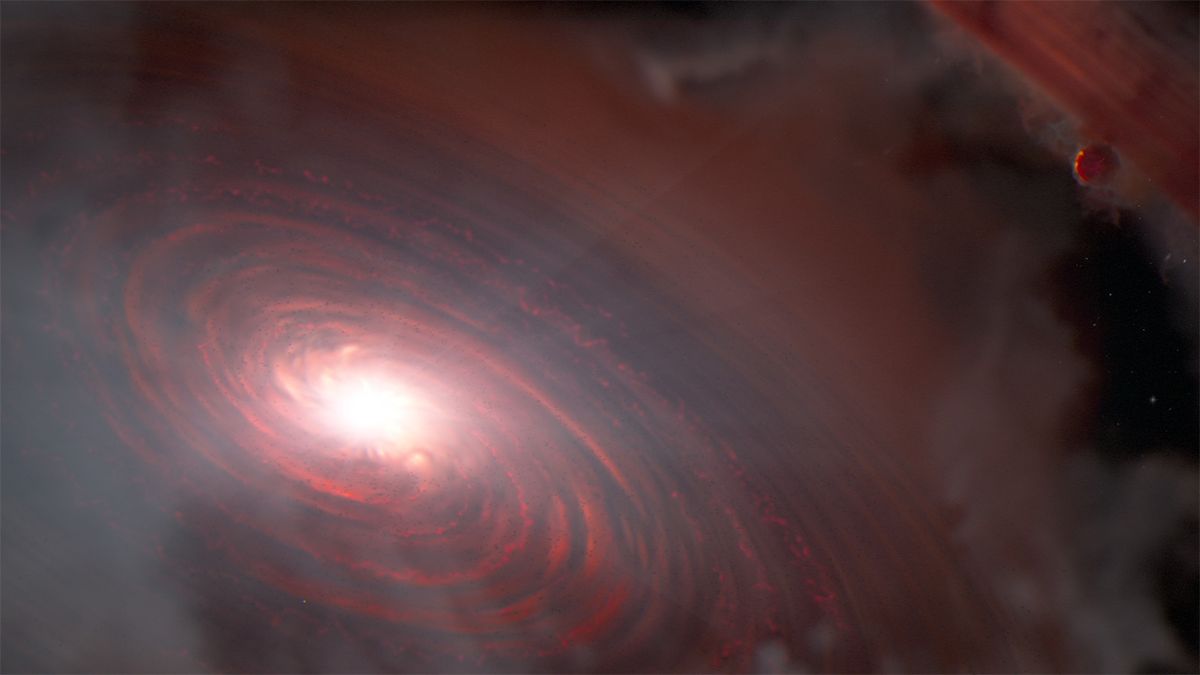
The James Webb Space Telescope (JWST) has detected water vapor in planet-forming disks surrounding young stars, providing evidence for the theory of pebble accretion, which describes how planets are built. Pebble accretion involves small icy pebbles in the outer parts of a disk migrating inwards, sticking together, and eventually forming protoplanets. The water vapor detected by the JWST suggests that the icy pebbles are indeed migrating and passing a boundary called the "snow line." The observations also raise questions about the formation of rings in the disks and the conditions required for pebbles to stick together during accretion. The findings not only shed light on exoplanet formation but also provide insights into how Earth may have formed billions of years ago.

Cosmic Chemical Detectives: Unveiling the Secrets of Protoplanets and Star-Birthing Clouds

Originally Published 2 years ago — by SciTechDaily

Featured image for Cosmic Chemical Detectives: Unveiling the Secrets of Protoplanets and Star-Birthing Clouds
Source: SciTechDaily

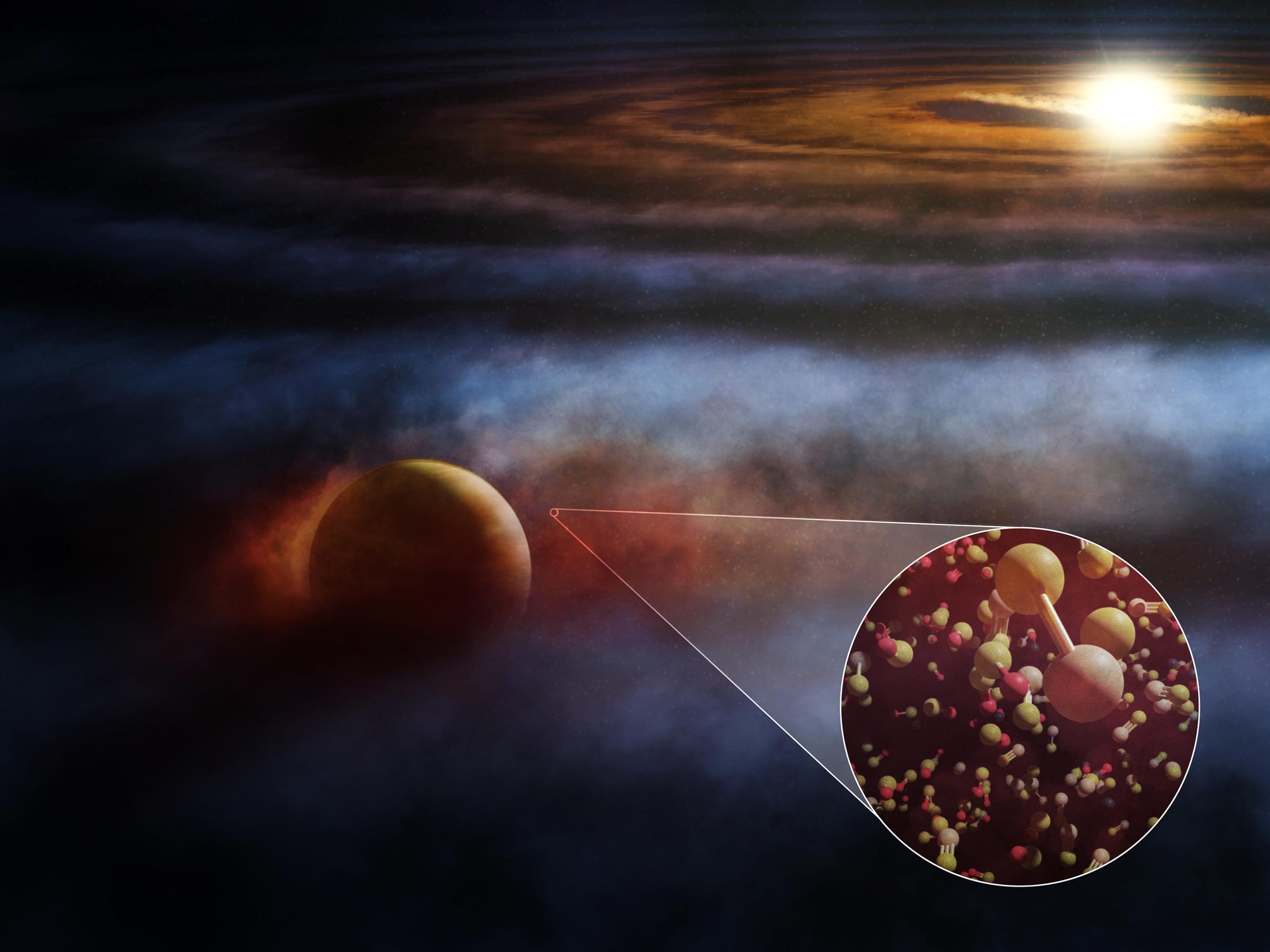
Scientists using the ALMA observatory have discovered strong chemical evidence of a protoplanet in the protoplanetary disk around young star HD 169142. The detection of silicon monosulfide provides a new method for detecting and studying protoplanets, offering insights into protoplanetary chemistry. This discovery opens up new possibilities for detecting and characterizing protoplanets when direct observations or imaging are not possible, deepening our understanding of exoplanets and their development over time.