
"James Webb Space Telescope Unveils Earth's Ancient Origins"
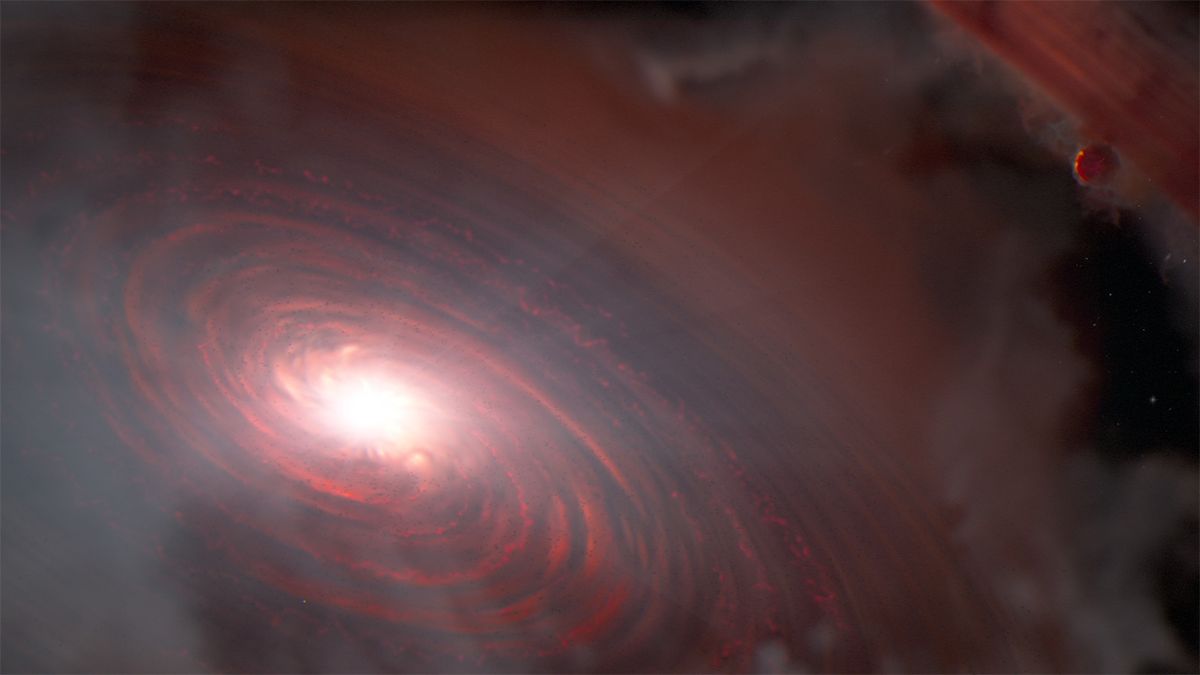
The James Webb Space Telescope (JWST) has detected water vapor in planet-forming disks surrounding young stars, providing evidence for the theory of pebble accretion, which describes how planets are built. Pebble accretion involves small icy pebbles in the outer parts of a disk migrating inwards, sticking together, and eventually forming protoplanets. The water vapor detected by the JWST suggests that the icy pebbles are indeed migrating and passing a boundary called the "snow line." The observations also raise questions about the formation of rings in the disks and the conditions required for pebbles to stick together during accretion. The findings not only shed light on exoplanet formation but also provide insights into how Earth may have formed billions of years ago.
Reading Insights
0
6
4 min
vs 5 min read
86%
879 → 121 words
Want the full story? Read the original article
Read on Space.com