Researchers at the University of Cincinnati have used advanced cryogenic electron microscopy to visualize the atomic structure of the ADAM17 enzyme bound to its regulator protein iRhom2, revealing key features that could lead to targeted therapies for inflammatory diseases, cancer, and COVID-19. This breakthrough provides new insights into immune signaling and offers a foundation for developing more precise treatments.
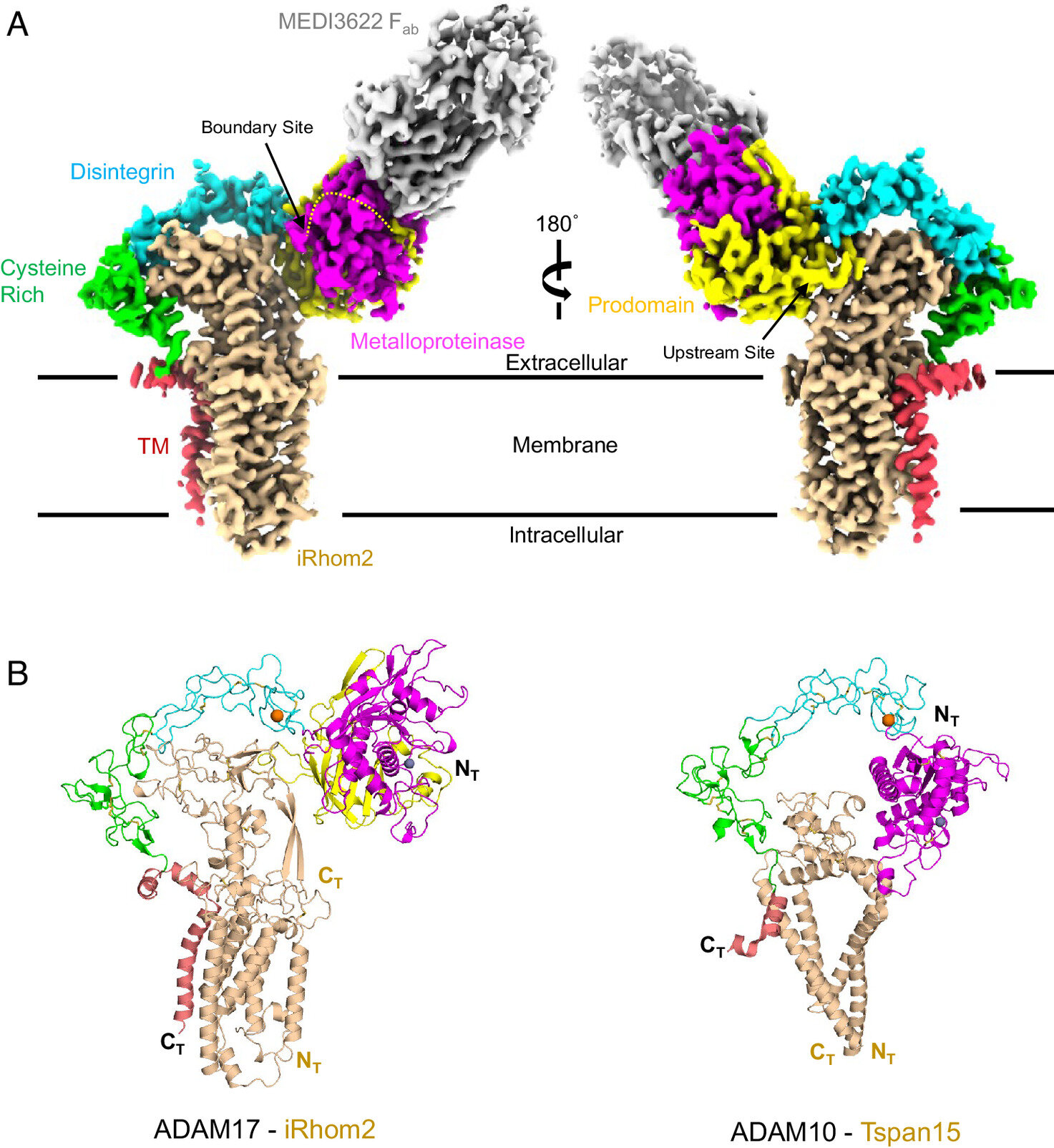
Scientists at UC visualized the atomic structures of the ADAM17 enzyme and its regulator iRhom2 using advanced cryo-EM technology, providing insights that could lead to targeted therapies for inflammatory diseases, cancer, and COVID-19.
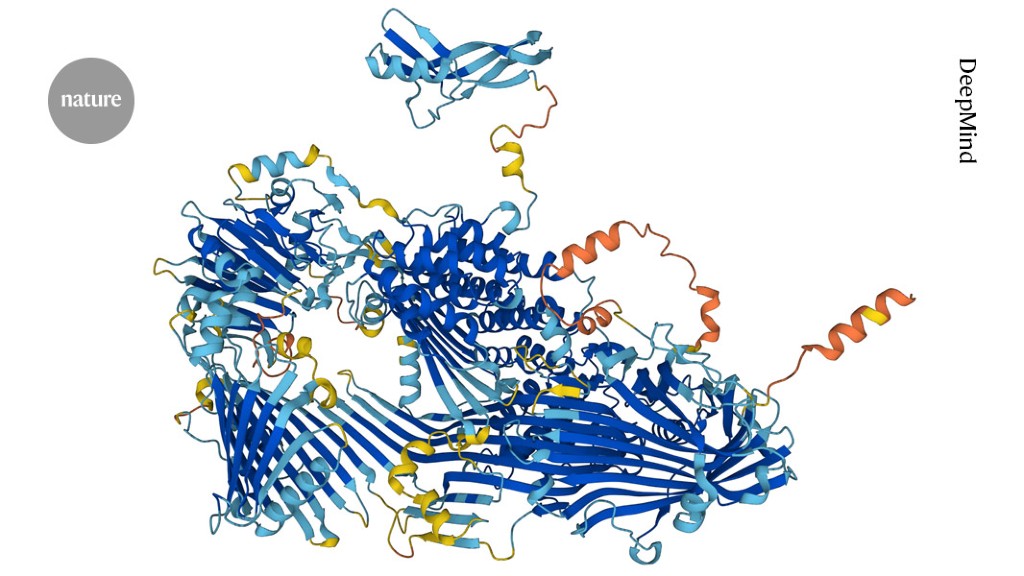
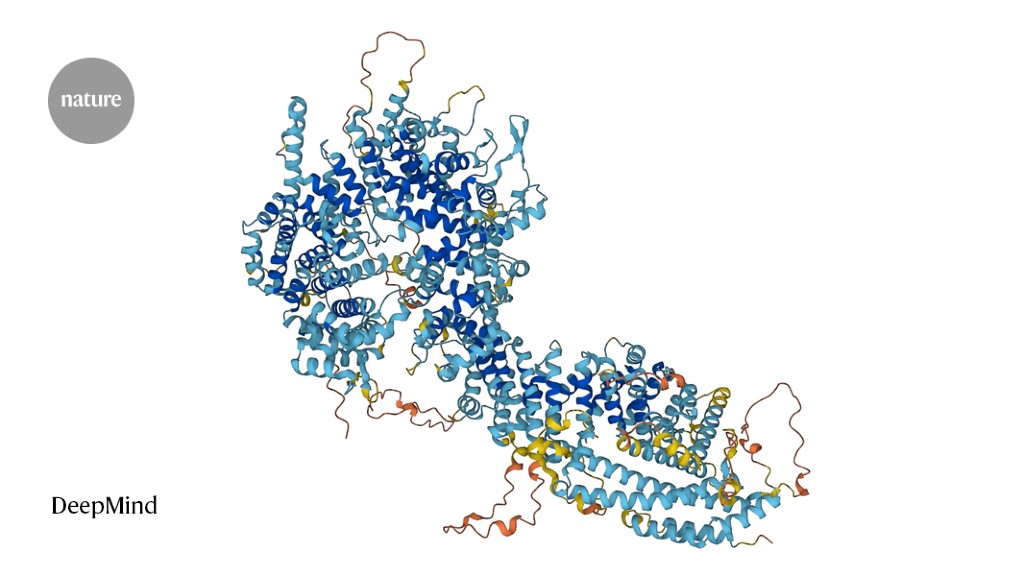
AlphaFold, an AI tool developed by DeepMind, has been used to identify hundreds of thousands of potential new psychedelic molecules, showing its potential in drug discovery. While some skepticism remains, studies have found that AlphaFold's predictions can be as useful as experimental models in identifying promising drugs. The tool's ability to predict protein structures could revolutionize drug discovery, although it may not be universally applicable. Isomorphic Labs, a spin-off of DeepMind, is ramping up drug-discovery efforts using AlphaFold, and the company has announced deals with pharmaceutical giants to utilize machine-learning tools for drug development.
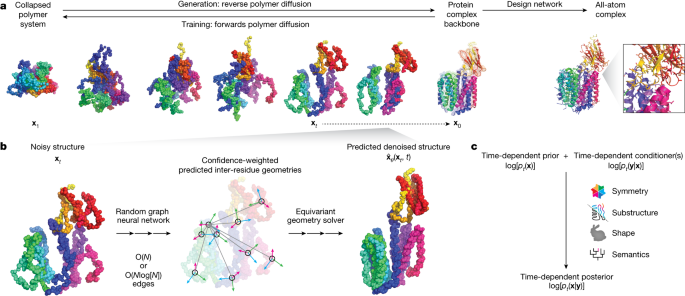
Researchers have developed Chroma, a generative model for proteins that can efficiently generate high-quality protein structures with diverse properties. Chroma combines diffusion models and graph neural networks to model the joint likelihood of sequences and three-dimensional structures of protein complexes. The model achieves quasi-linear computational scaling, allowing it to handle larger protein systems. Chroma also enables conditional sampling, allowing for the programmable generation of proteins based on desired properties such as symmetry, shape, protein class, and even textual input. This scalable generative model has the potential to significantly advance the design and construction of functional protein systems.
Google Deepmind's AlphaFold, an AI program that accurately predicts the 3D shapes of proteins, has sparked excitement in the field of drug discovery. Biotech firm Recursion recently used AlphaFold to calculate how potential drug compounds could bind to human proteins, but some scientists remain skeptical about the quality and usefulness of these predictions. While AlphaFold's protein structure predictions are impressive, they may not accurately predict ligand binding, and the lack of validation data and transparency from companies like Recursion raises concerns. Other AI programs, such as RoseTTAFold and DragonFold, are also being developed to improve protein-drug binding predictions. The challenge lies in identifying compounds that bind strongly to proteins with limited knowledge, and validation in the lab is crucial for progress in this field.
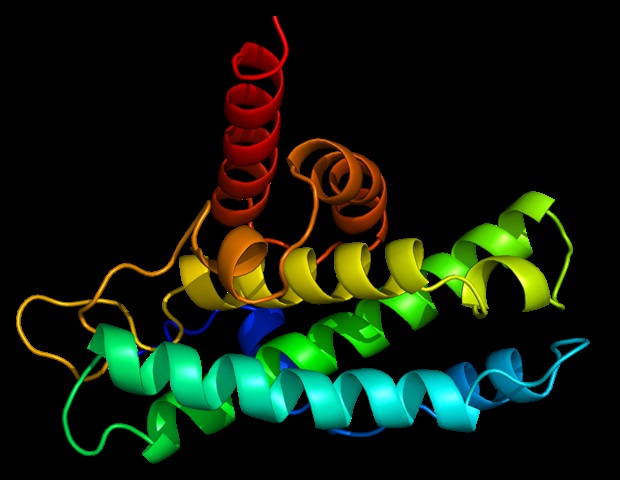
A groundbreaking study has revealed the existence of approximately 10,000 unexplored foldable αβ-protein folds in nature, expanding our understanding of the protein universe. The research team combined theoretical prediction with experimental validation to identify 12,356 novel folds not yet observed in the Protein Data Bank. Surprisingly, computationally designed proteins closely matched the experimental structures, suggesting the potential for de novo design of functional protein molecules. These findings challenge the notion that nature has explored the full extent of protein fold space and raise hypotheses about the structure and evolution of proteins. The discovery of these uncharted protein folds could have significant implications for drug development, enzyme design, and other areas.
Scientists at Skoltech Bio tested AlphaFold, the AI program that solved the central problem of structural bioinformatics, on another challenge in the field and found that the program's predictions contradicted experimental findings, suggesting that the AI is not a cure-all for structural bioinformatics. The findings refute claims by some AlphaFold enthusiasts that the program had mastered the ultimate protein physics and should work beyond the task it was designed for. The study highlights that even in the wake of AlphaFold, scientists in the field have one or two things to do, including predicting the structures of complexes made up of proteins and either small molecules or DNA or RNA, determining how mutations affect the binding energy of proteins with other molecules, and designing proteins with amino acid sequences that endow them with desired properties.
A team at Meta has trained a large language model (LLM) on the statistics of the appearance of amino acids within proteins and used the system's internal representation of what it learned to extract information about the structure of those proteins. The resulting system, ESM-2, was able to ingest a raw string of amino acids and output a 3D protein structure, along with a score that represents its confidence in the accuracy of that structure. This approach is faster than the best competing AI systems for predicting protein structures and still improving.