The article argues for the development of AI models that truly understand the world, rather than just predict outcomes, emphasizing the importance of semantic comprehension in language models to be genuinely useful.
Neuroscientists discovered that the brain constructs a unified reality by using separate predictive models for context, intentions, and actions, which are integrated in the precuneus, shaping our subjective experience. This process was observed through fMRI studies during movie watching, revealing specialized brain regions and their dynamic interactions, providing insights into how our perceptions and shared realities are formed.
Yale researchers have demonstrated that predictive models linking brain activity to behavior can generalize across diverse datasets, which is crucial for their clinical utility. By training models on varied brain imaging datasets, they found that these models can still perform accurately when tested on different datasets with unique demographic and regional characteristics. This highlights the importance of developing neuroimaging models that work for diverse populations, including underserved rural communities, to ensure equitable access to mental health care.
A new study published in PNAS Nexus has identified key predictors, including age, gender, emotional state, personality traits, and cultural exposure, that can forecast when individuals will experience aesthetic chills with 73.5% accuracy. The research, conducted in Southern California with 2,937 participants, revealed that higher arousal and positive valence were associated with an increased likelihood of experiencing chills. The study aims to harness these peak emotional experiences for therapeutic purposes, particularly in the context of major depressive disorder, and is using predictive models to design personalized interventions. Despite its regional focus, the study's comprehensive approach sheds light on the multifaceted nature of chills elicitation and aims to utilize aesthetic chills as a nonpharmacological tool to enhance positive emotional experiences and support mental health recovery.
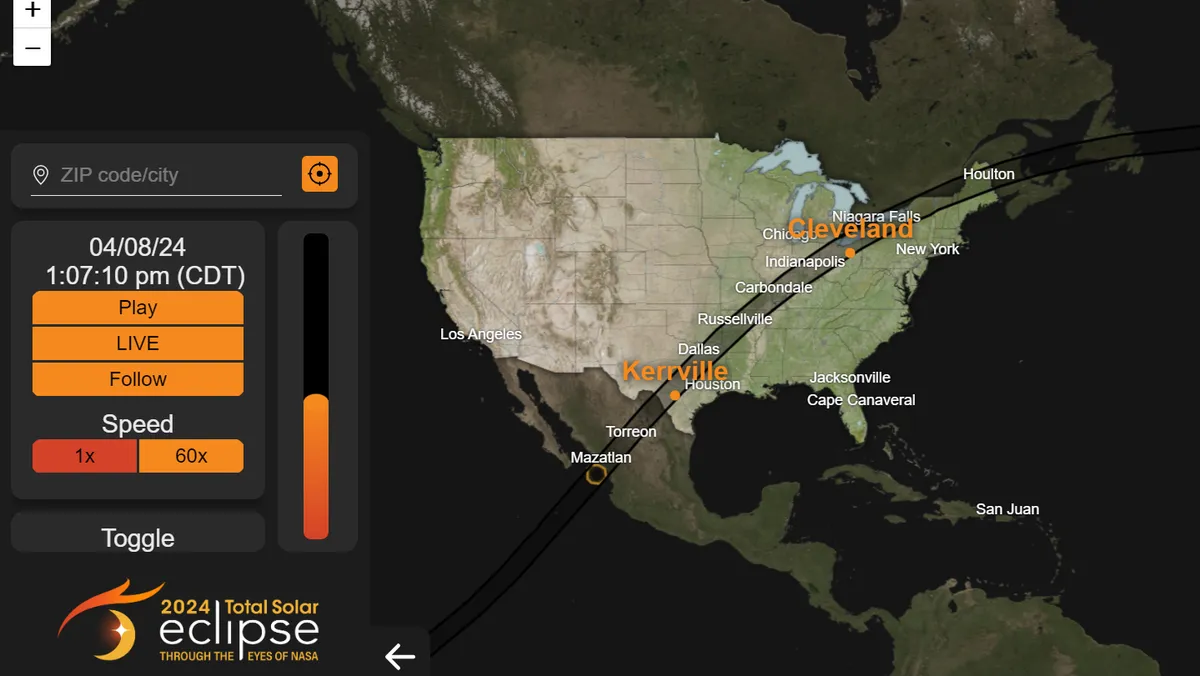
The precise prediction of solar eclipses involves thousands of years of human observation and scientific advancements. Ancient civilizations noticed patterns in celestial events, leading to the discovery of the 18-year Saros cycle. Sir Isaac Newton's theory of gravitation and Edmond Halley's application of mathematical formulas significantly advanced our understanding and prediction of eclipses. As technology has improved, so have the predictive models for eclipses, taking into account factors such as Earth's rotational speed and the moon's orbit.