Yale researchers have demonstrated that predictive models linking brain activity to behavior can generalize across diverse datasets, which is crucial for their clinical utility. By training models on varied brain imaging datasets, they found that these models can still perform accurately when tested on different datasets with unique demographic and regional characteristics. This highlights the importance of developing neuroimaging models that work for diverse populations, including underserved rural communities, to ensure equitable access to mental health care.
Google DeepMind researchers have published a paper highlighting the limitations of AI models, specifically transformer models like OpenAI's GPT-2. The study reveals that these models struggle to generate outputs beyond their training data, hindering their ability to perform tasks outside their domain. Despite the massive training datasets used to build these models, they still lack generalization and are only proficient in areas they have been extensively trained on. The findings challenge the hype surrounding AI and caution against presumptions of artificial general intelligence (AGI). The research contradicts the optimistic views of CEOs like OpenAI's Sam Altman and Microsoft's Satya Nadella, who plan to "build AGI together."
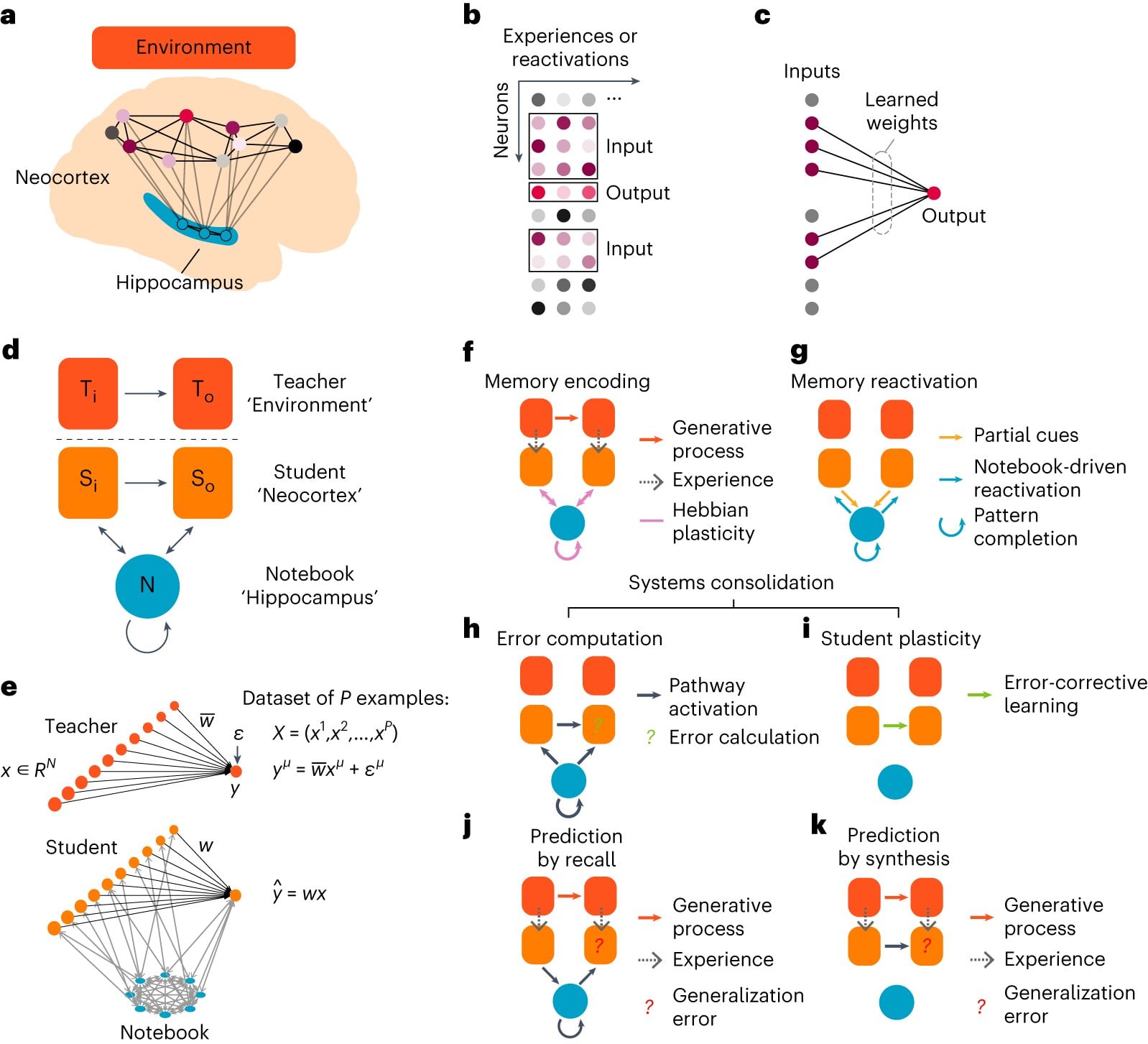
Researchers at HHMI's Janelia Research Campus and UCL propose a new theory of systems consolidation, suggesting that memories are consolidated in the neocortex only if they improve generalization. This mathematical neural network theory challenges the classical view that all memories move from the hippocampus to the neocortex over time. The amount of consolidation depends on how much of a memory can be generalized, rather than its age. The researchers used neural networks to reproduce experimental patterns that couldn't be explained by the classical view. Further experiments will test the theory's ability to predict memory consolidation and explore how the brain distinguishes predictable and unpredictable components of memories. Understanding memory consolidation can have implications for cognition, human health, and artificial intelligence.
Researchers propose a new theory of systems consolidation, the process of transferring memories from the hippocampus to the neocortex, suggesting that memories are consolidated in the neocortex only if they improve generalization. This theory challenges the classical view that all memories eventually move to the neocortex. Using a mathematical neural network model, the researchers demonstrate that the amount of consolidation depends on the generalizability of a memory, rather than its age. Further experiments will be conducted to test the theory's predictions and explore how the brain distinguishes predictable and unpredictable components of memories. Understanding memory consolidation can have implications for cognition, human health, and artificial intelligence.
Avoiding activities associated with past pain can lead individuals to avoid related tasks that may be painless, even if they are conceptually similar or in a different category. A study conducted on healthy individuals found that pain avoidance can generalize to safe activities, resulting in needless abstention from valued tasks. The findings emphasize the importance of understanding pain avoidance to improve treatment outcomes for those with chronic pain, as psychological factors play a significant role in predicting chronic pain rather than physical injury severity. Further research is needed to explore how these findings apply to individuals with chronic pain.