Researchers at NIST have developed the most precise atomic clock using aluminum ion technology, achieving 19-decimal accuracy and surpassing previous records in stability and accuracy, with potential applications in redefining the second, geodesy, and quantum physics research.
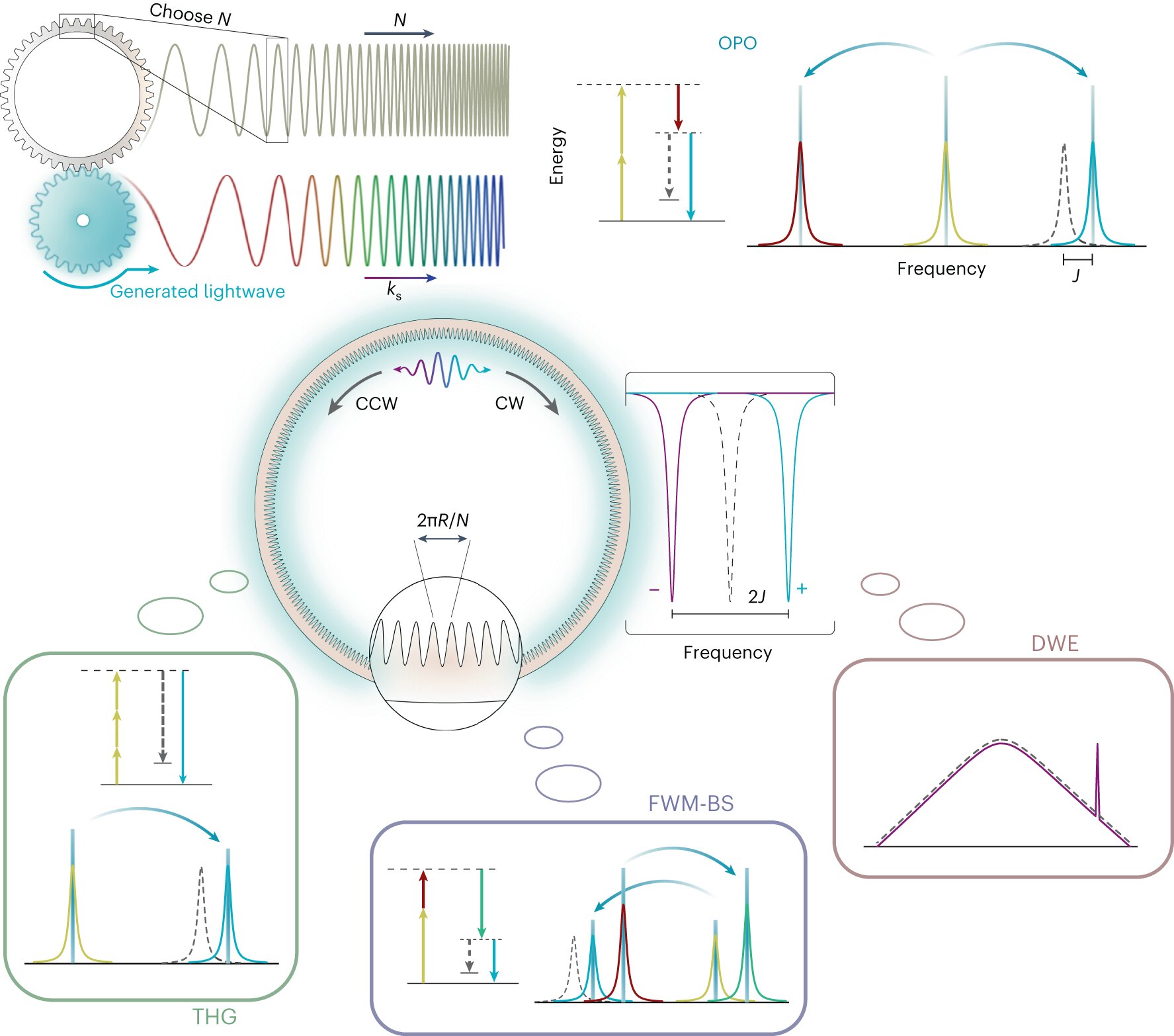
Scientists at the National Institute of Standards and Technology (NIST) and the Joint Quantum Institute (JQI) have developed a technique to convert near-infrared laser light into specific wavelengths of visible light with high accuracy and efficiency. By introducing tiny, periodic bumps along the surface of a microresonator, the researchers can select a specific output wavelength of visible light with an accuracy of 99.7%. This technique has potential applications in precision timekeeping and quantum information science, enabling the deployment of compact devices like photonic chips for quantum sensors and optical atomic clocks.