Tag

Planetaryscience

All articles tagged with #planetaryscience

Martian Surface Collapses

Originally Published 5 months ago — by European Space Agency

Featured image for Martian Surface Collapses
Source: European Space Agency

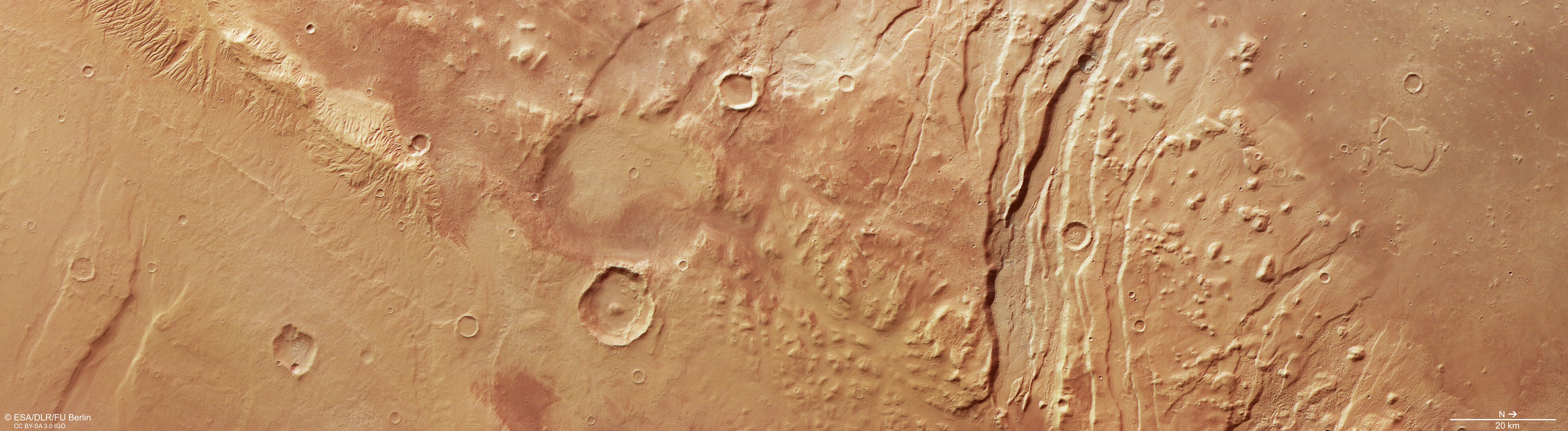
The European Space Agency's Mars Express has provided new detailed images of the Acheron Fossae region on Mars, revealing a complex landscape of deep cracks, valleys filled with ice-rich rock, and transitional plains, offering insights into the planet's geological history and climate fluctuations over billions of years.
Juno Mission Sheds Light on Io's Volcanic Mysteries

Originally Published 1 year ago — by CNN

Featured image for Juno Mission Sheds Light on Io's Volcanic Mysteries
Source: CNN

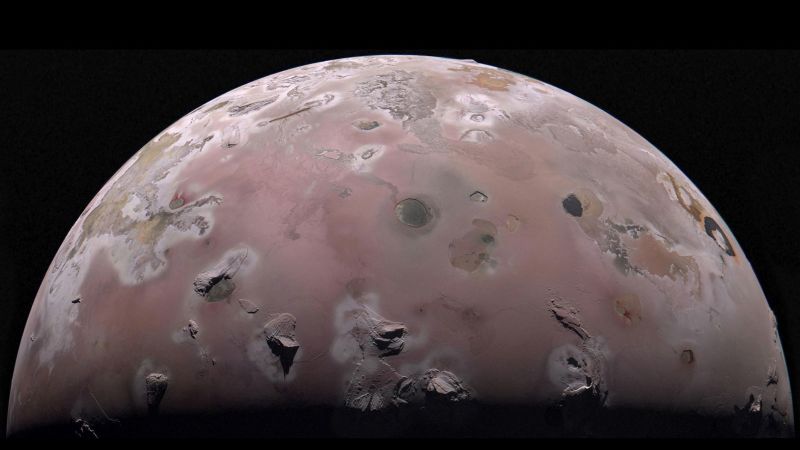
NASA's Juno spacecraft has provided new insights into the volcanic activity of Jupiter's moon Io, revealing that its numerous volcanoes are powered by individual magma chambers rather than a global magma ocean. This discovery, presented at the American Geophysical Union's annual meeting and published in Nature, challenges previous theories and has implications for understanding other celestial bodies with subsurface oceans. Juno's close flybys have also captured unprecedented images of Io's surface, contributing to a deeper understanding of its geological features.

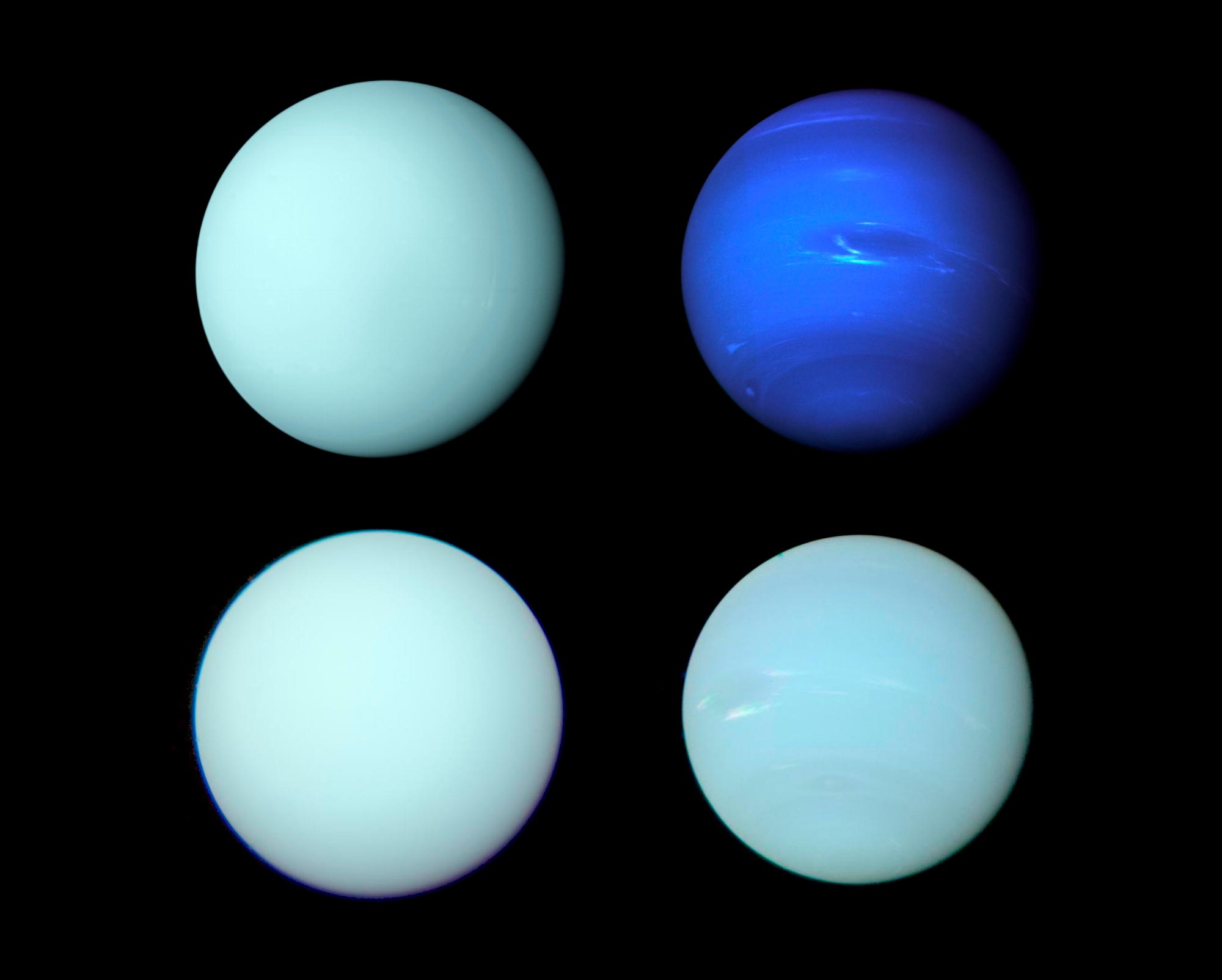
"Revealing the Real Hues: Color-Corrected Images Show Uranus and Neptune's True Shades"

Originally Published 2 years ago — by SciTechDaily

Featured image for "Revealing the Real Hues: Color-Corrected Images Show Uranus and Neptune's True Shades"
Source: SciTechDaily

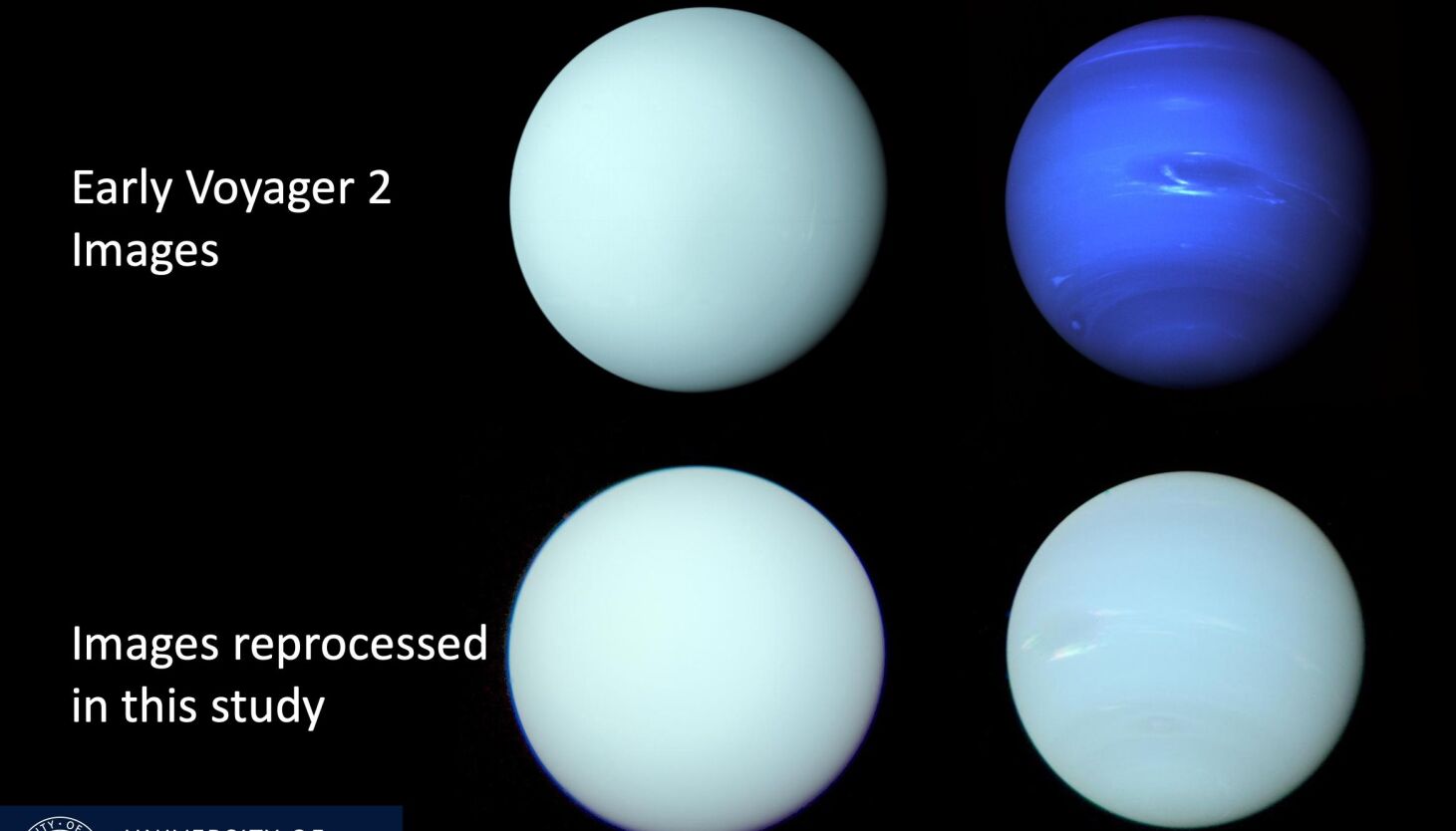
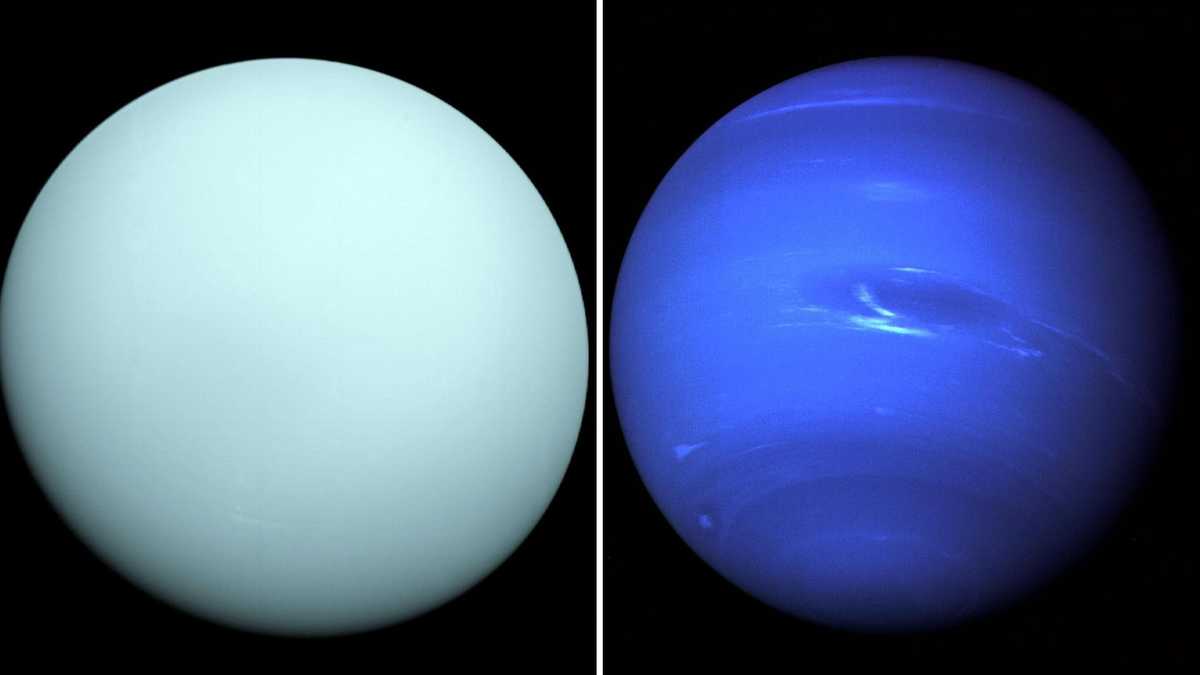
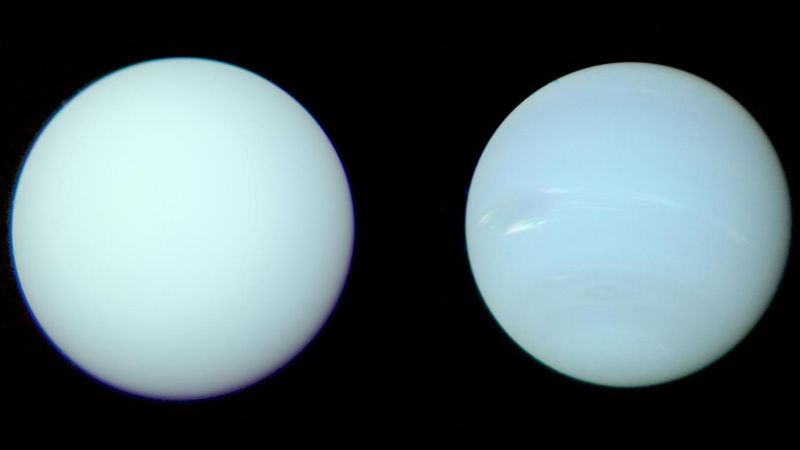
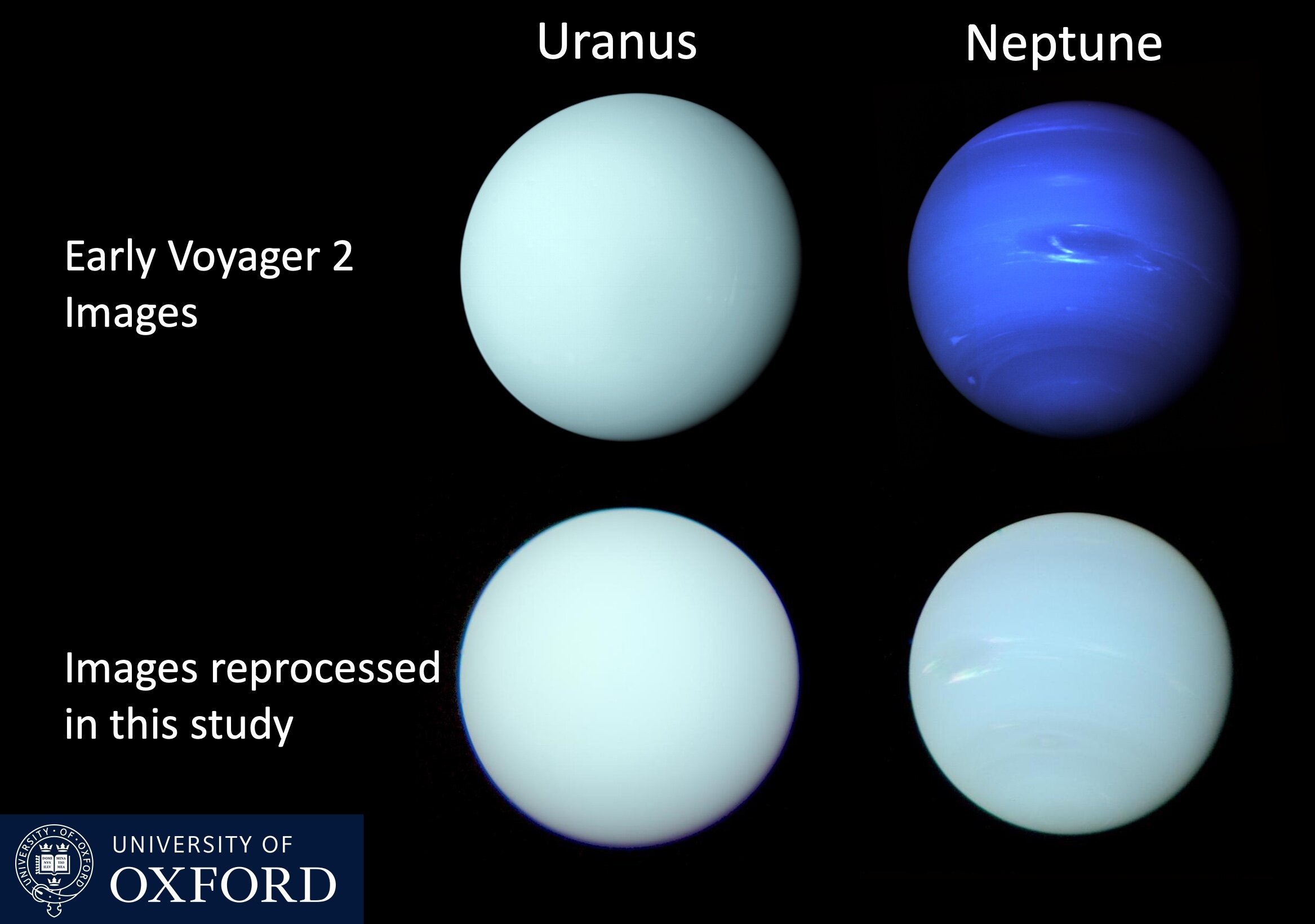
Recent research led by Professor Patrick Irwin has used modern telescope data to reveal that Neptune and Uranus are both a similar shade of greenish-blue, contrary to the deep azure and pale cyan colors previously thought. The study, which corrected historical color inaccuracies, also explained the slight color variations of Uranus during its orbit. This new understanding of the planets' true colors was achieved by re-balancing composite color images from Voyager 2 and the Hubble Space Telescope, and it provides insights into the atmospheric conditions of these distant ice giants.

"Debating the Feasibility of Manned Missions to Pluto"

Originally Published 2 years ago — by Universe Today

Featured image for "Debating the Feasibility of Manned Missions to Pluto"
Source: Universe Today

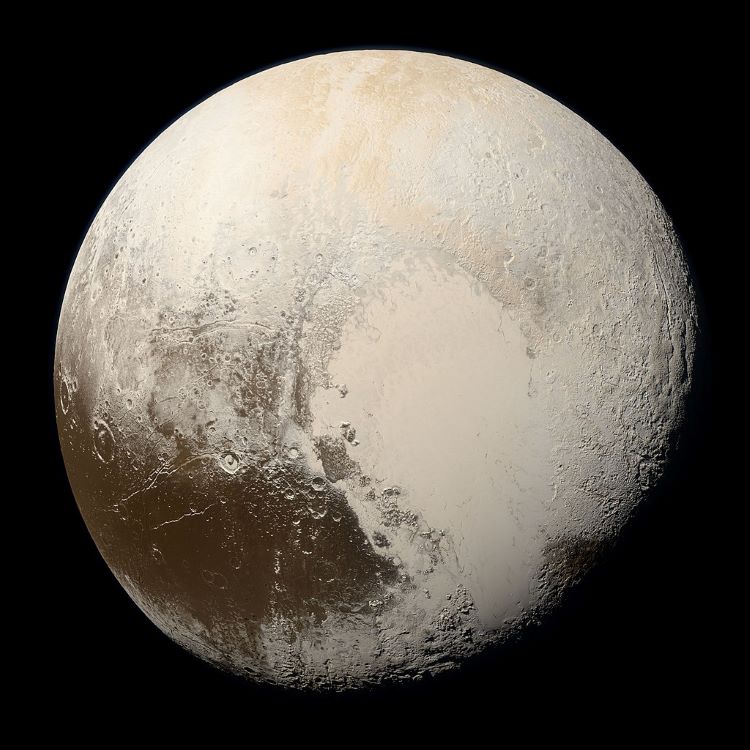
Experts in planetary science, including Dr. Alan Stern of NASA's New Horizons mission, discuss the potential of sending humans to Pluto. While current technology and understanding make such a mission premature and highly challenging due to the vast distance and lack of immediate need, future advancements could change the scenario. Dr. Mike Brown of Caltech expresses skepticism about the practicality of human missions to the Kuiper Belt. The article contrasts the efficiency of human explorers with the current capabilities of robotic missions, highlighting the scientific benefits and technical complexities of potential human exploration of Pluto. As human space exploration advances with programs like NASA's Artemis and SpaceX's Starship, the conversation about the feasibility and value of sending humans to distant worlds like Pluto continues.

"Revealed: Color-Corrected Photos Unmask the True Robin's Egg Blue of Uranus and Neptune"

Originally Published 2 years ago — by Deseret News

Featured image for "Revealed: Color-Corrected Photos Unmask the True Robin's Egg Blue of Uranus and Neptune"
Source: Deseret News

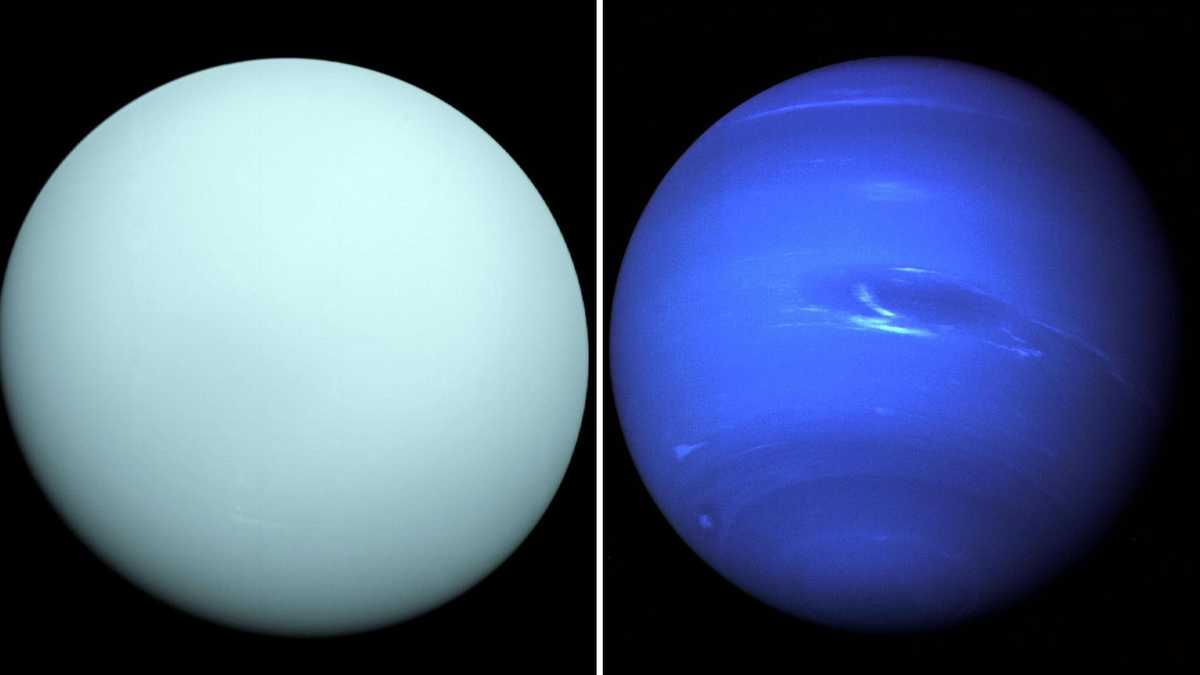
A University of Oxford study has revealed that Neptune and Uranus are actually a similar shade of greenish-blue, contrary to the distinct blue and light green colors depicted in images from the Voyager 2 spacecraft in the 1980s. The study, which used advanced imaging data from the Hubble Space Telescope and the Very Large Telescope, corrected the color misrepresentations caused by the original composite images. The research also explained the slight color changes in Uranus observed from Earth during its orbit, which are influenced by the planet's unusual spin and seasonal haze variations.

"Revealed: The Authentic Hues of Neptune and Uranus in Latest Imagery"

Originally Published 2 years ago — by WDSU New Orleans

Featured image for "Revealed: The Authentic Hues of Neptune and Uranus in Latest Imagery"
Source: WDSU New Orleans

Recent research using data from the Hubble Space Telescope and the Very Large Telescope has revealed that the true colors of Neptune and Uranus are more similar than previously thought, both displaying a greenish-blue hue. This corrects the earlier enhanced images from NASA's Voyager 2 mission, which showed Neptune as an artificially deep blue. The study also explored why Uranus changes colors with its seasons, attributing it to the planet's unique tilt and varying methane ice haze. These findings, published in the Monthly Notices of the Royal Astronomical Society, help clarify long-standing misconceptions about the ice giants and assist in preparing for future missions to study these distant worlds.

"New Images Unveil the Authentic Greenish-Blue Hues of Neptune and Uranus"

Originally Published 2 years ago — by WBAL TV Baltimore

Featured image for "New Images Unveil the Authentic Greenish-Blue Hues of Neptune and Uranus"
Source: WBAL TV Baltimore

Recent research using data from the Hubble Space Telescope and the Very Large Telescope has revealed that the true colors of Neptune and Uranus are more similar than previously thought, both displaying a greenish-blue hue. This corrects the earlier enhanced images from NASA's Voyager 2 mission, which showed Neptune as an artificially deep blue. The study also explains why Uranus changes colors with its seasons, attributing it to the varying thickness of methane ice in its atmosphere. These findings, published in the Monthly Notices of the Royal Astronomical Society, help clarify long-standing misconceptions about the ice giants and assist in preparing for future missions to explore these distant planets.

"New Images Unveil the Authentic Greenish-Blue Hues of Neptune and Uranus"

Originally Published 2 years ago — by KCCI Des Moines

Featured image for "New Images Unveil the Authentic Greenish-Blue Hues of Neptune and Uranus"
Source: KCCI Des Moines

Recent research using data from the Hubble Space Telescope and the Very Large Telescope has revealed that the true colors of Neptune and Uranus are more similar than previously thought, both displaying a greenish-blue hue. This corrects the earlier enhanced images from NASA's Voyager 2 mission, which showed Neptune as an artificially deep blue. The study also explains why Uranus changes colors with its seasons, attributing it to the varying thickness of methane ice in its atmosphere. These findings, published in the Monthly Notices of the Royal Astronomical Society, help clarify long-standing misconceptions about the ice giants and assist in planning future missions to these enigmatic planets.

"New Images Unveil the Authentic Greenish-Blue Hues of Neptune and Uranus"

Originally Published 2 years ago — by KSBW Monterey

Featured image for "New Images Unveil the Authentic Greenish-Blue Hues of Neptune and Uranus"
Source: KSBW Monterey

Recent research using data from the Hubble Space Telescope and the Very Large Telescope has revealed that the true colors of Neptune and Uranus are more similar than previously thought, both displaying a greenish-blue hue. This corrects the earlier enhanced images from NASA's Voyager 2 mission, which showed Neptune as an artificially deep blue. The study also explains why Uranus changes colors with its seasons, attributing it to the varying thickness of methane ice in its atmosphere. These findings, published in the Monthly Notices of the Royal Astronomical Society, help clarify long-standing misconceptions about the ice giants and assist in preparing for future missions to explore these distant planets.

"Revealing the True Hues: Astonishing Portraits of Uranus and Neptune Unveiled"

Originally Published 2 years ago — by CNN

Featured image for "Revealing the True Hues: Astonishing Portraits of Uranus and Neptune Unveiled"
Source: CNN

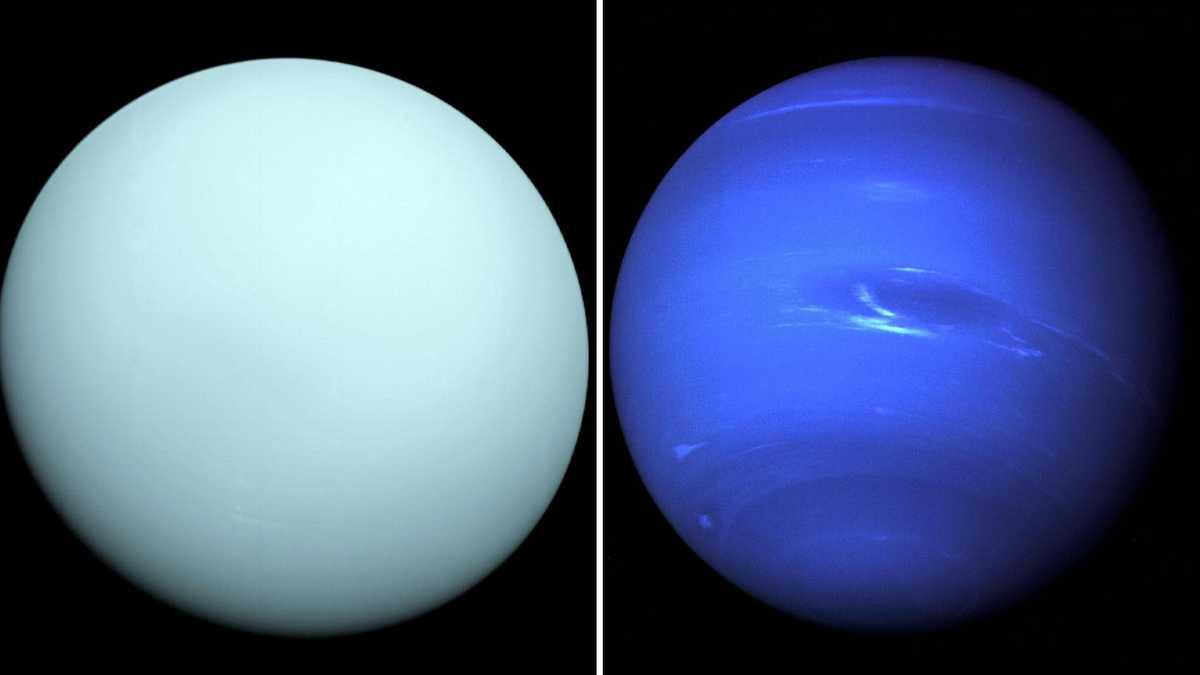
Recent research using color-corrected images has shown that Uranus and Neptune are more similarly colored than previously thought, both displaying a greenish-blue hue. The original Voyager 2 images had depicted Neptune with an artificially enhanced blue color. The study, which also explored why Uranus changes colors with its seasons, suggests that both planets' appearances are influenced by atmospheric haze and methane ice. These findings, published in the Monthly Notices of the Royal Astronomical Society, contribute to a better understanding of the ice giants and support the need for future space missions to explore these distant worlds.

"Revealing Neptune and Uranus: True Colors and Surprising Portraits Unveiled"

Originally Published 2 years ago — by Phys.org

Featured image for "Revealing Neptune and Uranus: True Colors and Surprising Portraits Unveiled"
Source: Phys.org

A new study led by Professor Patrick Irwin from the University of Oxford, published in the Monthly Notices of the Royal Astronomical Society, has used reprocessed Voyager 2 images and recent data from the Hubble Space Telescope to reveal that Neptune and Uranus are actually a similar shade of greenish-blue, contrary to the long-held belief that Neptune is deep blue and Uranus is pale cyan. The study also explains the seasonal color changes of Uranus, attributing them to variations in methane concentration and icy haze in its atmosphere, providing a more accurate understanding of the true colors of these distant ice giants.

"Iron Snowstorms Inside Ganymede May Unlock Secrets of Its Magnetic Mysteries"

Originally Published 2 years ago — by ScienceAlert

Featured image for "Iron Snowstorms Inside Ganymede May Unlock Secrets of Its Magnetic Mysteries"
Source: ScienceAlert

Researchers have conducted an experimental study to understand Ganymede's strong magnetic field, testing the 'iron snow' theory which suggests iron crystallizes and falls within the moon's core, similar to a snowglobe. The laboratory experiment used water ice to simulate iron snow crystals and found that crystallization occurs in sporadic bursts when the liquid reaches a supercooled state. This process could explain the dynamic nature of Ganymede's magnetic field and may also apply to other small planetary bodies in the solar system. Earth's core, however, operates differently due to its powerful gravity and material composition.

"Mysterious Geometric Shapes Discovered Underground on Mars"

Originally Published 2 years ago — by indy100

Featured image for "Mysterious Geometric Shapes Discovered Underground on Mars"
Source: indy100

The Chinese rover Zhurong has discovered 16 buried polygonal structures beneath the surface of Mars in the Utopia Planitia region, suggesting a past influenced by freeze-thaw cycles. This finding, revealed by radar technology and published in Nature Astronomy, indicates that early Mars had a varied atmosphere capable of supporting such thermal processes. The structures, found 35 meters underground and extending horizontally for 1.9 kilometers, are not formed by lava but by sediment and thermal contraction cracking, hinting at a high obliquity of early Mars and significant paleoclimatic changes.

"NASA's Curiosity Rover Captures a Full Martian Day in Stunning New Timelapse"

Originally Published 2 years ago — by Fox News

Featured image for "NASA's Curiosity Rover Captures a Full Martian Day in Stunning New Timelapse"
Source: Fox News

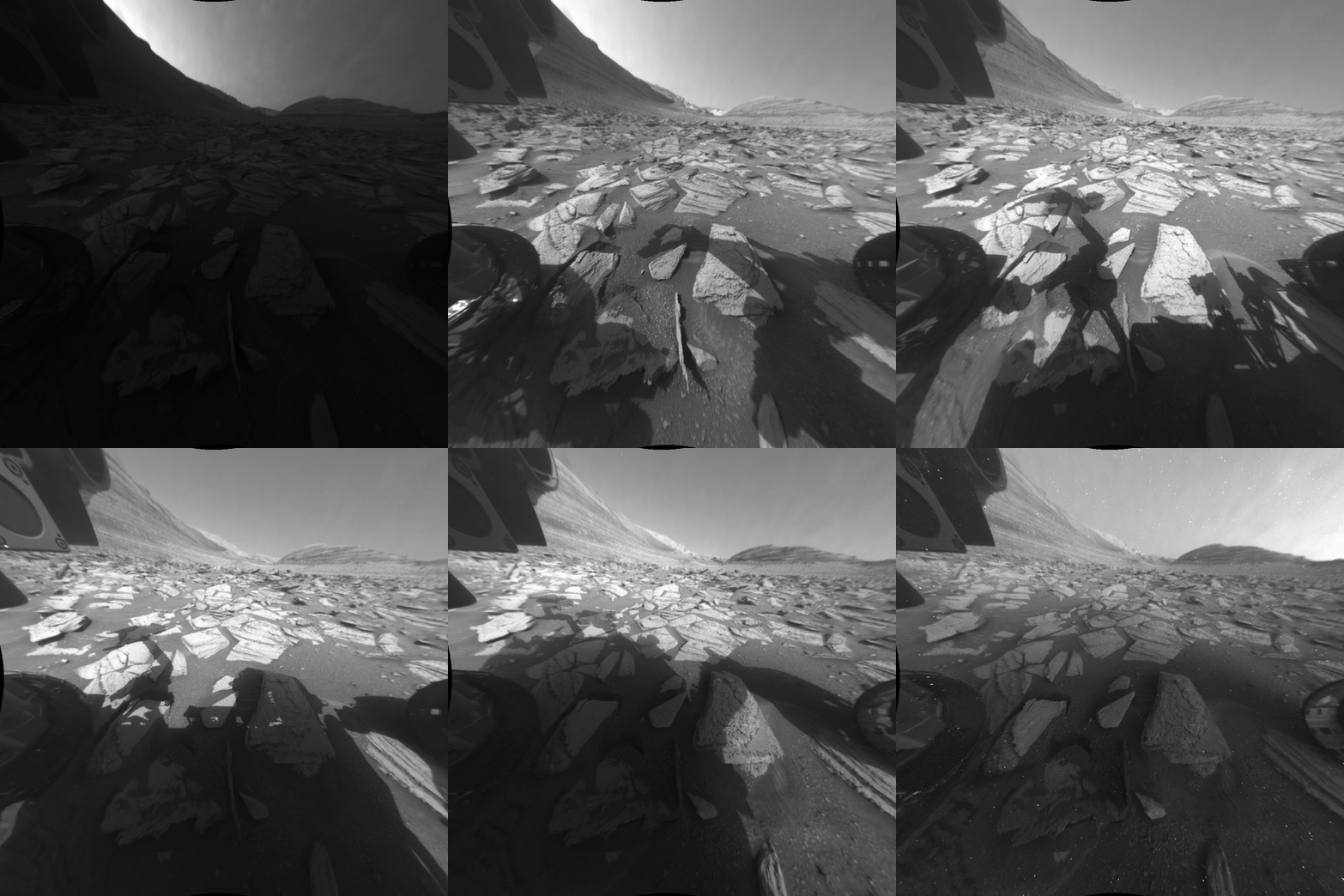
NASA's Curiosity rover captured a 12-hour time-lapse on Mars, providing a detailed look at the planet's surface and potential insights into its weather patterns. The rover, which has been on Mars since 2012, took the images with its Hazard-Avoidance Cameras while parked in Gale Crater. Although no weather anomalies were observed, the time-lapse could help scientists understand the Martian environment better. Curiosity has been exploring Mount Sharp within the crater, collecting soil samples to determine the planet's habitability for microbial life. The images also show the rover's shadow and the accumulation of Martian dust on the cameras over the years.

"James Webb Telescope Reveals Unprecedented New Year Glimpse of Uranus and Its Rings"

Originally Published 2 years ago — by Livescience.com

Featured image for "James Webb Telescope Reveals Unprecedented New Year Glimpse of Uranus and Its Rings"
Source: Livescience.com

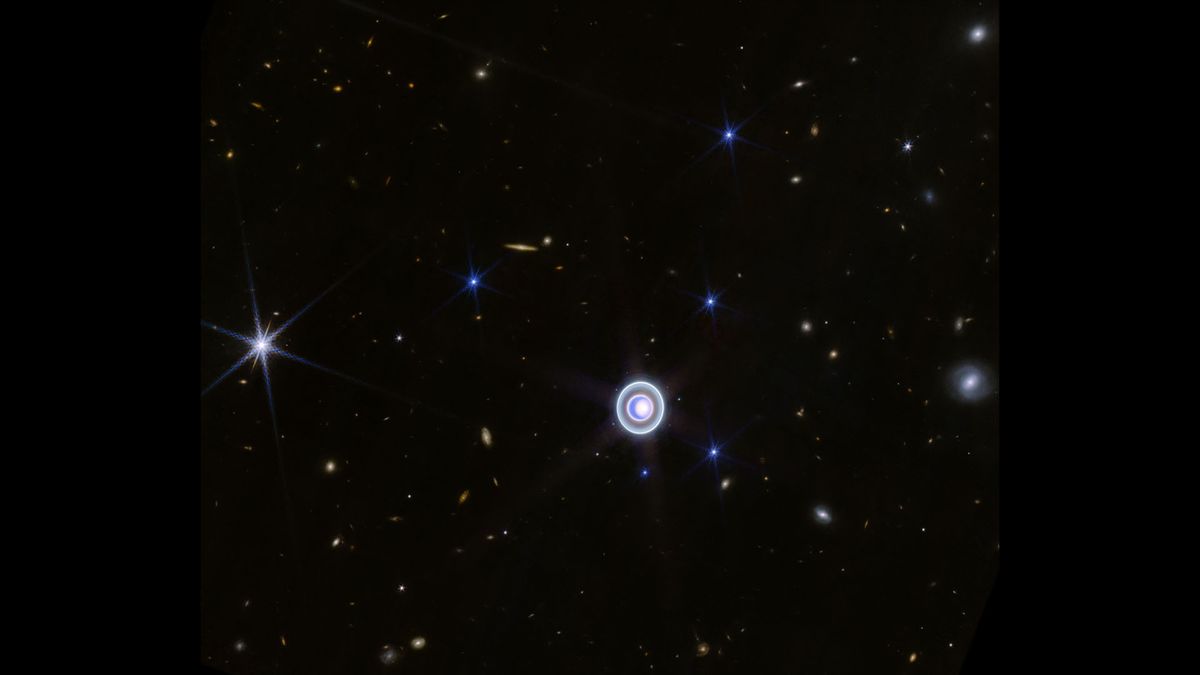
The James Webb Space Telescope captured a stunning image of Uranus, showcasing its rings, a polar ice cap, and 14 of its 27 moons in unprecedented detail. This image, taken on December 18, 2023, is significant as it reveals atmospheric features and a previously elusive "Zeta ring" around the ice giant. The photo also includes background stars and galaxies, providing a much more detailed view than the first close-up by Voyager 2 in 1986. The image helps scientists study Uranus' extreme seasons and meteorological phenomena, as the planet experiences a 21-year-long winter due to its 98-degree axial tilt.