Tag

Planetary Atmosphere

All articles tagged with #planetary atmosphere

space-science1 year ago

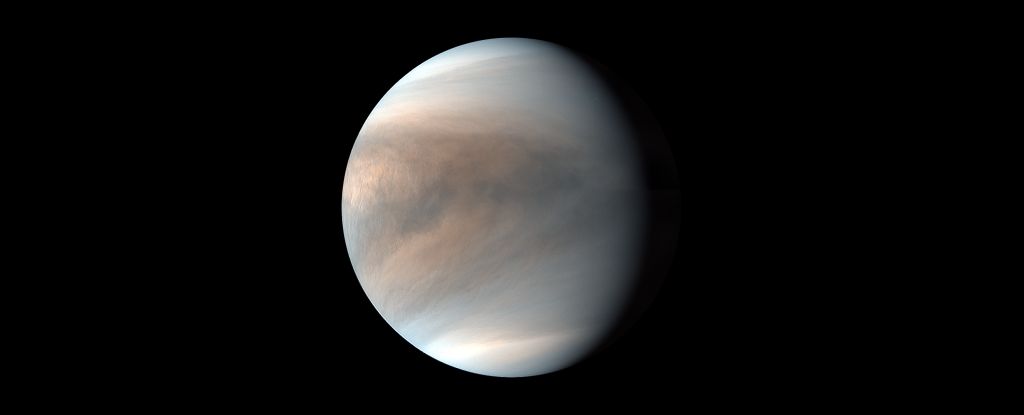
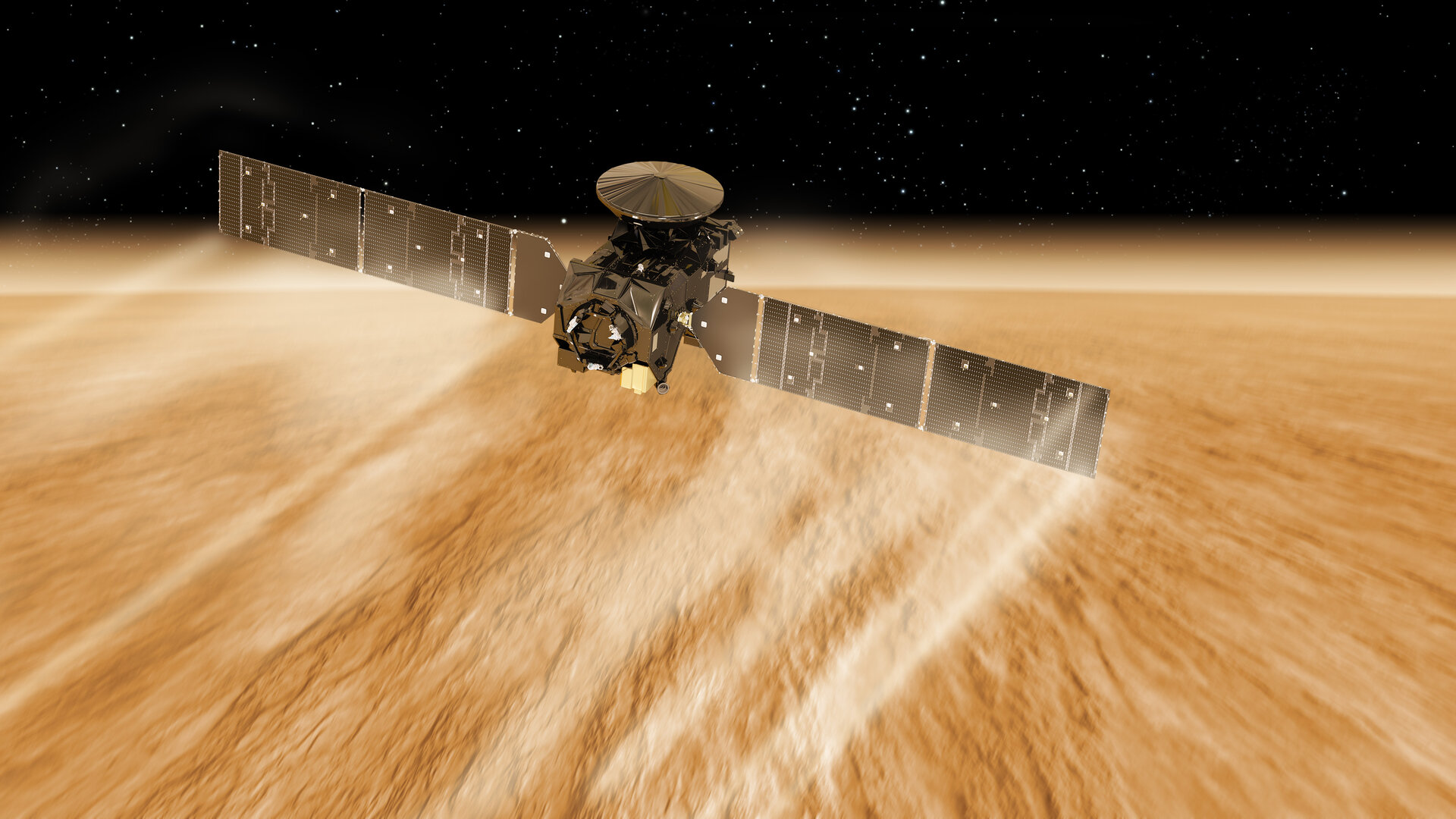
Mystery of Venus' Leaking Carbon and Oxygen

The BepiColombo spacecraft has detected carbon and oxygen leaking from Venus, adding to previous findings on the loss of hydrogen and potentially providing clues to the planet's transformation from a temperate world to a scorching, acidic environment. The discovery, made during flybys of Venus, suggests that the planet's atmosphere has evolved and lost its water over time. With limited in-situ information about Venus, upcoming missions aim to study its escape mechanisms, volcanic activity, and potential for life, shedding light on its historical evolution.

space-exploration2 years ago

Unveiling the 'Free Lunch' of Aerocapture in Space Exploration

A new paper explores the concept of aerocapture, a technique used in space exploration where a spacecraft uses the atmosphere of a planet to slow down and achieve orbit insertion. The paper discusses the different methods of aerodynamic control, such as lift modulation and drag modulation, and highlights the importance of accounting for atmospheric uncertainties in mission design. The atmospheric density of planets like Mars and Venus can vary significantly, posing risks to aerocapture maneuvers. The paper also examines the aerocapture capabilities of various planets in the solar system, including Venus, Mars, Titan, Uranus, and Neptune.

astronomy2 years ago

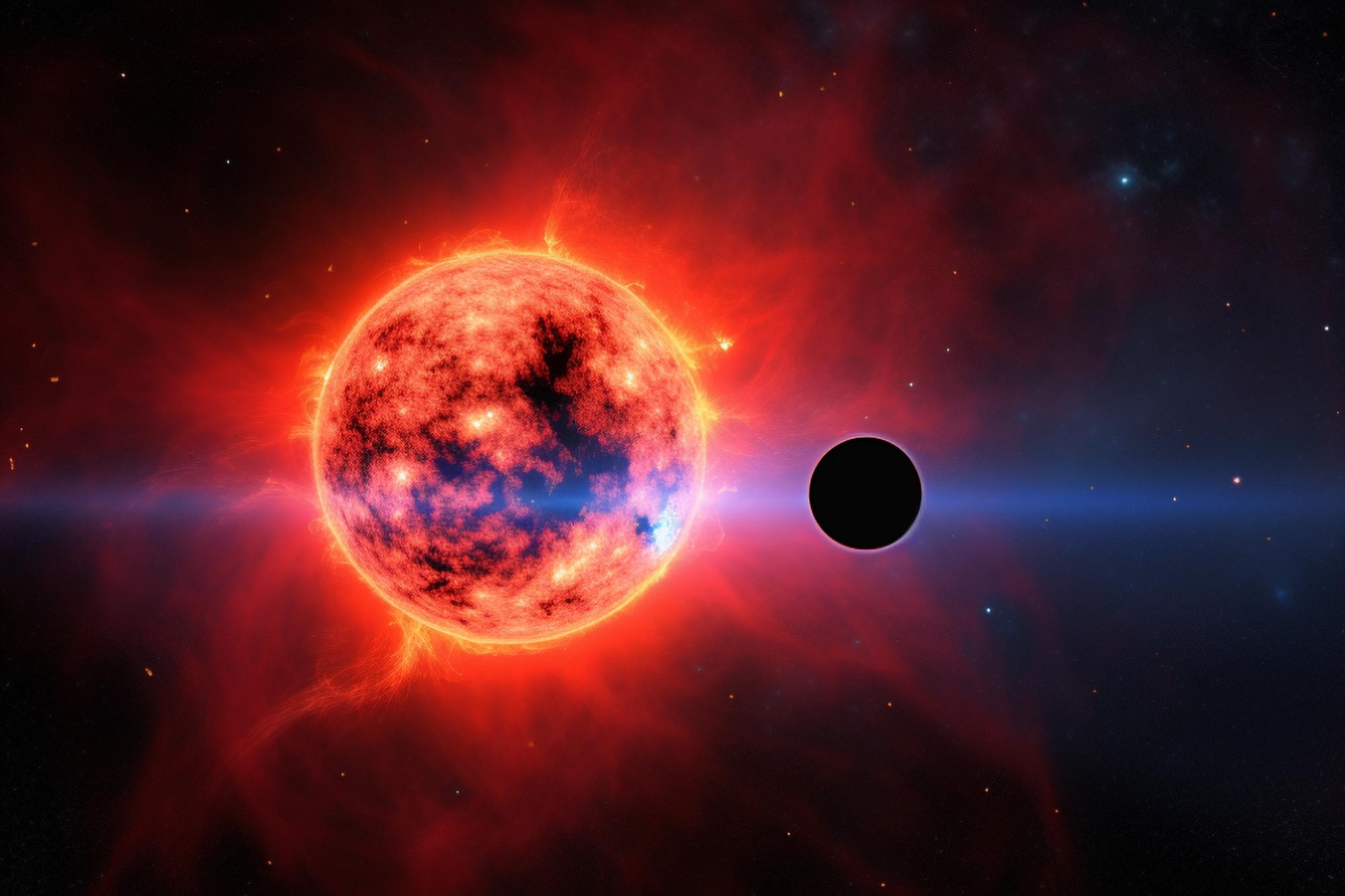
Hubble Observes Evaporating Planet's Bizarre Hiccups

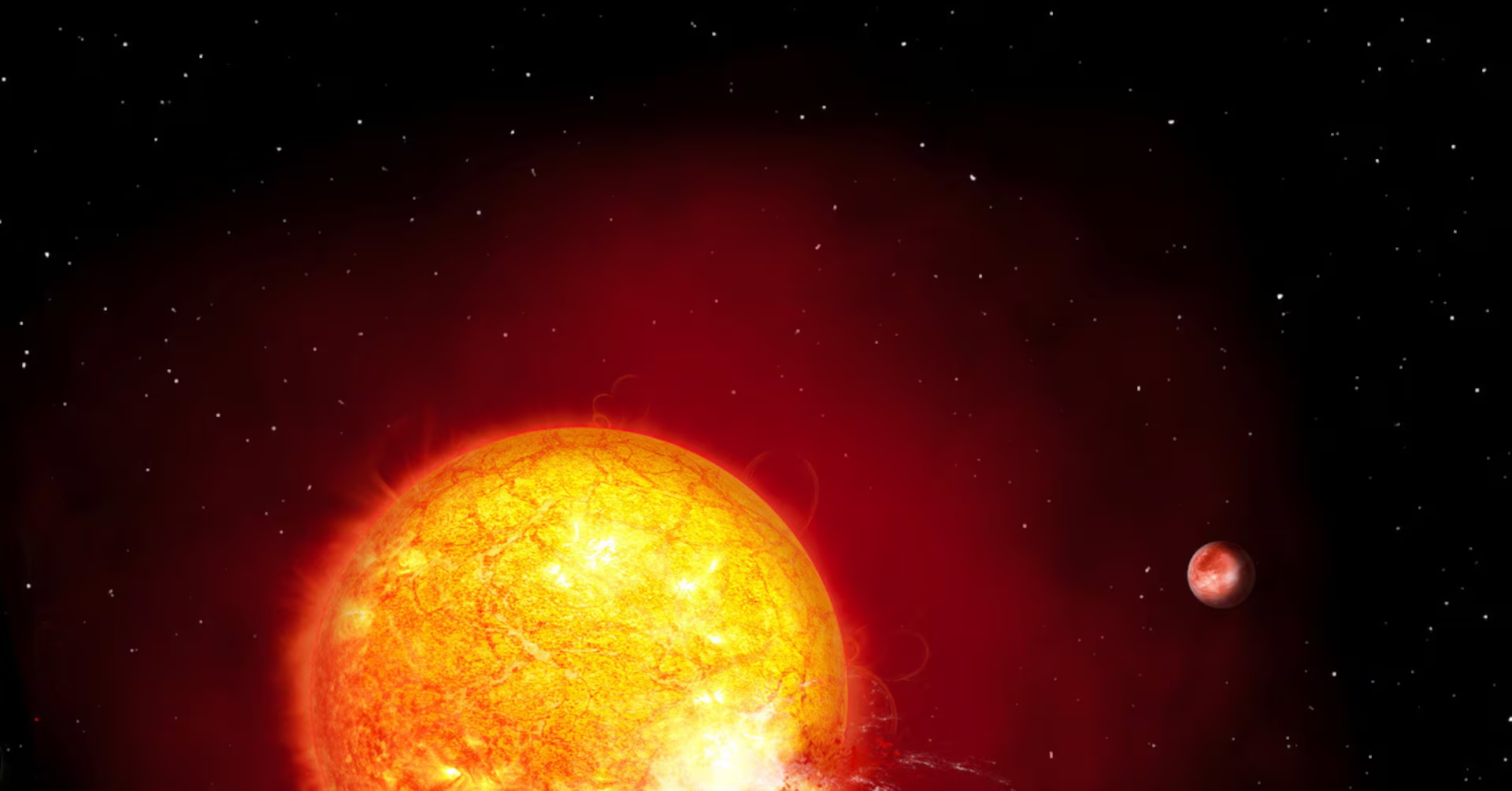
The Hubble Space Telescope has observed an evaporating planet, AU Microscopii b, orbiting a red dwarf star. The planet's hydrogen atmosphere is being stripped off due to the star's intense magnetic fields and blistering ultraviolet radiation. The observations revealed unexpected variability in the planet's atmospheric loss, with one orbit showing no material loss and another orbit showing clear signs of atmospheric escape. This variability challenges current models of planetary evolution and highlights the extreme conditions experienced by planets orbiting red dwarf stars. Further observations will help scientists understand the complex interplay between the star and the planet and the potential habitability of such systems.

astronomy2 years ago

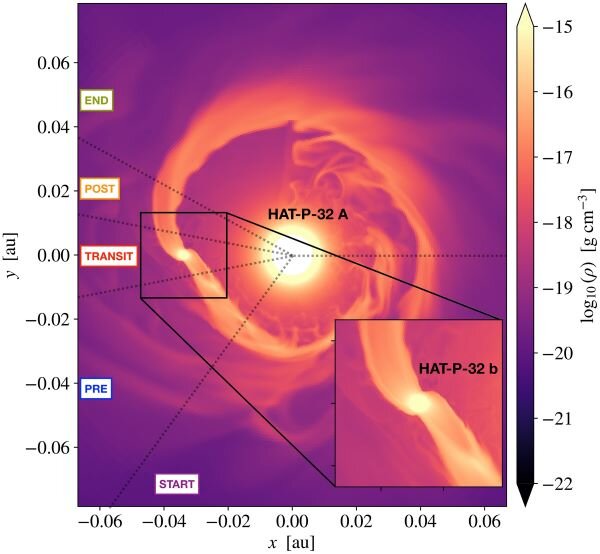
Helium Tails Discovered Escaping Jupiter-like Planet HAT-P-32 b

Astronomers using the Hobby-Eberly Telescope have discovered some of the longest tails of gas yet observed escaping a planet. The planet, HAT-P-32b, is nearly twice the size of Jupiter and losing its atmosphere through dramatic jets of helium unfurling before and behind it as it travels through space. These tails are more than 50 times the length of the planet's radius. The discovery is published in the journal Science Advances.

astronomy2 years ago

James Webb Telescope Detects Water Vapor in Nearby Star System and Rocky Planet's Atmosphere.

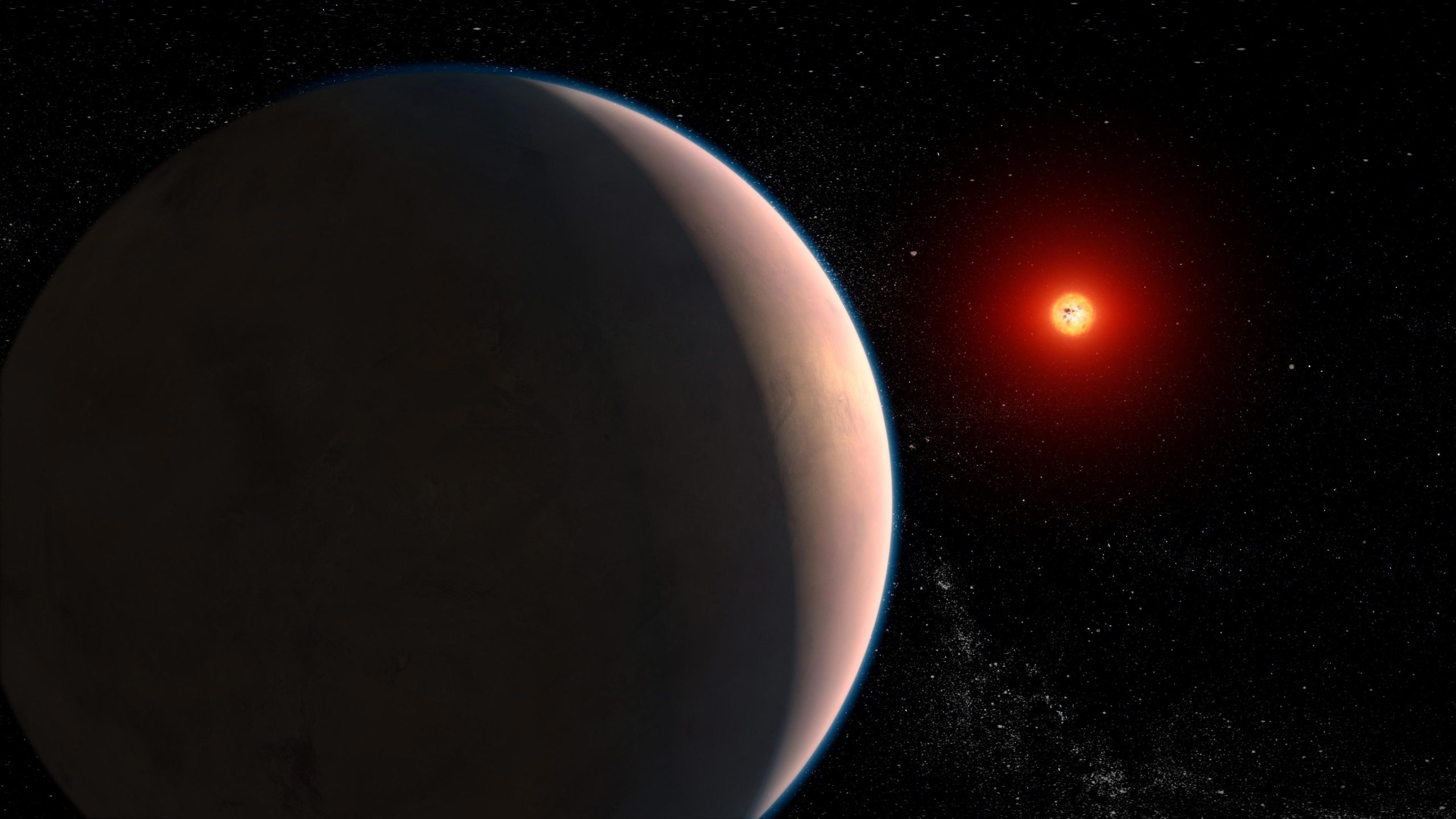
The James Webb Space Telescope has detected hints of water vapor on a rocky exoplanet known as GJ 486 b, which orbits a red dwarf star. However, the water vapor could be on the star itself and not from the planet at all. Additional observations are needed to determine if the planet has an atmosphere or if the water vapor is from the star. If the water vapor is associated with the planet, that would indicate that it has an atmosphere despite its scorching temperature and close proximity to its star.