Sentinel-5A, a new satellite launched in August 2025, has begun providing detailed images of Earth's atmosphere, including the ozone hole over Antarctica, pollution levels over urban areas, and natural emissions from volcanoes and wildfires, enhancing global environmental monitoring.
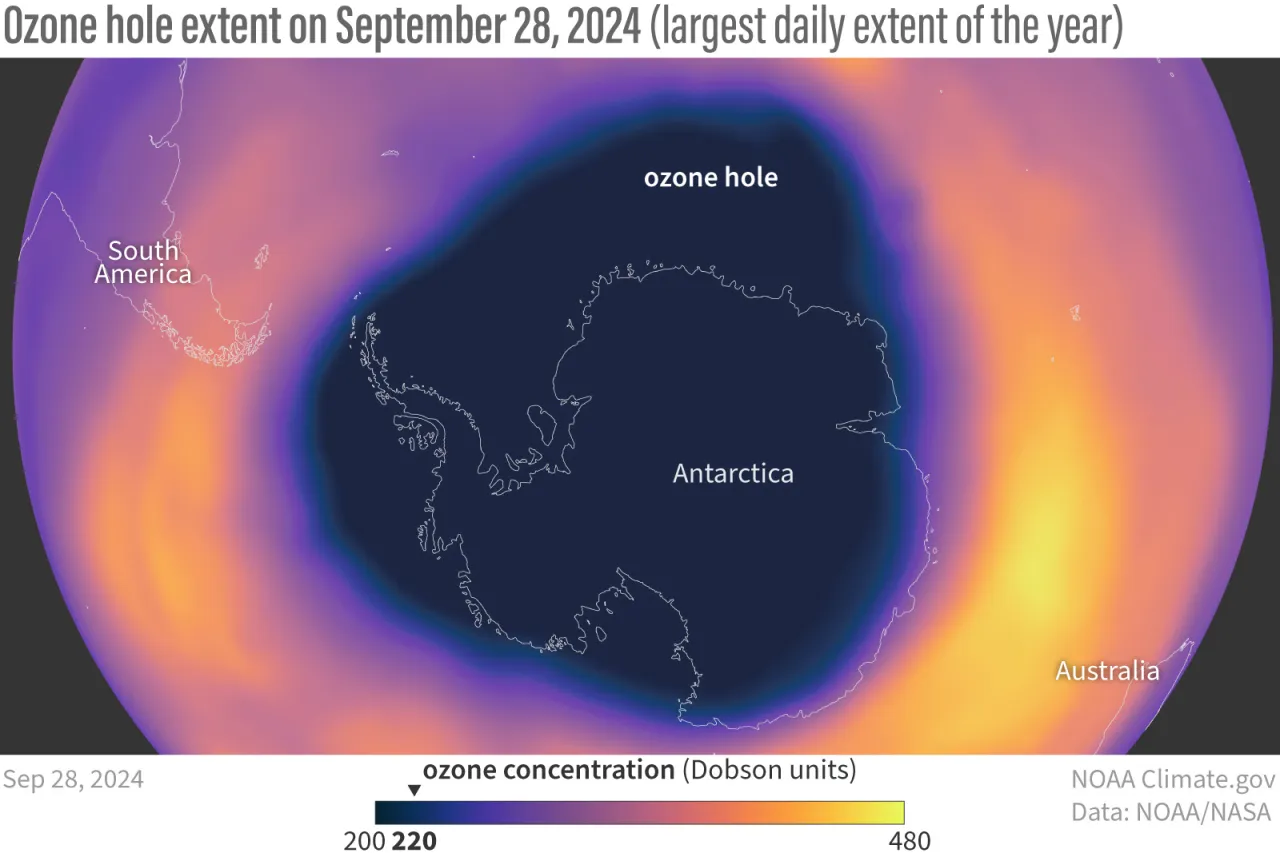
The Antarctic ozone hole was the seventh smallest on record in 2024, thanks to declining chlorofluorocarbons (CFCs) due to the Montreal Protocol and unexpected ozone influx from northern air currents. The hole, still large at nearly 8 million square miles, is expected to fully mend by 2066, demonstrating the effectiveness of international efforts to curb ozone-depleting chemicals.
The Antarctic ozone hole is on track to be fully repaired by 2066, with this year's hole being the seventh smallest since 1992. This improvement is attributed to the reduction of chlorofluorocarbons (CFCs) due to the Montreal Protocol and unexpected ozone influx from northern air currents. The hole, although smaller, still spans nearly 8 million square miles, highlighting the ongoing recovery efforts.
The ozone hole above Antarctica has grown to approximately 10 million square miles, making it one of the largest seasonal holes ever observed. The hole still experiences seasonal growth and shrinkage, but overall it is decreasing in size due to the Montreal Protocol and the decrease of ozone-depleting substances. The early start and rapid growth of the ozone hole this year may be attributed to the Hunga Tonga volcanic eruption in January 2022, which introduced large amounts of water vapor into the air. Scientists predict that the global ozone layer will return to its normal state by around 2050.
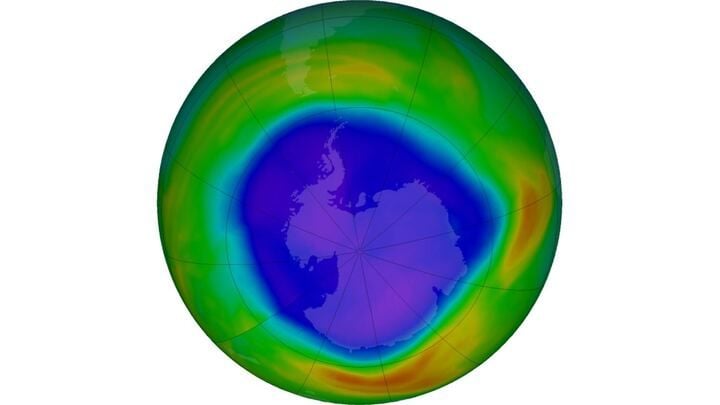
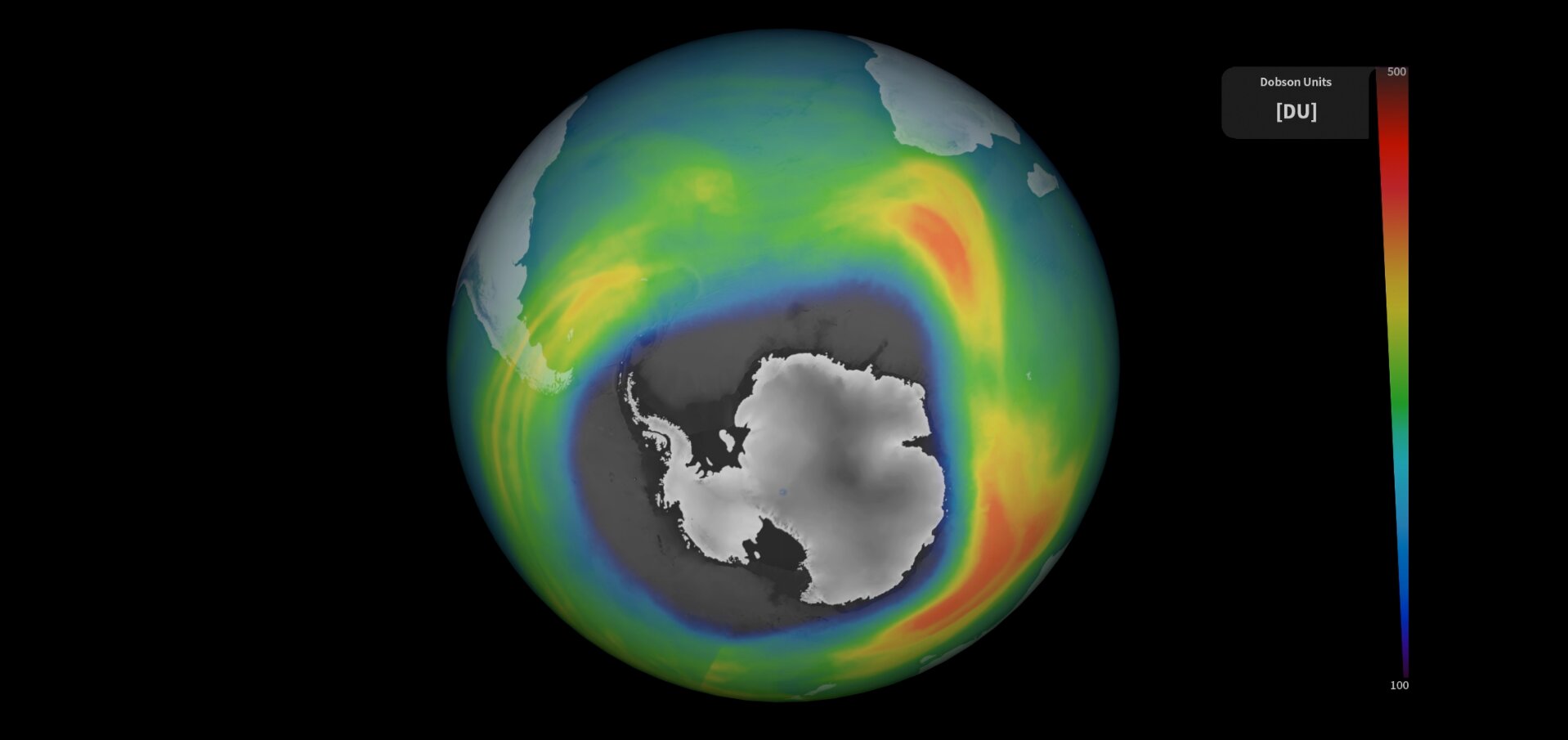
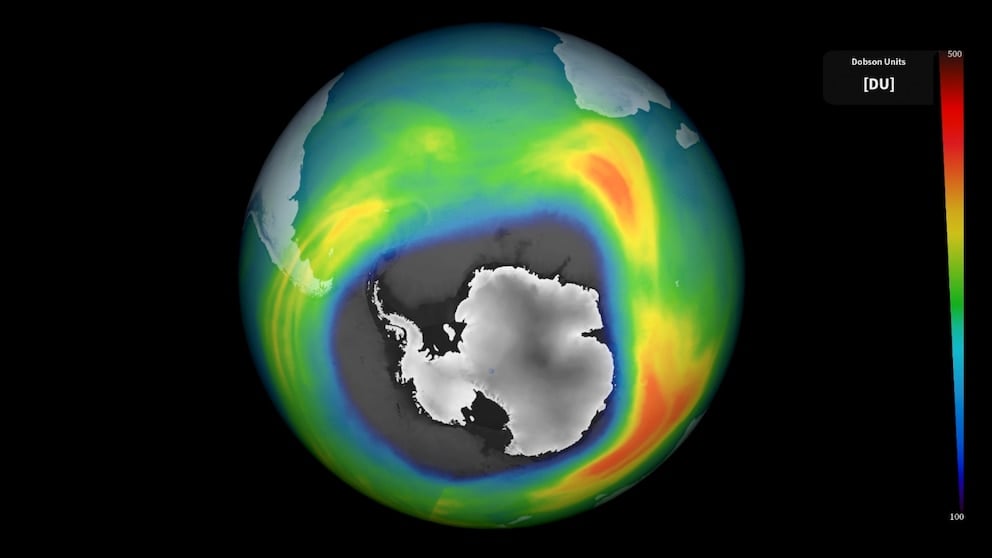
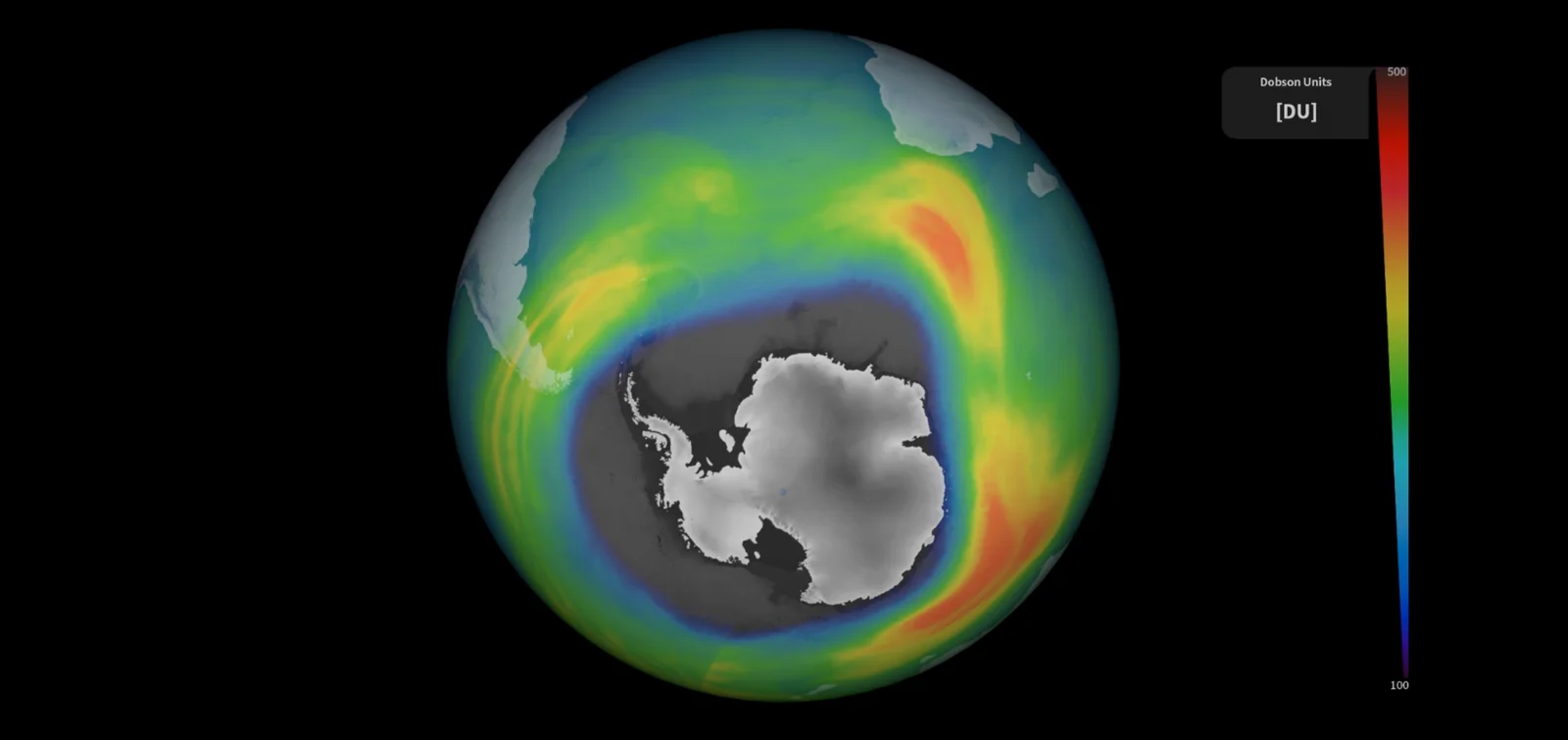
Measurements from the Copernicus Sentinel-5P satellite reveal that this year's ozone hole over Antarctica is one of the largest on record, reaching a size of 26 million sq km on September 16, 2023. The size of the ozone hole fluctuates due to the strength of a wind band around the Antarctic area, and this year's unusual ozone patterns may be associated with the eruption of the Hunga Tonga-Hunga Ha'apai volcano in January 2022. The Montreal Protocol, which phased out the production and consumption of ozone-depleting substances, is expected to lead to the recovery of the ozone layer by around 2050.
The annual ozone hole over Antarctica has grown to near-record size, measuring 26 million square kilometers, according to satellite imaging from Copernicus. The ozone hole, caused by ozone-depleting substances and specific regional conditions, typically reaches maximum depletion between mid-September and mid-October. This year, it started early and has rapidly expanded since mid-August, making it one of the largest on record. The size of the ozone hole is influenced by the strength of a wind band around Antarctica. The ozone layer is expected to recover within decades, but the unusual behavior in 2023 may be linked to the Tongan underwater volcano eruption in January 2022. The Montreal Protocol, which phased out ozone-depleting substances, has played a crucial role in addressing this issue.
The ozone hole over Antarctica in 2023 is one of the largest on record, reaching a size of 26 million sq km, roughly three times the size of Brazil. The size of the ozone hole fluctuates based on temperature changes in the stratosphere, and this year's unusual ozone patterns may be associated with the eruption of the Hunga Tonga-Hunga Ha'apai volcano in January 2022. The ozone hole is largely determined by the strength of a wind band that flows around the Antarctic area, and the variability in size is influenced by the presence of chlorofluorocarbons (CFCs) and other ozone-depleting substances. The Montreal Protocol, implemented in 1987, aims to phase out the production and consumption of these harmful substances, leading to a predicted recovery of the ozone layer by around 2050.