The Antarctic ozone hole has shrunk to its smallest and shortest duration since 2019, indicating progress in the ozone layer’s recovery due to international efforts like the Montreal Protocol, despite recent large holes possibly influenced by volcanic activity and other factors.
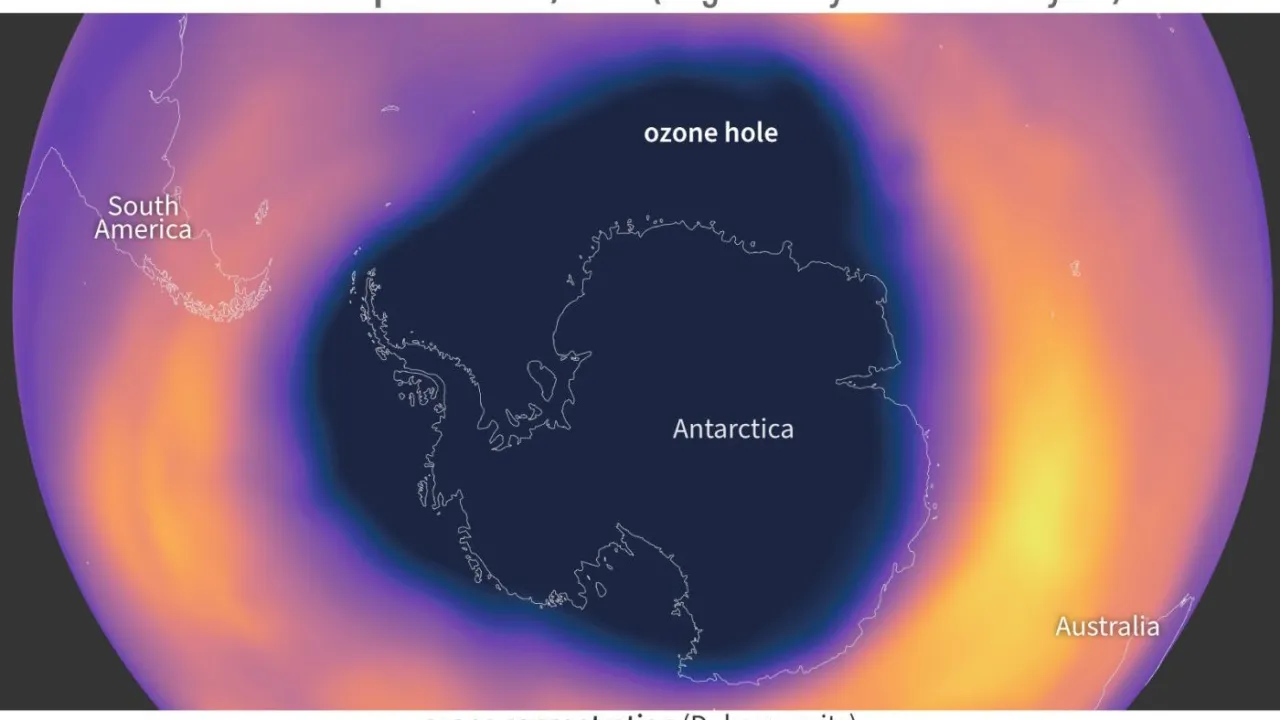
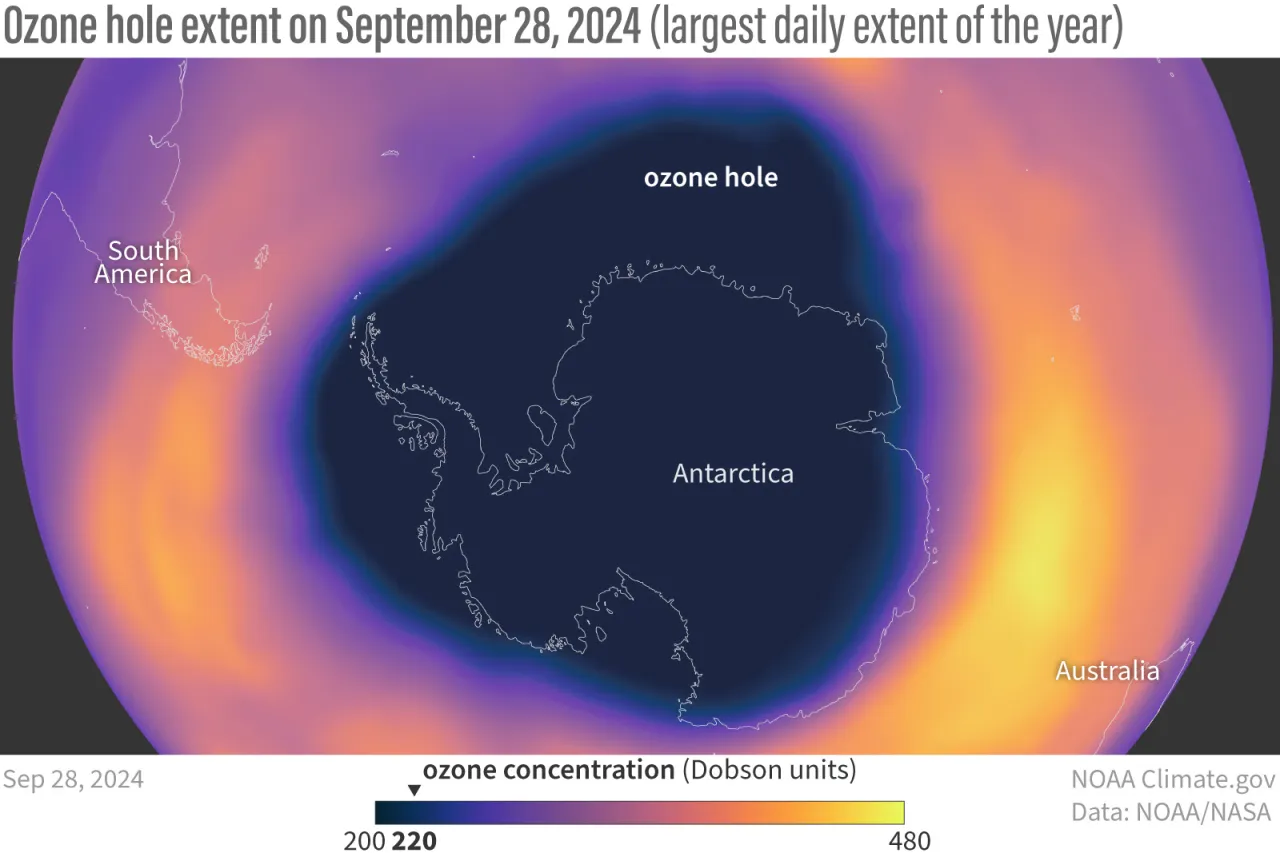
The Antarctic ozone hole was the seventh smallest on record in 2024, thanks to declining chlorofluorocarbons (CFCs) due to the Montreal Protocol and unexpected ozone influx from northern air currents. The hole, still large at nearly 8 million square miles, is expected to fully mend by 2066, demonstrating the effectiveness of international efforts to curb ozone-depleting chemicals.
The Antarctic ozone hole is on track to be fully repaired by 2066, with this year's hole being the seventh smallest since 1992. This improvement is attributed to the reduction of chlorofluorocarbons (CFCs) due to the Montreal Protocol and unexpected ozone influx from northern air currents. The hole, although smaller, still spans nearly 8 million square miles, highlighting the ongoing recovery efforts.
A new study published in Nature Communications challenges the widely accepted belief that the ozone layer is recovering. The study suggests that the ozone hole above Antarctica may not be shrinking as expected and may even be expanding. The researchers found that ozone levels have decreased by 26% since 2004 at the core of the hole during the Antarctic spring. They attribute this depletion to changes in the Antarctic polar vortex, although they did not explore the specific causes. Some scientists are skeptical of the study's findings, pointing to other factors such as smoke from wildfires and volcanic eruptions, as well as the influence of the El Niño Southern Oscillation.
A new study published in Nature Communications challenges the widely accepted belief that the ozone layer is recovering. The study suggests that the ozone hole above Antarctica may not be shrinking as expected and may even be expanding. The researchers found that ozone levels have reduced by 26% since 2004 at the core of the hole during Antarctic spring. They attribute this to changes in the Antarctic polar vortex, although other factors such as planet-warming pollution and volcanic eruptions could also contribute. Some scientists are skeptical of the study's findings, citing exceptional events and a short period of analysis.
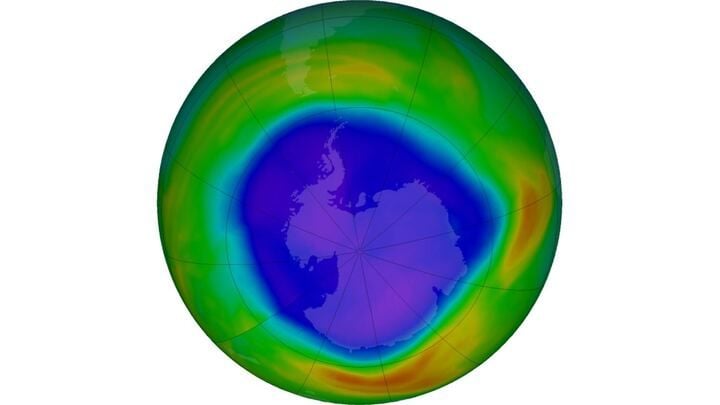
The annual hole in the ozone layer over Antarctica grew to a record size in September, according to scientists from the European Space Agency. However, this is a natural occurrence that happens each year due to temperature and atmospheric conditions. The ozone layer thins during the polar spring, allowing unique polar stratospheric clouds to form and interact with ozone-depleting chemicals. The hole is not a permanent hole but a temporary thinning of the atmosphere. The ozone layer is on track for full recovery in the next few decades, thanks to the Montreal Protocol banning chlorofluorocarbons (CFCs) that were responsible for the ozone depletion.
The ozone hole above Antarctica has grown to approximately 10 million square miles, making it one of the largest seasonal holes ever observed. The hole still experiences seasonal growth and shrinkage, but overall it is decreasing in size due to the Montreal Protocol and the decrease of ozone-depleting substances. The early start and rapid growth of the ozone hole this year may be attributed to the Hunga Tonga volcanic eruption in January 2022, which introduced large amounts of water vapor into the air. Scientists predict that the global ozone layer will return to its normal state by around 2050.
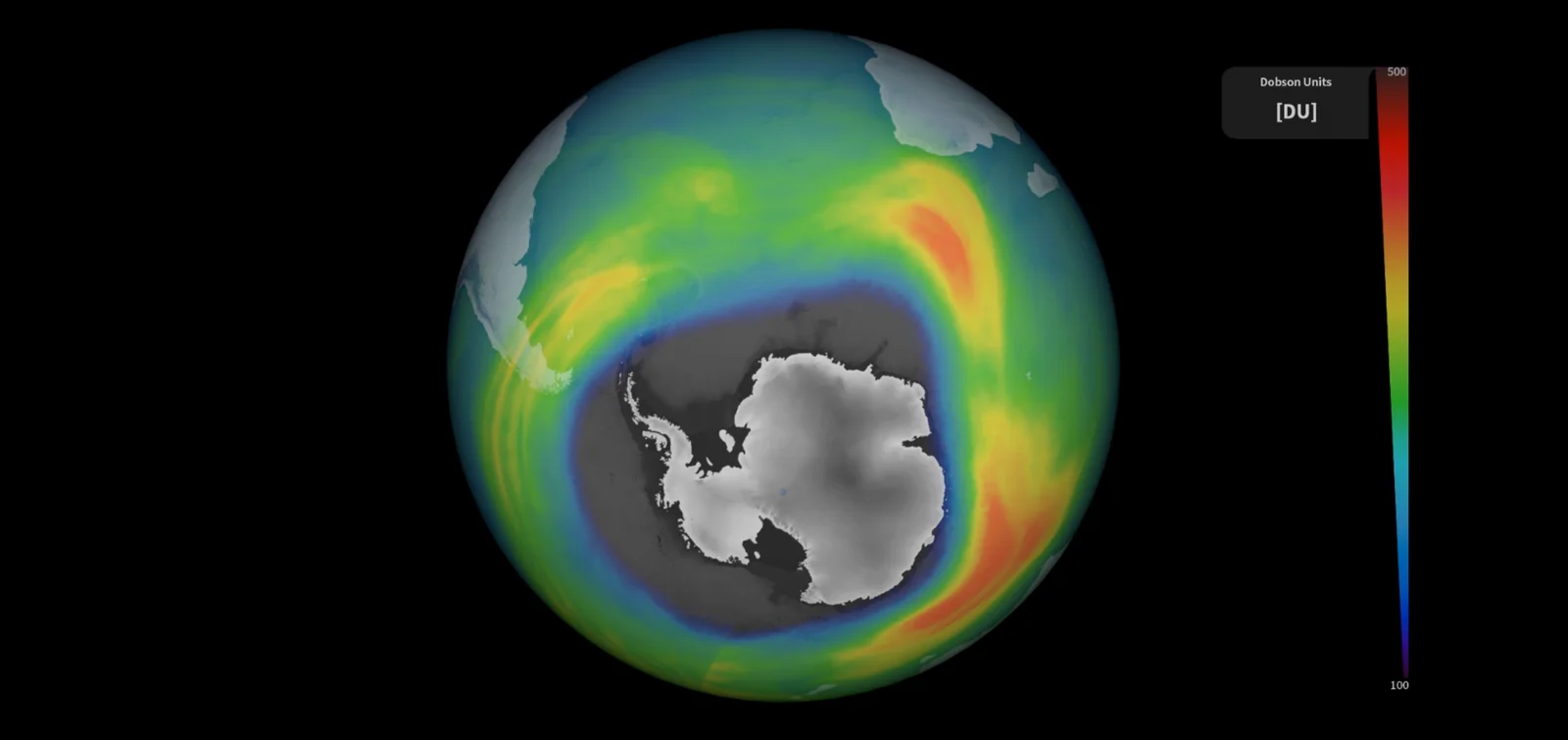
The ozone hole over Antarctica in 2023 is one of the largest on record, reaching a size of 26 million sq km, roughly three times the size of Brazil. The size of the ozone hole fluctuates based on temperature changes in the stratosphere, and this year's unusual ozone patterns may be associated with the eruption of the Hunga Tonga-Hunga Ha'apai volcano in January 2022. The ozone hole is largely determined by the strength of a wind band that flows around the Antarctic area, and the variability in size is influenced by the presence of chlorofluorocarbons (CFCs) and other ozone-depleting substances. The Montreal Protocol, implemented in 1987, aims to phase out the production and consumption of these harmful substances, leading to a predicted recovery of the ozone layer by around 2050.
A new scientific paper published in AGU Advances challenges the conventional understanding of the ozone layer's impact on human health. While the 1987 Montreal Protocol successfully prevented further depletion of the ozone layer and reduced cases of skin cancer, the study suggests that small decreases in the ozone layer could actually save lives by decreasing ground-level air pollution. The researchers found that certain chemicals, such as sulfates, could alter the ozone content in the atmosphere, leading to complex interactions between "good ozone" in the stratosphere and "bad ozone" in the troposphere. The decrease in ground-level air pollution resulting from these interactions could outweigh the rise in skin cancer, potentially saving between 33,000 and 86,000 lives annually. However, experts caution that these findings are preliminary and highlight the challenges of balancing different health impacts in policy decisions.
A study by scientists from the University of Saskatchewan has found that human activity is releasing significantly more of the organic solvent bromoform (CHBr3) than previously assumed. Produced by phytoplankton and algae, the compound was never considered for regulation by the Montreal Protocol. However, it is also a byproduct of chlorine's sterilization of water, expanding the range of sources we humans do have some control over. The increase in anthropogenic sources of the chemical could bump up its global levels by as much as nearly a third compared to previous estimates, which could affect the ozone layer.
Despite being banned under the Montreal Protocol, five chlorofluorocarbons (CFCs) have reached record levels in the atmosphere from 2010 to 2020, according to a study published in the journal Nature Geoscience. The increase was probably due to leakage during the production of chemicals that are meant to replace CFCs, including hydrofluorocarbons (HFOs). Although at current levels they do not threaten the recovery of the ozone layer, they contribute to a different threat, joining other emissions in heating the atmosphere.