Tag

Orbital Mechanics

All articles tagged with #orbital mechanics

Mastering Space Commutes Before Lunar Construction

Originally Published 16 days ago — by Universe Today

Featured image for Mastering Space Commutes Before Lunar Construction
Source: Universe Today

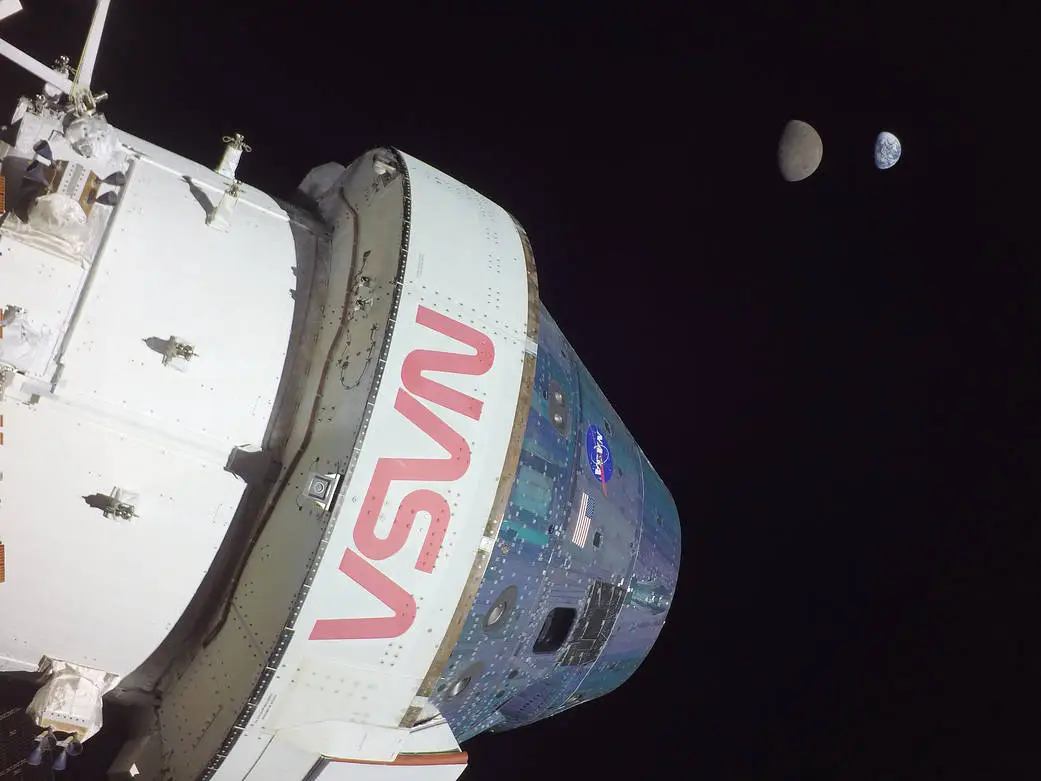
Scientists at Lawrence Livermore National Laboratory have created an open-source dataset and software that maps 1,000,000 potential orbits in the complex and chaotic region between Earth and the Moon, aiming to improve navigation and stability for future lunar missions and infrastructure. Only about 9.7% of these orbits are stable over three years, with notable stability around Lagrange points and certain distant orbits, which could serve as strategic locations for lunar bases and gateways.
Upcoming Partial Solar Eclipse: When and Where to Watch

Originally Published 3 months ago — by Space

Featured image for Upcoming Partial Solar Eclipse: When and Where to Watch
Source: Space

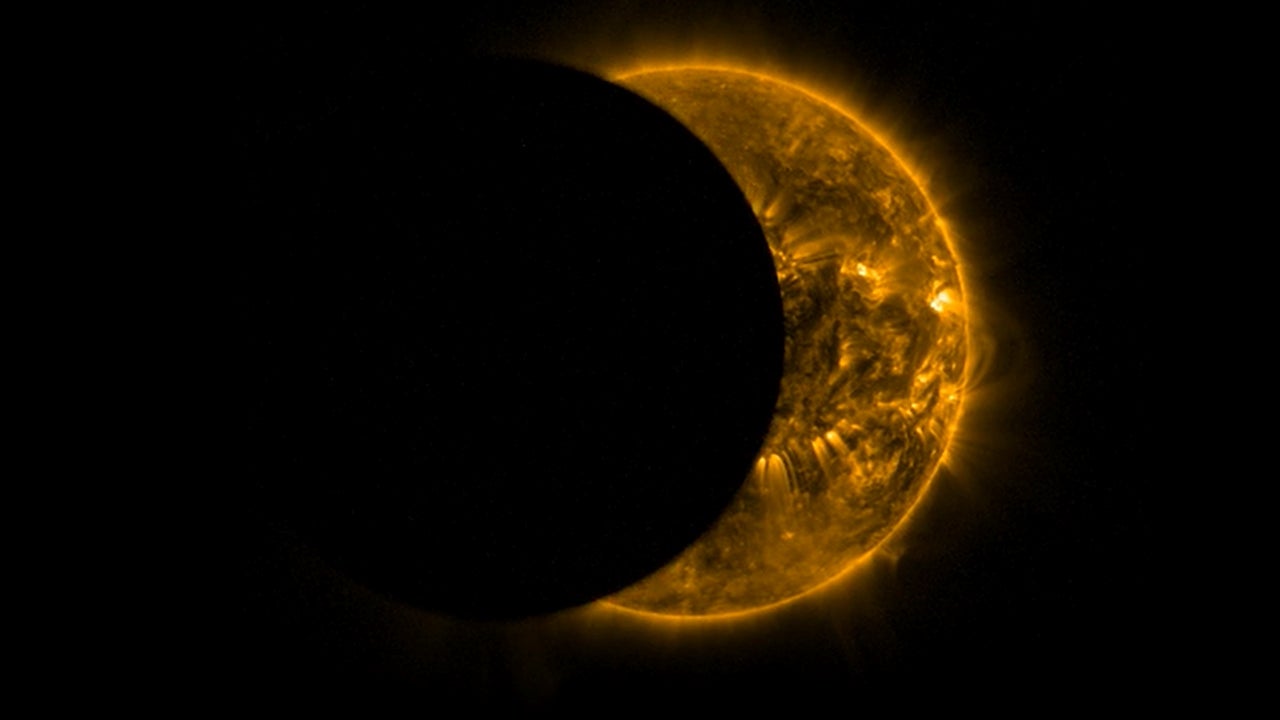
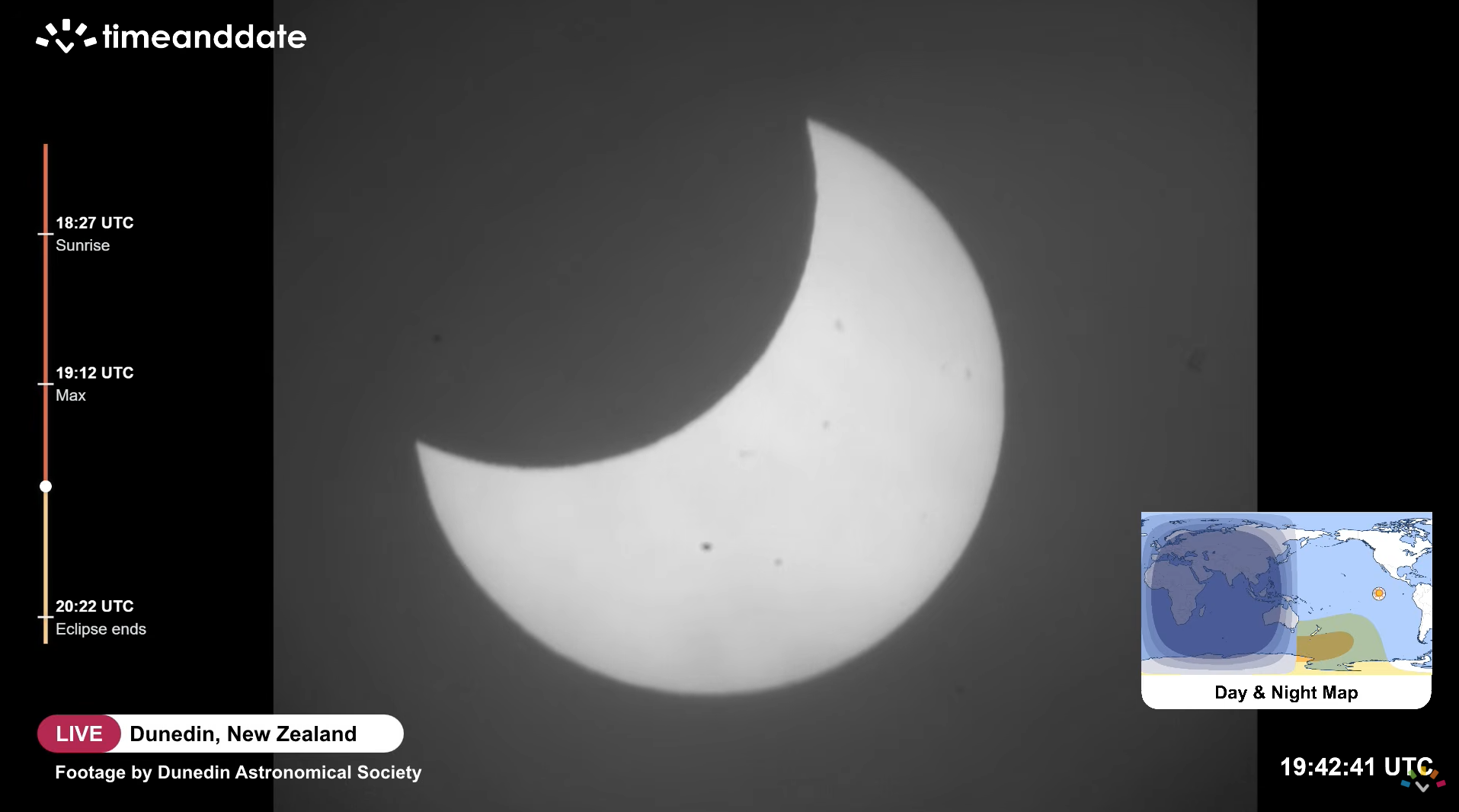
The article describes the first photos of the September 2025 partial solar eclipse over New Zealand, where up to 70% of the sun was obscured by the moon, captured during a live stream and by the Dunedin Astronomical Society, highlighting the celestial event's progression and providing educational context about eclipses.

3D Solar System Atlas Includes All Asteroids

Originally Published 4 months ago — by Boing Boing

Featured image for 3D Solar System Atlas Includes All Asteroids
Source: Boing Boing

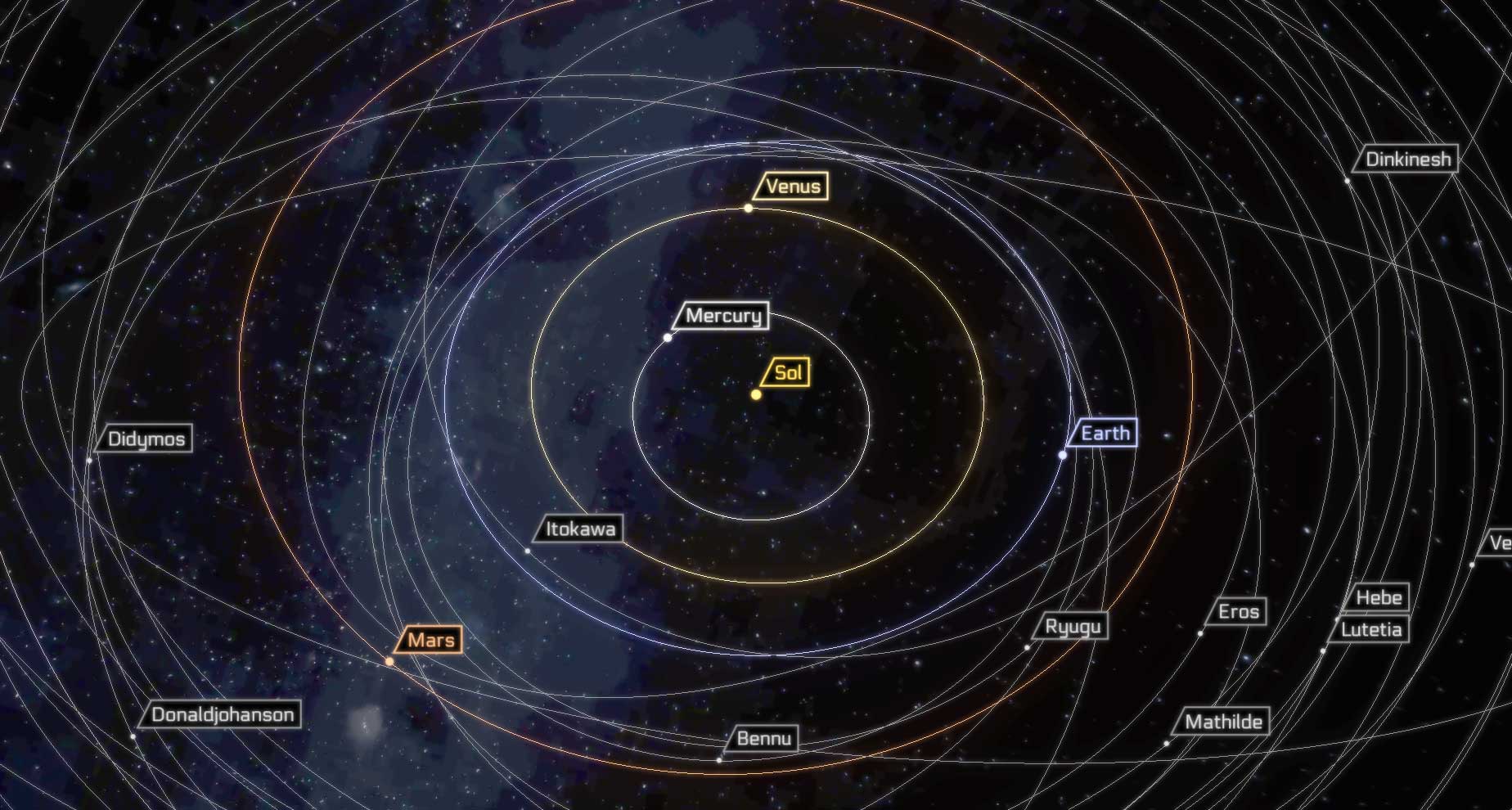
A detailed 3D interactive atlas of the solar system showcases planets, moons, asteroids, and other celestial objects, allowing users to explore and learn about space through an engaging browser-based visualization created by Gordon Hart, utilizing technologies like Three.js and data from JPL and Wikidata.

July 2025 Buck Moon: Viewing Tips and Skywatching Events

Originally Published 6 months ago — by Space

Featured image for July 2025 Buck Moon: Viewing Tips and Skywatching Events
Source: Space

The July 2025 full moon, known as the Buck Moon, will rise tonight and offers a unique viewing experience due to its proximity to the summer solstice, a Major Lunar Standstill, and aphelion, making it a notable event for skywatchers. It coincides with the time when male deer grow antlers and provides an excellent opportunity to observe lunar features and historic Apollo landing sites. Viewers should check local moonrise times for optimal viewing.

"Unveiling the Frequency of Solar Eclipses and Upcoming Celestial Events"

Originally Published 1 year ago — by Forbes

Featured image for "Unveiling the Frequency of Solar Eclipses and Upcoming Celestial Events"
Source: Forbes

Solar eclipses occur more frequently than commonly thought, with about two to five happening per year, but their rarity for a specific location makes them seem infrequent. Scientists use orbital mechanics and Newton's laws of motion to predict the occurrence of eclipses, with the next visible one in parts of the U.S. set for 2044. NASA provides a helpful website for tracking future solar eclipses.

"Spectacular Footage: Total Solar Eclipse Captured by Satellite Fleet in Orbit"

Originally Published 1 year ago — by IGN

Featured image for "Spectacular Footage: Total Solar Eclipse Captured by Satellite Fleet in Orbit"
Source: IGN

A fleet of Earth-orbiting spacecraft, including satellites from NASA, SpaceX, and the European Space Agency, captured stunning footage of the total solar eclipse that swept over North America on April 8. The videos show the moon's shadow passing through Mexico, the United States, Canada, and out into the Atlantic Ocean. Astronauts aboard the International Space Station also captured images of the eclipse, while the National Oceanic and Atmospheric Administration's GOES EAST satellite provided a wider view from geosynchronous orbit. Additionally, a plane full of lucky airline passengers found themselves flying in the path of totality, experiencing a 360-degree golden sunset. The event highlights the grand scale of the cosmic phenomenon and serves as a reminder of ongoing efforts in space exploration, including NASA's Artemis program aimed at establishing a crewed colony on the moon.

"Surprising Discovery: Saturn's Moon Mimas Harbors Hidden Ocean"

Originally Published 1 year ago — by Ars Technica

Featured image for "Surprising Discovery: Saturn's Moon Mimas Harbors Hidden Ocean"
Source: Ars Technica

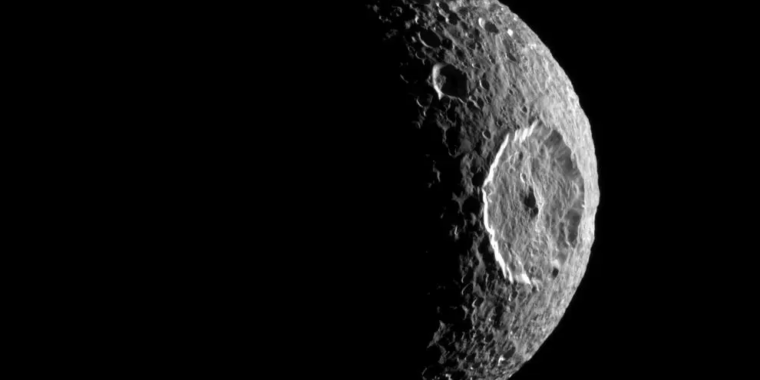
Evidence from orbital mechanics and tidal forces suggests that Saturn's moon Mimas has a subsurface ocean, contradicting its heavily cratered surface. The ocean likely formed relatively recently, possibly within the last 3 million years, due to tidal heating. This discovery adds Mimas to the growing list of Solar System objects with subsurface oceans and raises questions about its history and interactions with other moons and Saturn's rings.

Unveiling the Enigmatic Nature of Planet 9: Could Modified Gravity Hold the Key?

Originally Published 2 years ago — by Universe Today

Featured image for Unveiling the Enigmatic Nature of Planet 9: Could Modified Gravity Hold the Key?
Source: Universe Today

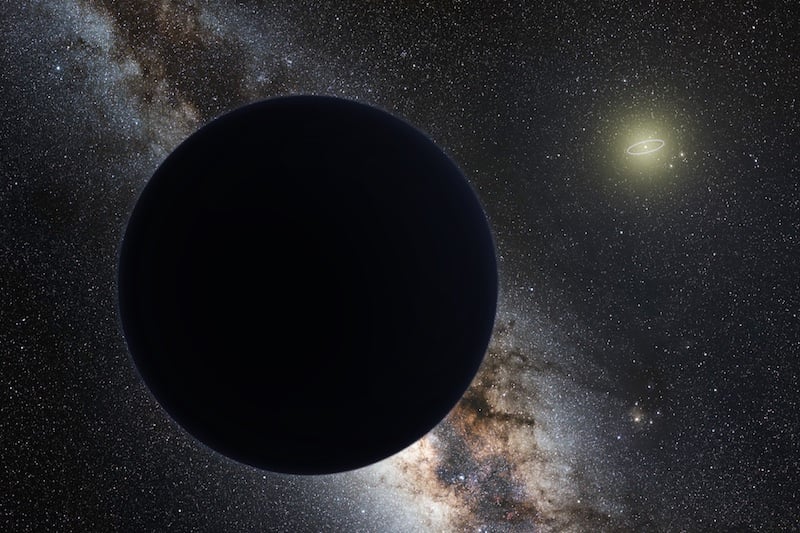
Astronomers have proposed that Modified Newtonian Dynamics (MOND) theory, which has been successful in understanding galactic rotation, could explain the strange orbital paths of Kuiper Belt Objects (KBOs) that have led to speculation about the existence of Planet 9. MOND suggests that the gravitational pull of the galactic core affects the orbital mechanics of objects farther away from the Sun, aligning their major and minor axes towards the core. While the absence of direct evidence for Planet 9 may eventually become evidence of its absence, the study highlights the need for further observations and a deeper understanding of gravitational physics to unravel the mysteries of our universe.