Tag

Galactic Core

All articles tagged with #galactic core

"Revealing the Slow Travel of Stars at the Milky Way's Edge"

Originally Published 1 year ago — by Interesting Engineering

Featured image for "Revealing the Slow Travel of Stars at the Milky Way's Edge"
Source: Interesting Engineering

MIT physicists have found a surprising twist in the Milky Way's rotation curve, suggesting a potential deficit of dark matter at the galactic core, challenging previous understanding. Dark matter, a hypothetical substance in the universe, is believed to be responsible for galaxies' rotation due to its gravitational effects on visible matter, despite being impossible to see directly.
"Galactic Core's Reduced Dark Matter Leads to Slower Star Travel at Milky Way's Edge"

Originally Published 1 year ago — by Phys.org

Featured image for "Galactic Core's Reduced Dark Matter Leads to Slower Star Travel at Milky Way's Edge"
Source: Phys.org

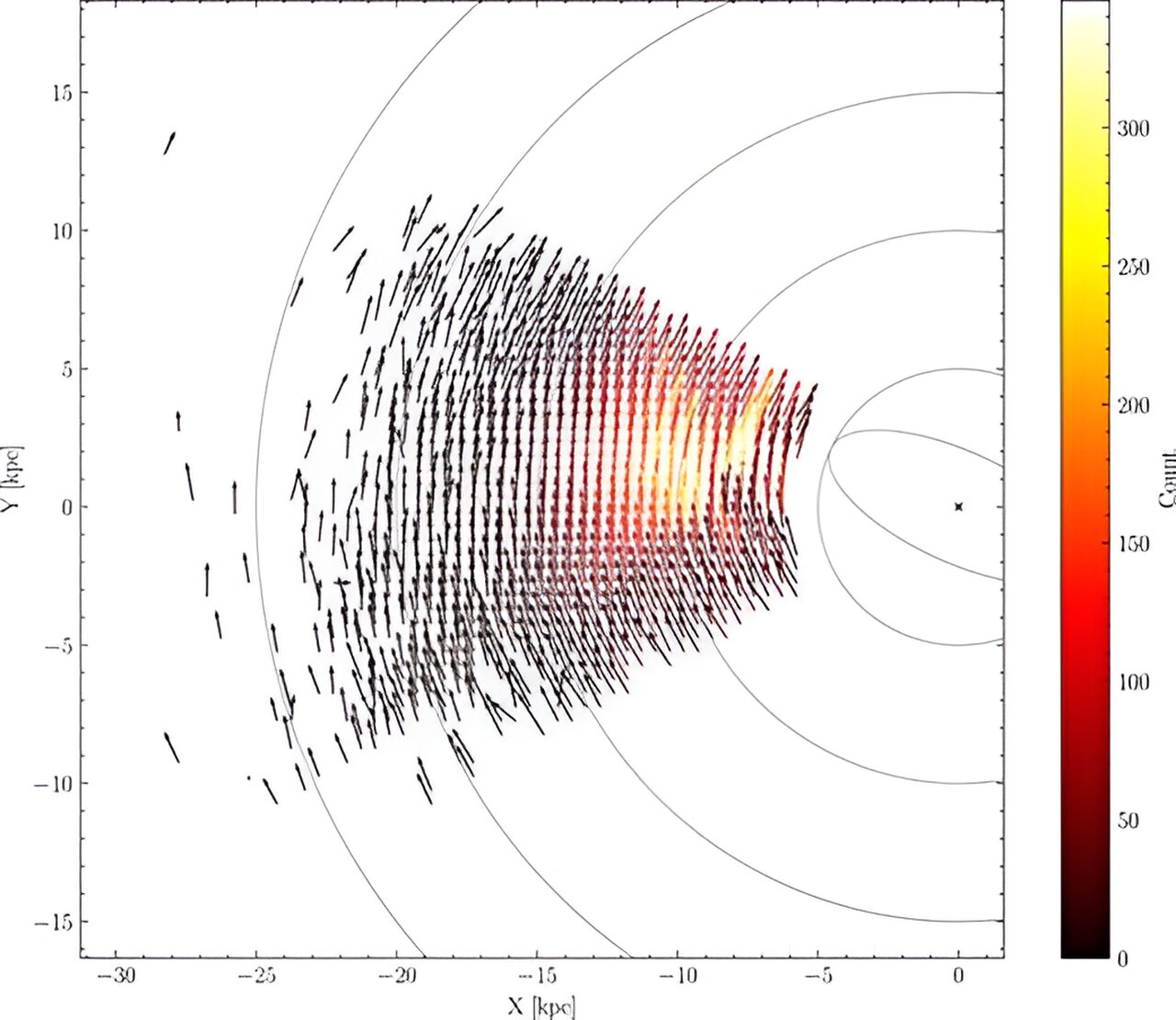
MIT physicists have found that stars further out in the Milky Way galaxy are traveling more slowly than expected, suggesting that the galaxy's gravitational core may contain less dark matter than previously estimated. By analyzing data from the Gaia and APOGEE instruments, the team observed a surprising dip in the rotation curve at the galaxy's outer edge, indicating a lighter galactic core. These findings challenge previous assumptions and may lead to a reevaluation of the distribution of dark matter within the Milky Way.

Unveiling the Enigmatic Nature of Planet 9: Could Modified Gravity Hold the Key?

Originally Published 2 years ago — by Universe Today

Featured image for Unveiling the Enigmatic Nature of Planet 9: Could Modified Gravity Hold the Key?
Source: Universe Today

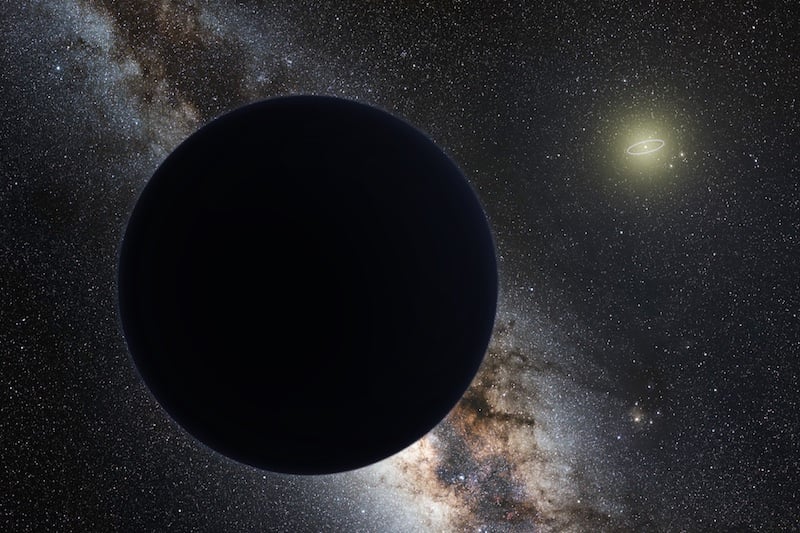
Astronomers have proposed that Modified Newtonian Dynamics (MOND) theory, which has been successful in understanding galactic rotation, could explain the strange orbital paths of Kuiper Belt Objects (KBOs) that have led to speculation about the existence of Planet 9. MOND suggests that the gravitational pull of the galactic core affects the orbital mechanics of objects farther away from the Sun, aligning their major and minor axes towards the core. While the absence of direct evidence for Planet 9 may eventually become evidence of its absence, the study highlights the need for further observations and a deeper understanding of gravitational physics to unravel the mysteries of our universe.

Mysterious Galactic Filaments and Threads Discovered in Milky Way's Core

Originally Published 2 years ago — by IFLScience

Featured image for Mysterious Galactic Filaments and Threads Discovered in Milky Way's Core
Source: IFLScience

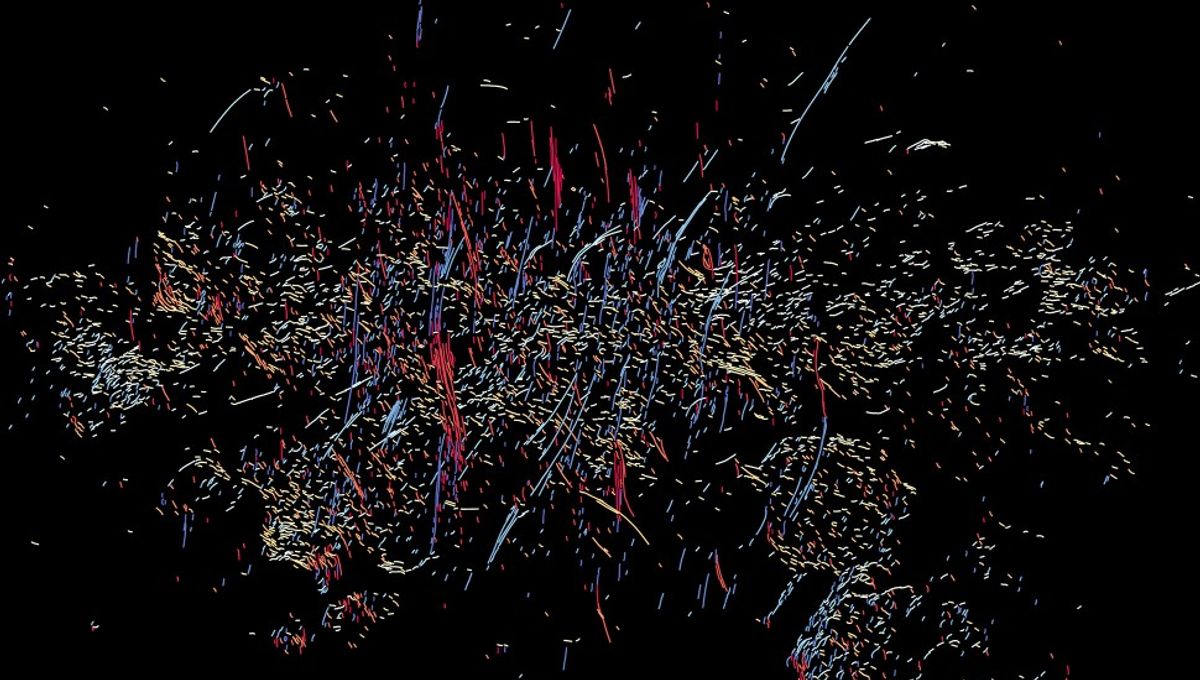
New filaments have been discovered near the Milky Way's supermassive black hole, Sagittarius A*. These filaments are shorter and lie horizontally, pointing directly to Sagittarius A*. They are related to the activity of Sagittarius A*, but it is unclear if the two types of filaments are related. The vertical filaments are magnetic accelerating particles close to the speed of light, while the horizontal ones appear to emit heat, accelerating thermal material in a molecular cloud. The newly discovered filaments are estimated to be about 6 million years old and may have originated from an outflow from an activity that happened a few million years ago.

The Brightness of the Night Sky at the Milky Way's Center.

Originally Published 2 years ago — by Sky at Night Magazine

If we were closer to the center of the Milky Way, our night sky would be much brighter due to the increased density of stars. However, the presence of obscuring gas and dust currently hides the galactic core at optical wavelengths. If we were able to move through most of this material, we would be looking at a sky ablaze with stars, making it great for observing stars but difficult for deep-sky astronomers.