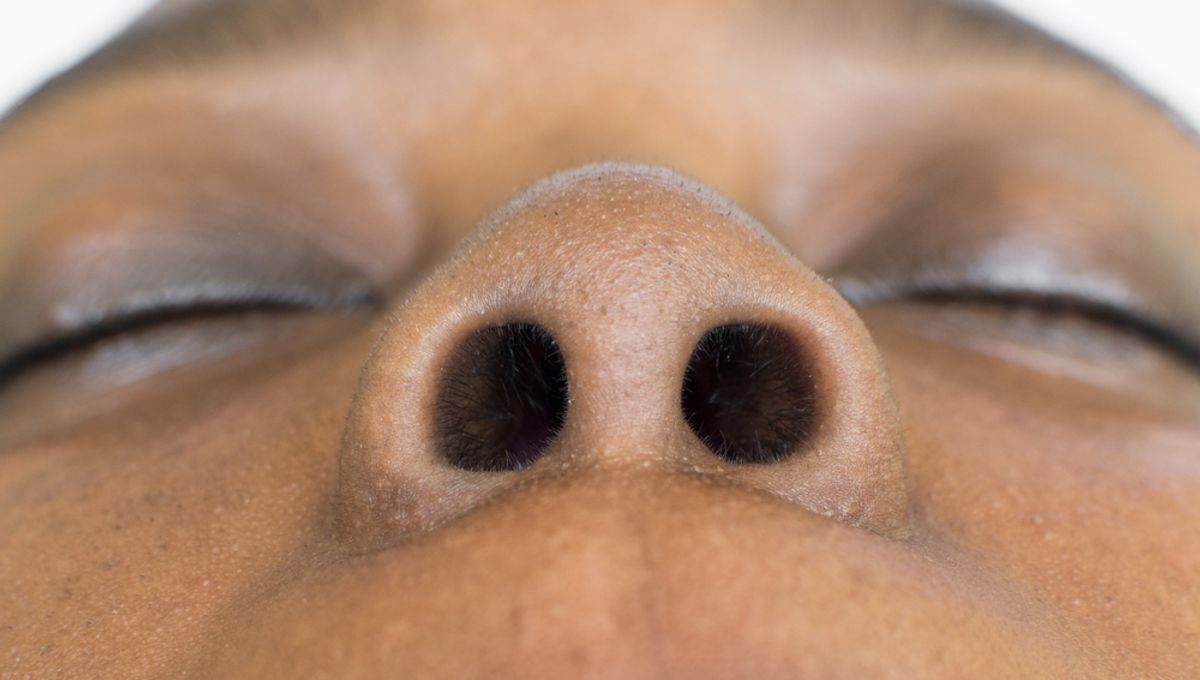
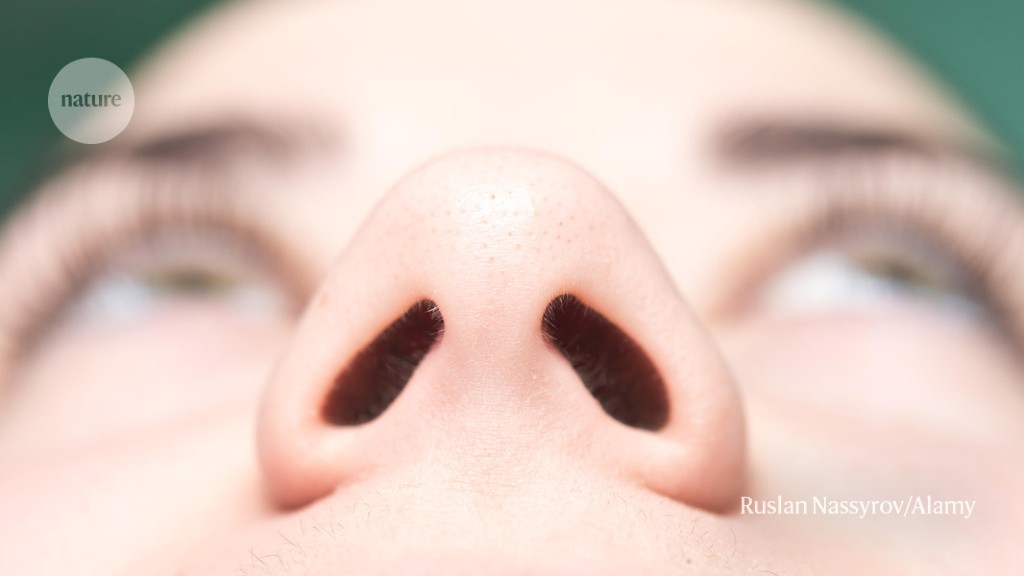
Humans have two nostrils primarily due to bilateral symmetry and the nasal cycle, which allows one nostril to rest while the other breathes, aiding in moisture regulation, smell, and survival. The dual nostrils also help locate smells and provide a backup in case one is blocked, offering significant evolutionary advantages.
The article explores the deep connection between smell, emotion, and memory, highlighting recent scientific advances in understanding how scent molecules are perceived and processed in the brain, challenging the outdated notion that humans have a poor sense of smell.
There is no definitive 'best smeller' in the animal kingdom, but animals like the Gambian pouched rat, elephants, moths, and dogs have remarkable olfactory abilities, with different species excelling in various aspects of scent detection based on genetic, anatomical, and ecological factors.
New research shows that the brain encodes the nostril through which an odor enters, suggesting that integrating information from both nostrils helps identify the scent. The study found that the piriform cortex, a region responsible for processing scents, reacts independently to smells in each nostril. When scents were delivered to a single nostril, the corresponding side of the brain reacted first, followed by the opposite side. When scents were delivered to both nostrils simultaneously, both sides of the brain recognized the scent faster. This suggests that the brain makes use of the different arrival times of scents. The findings provide insight into how the brain processes olfactory information and may contribute to our ability to accurately identify odor sources.
Scientists have discovered that certain neurons in fruit flies and mice allow them to differentiate between distinct smells, while others help distinguish similar scents with experience. This variability in neural response serves a significant purpose and could potentially enhance machine-learning models, making them more discerning and reliable. The findings have implications for understanding how animals and humans learn to differentiate between similar sensory inputs and could contribute to advancements in AI technology.
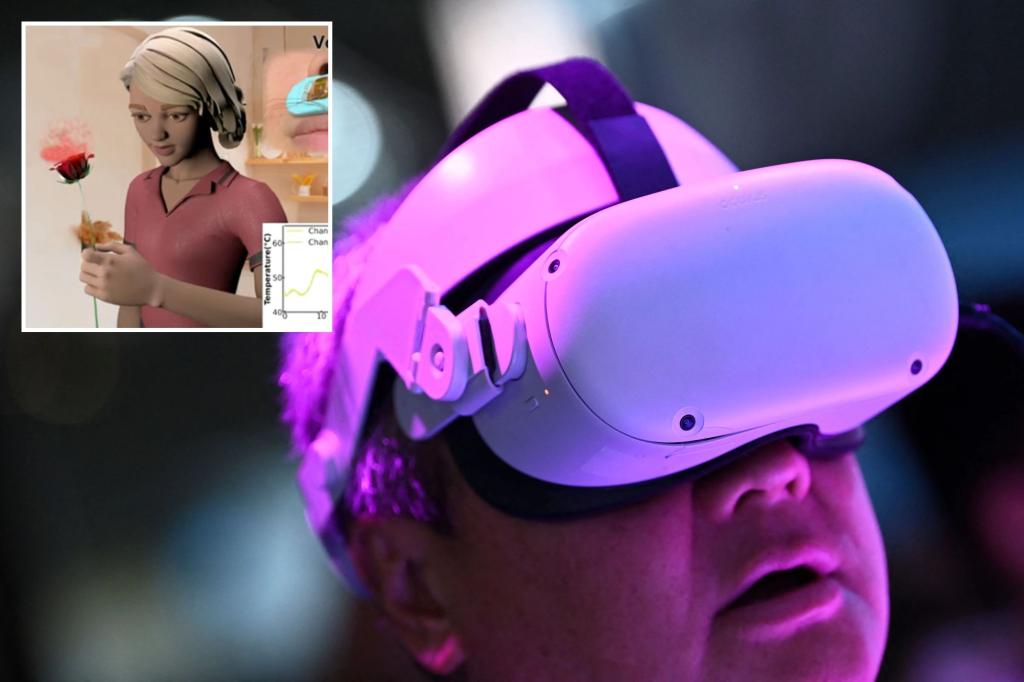
Engineers from Beihang University and the City University of Hong Kong have developed a VR headset that can emit 30 different odors to its wearer, including coffee, mojito, pancakes, and ethanol. The headset uses small paraffin wax pads infused with scents that are heated by an attached electrode to release the scent. The technology aims to expand the range of haptics for VR users and could be used beyond gaming, including to enhance remote learning classrooms and help amnesic patients recall lost memories. The engineers aim to shrink the overall size of the odor generators to extend the longevity of the scents and limit the delay time when users switch between the odors.
Cryo-electron microscopy has provided an atomic-resolution picture of how an odour molecule is recognized by one of the hundreds of odorant receptors encoded in the human genome, providing a first view into the chemical logic of olfaction.