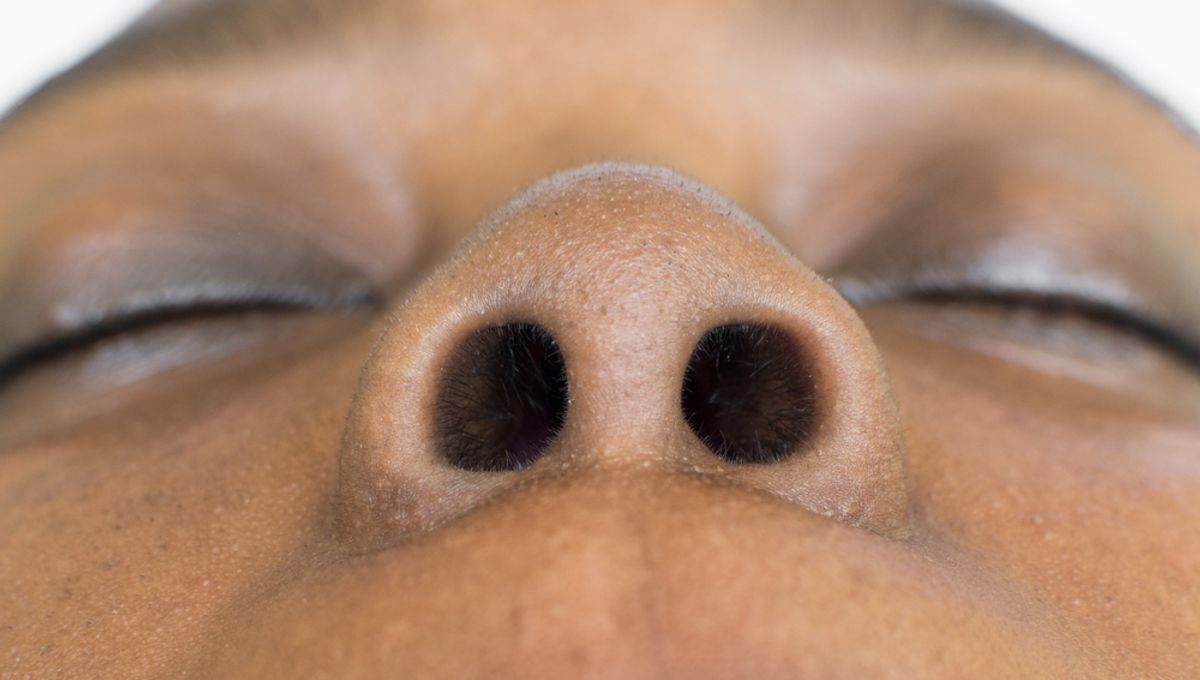
Humans have two nostrils primarily due to bilateral symmetry and the nasal cycle, which allows one nostril to rest while the other breathes, aiding in moisture regulation, smell, and survival. The dual nostrils also help locate smells and provide a backup in case one is blocked, offering significant evolutionary advantages.
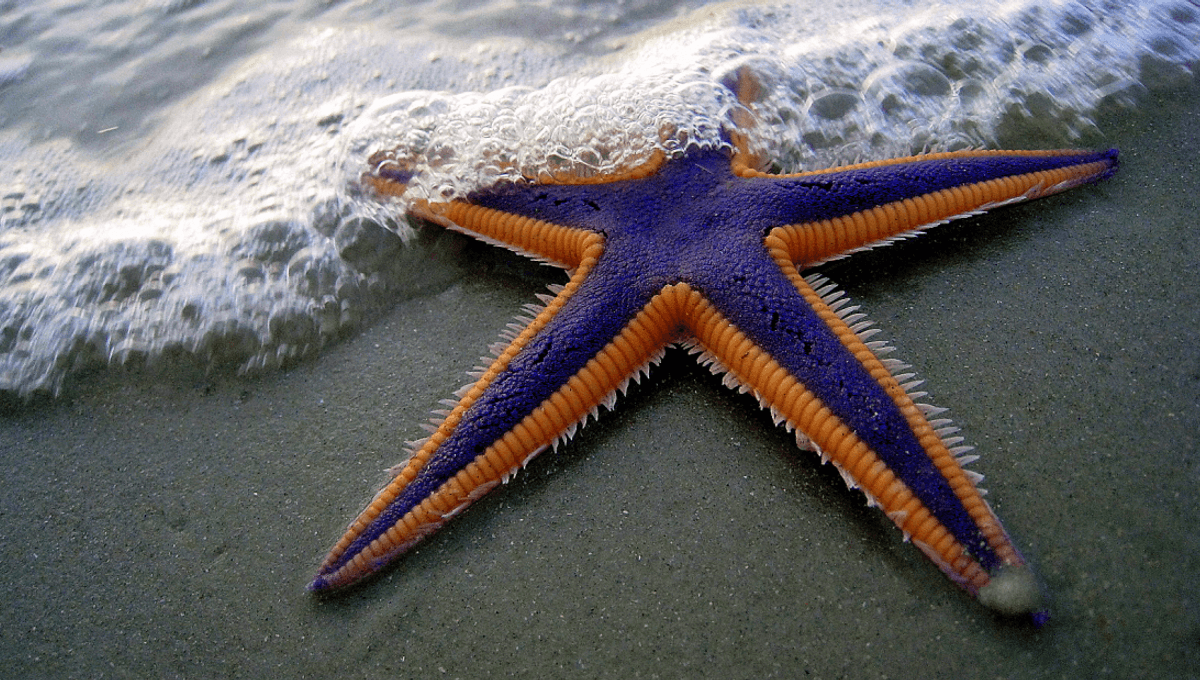
A 500-million-year-old fossil from Morocco, Atlascystis acantha, provides crucial evidence on how starfish evolved from bilateral ancestors to their current fivefold symmetry, revealing that the five-armed body plan likely developed later through duplication after losing a trunk, thus filling a significant gap in the evolutionary record of echinoderms.
A new study challenges the long-held belief that bilateral floral symmetry enhances pollination accuracy. The study found that flower orientation, particularly horizontal presentation, significantly stabilizes bee entry angles, rather than symmetry. The research suggests that the observed stabilization of animal flower entry may be attributed to the accompanied horizontal orientation, prompting a reevaluation of the adaptive significance of bilaterally symmetrical flowers in angiosperms.
The nervous system is cross-wired, so that the left side of the brain controls the right half of the body and vice versa. While this neural cross-wiring is ubiquitous in the animal kingdom, biologists still aren’t certain what its benefit is. An intriguing answer has come from the world of mathematics. The key to that solution lies in exactly how neural circuits are laid out within brain tissue. The simplest way to introduce three-dimensionality into the 2D maps in our brain is to fold in the edges of the “body” plane 90 degrees, representing (for example) the skin of your chest folded around the sides of your rib cage. Folds in the cerebral cortex introduce a third dimension there too. Now, since the fibers must pass through the midline, because that’s where the central nervous system in our body runs, the two fibers become crossed.