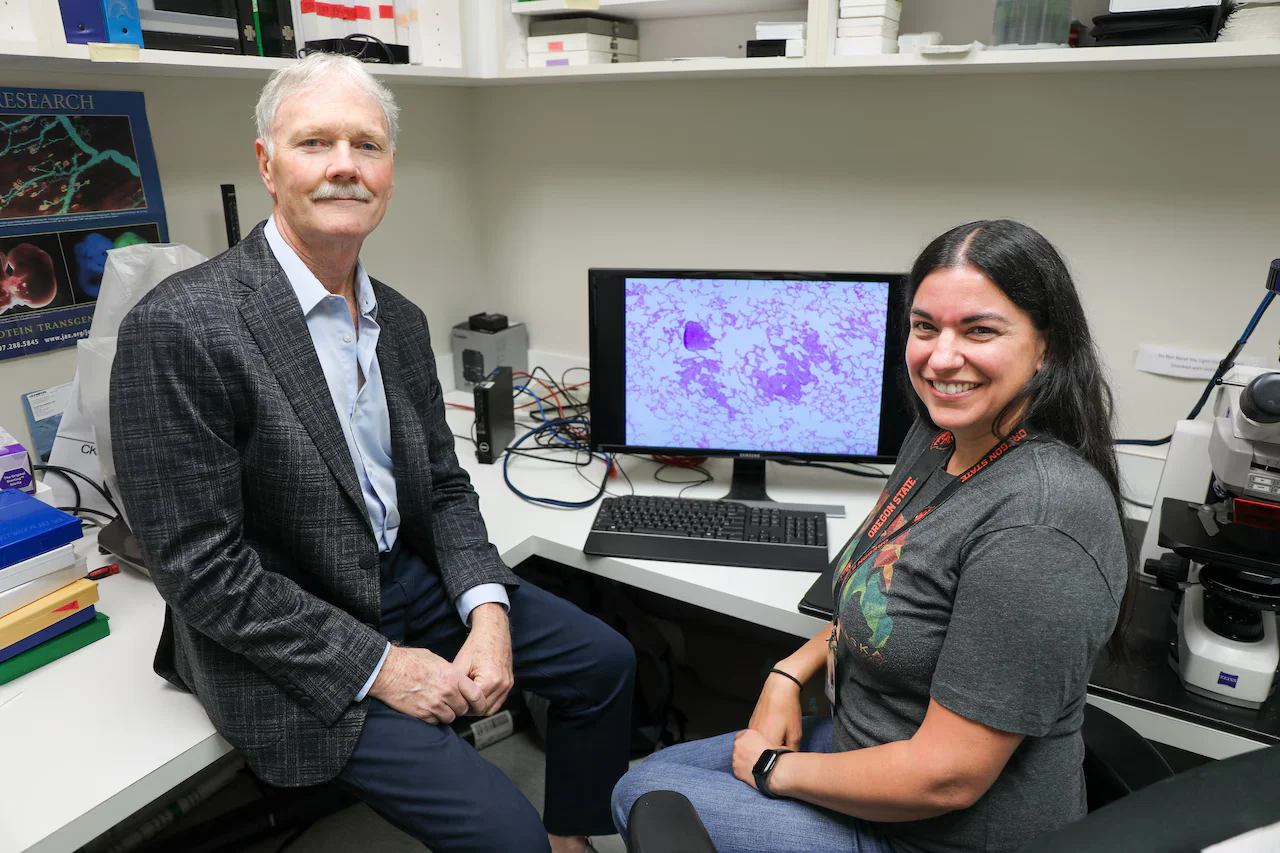
A study from Oregon Health & Science University using rhesus macaques suggests that long COVID may be more common and have delayed onset effects, including chronic health issues like inflammation and metabolic disruptions, even in cases with mild initial symptoms, indicating the need for ongoing vigilance in COVID-19 recovery.
A study using nonhuman primates suggests long COVID may be more common and impactful than previously thought, with persistent health issues observed months after infection, highlighting the need for increased awareness and early intervention strategies.
Researchers have found that a successful stem cell transplant can cure HIV, as demonstrated by two nonhuman primates cured of the monkey form of HIV after receiving a stem cell transplant. The team identified two circumstances that must coincide for a cure to occur and tracked the sequence in which HIV is cleared from the body. The insights may help develop a widespread cure for HIV, which affects around 38 million people globally.
Life Biosciences presented preclinical data at the Association for Research in Vision and Ophthalmology (ARVO) conference demonstrating the ability to restore visual function in nonhuman primates (NHP) after delivery of a novel gene therapy candidate using a partial epigenetic reprogramming approach. The therapy significantly restored visual function in an NHP model of non-arteritic anterior ischemic optic neuropathy (NAION), a disorder similar to a stroke of the eye that is characterized by painless yet sudden loss of vision. The approach partially reprograms cells to resemble a more youthful state while retaining their original cellular identity.