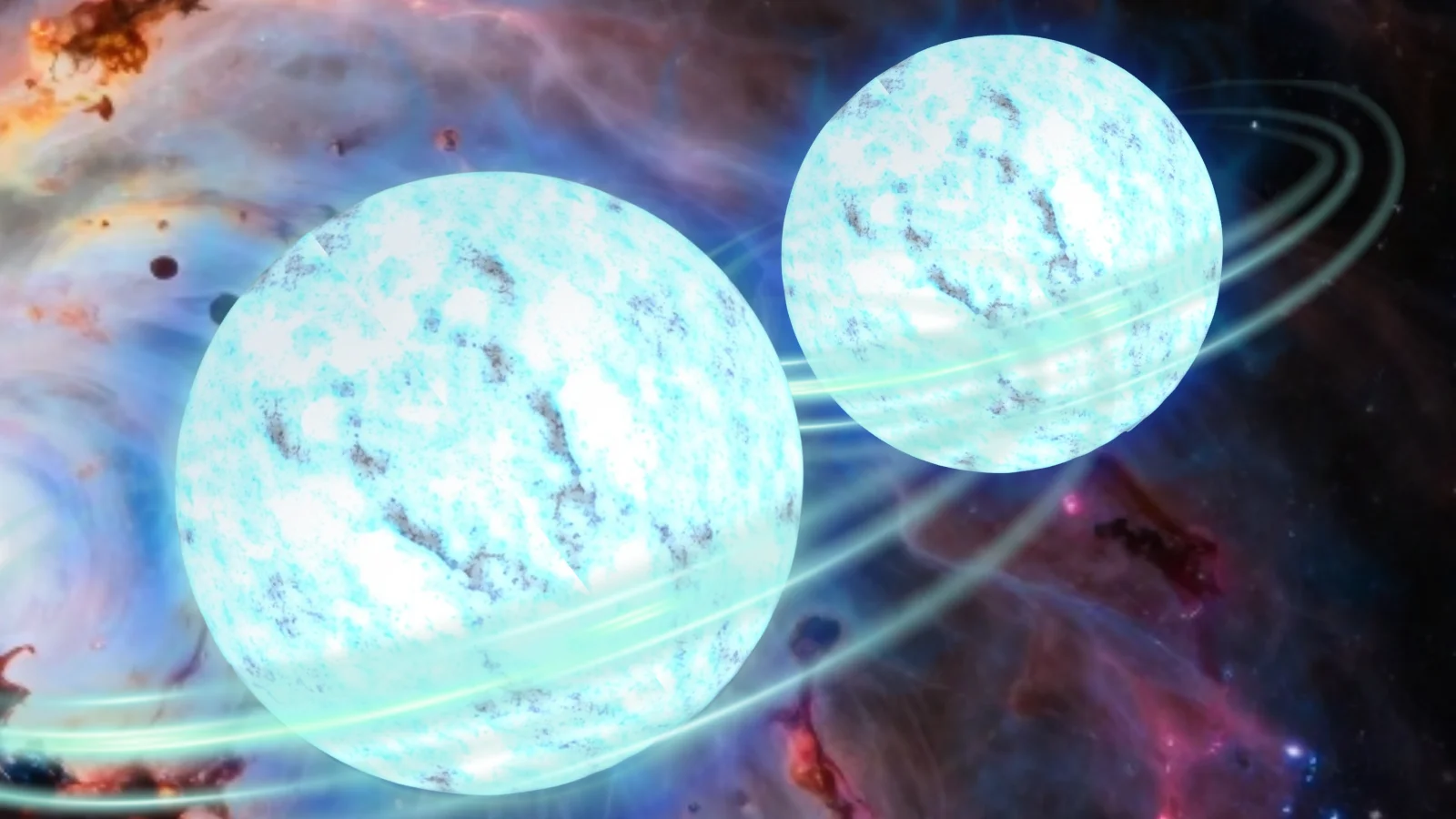
Simulations show that neutrino flavor transformations during neutron star mergers significantly influence the production of heavy elements like gold and platinum, potentially increasing their yield and affecting gravitational wave brightness, highlighting the importance of including neutrino physics in astrophysical models.
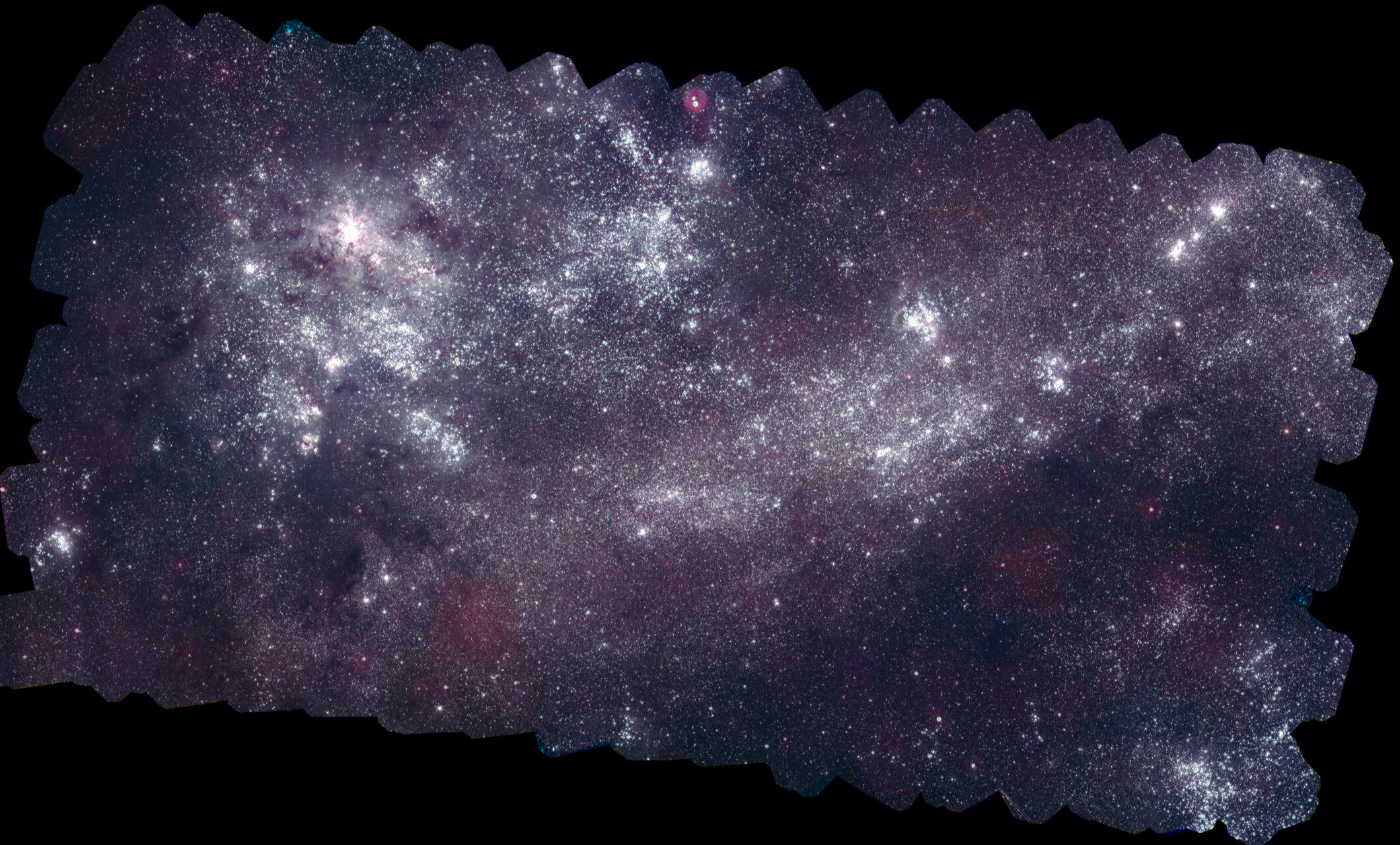
Astronomers at the University of Toronto have discovered a population of massive stars in binary systems that have been stripped of their hydrogen envelopes by their companions. This finding sheds light on the origins of hydrogen-poor core-collapse supernovae and neutron star mergers. The researchers used ultraviolet data from the Swift-UVOT telescope to identify these stripped stars, which are believed to be rare and have important implications for our understanding of supernovae, gravitational waves, and the properties of distant galaxies. The discovery also provides opportunities for more detailed physics studies and measurements of stellar winds.
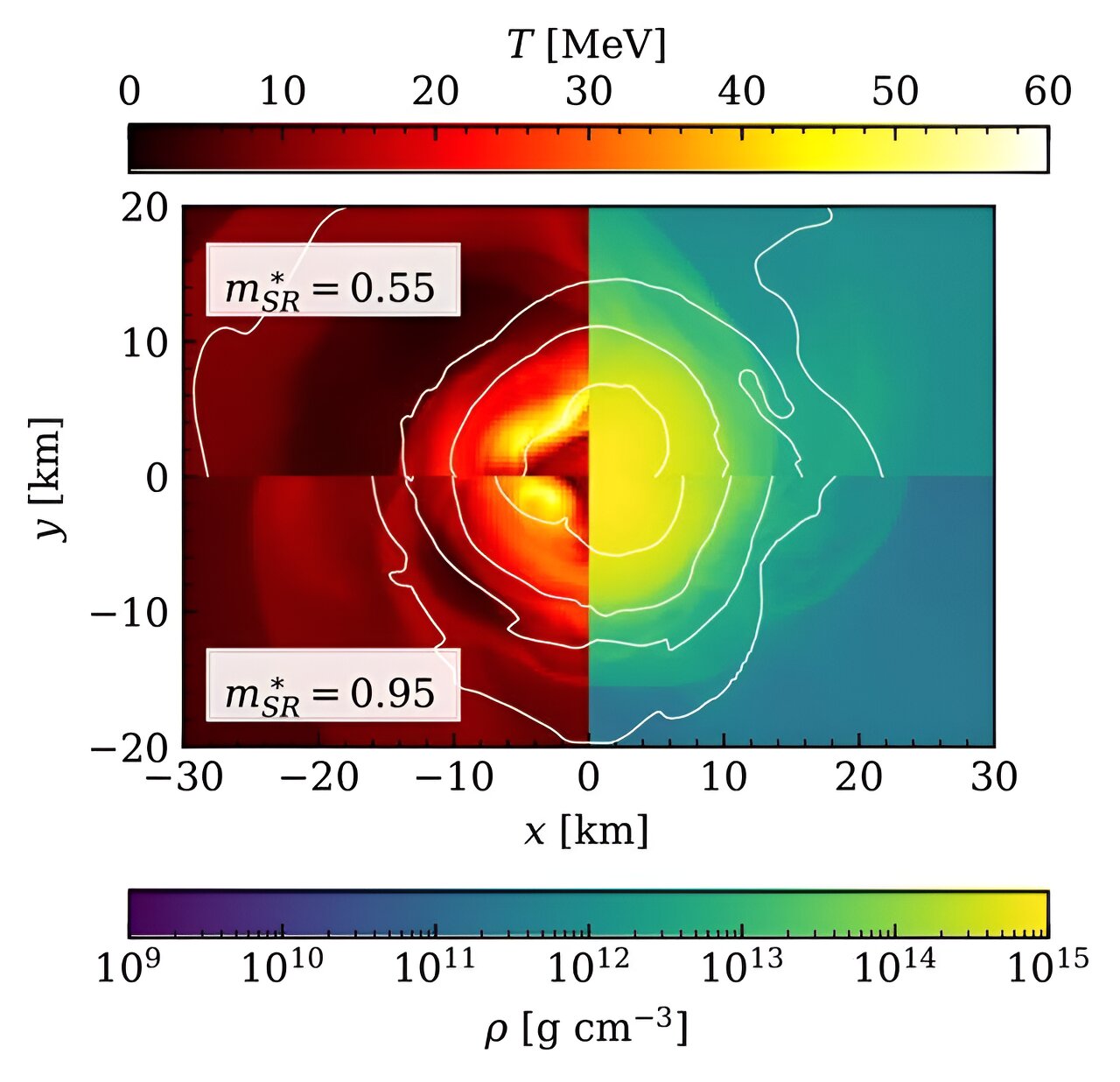
Researchers have used computer simulations to study the thermal effects in binary neutron star mergers and their correlation with gravitational waves. By varying the specific heat capacity in the equation of state, they found a strong relationship between the remnant's temperature and the frequency of gravitational waves. Future detectors will be able to distinguish different models of nuclear matter and provide valuable insights into hot nuclear matter.
An international research team has found a potential link between neutron star mergers and fast radio bursts (FRBs), two of the universe’s most enigmatic phenomena. The observed correlation, if confirmed by further data, suggests that some FRBs may be created by the merging and subsequent collapse of neutron stars, potentially providing a new understanding of these mysterious cosmic events.
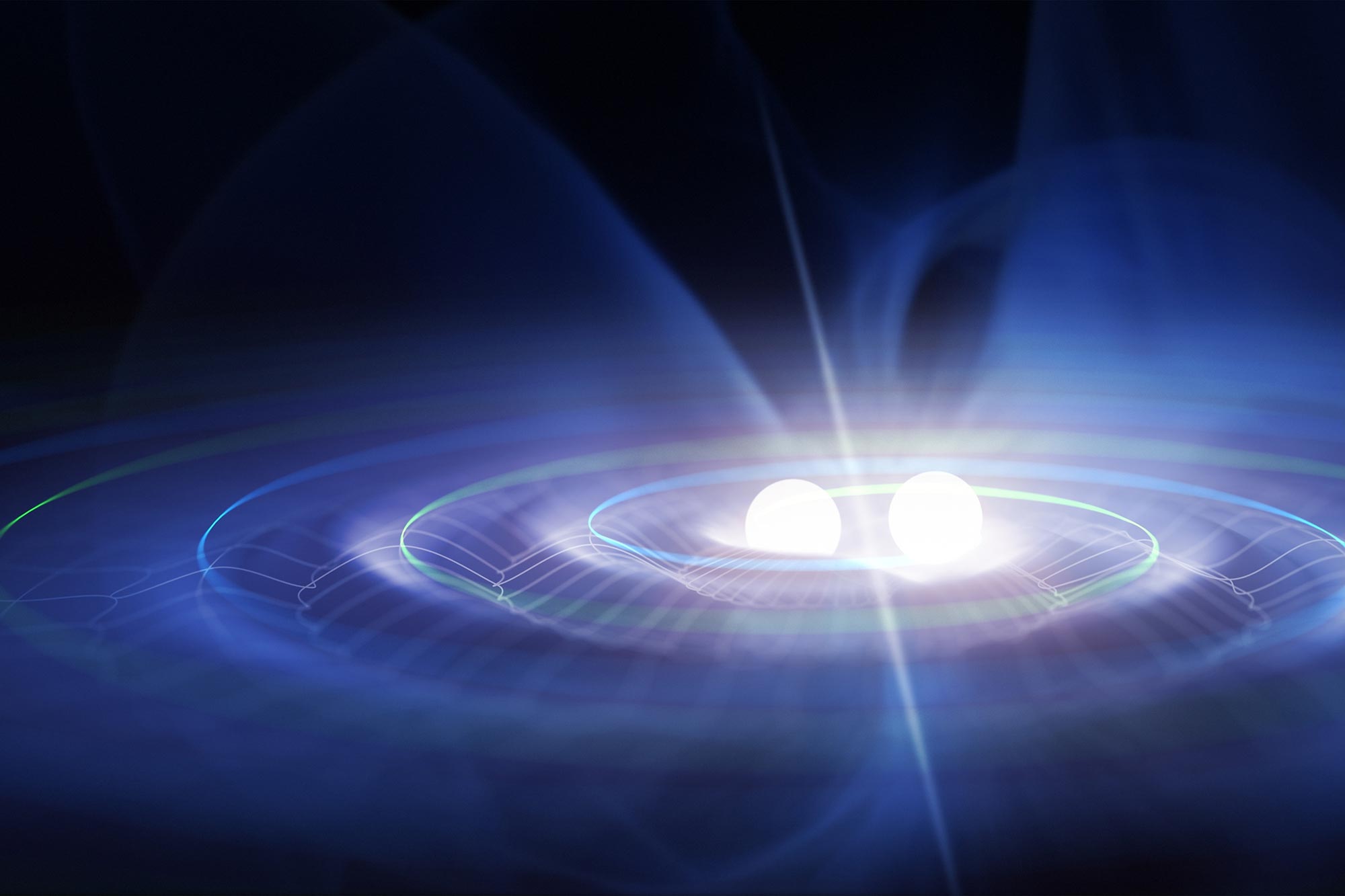
New observations suggest that Fast Radio Bursts (FRBs) may be linked to Neutron Star Mergers, the collision of the leftover cores from two massive stars that produce ripples in space time known as gravitational waves. A gravitational wave event known as GW190425 was detected by the Laser Interferometer Gravitational-Wave Observatory (LIGO) in April 2019 only two and a half hours before a Canadian radio telescope spotted a powerful FRB in the same patch of sky. The researchers calculate a less than 1% chance that this was truly a coincidence, where the events were not really related to each other.