Tag

Near Infrared

All articles tagged with #near infrared

astronomy2 years ago

"Webb Space Telescope's Stunning HD View Reveals Hidden Secrets of Exploded Star"

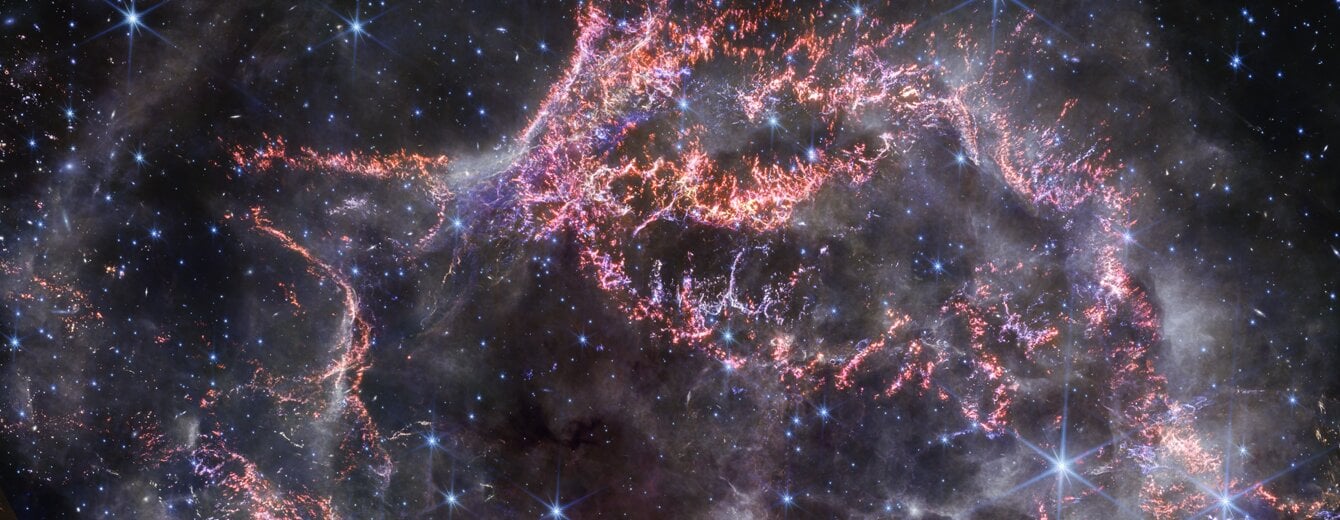
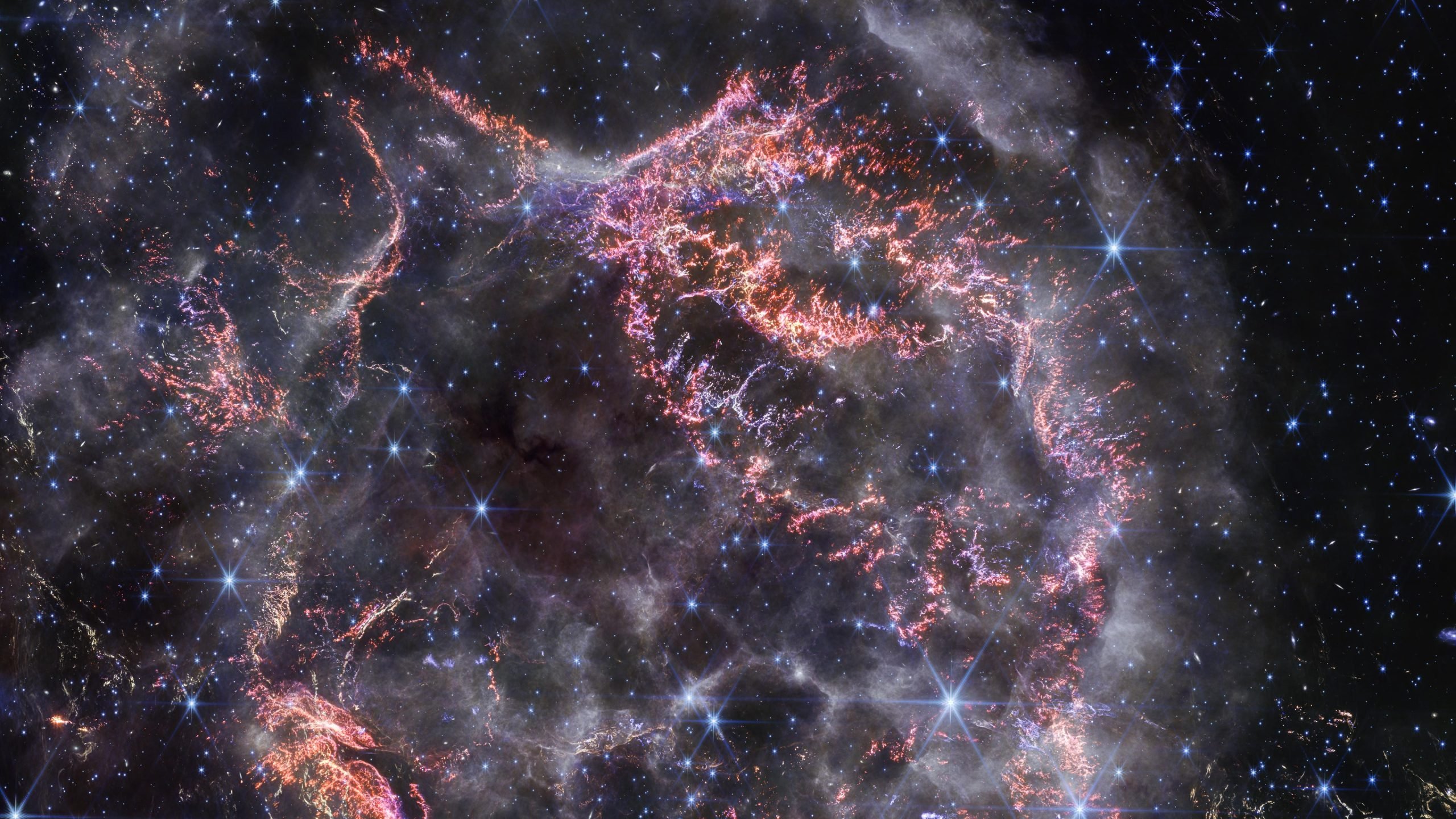
The James Webb Space Telescope has provided a stunning new high-definition look at the supernova remnant Cassiopeia A (Cas A) in the near-infrared spectrum. The image reveals intricate details of the expanding shell of material from the exploded star, including tiny knots of gas and light echoes. The image also highlights the absence of color in certain regions, indicating the presence of ionized gas and dust. Researchers are particularly intrigued by a large, striated blob called "Baby Cas A," which appears to be a light echo located about 170 light-years behind the supernova remnant.

space2 years ago

"Webb Space Telescope's Stunning HD View Reveals Hidden 'Green Monster' in Exploded Star"

The James Webb Space Telescope has captured a stunning high-definition image of the supernova remnant Cassiopeia A (Cas A), revealing intricate details and hidden features. The near-infrared image showcases the expanding shell of material colliding with the gas shed by the star before it exploded. The image highlights tiny knots of gas, circular holes within the "Green Monster" (a loop of green light in Cas A's inner cavity), and light echoes from the star's explosion. The image also reveals a large, striated blob known as "Baby Cas A," which is a light echo located about 170 light-years behind the supernova remnant.

astronomy2 years ago

Unveiling the Enigmatic Periphery of a Supermassive Black Hole's Accretion Disk

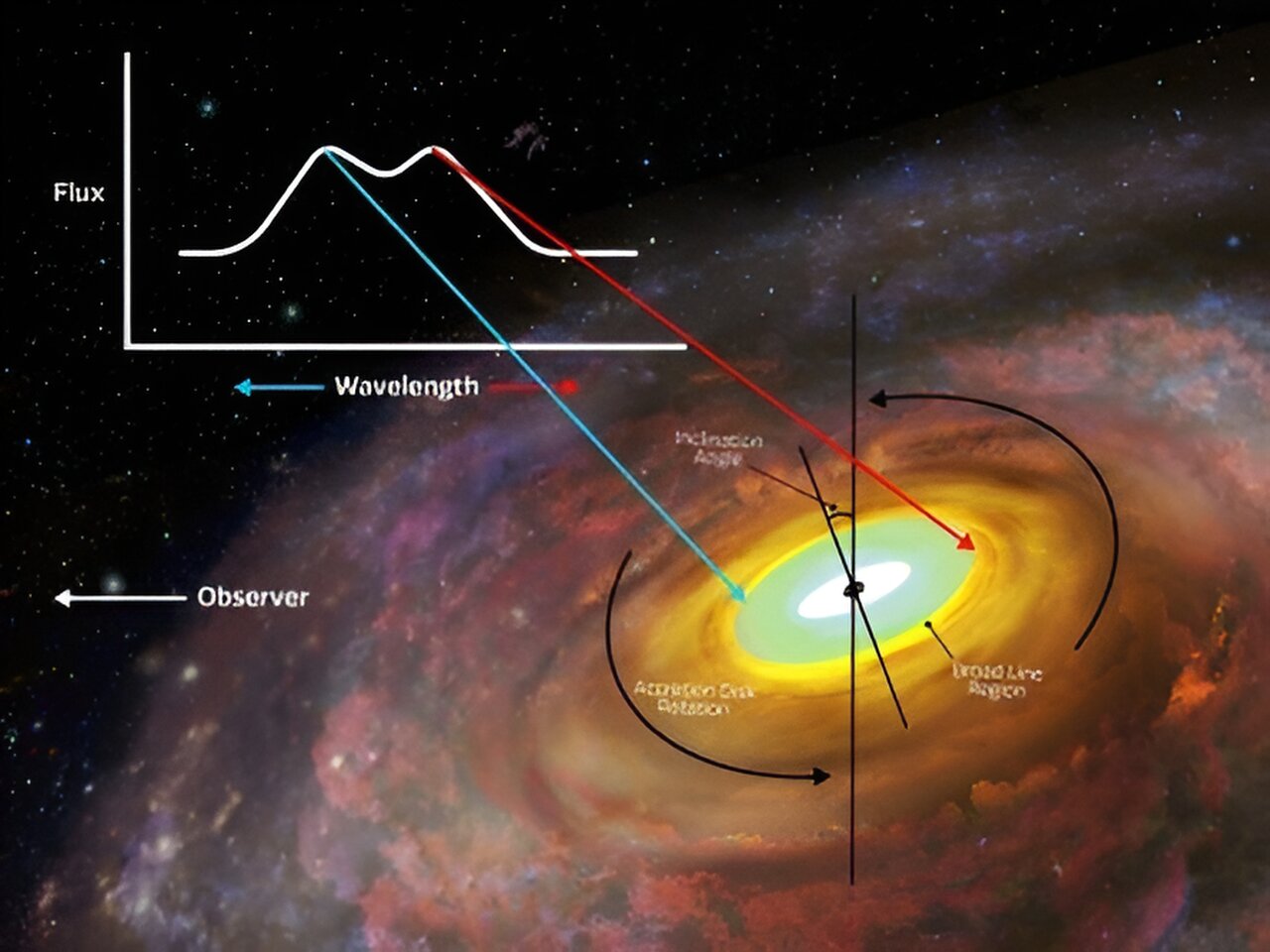
Astronomers using the Gemini North telescope have made the first detection ever of two near-infrared emission lines in the accretion disk of the galaxy III Zw 002, providing new insights into the size and behavior of these structures. Emission lines, which result from excited atoms releasing light, broaden into shallower peaks in the accretion disk due to the black hole's gravitational influence. The double-peaked profiles observed in III Zw 002's broad line region confirm the presence of an accretion disk and advance understanding of its geometry. The observations also reveal the feeding process and inner structure of the active galaxy's supermassive black hole.