A large international study found that narcissism levels are higher in countries like Germany, Iraq, China, Nepal, and South Korea, with the US ranking 16th, and that young adults and men tend to be more narcissistic across cultures, regardless of whether the society is individualistic or collectivistic.
Over the past 30 years, our understanding of narcissism has evolved from viewing it as simple arrogance to recognizing it as a complex set of personality traits with distinct subtypes, such as grandiose and vulnerable narcissism, each with different emotional and social implications. This nuanced view helps differentiate between normal traits and clinical disorders, emphasizing the importance of moving beyond stereotypes to better understand individual behaviors.
A study finds that individuals with high antagonistic narcissism prefer antisocial news stories over prosocial ones, driven by lower empathy and higher sensation seeking, reflecting their tendency to engage with social information that aligns with their traits.
The article argues that Donald Trump's actions, including recent U.S. strikes on Iran, are driven by malignant narcissism and mental illness, leading to reckless foreign policy decisions and increased risk of war, with the author warning about the dangerous consequences of his instability.
The article explains the difference between normal narcissistic traits and narcissistic personality disorder (NPD), highlighting nine signs of NPD using the acronym 'SPECIAL ME' and offering three indicators to help individuals determine if they are not narcissists, such as genuine emotional responses, belief in equal worth of all people, and self-love, which is typically absent in narcissists.
A diagnosed narcissist, Jacob Skidmore, explains three ways to tell if you aren't a narcissist: genuine emotions, belief in equal inherent worth of all people, and lack of grandiose self-love. He emphasizes that these signs can help differentiate non-narcissists from those with NPD, but advises seeking professional diagnosis for certainty.
New research shows that while narcissistic individuals develop greater compassion with age, they never fully lose their inflated sense of self-importance. A study of over 37,000 people indicates that narcissism is a stable personality trait, with those who were more narcissistic as children remaining so into adulthood, despite some mitigation of traits over time. Understanding how narcissists mature is crucial for developing interventions to reduce their potential for harm.
Research from City University London reveals that vulnerable narcissism in women is linked to increased intimate partner violence and bullying, contrasting with the grandiose narcissism more common in men. The study emphasizes the need for gender-specific interventions, noting that childhood experiences, such as having a caring mother, can mitigate these behaviors. This research highlights the subtle and often overlooked manifestations of narcissism in women and its implications for violence and bullying.
A study by researchers at Washington State University delved into the relationship between vulnerable narcissism and aggression within socially uncertain contexts, challenging previous notions about the dynamics of narcissism and aggressive behavior. The study aimed to explore proactive aggression and its relation to vulnerable narcissism, which is marked by a fragile self-esteem. While social uncertainty heightened distress, it did not necessarily lead to increased aggression, suggesting that discomfort among individuals with vulnerable narcissism may not directly result in aggressive behavior. The study's unique approach involved experimental manipulation of social uncertainty and observation of aggression in a controlled setting, but its reliance on Zoom and predominantly female sample may have influenced the results, indicating the need for more immersive experimental designs and balanced gender representation in future research.
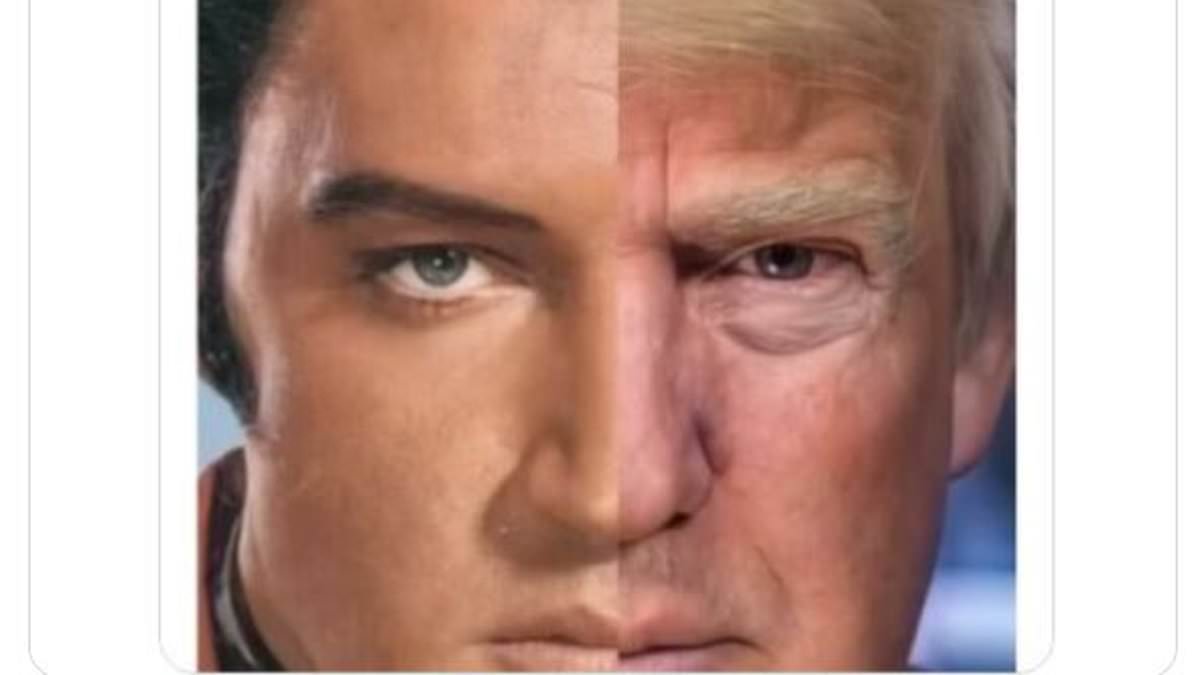
Donald Trump shared a photoshopped image of himself merged with Elvis Presley, claiming they look alike, sparking online mockery and accusations of narcissism. Critics questioned Trump's mental state and behavior, citing comparisons to The Mona Lisa and claims of resemblance to historical figures. Despite the controversy, Trump remains a prominent figure in the Republican Party and continues to lead in primary polls.
Dark empaths, a personality type combining traits of narcissism, psychopathy, and Machiavellianism with high empathy, can be difficult to spot in relationships. They express empathy without emotionally connecting, excel at love bombing, align with your views, exhibit narcissistic tendencies, and rarely seek self-improvement. These traits make them adept at manipulation and challenging to identify, posing potential risks in romantic relationships.
The author shares her experience of dating a narcissist for three months and not realizing it until they broke up. She reflects on the signs she missed and the emotional abuse she endured. The article provides insights from experts on narcissism and its key signs, such as gaslighting, love bombing, grandiosity, arrogance, lack of empathy, moodiness, projection, difficulty apologizing, and ignoring boundaries. The author also shares the lessons she learned from the experience, including the importance of not dating in isolation, not dating based on someone's potential, being aware of love bombing, prioritizing mental and emotional health, avoiding people-pleasing habits, and not trying to reason with a narcissist. The experts recommend establishing a support system, getting to know oneself again, and seeking professional help for healing from emotional abuse.
People are sharing videos on TikTok of their exes having narcissistic meltdowns, highlighting the manipulative and abusive behavior in these relationships. Therapist Leah Aguirre explains that narcissists throw tantrums when they feel cornered or caught in a lie, manipulating their partners into silence. These tantrums can keep the partner in an abusive cycle, as they learn to appease the narcissist to avoid conflict. While true narcissism is rare, emotional immaturity and other personality disorders can exhibit similar traits. Younger generations are more outspoken about abuse, using platforms like TikTok to spread awareness and educate others on recognizing abusive relationships.
A German study with over 2,000 participants receiving psychotherapy found that narcissistic personality traits are associated with a poorer response to treatment. The study, conducted by researchers from Jena University Hospital and the University of Münster, revealed that strong narcissistic rivalry was linked to more severe depression symptoms before therapy. However, the negative effects of narcissism on treatment response were not observed in psychoanalytic-interactional therapy, suggesting that the therapeutic relationship plays a crucial role. The findings highlight the importance of assessing patients' narcissistic tendencies and emphasizing the therapeutic relationship in mental health treatment.
A study examines the association between social media fatigue (SMF), cognitive ability, narcissism, and misinformation sharing during the COVID-19 pandemic in eight countries. The research finds that SMF is positively associated with the perceived accuracy of misinformation and the sharing of misinformation. Cognitive ability is negatively associated with the perceived accuracy of misinformation and misinformation sharing. Narcissism is positively associated with the perceived accuracy of misinformation and misinformation sharing. The study suggests that SMF may lead to increased engagement with misinformation due to higher information and cognitive overload. The findings highlight the importance of considering cognitive ability and narcissism in understanding the psychology of misinformation belief and sharing on social media.