Tag

Optical Devices

All articles tagged with #optical devices

Revolutionary Photonic Time Crystals Promise New Light Control Technologies

Originally Published 1 year ago — by Phys.org

Featured image for Revolutionary Photonic Time Crystals Promise New Light Control Technologies
Source: Phys.org

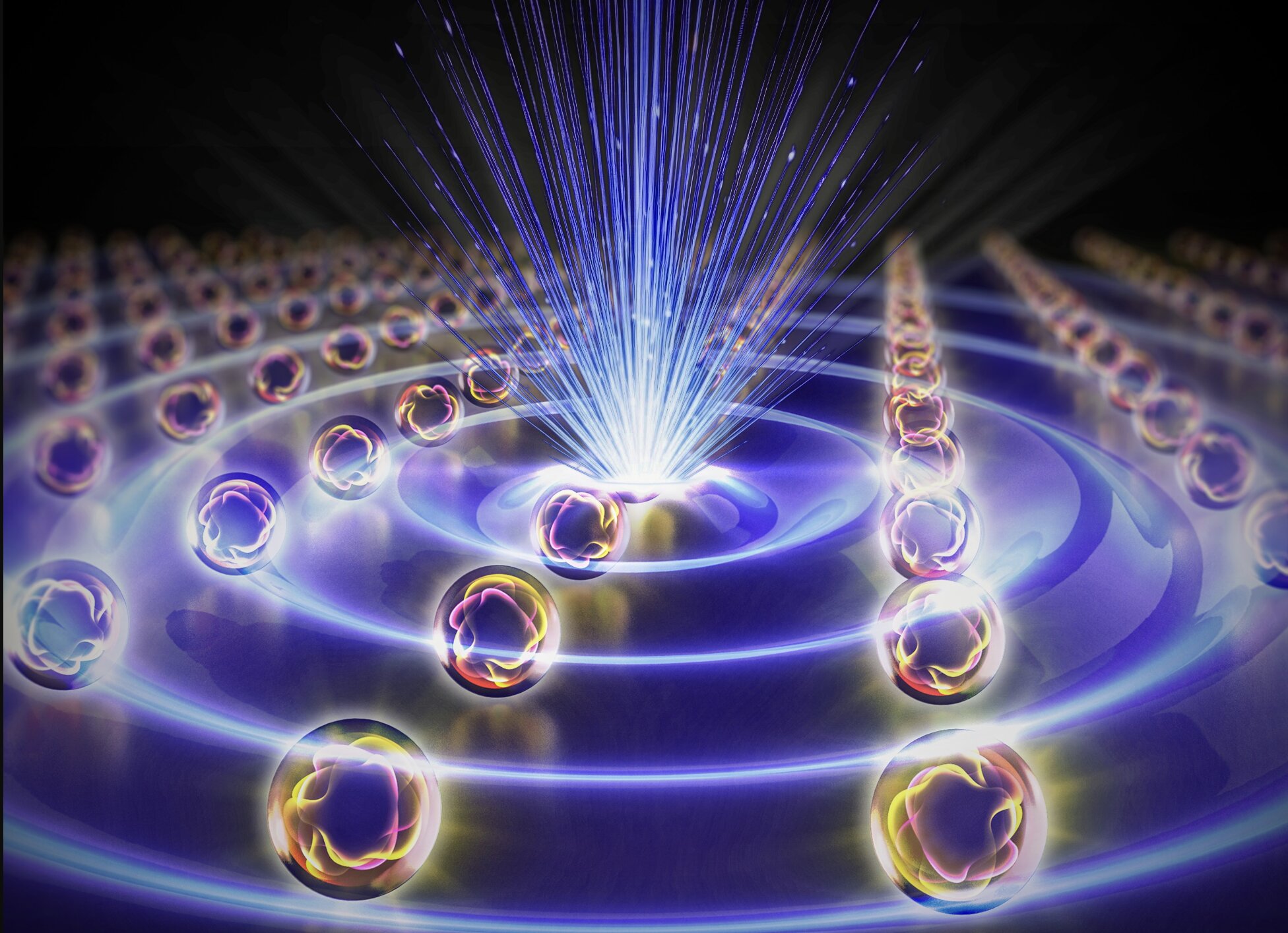
Researchers have designed realistic photonic time crystals, which exponentially amplify light, potentially transforming fields like communication, imaging, and sensing. These materials, which oscillate in time rather than space, could lead to more efficient lasers and sensors. The study, involving Aalto University and others, proposes using silicon spheres to achieve these effects in visible light, marking a significant step towards practical applications.

"Revolutionizing Vision: Graphene's Role in Smart Contact Lenses"

Originally Published 1 year ago — by TNW

Featured image for "Revolutionizing Vision: Graphene's Role in Smart Contact Lenses"
Source: TNW

Nobel Laureate Konstantin Novoselov, co-creator of graphene, and a team of scientists have discovered unique properties in two compounds, ReSe2 and ReS2, which belong to the same family of 2D structures as graphene. These materials have the potential to revolutionize various applications, including smart contact lenses for extended reality, optical devices, machine-learning computers, and laser-based blood tests. The discovery, published in Nature, could lead to advancements in healthcare, AI, and augmented reality, with the potential to enhance human color perception and enable faster and cheaper blood testing for diseases like cancer and COVID.

"Breakthrough: Two-Dimensional Waveguides Uncovered by Research Team"

Originally Published 1 year ago — by Phys.org

Featured image for "Breakthrough: Two-Dimensional Waveguides Uncovered by Research Team"
Source: Phys.org

The U.S. Naval Research Laboratory and Kansas State University have discovered slab waveguides based on the two-dimensional material hexagonal boron nitride, which can be used to enhance spectroscopy of encapsulated 2D materials. These waveguides, reported in the journal Advanced Materials, have the potential to impact the development of atomically thin electronic and optical devices, offering a way to study elusive dark excitons optically and providing a step towards interfacing 2D materials with existing platforms without damaging them.

Revolutionary Optical Device Enabled by Conjoined 'Racetracks'

Originally Published 2 years ago — by Phys.org

Featured image for Revolutionary Optical Device Enabled by Conjoined 'Racetracks'
Source: Phys.org

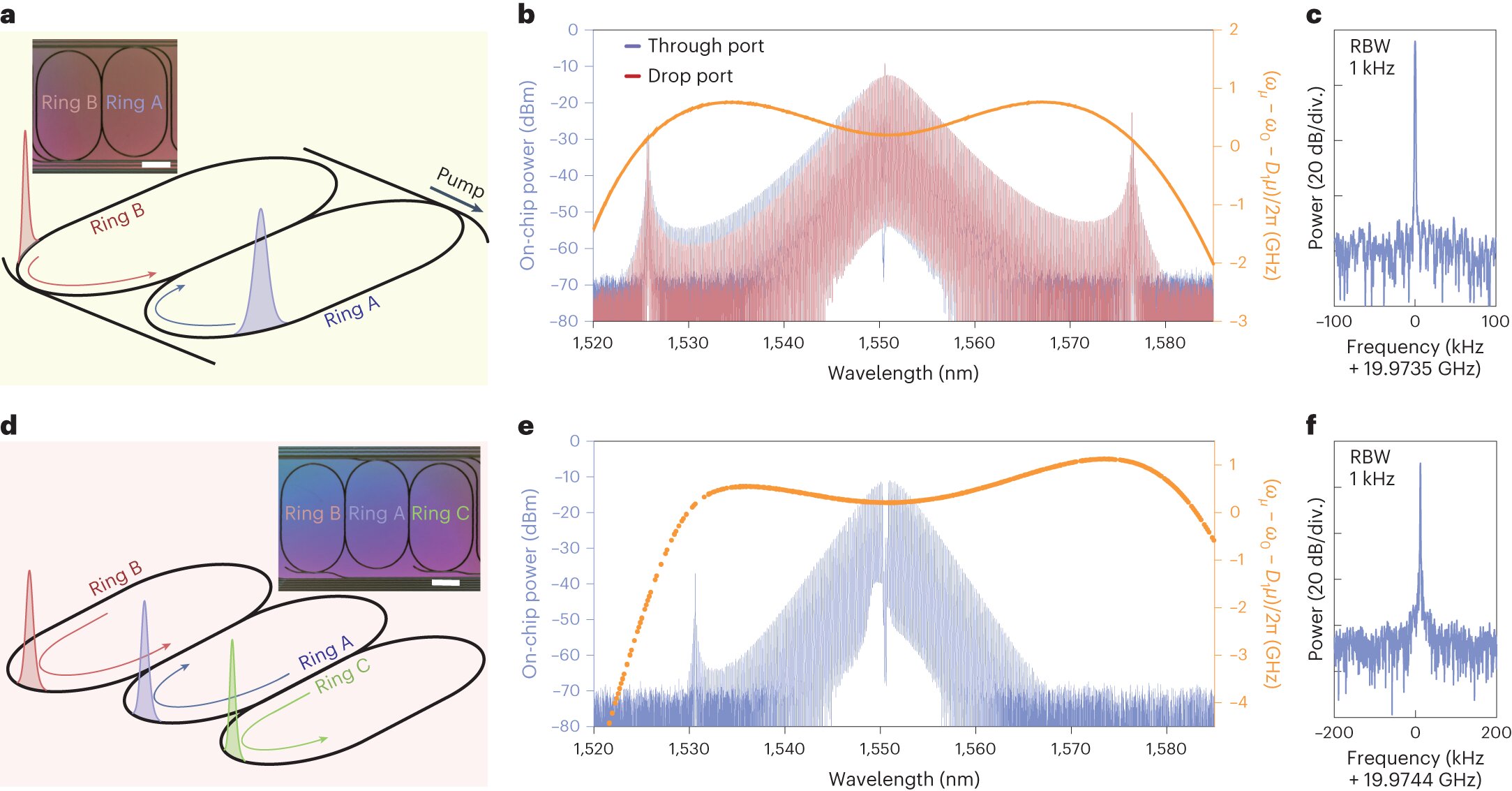
Researchers at Caltech and UC Santa Barbara have developed a new microcomb device that overcomes the optical limitations of ultra-low-loss silicon nitride (ULL nitride) by generating pulses in pairs. By creating multiple conjoined racetracks, the paired laser pulses bunch up, counteracting the dispersion and allowing the microcombs to work properly. This breakthrough could lead to the integration of microcombs into handheld devices and the creation of large photonic circuit arrays for soliton pulses. The manufacturing scalability of the complementary metal–oxide–semiconductor (CMOS) process makes it easier and more economical to produce these short-pulse microcombs.

"Revolutionary Technology Breaks Barriers in 3D Nanoprinting"

Originally Published 2 years ago — by Phys.org

Featured image for "Revolutionary Technology Breaks Barriers in 3D Nanoprinting"
Source: Phys.org

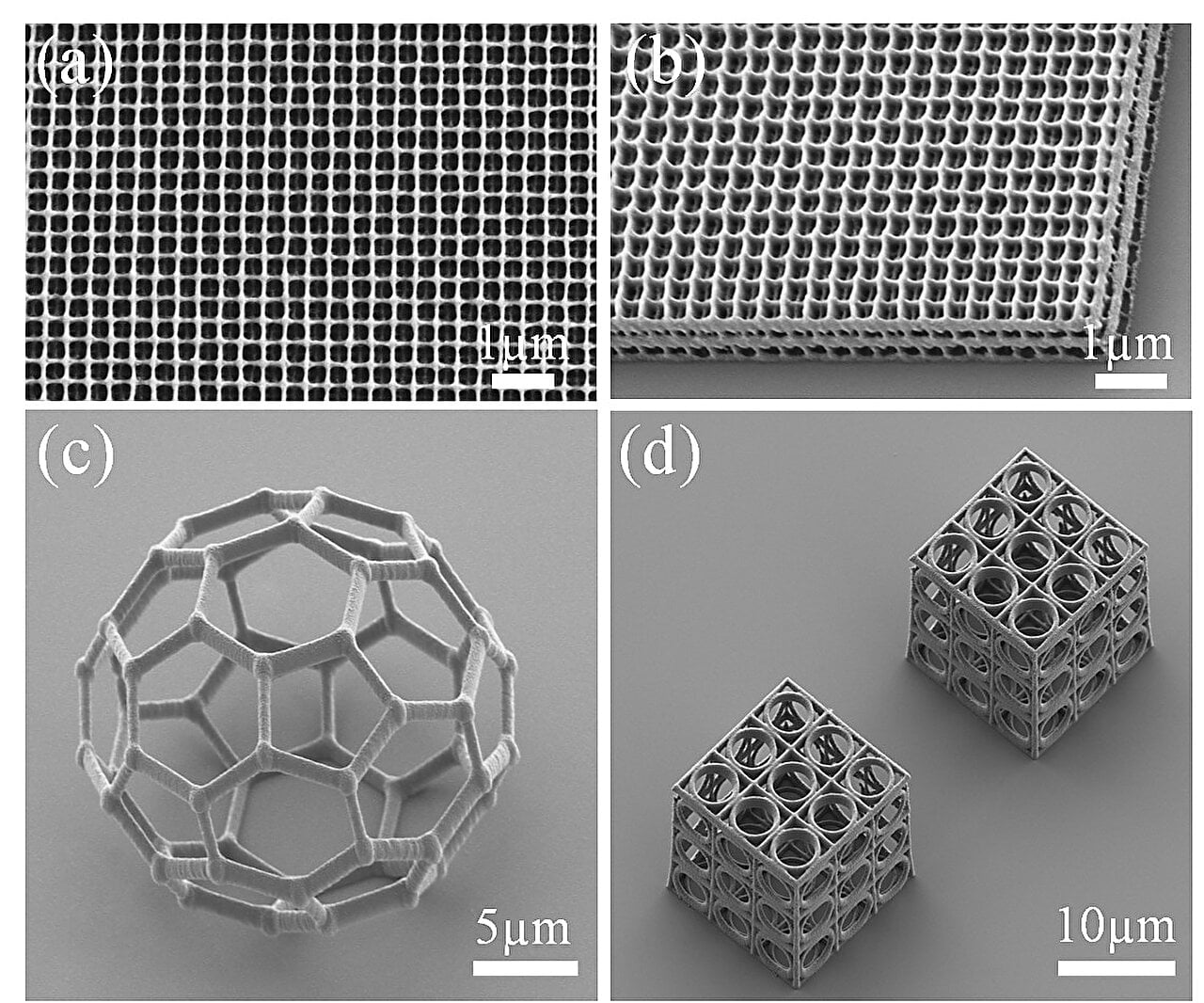
Researchers have developed a low-cost 3D nanoprinting system that can create precise 3D structures with fine features. The system uses a two-step absorption process and an integrated fiber-coupled continuous-wave laser diode, making it accessible and easy to operate. It has the potential to print metamaterials, microlenses, and micro-optical devices, opening up possibilities for applications in various fields such as biology and virtual reality. The researchers are working on improving the writing speed and quality of the technique to expand its practical use.

Advancements in 3D Printing Revolutionize Nanoscale Optical Devices

Originally Published 2 years ago — by Phys.org

Featured image for Advancements in 3D Printing Revolutionize Nanoscale Optical Devices
Source: Phys.org

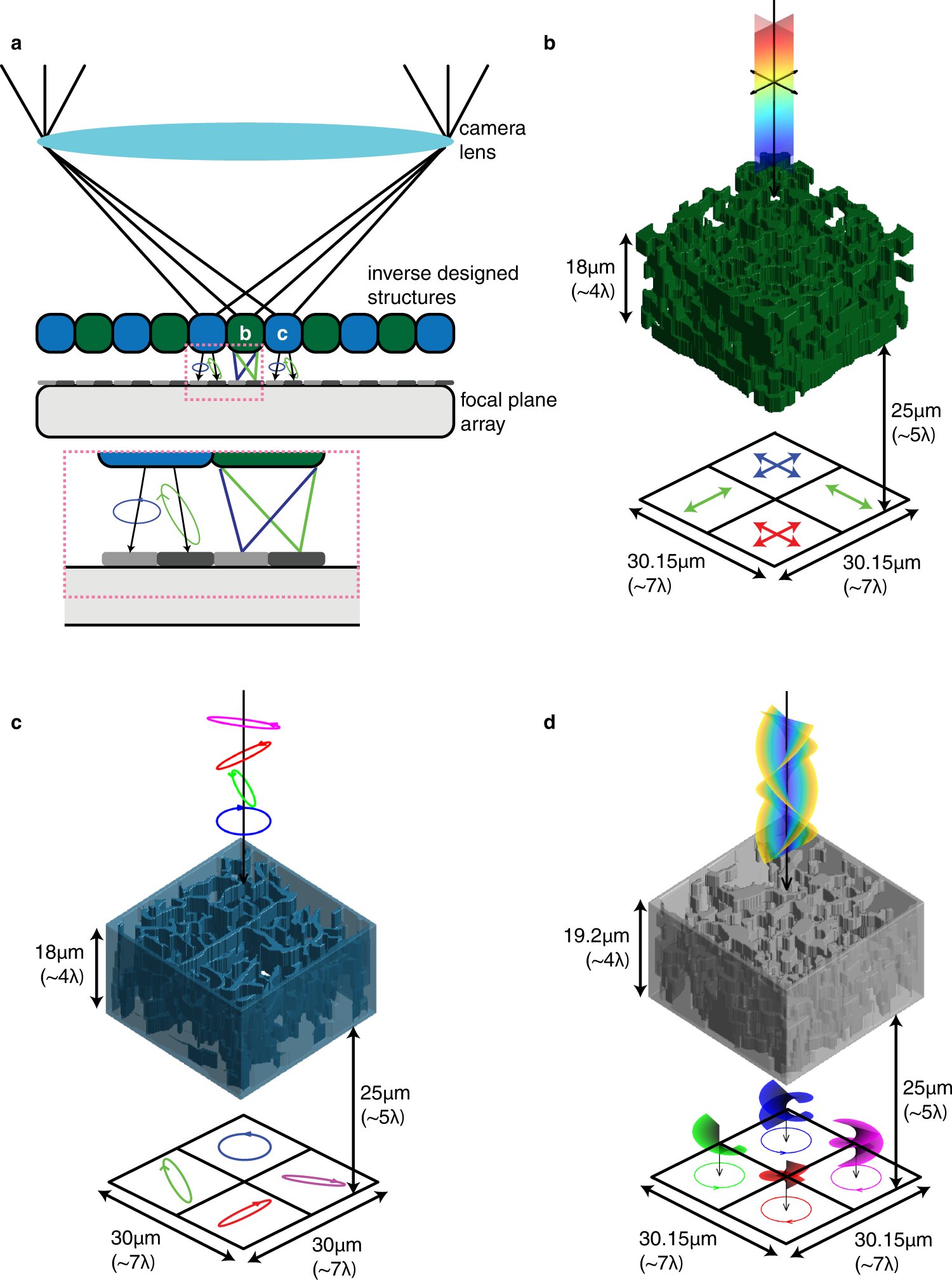
Researchers at Caltech have developed a new technique that combines 3D printing with optical metamaterials to create nanoscale optical devices. These devices, made of structures measured in nanometers, have the potential to detect and manipulate light properties at small scales, allowing for advancements in cameras and sensors. The devices can sort incoming light by wavelength and polarization, and could be used in visible light applications. The design process involves an algorithm that continuously evolves the device's structure until it meets the desired performance criteria. The researchers used two-photon polymerization (TPP) lithography to physically create the devices. While still a proof of concept, further research could lead to practical manufacturing techniques for these nanoscale optical devices.

Harnessing the Power of Dark Structures for Optimal Resilience

Originally Published 2 years ago — by Phys.org

Featured image for Harnessing the Power of Dark Structures for Optimal Resilience
Source: Phys.org

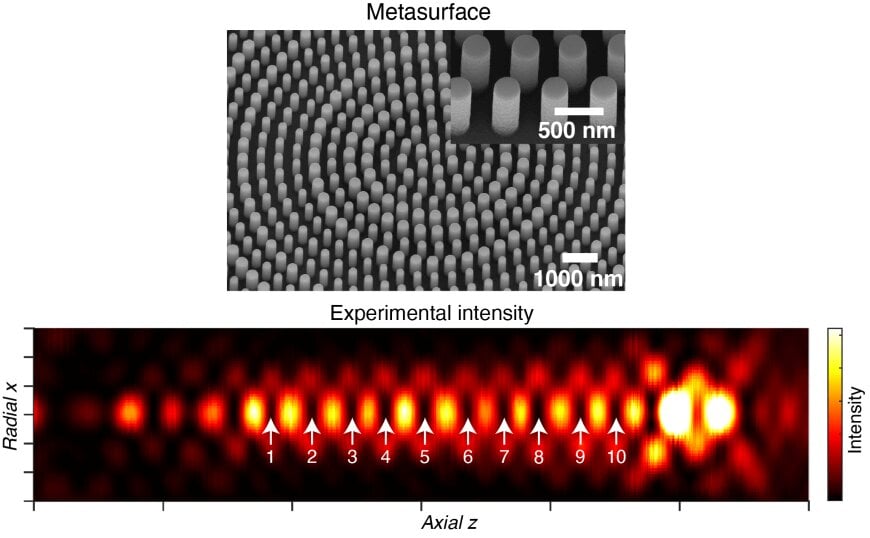
Researchers at the Harvard John A. Paulson School of Engineering and Applied Sciences have developed new techniques using metasurfaces to control points of darkness, or optical singularities. These dark spots have potential applications in remote sensing, precision measurement, and imaging. The team designed metasurfaces with titanium dioxide nanopillars to create an array of optical singularities, which could be used as optical traps for capturing atoms or as reference positions for imaging. They also developed extremely stable points of darkness in a polarized optical field, known as polarization singularities, which are topologically protected and can withstand perturbations. These advancements in optical singularities have implications for remote sensing, covert detection, and creating compact, lightweight optical devices.