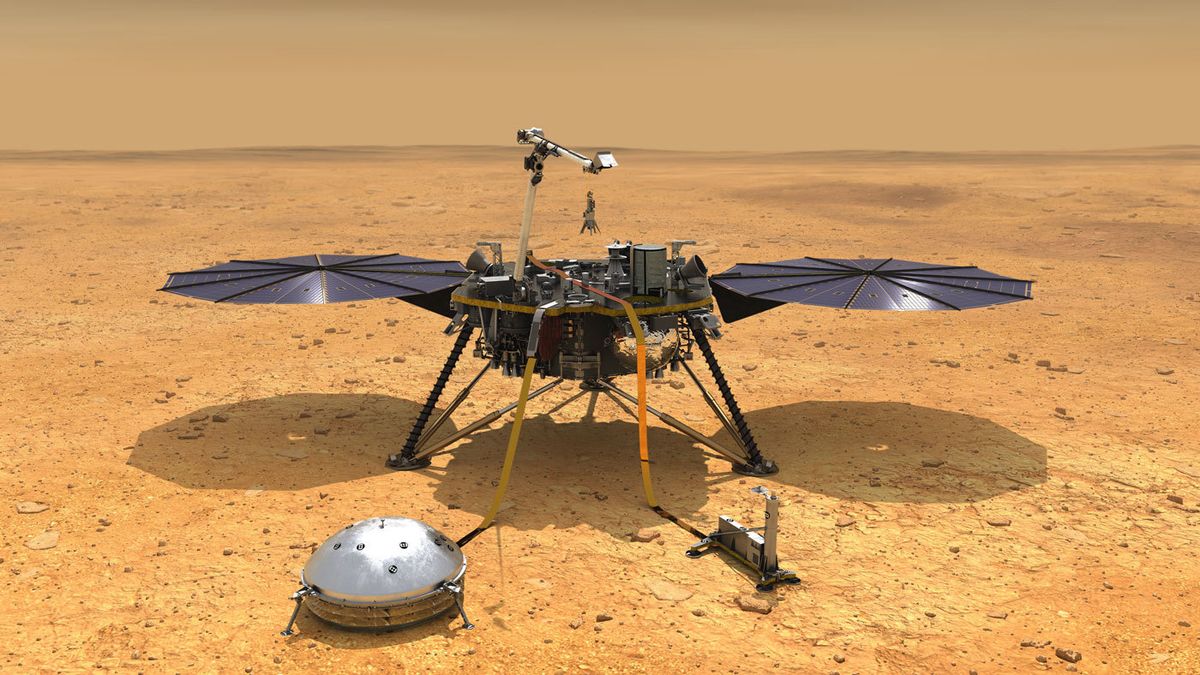
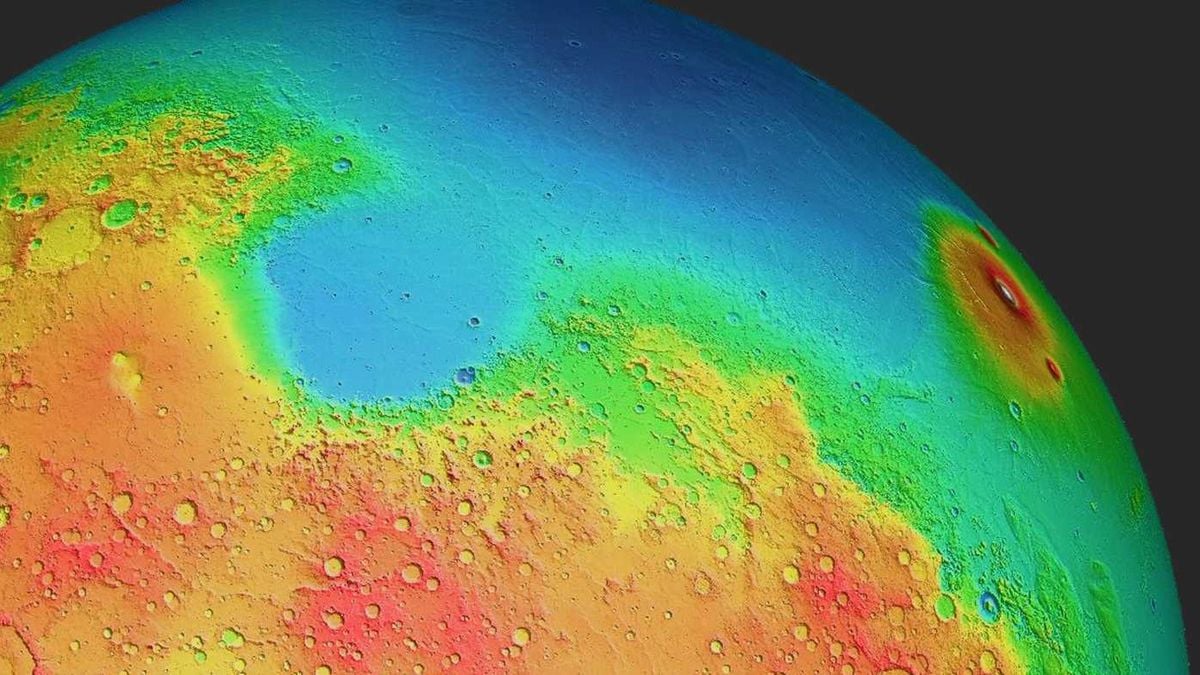
NASA's InSight lander data reveals that Mars' mantle contains ancient impact fragments, indicating a sluggish interior that has preserved features from early solar system impacts, providing new insights into the planet's geological history.
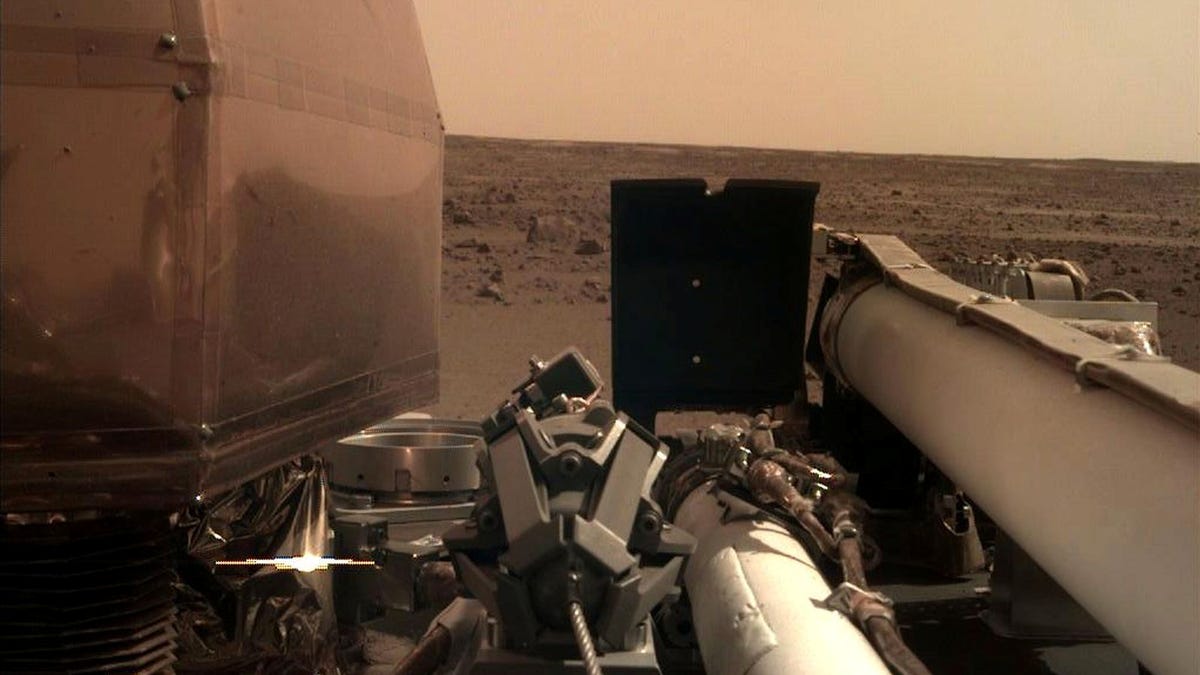
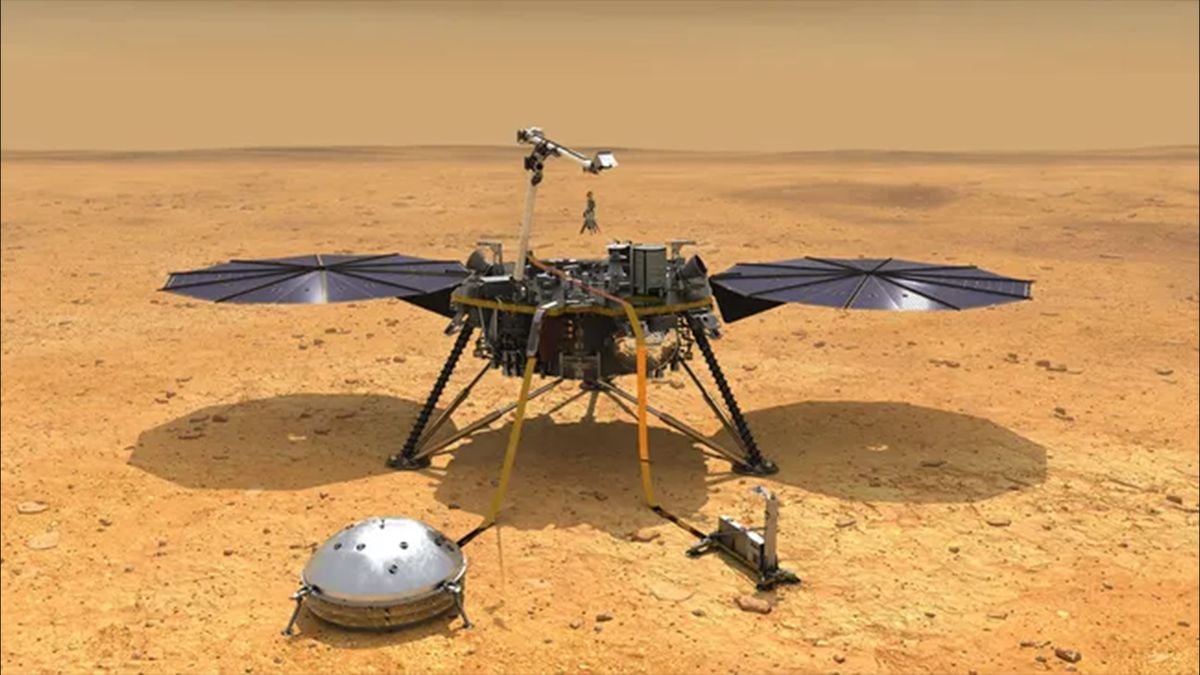
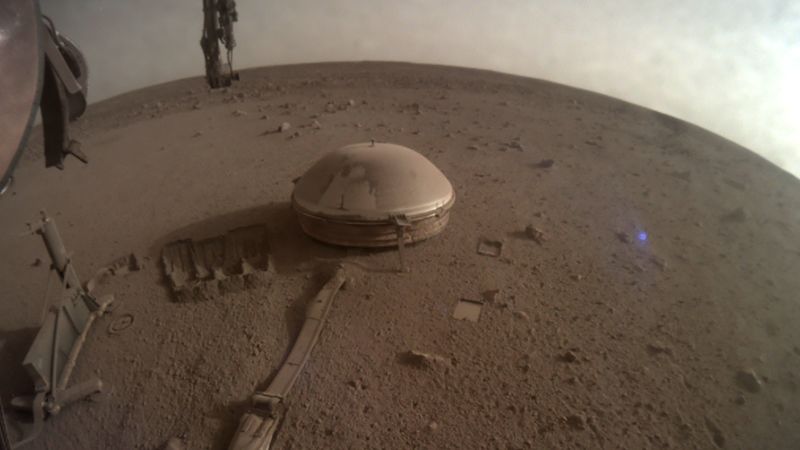
Although NASA's InSight Lander ran out of power 18 months ago, it continues to provide valuable data through high-resolution images taken by the Mars Reconnaissance Orbiter. The lander's presence on Mars helps scientists study dust accumulation and surface disturbances, extending its legacy beyond its active mission.
Scientists have determined that the strongest recorded marsquake on Mars was not caused by a meteorite strike, but rather by the release of powerful tectonic forces within the planet's crust. The quake, with a strength of 4.7, was detected by instruments on NASA's InSight lander. The absence of a corresponding crater led researchers to conclude that Mars is more seismically active than previously thought. The findings provide valuable insights into Martian seismic activity and may contribute to future understanding of safe living conditions for humans on Mars.
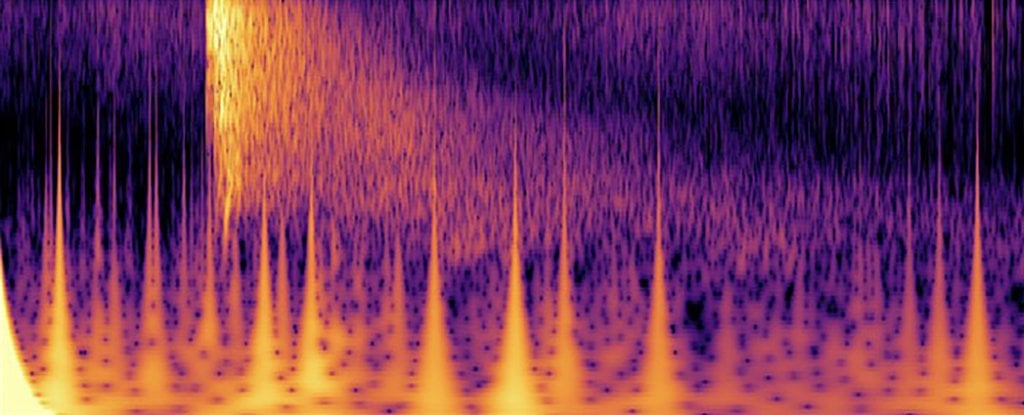
Scientists have determined that the strongest-ever quake detected on Mars was not caused by an asteroid impact, but rather by tectonic forces within the planet itself. The magnitude 4.7 quake, recorded by NASA's InSight lander in May 2022, was five times stronger than the previous record. Unlike most marsquakes, which last for about an hour, this quake continued for a record six hours. The findings suggest that Mars is more seismically active than previously thought, challenging the belief that the planet is too small and cold to host tectonic processes. The research may help in understanding potential safe zones for human habitation on Mars.
The largest-ever recorded Marsquake, known as S1222a, was caused by tectonic forces within Mars' crust, rather than a meteorite impact, according to a global collaboration led by the University of Oxford. The seismic event, which lasted over six hours and had a magnitude of 4.7, suggests that Mars may be more seismically active than previously believed. The discovery has implications for future habitation efforts on the planet. The research involved contributions from international space agencies and was published in the journal Geophysical Research Letters.
Scientists were surprised to discover that the largest quake ever detected on Mars, with a magnitude of 4.7, was not caused by a meteorite impact as initially suspected, but rather by tectonic activity within the planet's interior. This finding, based on data collected by NASA's InSight lander, provides valuable insights into the geological processes and seismic activity on Mars, which is crucial for future human missions to the planet. The absence of an impact crater challenges previous assumptions about Mars' seismic activity and highlights the ongoing motion and shrinking of the planet's crust.
Scientists have determined that the strongest marsquake ever recorded on Mars, a magnitude 4.7 quake, was not caused by an asteroid impact but rather by tectonic forces within the planet itself. This discovery suggests that Mars is more seismically active than previously thought. The quake, which lasted for a record six hours, was detected by NASA's InSight lander in May 2022. Unlike Earth, Mars is believed to lack plate tectonics, but the new study suggests that the release of billion-year-old stress within Mars' crust, due to differential cooling and shrinking rates, can cause seismic activity. Understanding these processes could help determine safe areas for human habitation on Mars.
The source of a massive quake on Mars, detected by NASA's InSight lander, has surprised scientists. Mars, which was believed to lack tectonic plates, experienced colossal tectonic activity in its crust, according to a study led by Benjamin Fernando of the University of Oxford. The leading alternative explanation, a meteorite impact, was ruled out. The findings suggest that Mars is more seismically active than previously thought, although further exploration is needed to fully understand the planet's geological processes.
NASA's InSight Lander has discovered that Mars is spinning faster and faster each year, with its days gradually growing shorter. The acceleration in spin was detected through data from InSight's RISE instrument, which also revealed that the core of Mars is likely a molten metal. The exact cause of the increasing spin is still unknown, but it could be related to changes in the planet's ice caps or core-mantle coupling. Researchers are continuing to analyze the data to uncover more insights about Mars' rotation.
NASA's InSight lander, before succumbing to a dust storm, provided evidence suggesting that Mars has a liquid core. Using its RISE instrument, which measures changes in Mars' rotation, researchers detected wobbles in the planet's axis that indicate the presence of a liquid core. Further analysis suggests that the Martian core is likely made of an alloy of liquid iron and sulfur, constantly undergoing convection. The findings also suggest the possibility of a molten lower mantle, which could explain anomalies in the size and shape of Mars' core and surface.
NASA's InSight lander measured the largest marsquake ever recorded in May 2022, revealing that the Martian crust is "like heavy armor" in some locations, according to a new study. The team's research showed that the crust of the Red Planet has a thickness that ranges from an average of 26 to 35 miles (42 to 56 kilometers), but its thickest extent is double that: 56 miles (90 kilometers). The team's discovery of a thick Martian crust in some places also sheds some light on how the planet generates heat, and how this has evolved over the Red Planet's history.
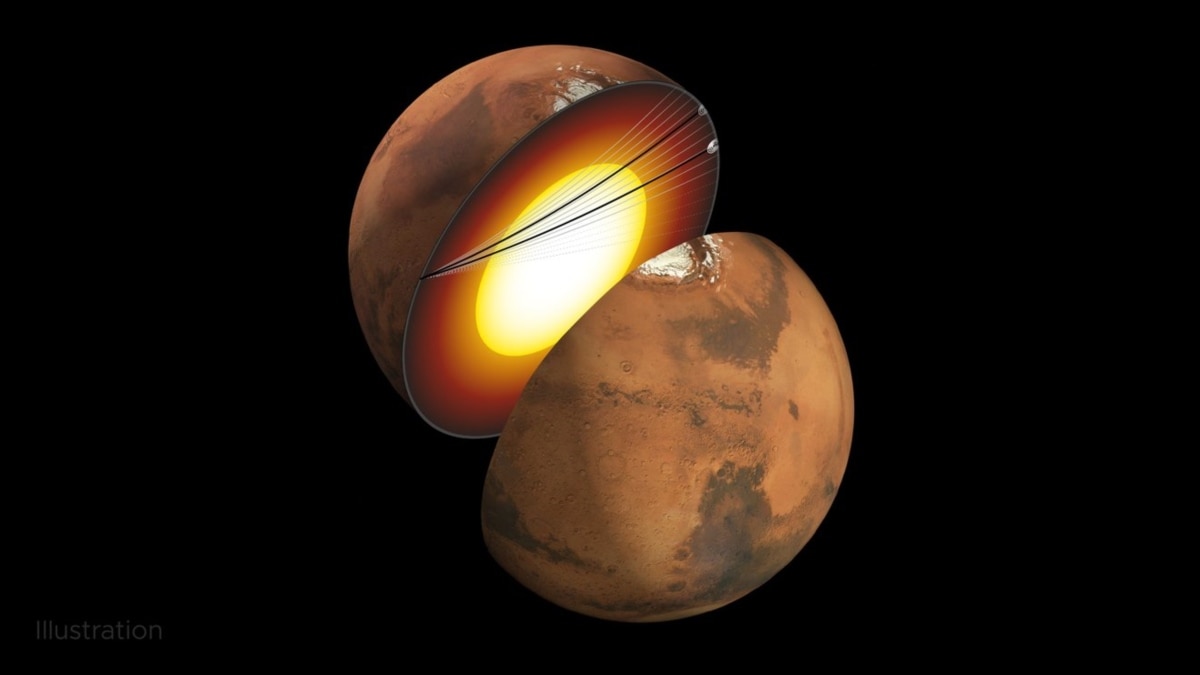
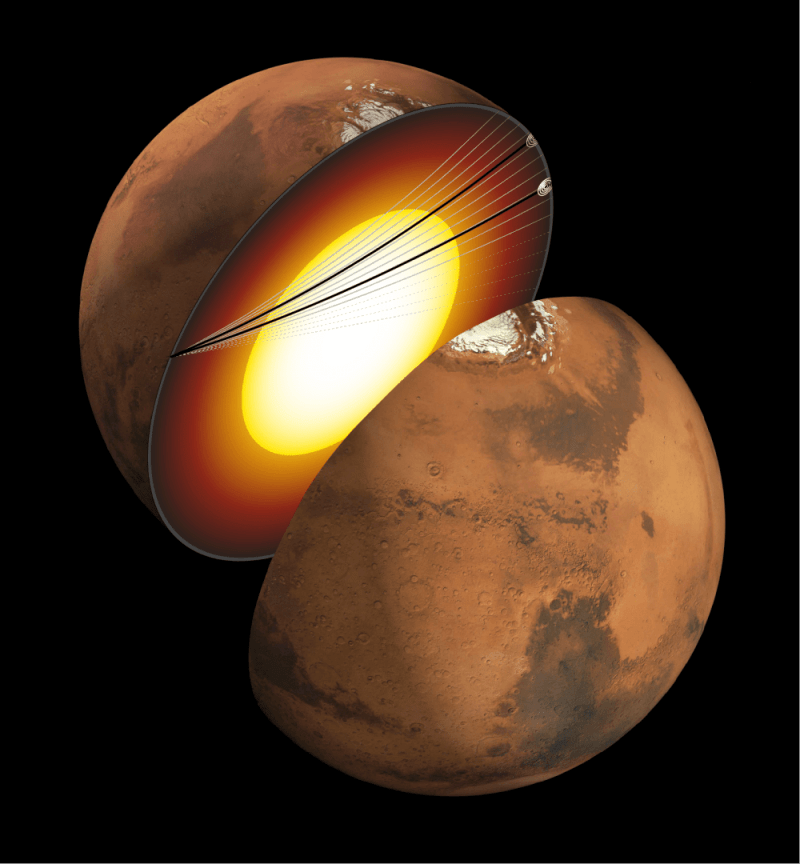
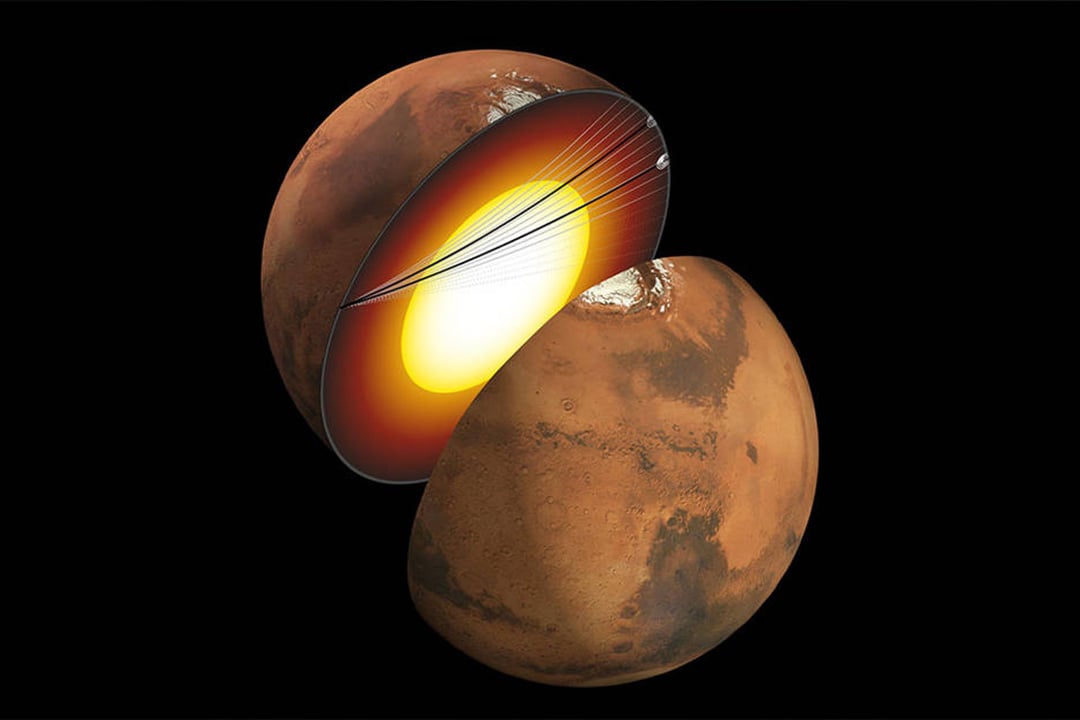
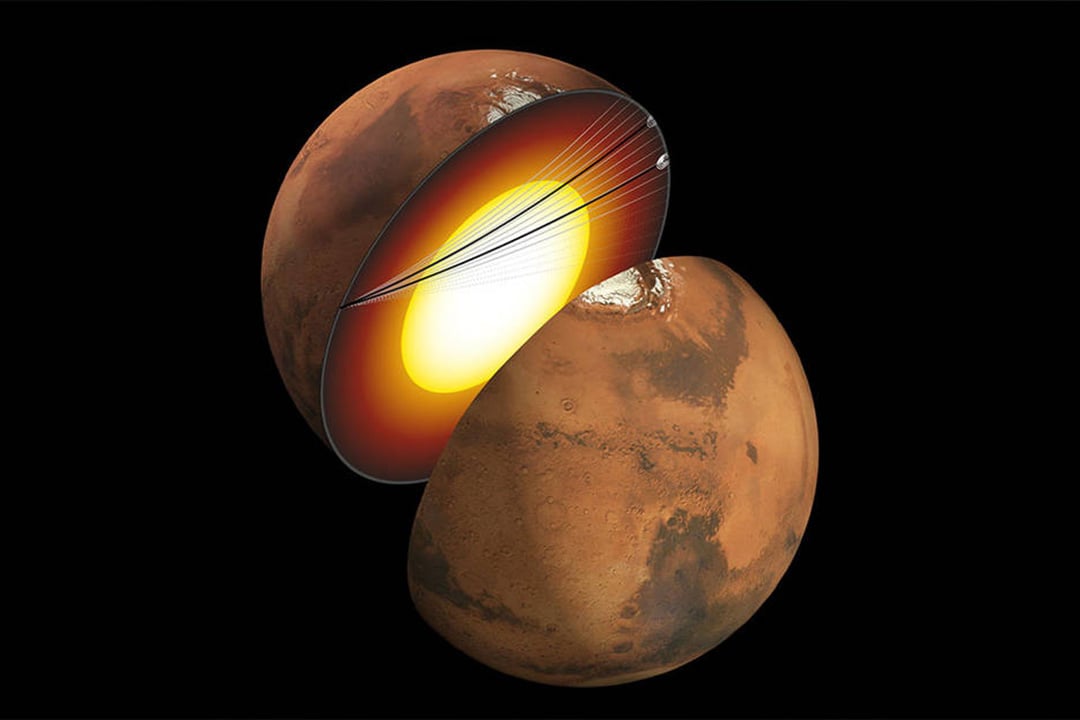
For the first time, scientists have measured "core-transiting seismic waves" moving through Mars using the InSight lander's seismic instrument. The behavior of these waves revealed that Mars most likely has a liquid core made of a single blob of molten iron alloy, which is also rich in sulfur, oxygen, carbon, and hydrogen. The differences between Earth and Mars cores hint at different formation stories for each planet, and the uniqueness of Earth's core allows it to generate a magnetic field that protects us from solar winds, allowing us to keep water.
NASA's InSight Lander has made the first-ever direct observation of another planet's core by measuring seismic waves on Mars. The measurements came from two quakes that occurred on the opposite side of the planet from InSight, revealing that Mars has a liquid-iron core that is smaller and denser than scientists anticipated. While InSight is now retired, scientists still have years of data to sift through, and there's no telling what else we might learn.
NASA's InSight Lander has made the first-ever direct observation of another planet's core by measuring seismic waves on Mars. The measurements came from two quakes that occurred on the opposite side of the planet from InSight, revealing that Mars has a liquid-iron core that is smaller and denser than scientists anticipated. While InSight is now retired, scientists still have years of data to sift through, and there's no telling what else we might learn about the Red Planet's interior.
NASA's InSight Lander detected seismic waves traveling through the Martian core, revealing that Mars has a liquid iron-alloy core with lightweight elements such as sulfur, oxygen, hydrogen, and carbon. The study, published in Proceedings of the National Academy of Sciences, provides insight into how rocky planets like Earth and Mars form and differ, and what makes other planets habitable for life. The InSight mission, which was extended for two years, has changed the way scientists understand the red planet and will continue to influence planetary formation and evolution research for years to come.