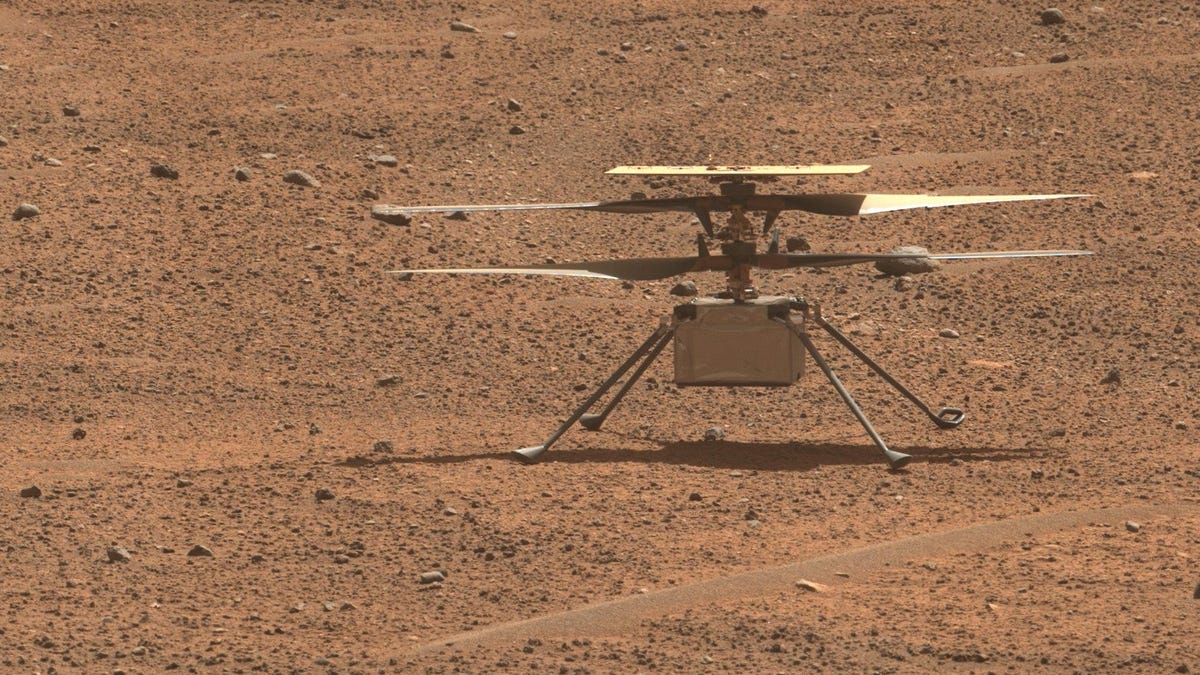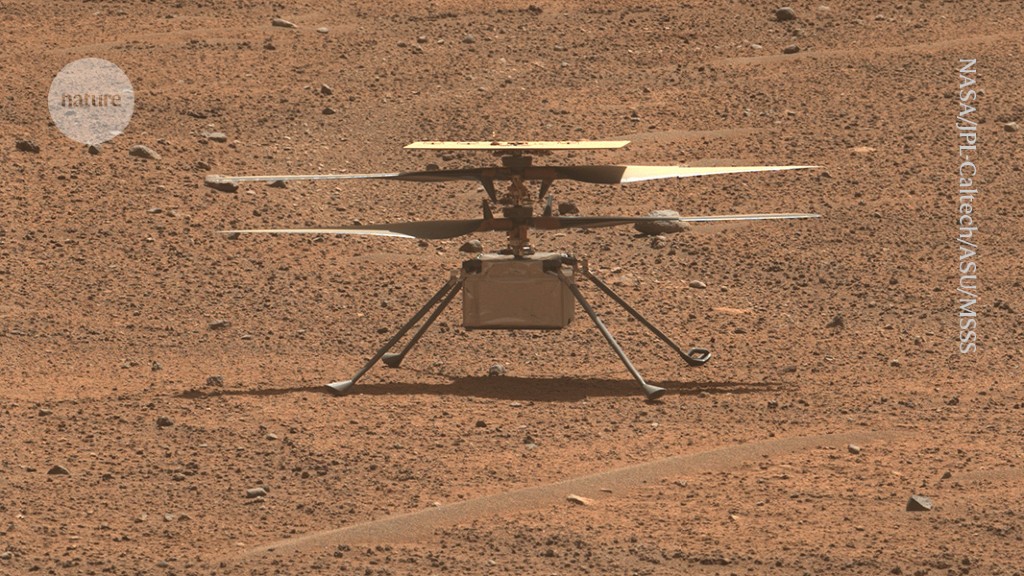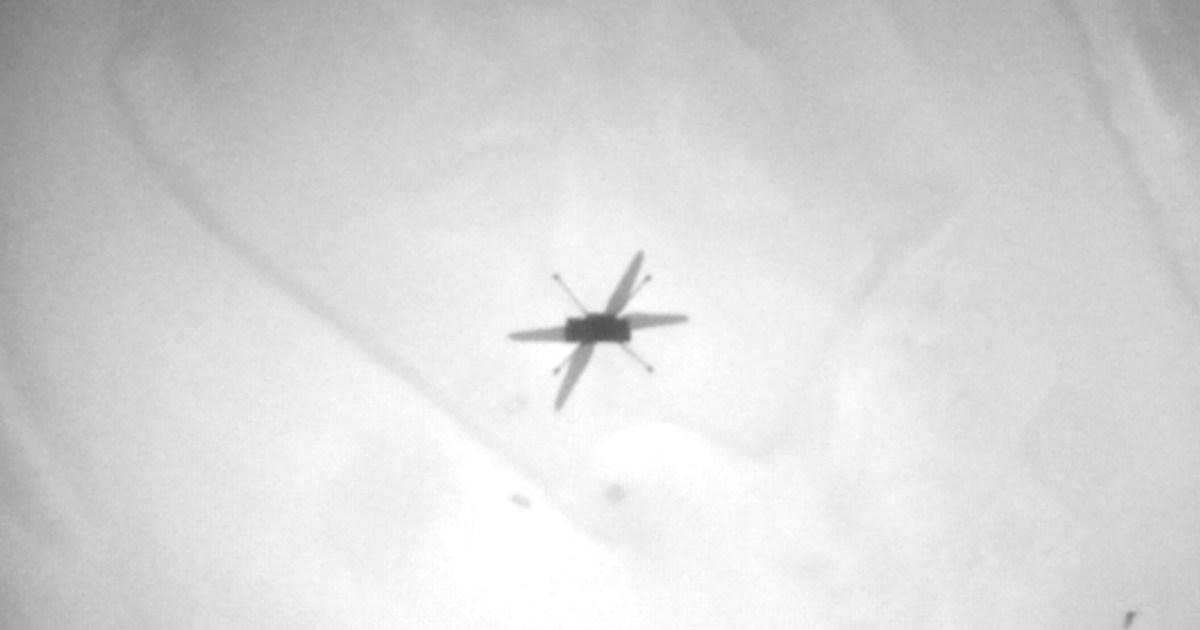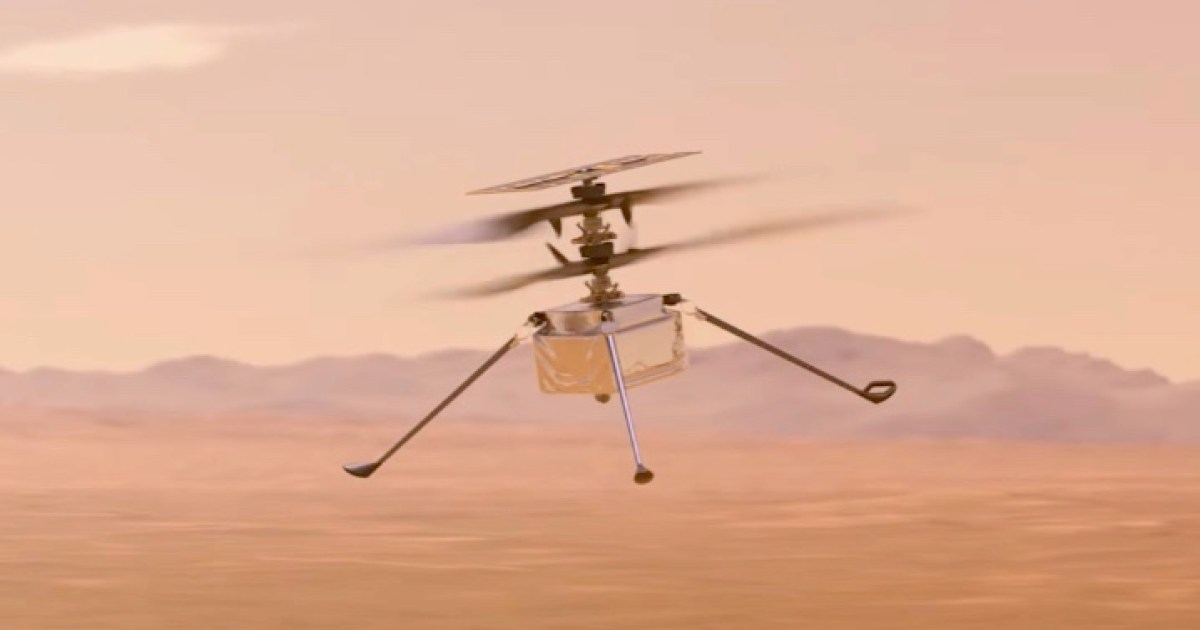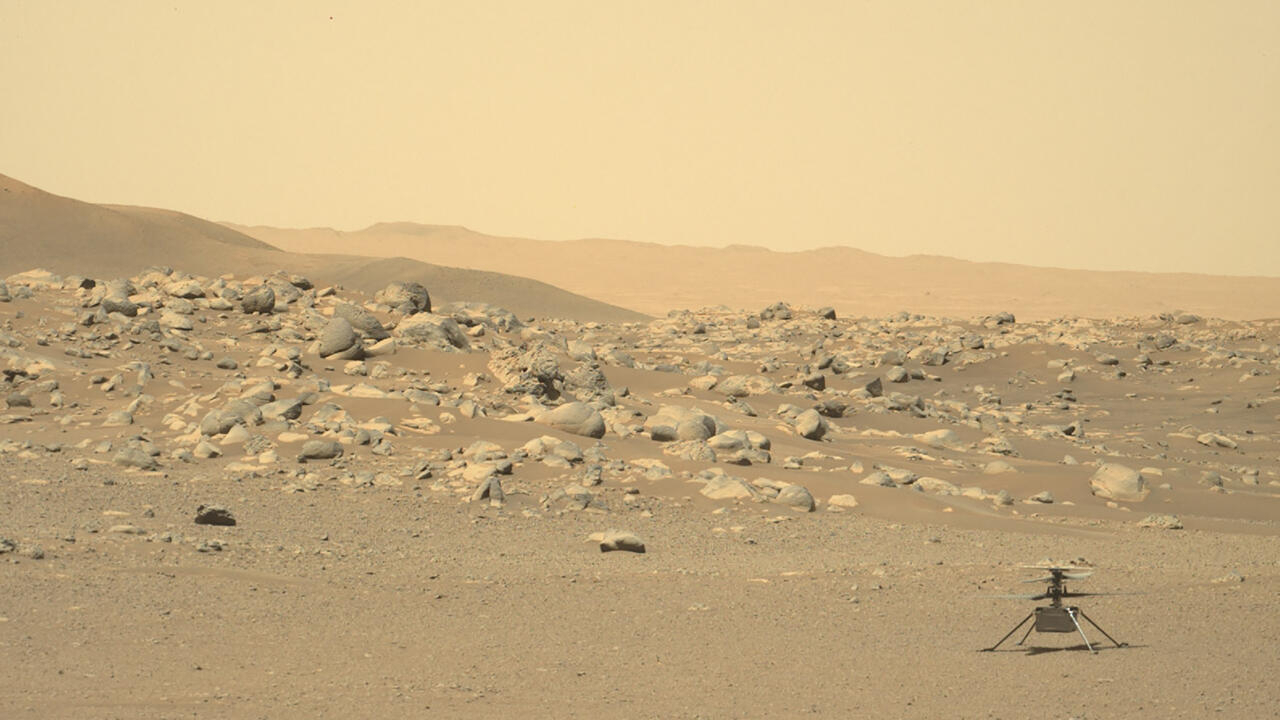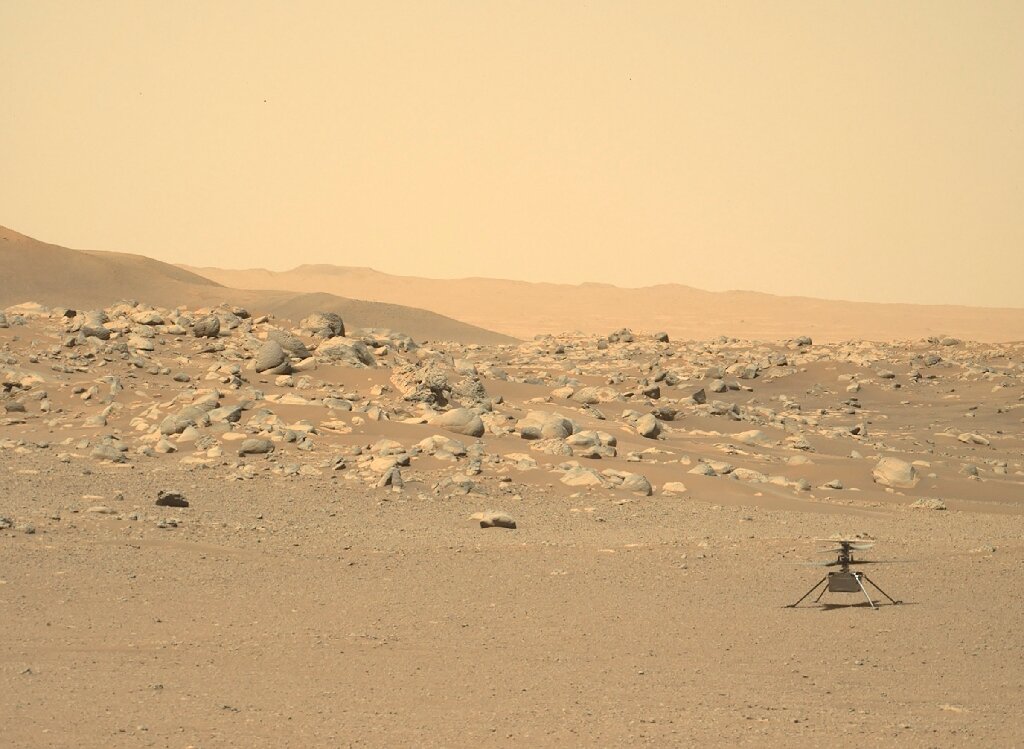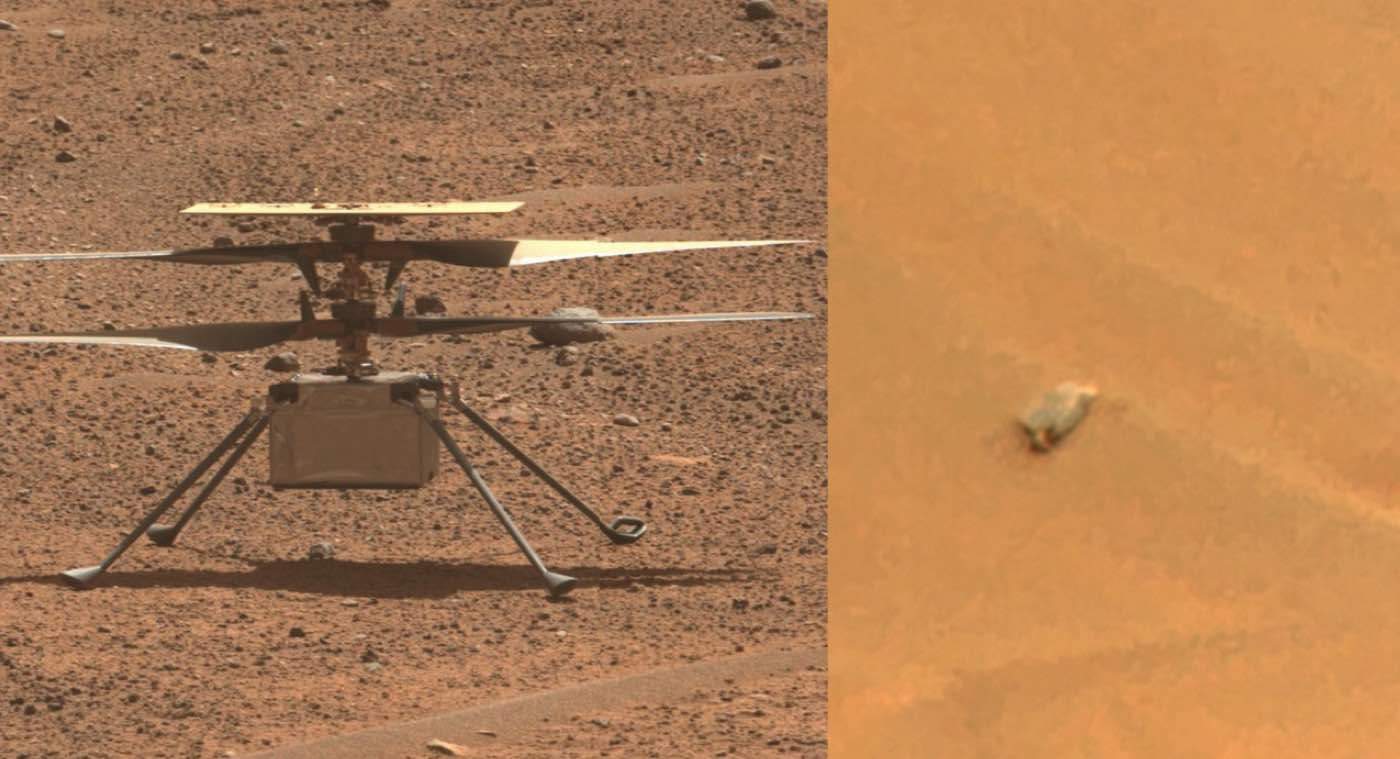
NASA's Perseverance rover has located the broken rotor blade of the stricken Mars helicopter, Ingenuity, using the Remote Microscopic Imager. The blade was found about 50 feet west of the helicopter, which became stranded after its 72nd flight. The mission for Ingenuity ended on January 25, surpassing expectations by flying more than planned. Perseverance's mission on Mars includes astrobiology and the search for signs of ancient microbial life, as well as collecting and caching Martian rock and dust for future analysis.
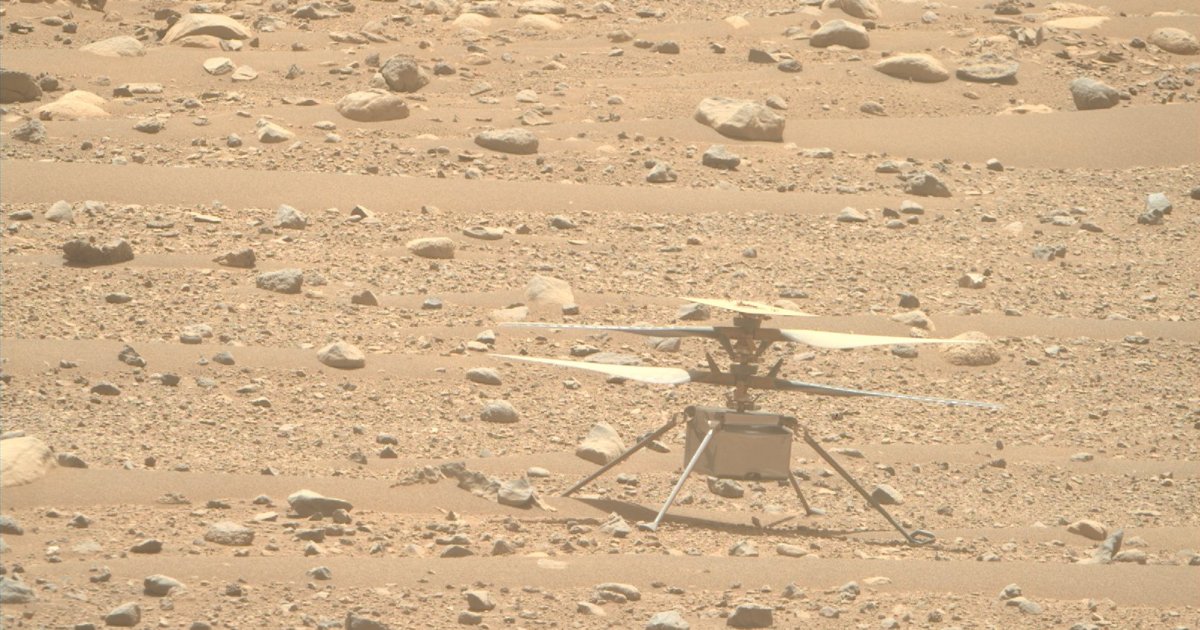
NASA's Mars helicopter, Ingenuity, has completed 72 flights on the red planet, surpassing expectations and providing valuable insights for future missions. Despite being grounded due to rotor damage, it is still operational and communicating with the team at JPL, capturing images of the Martian surface to study geological processes. However, its longevity depends on sand covering its solar panels, similar to what happened with NASA's InSight Mars lander. NASA recently regained communication with Ingenuity after an unexpected dropout, but its future operations remain uncertain.
January was a month of significant developments in space exploration, including NASA's successful opening of its asteroid sample container, Japan's SLIM lander's soft landing on the Moon, the decommissioned Space Shuttle Endeavour being joined to a display, and the end of NASA's Ingenuity Mars helicopter mission. Other highlights included China's Gravity-1 rocket's record-breaking first flight, SpaceX Dragon Freedom spacecraft's approach to the International Space Station, and various innovative space technologies and experiments.
NASA's Ingenuity helicopter on Mars is officially dead after nearly 3 years, having exceeded its initial expectations by completing 72 flight missions instead of the planned 5. The helicopter, which was the first to fly on another planet, suffered a broken rotor blade, rendering it unable to fly. Despite its demise, Ingenuity's accomplishments far surpassed NASA's goals, serving as an aerial scout for the Perseverance rover and covering 10.5 miles in total. NASA Administrator Bill Nelson expressed gratitude for Ingenuity's contributions while acknowledging the bittersweet end to its mission.
NASA's Ingenuity helicopter, the first aircraft to fly on another world, has perished on Mars during its 72nd flight, leaving a legacy of pioneering interplanetary aerial mobility. The helicopter, initially designed for five flights, exceeded expectations by traversing 17 kilometers and flying for nearly 129 minutes. Its final flight ended in a fatal incident, possibly due to rotor blades striking the ground. Ingenuity's contributions include enabling scientific studies on Mars and paving the way for future aerial exploration on other worlds, with plans for advanced helicopter designs for future missions.
NASA's Mars Ingenuity helicopter lost communication during its 72nd flight, prompting concern, but contact was reestablished after the Perseverance rover performed long-duration listening sessions. The helicopter's flight team is reviewing data to understand the communication dropout, as it approaches three years of service. While the future of Ingenuity's flights remains uncertain, it has already surpassed expectations and proven its resilience on Mars.
NASA regained contact with its Mars helicopter, Ingenuity, after losing communication during its descent from Flight 72, a quick pop-up vertical flight to check its systems. Perseverance, tasked with relaying data, reestablished contact with Ingenuity after performing long-duration listening sessions. Meanwhile, the European Space Agency's Mars Express orbiter spotted large ice water deposits below the Martian surface at the equator, the most water ever found in that part of the planet, providing valuable clues about Mars's past climate and potential resources for future missions.
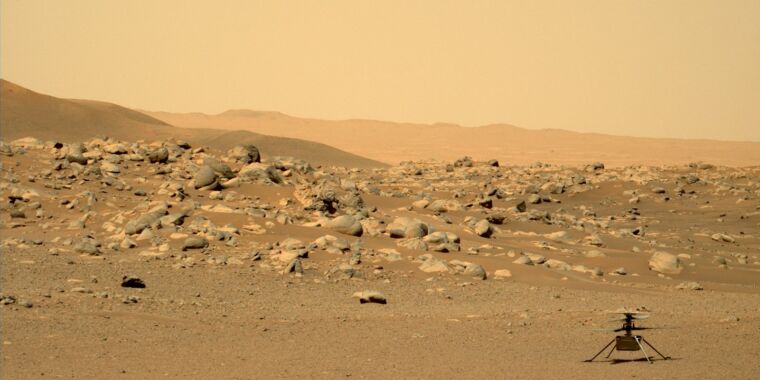
NASA's Mars helicopter, Ingenuity, has captured "otherworldly" images of wreckage on the surface of the Red Planet. The photos, taken in April, show debris from the landing equipment that brought the helicopter and the Perseverance rover to Mars in 2021. The images offer valuable engineering understanding and could provide insight for future missions to Mars. Ingenuity has exceeded expectations, with 67 completed flights and preparations for its 68th flight underway.
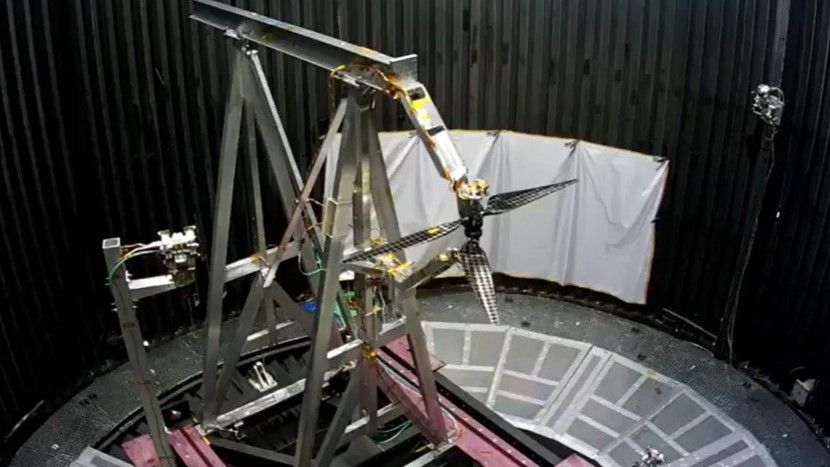
NASA is testing a new dual rotor system for future Mars missions, following the success of the Ingenuity helicopter. The new design features carbon-fiber blades that are longer than Ingenuity's, and they were tested in a vacuum chamber to simulate the conditions of interplanetary space. Meanwhile, Ingenuity continues to break records, with its highest flight reaching an altitude of 79 feet. The fact that NASA can conduct simultaneous tests of hardware in both simulated and off-world environments demonstrates significant progress in space exploration and highlights the agency's commitment to innovation.
NASA's Mars helicopter, Ingenuity, has set a new flight record by reaching an altitude of 20 meters on its 59th flight, surpassing its previous record by 6 meters. Since its maiden flight in April 2021, Ingenuity has achieved various milestones, including flying for as long as 169.5 seconds, covering a distance of 2,325 feet, and reaching speeds of up to 15 mph. The helicopter's impressive performance has not only assisted the Perseverance rover but has also provided valuable aerial shots for planning the rover's routes. NASA plans to develop more advanced versions of the flying machine based on Ingenuity's success for future missions to Mars and beyond.
NASA has restored contact with its Mars helicopter, Ingenuity, after a nine-week communication outage caused by a hill blocking the link between the helicopter and the Mars rover, Perseverance. The team at the Jet Propulsion Laboratory was able to confirm that Ingenuity successfully landed after its 52nd flight, covering a distance of 1,191 feet. If Ingenuity passes checks, it will embark on its 53rd flight in the coming weeks. The helicopter has exceeded expectations and proven the viability of flight technology on Mars, paving the way for future missions.
NASA has re-established contact with the Ingenuity Mars Helicopter after more than two months of radio silence. The mini rotorcraft, which hitched a ride to Mars with the Perseverance rover, has exceeded its initial 30-day mission and has been acting as an aerial scout. The loss of communication was expected due to a hill blocking the signal, but the heli is in good shape and ready for its next flight. This is not the first time Ingenuity has experienced communication issues.
NASA's Ingenuity Mars Helicopter has re-established contact after 63 days of radio silence. The mini rotorcraft, which exceeded its initial 30-day mission, has been acting as an aerial scout for the Perseverance rover in search of signs of ancient microbial life on Mars. The loss of communication was expected due to a hill blocking the relay between Ingenuity and Perseverance. Data indicates that the helicopter is in good shape, and if further health checks go well, it will be ready for its next flight.
The Mars helicopter experienced a communications outage and has been switching in and out of nighttime survival mode since Sol 685. A project called A Sign in Space aims to decode a message from extraterrestrial intelligence. An amateur radio operator was fined $24,000 for interfering with a net. The first private lunar landing mission, ispace's HAKUTO-R, crashed due to a software error. A physics teacher uses Pink Floyd's album The Dark Side of the Moon to teach physics.