November 2025 saw the worst video game hardware and software sales in 30 years in the US, with hardware spending dropping 27% and unit sales hitting their lowest since 1995, driven by high prices and declining demand across major consoles like Xbox Series, PS5, and Nintendo Switch.
Americans now hold a record high of 45% of their financial assets in stocks, raising concerns among economists about increased vulnerability to a market downturn, especially given the concentration of gains in a few tech giants and the growing economic disparity between the wealthy and lower-income Americans.
Warren Buffett is reportedly selling stocks in anticipation of a market downturn, building up a record cash reserve, and may buy back shares like Apple at lower prices once valuations decline, following his historical pattern of preparing for recessions.
The U.S. housing market shows signs of cooling, with slower price growth and declining sales, raising concerns about a potential sustained downturn due to high mortgage rates and rising supply, although tight inventory may prevent significant price drops.
The article discusses a strategy for building a high-yielding retirement portfolio using four ETFs that offer a 7.4% yield, significantly outperforming the traditional 60-40 portfolio. This approach is designed to provide stability and growth, with a historical performance showing 71% less decline during market downturns and a potential for 12% long-term returns. The strategy is part of the Dividend Kings' offerings, which include various investment tools and model portfolios to help investors achieve better long-term returns.
Berkshire Hathaway has accumulated a record $325 billion in cash, leading to speculation about Warren Buffett's market outlook. However, analyst Nir Kaissar suggests Buffett's strategy is not about predicting market downturns but rather focusing on long-term returns and asset allocation based on expected returns. Historically, Buffett increases cash reserves when stock valuations rise and deploys capital when opportunities arise. The current high market-to-GDP ratio suggests lower future returns, aligning with Buffett's strategy of maintaining cash for future investments. The cash reserve may also relate to succession planning or potential acquisitions.
SolarEdge Technologies announced it will lay off 400 employees, including 200 in Israel, to restore profitability and ensure financial stability amid a market downturn and excess inventory. The company, which had 5,633 employees as of December 2023, has seen its shares drop 6.6% in premarket trading and nearly 66% this year. This follows a January announcement to cut 16% of its global workforce after reporting a net loss of $157 million in the first quarter.
Despite a recent dip in the cryptocurrency market, Bitcoin's buy signals have surged, with investors showing optimism for a potential quick recovery. Social media conversations reveal a prevalence of positive terms related to buying and bullish sentiment, indicating a trend towards purchasing assets. Spot Bitcoin exchange-traded funds (ETFs) have seen significant activity, with March volumes tripling from the previous months, although April has shown signs of waning. Despite recent outflows in some ETFs, total net inflows for spot Bitcoin ETFs remain above $12 billion, reflecting continued interest in the cryptocurrency market.
JPMorgan warns that MicroStrategy's $2 billion Bitcoin purchases, funded by selling bonds, could worsen any future market downturn by adding leverage and froth to the current crypto rally. The software company's recent $821 million Bitcoin purchase and previous $1.2 billion bond sale have raised concerns about potential deleveraging in a downturn. MicroStrategy, led by Bitcoin bull Michael Saylor, aims to become a "Bitcoin development company" and currently holds 205,000 Bitcoin worth $14.7 billion, making it the world's leading private holder of the cryptocurrency.
China's cabinet has appointed Wu Qing, also known as the "Broker Butcher," as the new chairman of the China Securities Regulatory Commission, replacing Yi Huiman. Wu's appointment comes as the CSRC implements new policies to stabilize and revitalize China's struggling stock market, which has been impacted by volatility in the property sector and investor pessimism. The move follows a significant drop in the CSI 300 and concerns about the country's economic growth.
Chinese regulators have imposed restrictions on short selling as the country's stock market experiences a deepening downturn. The move is seen as an effort to stabilize the market and prevent further declines in stock prices.
The commercial real estate market is facing a significant downturn, with an estimated $590 billion loss in property values in 2023 and further declines expected in the coming years. The sector is grappling with the impact of higher interest rates and a shift in the office space market due to changes in work habits post-pandemic. Office values are predicted to fall more than 40% by the end of 2025, with no recovery in sight even by 2040. The multifamily segment is also at risk, particularly properties with floating rate debt and those in oversupplied regions. Despite the challenges, some industry experts view the situation as a normalization rather than a collapse, with the potential for recovery in the longer term.
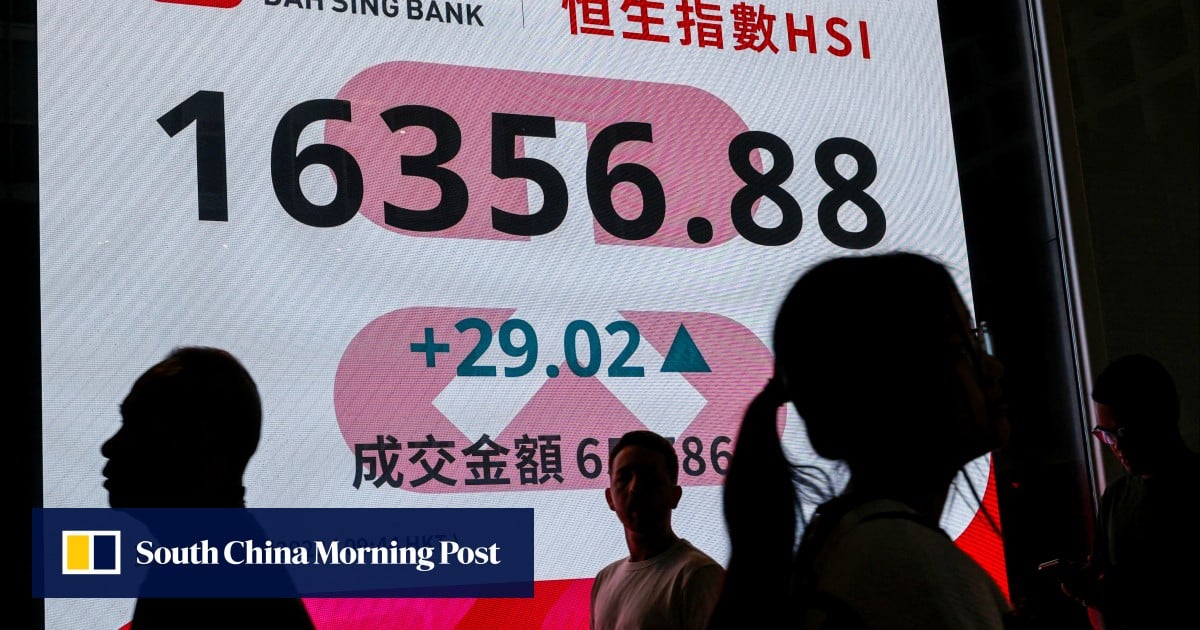
Hong Kong's stock market slump, with the Hang Seng Index heading for a fourth year of declines, has led to a wave of brokerage closures, with 30 local brokerages shutting down this year and a record 49 closing in 2022. The prolonged slump, along with job losses in the financial industry, raises concerns about the future of Hong Kong as Asia's top international finance center. Small and medium-sized brokerages are particularly affected, and the lack of liquidity in the market is driving up trading costs for institutional investors. The IPO market is also experiencing its worst year since 2001. The downturn in the market, coupled with a struggling economy, weak consumption, strained US-China ties, and a property crisis, has led to foreign funds fleeing Hong Kong and China. The lack of liquidity and a drought in deals are further exacerbating the market's troubles. Wall Street banks have been downsizing in response, and the hiring market in 2023 is expected to be the toughest since the global financial crisis. Hong Kong's government has taken steps to stimulate trading, but the high borrowing costs and weakness in mainland China's economy remain challenges. To revive Hong Kong's stock market, US monetary policy needs to shift from tightening to loosening, and Beijing needs to introduce more aggressive easing.
Shares of cybersecurity firm Fortinet (FTNT) plunged after its third-quarter results revealed disappointing growth in the network firewall market. The company's 2024 outlook for FTNT stock fell short of expectations, reflecting a slowdown in demand for on-premise firewall appliances. Fortinet plans to refocus on Secure Access Service Edge (SASE) products, which support remote workers and branch offices. Other players in the network firewall market, such as Palo Alto Networks (PANW), are also facing challenges as the industry shifts towards cloud-based cybersecurity services.
Private equity firms are facing their worst year for exiting investments in a decade, as the market downturn caused by the Covid-19 pandemic has made it difficult to sell off assets. The economic uncertainty and reduced buyer demand have led to a slowdown in exits, impacting the financial performance of private equity firms. This challenging environment has prompted firms to reassess their investment strategies and seek alternative ways to generate returns.